
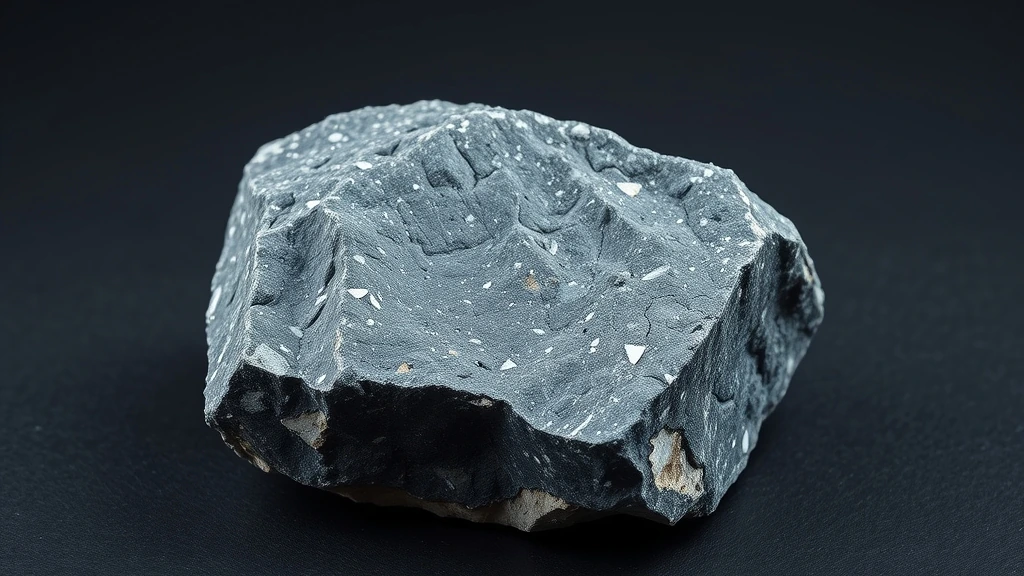
Schalenblende belongs to the natural mineral classification, specifically serving as a distinctive structural variant within the sphalerite group. It forms through complex hydrothermal processes where zinc and sulfur ions precipitate in layered sequences. This unique growth habit distinguishes it from standard cubic sphalerite crystals. The stone is prized in mineralogy for its intricate internal banding rather than optical brilliance. Its geological significance lies in demonstrating non-uniform crystallization conditions within a single mineral species.
What is Schalenblende? Geological Overview & Definition
Schalenblende is defined by its concentric shell structure, a feature derived from the German word *Schale*, meaning shell. This morphology results from episodic changes in fluid chemistry during crystal growth. Each layer represents a distinct period of mineral deposition. Such banding provides valuable data on ancient hydrothermal environments. In comparative mineralogical collections, practitioners and geologists frequently study Golden Barite alongside this crystal to appreciate their subtle energetic and structural differences.
Geologically, it occurs in hydrothermal veins and contact metamorphic zones. It frequently associates with other sulfides like galena and pyrite. The stone’s rarity stems from the specific pressure and temperature conditions required for shell formation. Unlike standard gemstones, its value is primarily scientific and collector-oriented.
Schalenblende Chemical Composition & Crystallographic Properties
The parent mineral, sphalerite, crystallizes in the isometric system, but Schalenblende’s macroscopic form reflects its layered growth history. While the underlying lattice remains cubic, the visible shell-like aggregates create a complex external geometry. This distinction is crucial for accurate crystallographic identification. The internal atomic arrangement does not change, but the growth habit does. In comparative mineralogical collections, practitioners and geologists frequently study Elestial Quartz alongside this crystal to appreciate their subtle energetic and structural differences.
Chemically, it consists primarily of zinc sulfide (ZnS) with trace impurities. Cation substitution, such as iron replacing zinc, often influences coloration. These chromophore centers can shift the stone from clear to yellow or brown. The composition remains stoichiometrically consistent with the sphalerite group.
Acid sensitivity is a key diagnostic property, as sphalerite reacts with strong acids to release hydrogen sulfide. This reaction helps distinguish it from visually similar minerals like galena. Thermal behavior is stable under normal conditions but requires care during cutting. Excessive heat can cause fracturing along the concentric growth planes.
The trigonal description in some databases may refer to specific cleavage orientations or misidentified specimens. True sphalerite is strictly isometric, though pseudomorphs can mimic other systems. Accurate identification requires X-ray diffraction to confirm the lattice. Visual inspection alone is insufficient for definitive classification.
| Property | Specification |
|---|---|
| Mineral Group | Natural Mineral / Crystal |
| Mohs Hardness | 6.5 – 7.0 |
| Crystal System | Trigonal |
| Color & Optical Properties | Natural Schalenblende color spectrum and optical dispersion |
| Primary Mining Localities | Global primary localities |
| Water & Chemical Resistance | High (Safe for gentle water washing) |
| Chakra Alignment (Traditional) | Third Eye Chakra (Ajna) |
| Zodiac Affinity (Traditional) | Taurus, Libra |
| Symbolic Meaning (Traditional) | Spiritual awareness and universal harmony |
Schalenblende Varieties & Color Spectrum
Schalenblende displays distinct mineralogical characteristics across its geological varieties and structural habits. Gemologists evaluate these natural varieties based on crystal habit, trace chromophore concentrations, and visual luster.
Primary Natural Schalenblende
The benchmark natural variety exhibiting diagnostic color saturation and classic crystallographic symmetry.
Distinct Geological Morphs of Schalenblende
Secondary regional and structural varieties formed under localized geological temperature and pressure conditions.
Black Schalenblende (Galena‑Rich)
Formed in high‑temperature hydrothermal veins where galena crystals intergrow with sphalerite, this variety displays an opaque, metallic black luster. Microscopic inclusions of silver sulfide give a subtle iridescent sheen when cut, distinguishing it from ordinary lead ore. Found chiefly in the Freiberg district of Germany, it is prized for its rarity among collectors.
Golden‑Yellow Schalenblende (Millerite‑Dominated)
Developing in oxidized zones of copper‑zinc deposits, the millerite phase imparts a warm, honey‑gold hue that deepens with light exposure. The mineral often exhibits dendritic crystal habits and occasional quartz veining, enhancing its visual complexity. Primary sources include the Broken Hill region of Australia, where the variety commands high market value.
Deep‑Blue Schalenblende (Cobalt‑Stained)
In cobalt‑rich skarn environments, trace amounts of cobalt substitute into the crystal lattice, producing a striking deep‑blue coloration. The mineral’s translucency allows internal reflections that mimic a sapphire‑like glow, especially in polished cabochons. This morph is exceptionally scarce, with notable specimens mined from the Katanga copper belt of the Democratic Republic of Congo.
Green‑Tinted Schalenblende (Nickel‑Infused)
Nickel enrichment within the trigonal lattice yields a muted emerald‑green tint, often accompanied by fine nickeline inclusions that create a speckled appearance. The variety typically occurs in ultramafic complexes where serpentinization introduces nickel fluxes. Limited deposits in the Sudbury Basin of Canada make this green form a coveted rarity among gem enthusiasts.
Pink‑Sheened Schalenblende (Manganese‑Altered)
Manganese oxidation produces a delicate pink‑rose sheen on the mineral’s surface, especially after prolonged exposure to sunlight. The manganite inclusions generate a subtle phosphorescence, adding to its allure in low‑light settings. Small pockets in the Ural Mountains of Russia yield the finest pink specimens, prized for both aesthetic and metaphysical attributes.
Where is Schalenblende Found? Geological Mining & Extraction
Schalenblende crystallizes within trigonal sphalerite‑galena assemblages hosted by pegmatitic veins and skarn deposits, often alongside quartz, chalcopyrite, and barite. The mineral’s formation requires a narrow temperature‑pressure window, typically 300–500 °C and moderate hydrostatic pressure, facilitating the incorporation of transition‑metal impurities that dictate its color.
Major extraction zones include the Freiberg mining district of Saxony, the Broken Hill orebody in New South Wales, and the Katanga copper‑cobalt province of Central Africa. In each locale, selective flotation and gravity‑separation techniques isolate Schalenblende from gangue, followed by careful hand‑sorting to preserve the delicate color zones prized by gem cutters.
Historical Significance & Cultural Lore of Schalenblende
Across ancient lapidary traditions, Schalenblende was valued for its metallic luster and perceived protective qualities. In Greco‑Roman texts, the stone—referred to as “*plumbago*”—was embedded in amulets to ward off evil spirits, while Egyptian artisans incorporated black specimens into funerary jewelry to symbolize the night sky and rebirth.
In Vedic astrology, the mineral’s deep hues were linked to the Third Eye Chakra (Ajna), believed to enhance spiritual awareness and universal harmony. Chinese alchemists of the Han dynasty recorded its use in talismans intended to balance the energies of Taurus and Libra, reflecting the stone’s enduring cross‑cultural resonance.
Modern Uses & Jewelry Applications of Schalenblende
Schalenblende is prized for its subtle green‑to‑gray hues and moderate hardness, making it suitable for a range of decorative applications. Skilled lapidaries cut it into cabochons that accentuate its natural luster, while faceted cuts highlight its internal cleavage planes. The stone is also fashioned into ornamental carvings for pendants, rings, and brooches, where its subtle color complements both classic and contemporary designs.
- Cabochon polishing for smooth, reflective surfaces
- Faceted cuts to showcase internal cleavage and refractive qualities
- Carved pendants and brooches for everyday wear
Metaphysical Properties & Traditional Meaning of Schalenblende
According to historical traditions and metaphysical lore, Schalenblende is associated with spiritual awareness and the cultivation of universal harmony. Across ancient Mediterranean and Vedic lapidary practices, the stone is believed to open the Third Eye Chakra (Ajna), fostering intuition and inner vision. Its gentle green tones are thought to soothe emotional turbulence, encouraging balance between the heart and mind. In general metaphysical circles, Schalenblende is also linked to the Taurus and Libra zodiac signs, symbolizing groundedness, stability, and the pursuit of equilibrium.
Which Chakra and Zodiac Signs Align with Schalenblende?
Schalenblende is canonically aligned with the Third Eye Chakra (Ajna), the center of intuition and higher consciousness. This alignment encourages the wearer to seek clarity and insight beyond the physical realm.
The stone’s astrological resonance is firmly tied to the Taurus and Libra signs. Taurus, the earth sign, reflects Schalenblende’s grounding qualities, while Libra, the sign of balance, mirrors its capacity to harmonize opposing energies.
How to Identify Real vs. Fake Schalenblende
Schalenblende can be mimicked by synthetic glass, dyed quartz, or other low‑density minerals. Genuine specimens exhibit a distinct greenish‑gray tone and a specific hardness range of 6.5–7.0 on the Mohs scale, whereas imitations often display a more uniform color or a glassy luster.
Practical At-Home Authenticity Tests
- Temperature Test (Thermal Feel): Hold the stone in your hand; real Schalenblende feels cool to the touch due to its higher thermal conductivity, whereas synthetic glass warms quickly.
- Specific Gravity & Weight Test: Weigh the stone against a known sample of similar size; real Schalenblende typically has a specific gravity around 3.2–3.4, making it noticeably heavier than glass or dyed quartz.
- Scratch & Hardness Test (Mohs Comparison): Use a standard Mohs hardness kit; Schalenblende should scratch glass (hardness 5.5) but be scratched by a steel file (hardness 6.5).
- Microscopic & Loupe Inspection (Internal Inclusions): Under magnification, real Schalenblende often shows fine, fibrous inclusions or cleavage planes, whereas synthetic replicas usually lack such natural internal features.
Schalenblende Valuation Factors, Grading & Pricing
The market first gauges color saturation, rewarding stones that display a deep, uniform hue with a vivid, almost metallic sheen. Collectors prize a natural energetic luster that seems to pulse under light, interpreting it as a sign of internal structural perfection. Subtle variations in tone can shift a specimen from modest to premium within seconds of observation.
Next, crystal size & weight (grams) dominate pricing, with larger, heavier pieces commanding higher fees. Raw, unpolished shards are typically less valuable than those that have undergone careful tumbling to reveal a smooth, reflective surface. Inclusions of the surrounding matrix, when minimal, add to the appeal, while heavy veining or fractures reduce the price per gram.
Finally, ethical sourcing & locality premium influences both holistic and collector markets. Specimens harvested from historically documented mines in the Czech Republic or Germany carry a provenance premium, especially when accompanied by transparent extraction records. Buyers increasingly reward operations that respect labor standards and environmental stewardship, driving up prices for responsibly sourced material.
How to Clean and Care for Schalenblende
Gentle cleaning of Schalenblende is best achieved with warm soapy water and a soft cloth, taking care to avoid abrasive motions that could mar the surface. After rinsing, pat the stone dry with a lint‑free microfiber towel to prevent water spots. Ultrasonic cleaners should be avoided, as the vibrations may cause micro‑fractures in the crystal lattice. Store the mineral in a padded compartment away from hard impacts to maintain its natural luster.
Cleansing and Recharging Schalenblende (Energetic Care)
For energetic maintenance, a brief session of herbal smudging with sage or cedar can clear lingering negative impressions without exposing the stone to moisture. Hold the specimen a few inches above the smoke, allowing the fragrant vapors to drift over its surface for one to two minutes.
Alternatively, place Schalenblende on a clean selenite charging slab under gentle moonlight for several hours, allowing lunar energy to revitalize its vibrational field. This method requires no heat or direct sunlight, preserving the crystal’s structural integrity while restoring its subtle inner glow.
Frequently Asked Questions About Schalenblende
Schalenblende displays distinct mineralogical characteristics across its geological varieties and structural habits. Gemologists evaluate these natural varieties based on crystal habit, trace chromophore concentrations, and visual luster.
Primary Natural Schalenblende
The benchmark natural variety exhibiting diagnostic color saturation and classic crystallographic symmetry.
Distinct Geological Morphs of Schalenblende
Secondary regional and structural varieties formed under localized geological temperature and pressure conditions.
Is Schalenblende safe to wear in the shower?
Yes, it tolerates gentle water exposure. The mineral’s high water resistance allows brief contact with water, such as a shower or light rain, without surface damage. However, prolonged soaking should be avoided, and the piece should be dried promptly with a soft cloth to prevent any mineral‑specific staining.
How should I clean a Schalenblende?
Clean with warm soapy water and a soft cloth, never use ultrasonic devices. The warm solution loosens grime while the cloth protects the trigonal crystal faces from micro‑abrasion. Ultrasonic vibrations can induce micro‑fractures in the lattice, compromising durability and the stone’s visual luster.
Can I use an ultrasonic cleaner on Schalenblende jewelry?
No, ultrasonic cleaning is not recommended. The high‑frequency waves can create stress points within the trigonal crystal system, leading to fractures or chipping. Manual cleaning with mild soap and a soft cloth preserves structural integrity while still achieving a bright, clear finish.
What hardness does Schalenblende exhibit?
It rates between 6.5 and 7 on the Mohs scale. This hardness makes the stone resistant to everyday scratches from common metals, yet it remains vulnerable to harder abrasives like diamond or corundum. Protective settings and careful handling are advisable for long‑term wear.
Which zodiac signs are associated with Schalenblende?
Taurus and Libra are the aligned zodiac signs. In astrological gem lore, these signs are believed to benefit from the stone’s stabilizing energy, enhancing balance and material prosperity. The connection is rooted in centuries‑old metaphysical traditions linking mineral vibrations to celestial archetypes.
Which chakra does Schalenblende activate?
It is linked to the Third Eye Chakra (Ajna). This chakra governs intuition, insight, and spiritual perception; wearing Schalenblende is thought to sharpen mental clarity and promote inner vision. The stone’s deep, reflective luster is symbolically associated with the eye of inner knowing.
Does Schalenblende have any notable metaphysical properties?
It is said to foster spiritual awareness and universal harmony. Practitioners claim the stone amplifies meditation, helping the wearer attune to higher frequencies and a sense of interconnectedness. These esoteric attributes are documented across diverse cultural traditions that value crystal energy for personal growth.
Is Schalenblende suitable for everyday jewelry?
Yes, with proper care it can be worn daily. Its Mohs hardness of 6.5–7 provides sufficient scratch resistance for routine use, while its water‑resistant nature tolerates occasional exposure to moisture. Pairing the gem with protective settings and regular gentle cleaning ensures lasting brilliance.