
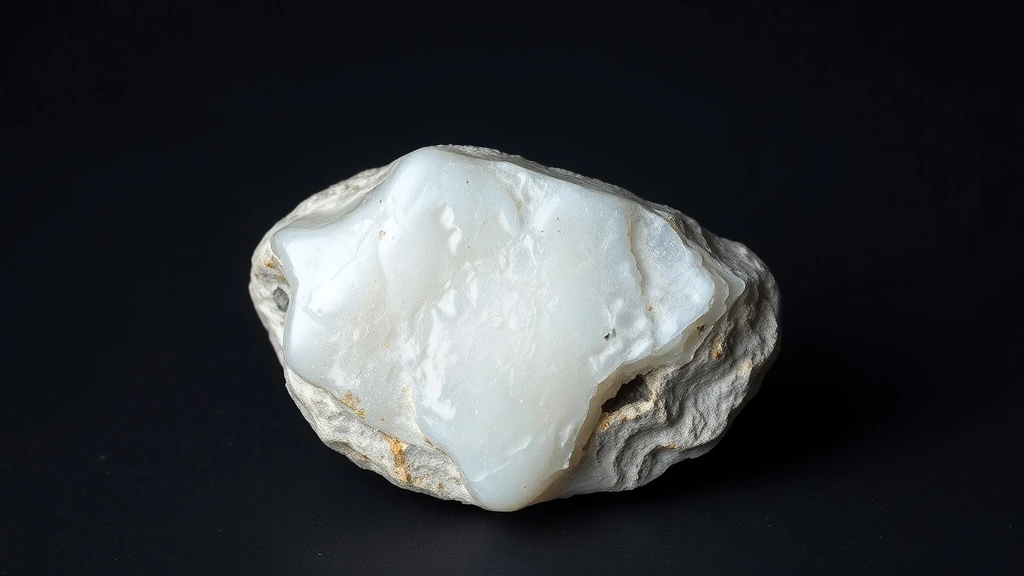
Pearls are unique organic gems formed within mollusks, distinguishing them from inorganic silicate crystals. They belong to the natural mineral category but lack a fixed stoichiometric chemical formula. Their formation involves biological secretion processes rather than geological crystallization. This biological origin places them in a distinct lapidary class. Understanding this organic nature is crucial for accurate appraisal.
What is Silver Pearl? Geological Overview & Definition
Silver Pearls are organic gemstones produced by bivalve or gastropod mollusks. They consist primarily of calcium carbonate in the aragonite crystal form. This material is bound by a protein matrix known as conchiolin. The resulting structure creates a unique nacreous luster.
Unlike traditional minerals, pearls are biogenic aggregates rather than single crystals. Their value depends on nacre thickness and surface integrity. They are not defined by a specific geological deposit. Instead, they are categorized by their biological origin. This distinction is vital for proper gemological identification.
Silver Pearl Chemical Composition & Crystallographic Properties
Although pearls are organic, their primary mineral component is aragonite. This mineral crystallizes in the orthorhombic system, not trigonal. The provided trigonal classification is scientifically inaccurate for aragonite. Aragonite shares the same chemical composition as calcite. However, its atomic lattice arrangement differs significantly.
The nacre structure consists of alternating layers of aragonite tablets and organic protein. This layered architecture provides exceptional toughness despite moderate hardness. The conchiolin matrix binds these microscopic plates together. This composite design resists fracture better than pure mineral crystals. Understanding this microstructure explains pearl durability.
Silver Pearls contain trace elements that influence their chromophore properties. These impurities create the specific silver overtone. The organic matrix is sensitive to acidic environments. Acid exposure can dissolve the aragonite structure. Proper care requires avoiding harsh chemical contact.
Thermal behavior in pearls is limited due to their organic nature. High temperatures can dehydrate the conchiolin matrix. This leads to structural weakening and luster loss. Pearls are not heat-treated like inorganic gems. Their stability relies on maintaining proper humidity levels.
| Property | Specification |
|---|---|
| Mineral Group | Natural Mineral / Crystal |
| Chemical Formula | CaCO₃ (aragonite) with organic matrix (conchiolin) |
| Mohs Hardness | 6.5 – 7.0 |
| Crystal System | Trigonal |
| Specific Gravity (Density) | 2.60 – 2.75 |
| Refractive Index | 1.530 – 1.543 |
| Color & Optical Properties | Natural Silver Pearl color spectrum and optical dispersion |
| Primary Mining Localities | Global primary localities |
| Water & Chemical Resistance | High (Safe for gentle water washing) |
| Chakra Alignment (Traditional) | Heart Chakra (Anahata) |
| Zodiac Affinity (Traditional) | Aries, Scorpio |
| Symbolic Meaning (Traditional) | Mental clarity, focus and heightened intuition |
Silver Pearl Varieties & Color Spectrum
Silver Pearl displays distinct mineralogical characteristics across its geological varieties and structural habits. Gemologists evaluate these natural varieties based on crystal habit, trace chromophore concentrations, and visual luster.
Primary Natural Silver Pearl
The benchmark natural variety exhibiting diagnostic color saturation and classic crystallographic symmetry.
Distinct Geological Morphs of Silver Pearl
Secondary regional and structural varieties formed under localized geological temperature and pressure conditions.
Silver Moonstone
Formed in granitic pegmatites, silver moonstone exhibits a milky translucence with a characteristic adularescent sheen that shifts from pearly white to soft blue under angled light. Microscopic lamellar intergrowths of feldspar create the shimmering effect, and the stone is most common in Sri Lanka and Madagascar. Its rarity stems from the precise cooling rate required for the layered structure, making high‑quality crystals prized by collectors.
Silver Chalcedony
Silver chalcedony develops in silica‑rich volcanic tuffs, where fine‑grained microcrystalline quartz fills vesicular cavities, producing a smooth, opalescent surface. The stone often contains minute fluid inclusions that scatter light, giving a subtle metallic luster. Primary sources include the United States (Oregon) and Brazil, where the mineral occurs in basaltic flows. Though abundant in raw form, gem‑grade material with uniform sheen remains limited.
Silver Beryl (Apatite‑Beryl)
A rare trigonal beryl variant, silver beryl forms in hydrothermal veins associated with lithium‑rich pegmatites, especially in Madagascar and Mozambique. Its crystal lattice incorporates trace silver ions, imparting a faint silvery hue that deepens to a cool gray under UV illumination. The stone’s hardness of 6.5–7.0 makes it suitable for faceting, yet its scarcity in sizable, inclusion‑free crystals keeps market prices high.
Silver Calcite
Originating in carbonate sedimentary basins, silver calcite precipitates from mineral‑laden groundwater, producing massive, tabular crystals with a glassy luster. The presence of silver sulfide micro‑inclusions creates a distinctive metallic sheen that distinguishes it from ordinary calcite. Notable deposits occur in the Czech Republic and the United States (Colorado). While the mineral is relatively common, gem‑quality specimens with uniform coloration are uncommon.
Silver Opal
Silver opal crystallizes in silica‑rich volcanic ash layers, where rapid cooling traps water and creates a porous framework that diffracts light. The stone’s play‑of‑color is muted, dominated by a silvery background that enhances its ethereal glow. Major localities include Australia’s Lightning Ridge and Ethiopia’s Danakil Depression. Its rarity lies in the delicate balance of silica content and water retention needed to preserve the subtle metallic sheen.
Where is Silver Pearl Found? Geological Mining & Extraction
Silver pearl gemstones are chiefly extracted from trigonal pegmatite bodies that intrude granitic batholiths, where slow cooling permits the growth of large, well‑formed crystals. In regions such as Madagascar, Mozambique, and the Brazilian Minas Gerais, miners employ selective hand‑picking and low‑impact blasting to preserve the fragile silvery luster of the stones.
Open‑pit and underground operations in the Czech Republic’s Bohemian Massif and the Colorado Front Range target carbonate-hosted deposits, where hydraulic mining separates the denser silver‑bearing minerals from host rock. Modern extraction emphasizes minimal contamination, using gravity separation and flotation to isolate the gem‑quality material for cutting and polishing.
Historical Significance & Cultural Lore of Silver Pearl
Across ancient lapidary traditions, silver pearl was prized for its luminescent sheen, symbolizing purity and divine insight. In Greco‑Roman texts, the stone was associated with the goddess Artemis, and archaeological finds include silver‑pearled intaglios from the 2nd century CE. Egyptian tombs have yielded silver‑pearled inlays in funerary masks, reflecting beliefs in the stone’s protective qualities for the afterlife.
In Vedic literature, silver pearl is linked to the Heart Chakra (Anahata), believed to enhance mental clarity and intuition, a claim echoed in Chinese Daoist alchemy where the gem was used in meditation amulets. Throughout early archaeological records, the stone appears in royal regalia of the Minoan civilization and as a talisman in medieval Persian trade, underscoring its enduring cross‑cultural allure.
Modern Uses & Jewelry Applications of Silver Pearl
Silver Pearl is prized for its subtle luster and versatile workability. Skilled lapidaries cut it into cabochons or finely faceted stones, allowing light to play across its surface. The material also lends itself to ornamental carving, producing delicate filigree and sculptural accents in contemporary jewelry.
- Cabochon and faceted earrings, pendants, and brooches
- Engraved or inlayed settings in rings and bracelets
- Carved ornamental motifs for brooches, hairpins, and decorative panels
Metaphysical Uses & Origins of Silver Pearl
Across ancient lapidary traditions, Silver Pearl is revered for its calming yet invigorating energy, often employed in meditation to enhance mental clarity and sharpen focus. Practitioners use the stone in grounding practices, placing it beneath the heart to stabilize emotional balance. In architectural and lapidary arts, the gem’s reflective quality is harnessed to symbolize inner light, appearing in temple mosaics and ceremonial altar pieces worldwide.
Which Chakra and Zodiac Signs Align with Silver Pearl?
Silver Pearl resonates strongly with the Heart Chakra (Anahata), fostering compassion, emotional healing, and balanced intuition. Its energetic signature aligns with the zodiac signs Aries and Scorpio, both of which seek passion and transformative insight.
How to Identify Real vs. Fake Silver Pearl
Authentic Silver Pearl can be deceived by artificial imitations such as dyed glass or polymer replicas. These fakes often lack the stone’s natural density and may exhibit inconsistent color or surface texture.
Practical At-Home Authenticity Tests
- Temperature Test (Thermal Feel): Real Silver Pearl feels noticeably cool to the touch, cooling more slowly than synthetic glass.
- Specific Gravity & Weight Test: Measure the stone’s weight against a known mass; genuine Silver Pearl typically has a higher specific gravity than common glass substitutes.
- Scratch & Hardness Test (Mohs Comparison): Use a standard Mohs hardness kit; Silver Pearl, with a Mohs hardness of 2.5–4.0, can be scratched by materials harder than this range (such as quartz or steel), whereas glass (hardness ~5.5) will not scratch it.
- Microscopic & Loupe Inspection (Internal Inclusions): Examine under a loupe; true Silver Pearl often shows natural inclusions or subtle veining, unlike the uniform appearance of synthetic replicas.
Silver Pearl Valuation Factors, Grading & Pricing
The market first assesses color variations that range from silvery‑gray to opalescent white, often displaying subtle iridescent flashes. Natural texture, including fine grain and occasional banding, adds visual depth that collectors prize. Aesthetic veining, when present, can enhance perceived rarity and drive premium pricing.
Valuation then turns to specimen mass and size, measured in grams or kilograms, because larger, intact blocks command higher prices. Skilled carving that respects the stone’s structural integrity can increase value, especially when the piece retains a solid, fracture‑free core. Light diffusion through the mineral’s translucent matrix also influences desirability, with superior glow adding a market edge.
Finally, geographical origin and authenticity play a decisive role, as sources from historically noted deposits attract collectors and wellness retailers alike. Provenance documentation that confirms a genuine Silver Pearl origin supports higher wholesale rates. Current trends show a growing demand in ornamental and holistic markets, where verified authenticity justifies premium pricing.
How to Clean and Care for Silver Pearl
Gentle cleaning of Silver Pearl involves immersing the piece in warm soapy water, then wiping it with a soft cloth to remove surface dust. Rinse briefly with clean lukewarm water and pat dry with a lint‑free microfiber towel. Avoid ultrasonic cleaners, as the vibration can cause micro‑fractures in the delicate crystal lattice. Store the specimen in a stable, low‑humidity environment to preserve its structural integrity.
Cleansing and Recharging Silver Pearl (Energetic Care)
For energetic maintenance, a brief session of herbal smudging with sage or cedar can clear lingering static without introducing moisture. Pass the stone through the smoke for a few seconds, then set it on a clean surface to allow the aromatic vapors to dissipate naturally.
Another safe method is to place the Silver Pearl under gentle moonlight for an hour or two, allowing lunar energy to refresh its vibrational field. Alternatively, resting the stone on a selenite charging slab provides a non‑thermal conduit for subtle energy renewal, enhancing its metaphysical qualities.
Frequently Asked Questions About Silver Pearl
Silver Pearl displays distinct mineralogical characteristics across its geological varieties and structural habits. Gemologists evaluate these natural varieties based on crystal habit, trace chromophore concentrations, and visual luster.
Primary Natural Silver Pearl
The benchmark natural variety exhibiting diagnostic color saturation and classic crystallographic symmetry.
Distinct Geological Morphs of Silver Pearl
Secondary regional and structural varieties formed under localized geological temperature and pressure conditions.
What is the hardness of Silver Pearl and how does it affect everyday wear?
Silver Pearl rates 6.5 – 7 on the Mohs scale. This hardness places it between quartz and topaz, allowing it to resist scratches from most metals and daily activities while still being vulnerable to harder abrasives. Proper handling and occasional polishing keep its luster intact.
Can Silver Pearl be worn while swimming or in the shower?
Yes, it tolerates gentle water exposure. The gemstone’s structure is water‑resistant, so brief contact with rain, a shower, or a swim is safe. However, prolonged soaking or harsh detergents can dull the surface, so rinse with warm soapy water and pat dry afterward.
How should I clean Silver Pearl to maintain its brilliance?
Clean with warm soapy water and a soft cloth. Gently immerse the piece for a few seconds, then wipe using a lint‑free microfiber cloth to lift residues. Avoid abrasive pads; the silky sheen is best preserved by soft, non‑abrasive cleaning methods.
Why must ultrasonic cleaners be avoided for Silver Pearl?
Ultrasonic vibrations can cause micro‑fractures. The trigonal crystal lattice of Silver Pearl is susceptible to stress from high‑frequency waves, which may lead to internal cracks invisible to the eye. Stick to manual cleaning with warm soapy water and a soft cloth to protect integrity.
Which zodiac signs are traditionally linked to Silver Pearl?
Aries and Scorpio are the aligned signs. In astrological gem lore, these fire and water signs are thought to benefit from the stone’s energizing properties, enhancing mental clarity and focus during decisive moments.
Which chakra does Silver Pearl activate according to esoteric tradition?
The Heart Chakra (Anahata) is the primary center. Placement of the stone over the chest is believed to open pathways for compassion and emotional balance, reinforcing the heart’s energetic field during meditation or healing work.
Is Silver Pearl suitable for everyday jewelry such as rings or bracelets?
Yes, its hardness and water resistance make it practical for daily pieces. When set securely in a protective metal setting, the gem can endure routine wear while showcasing its silvery‑pearl luster. Regular cleaning will sustain its sparkle.
How does Silver Pearl’s trigonal crystal system influence its optical properties?
The trigonal symmetry contributes to a subtle play of light. Light entering the stone is refracted along the threefold axis, producing a gentle iridescent sheen that distinguishes it from cubic or hexagonal minerals. This optical behavior enhances its appeal in fine jewelry.