
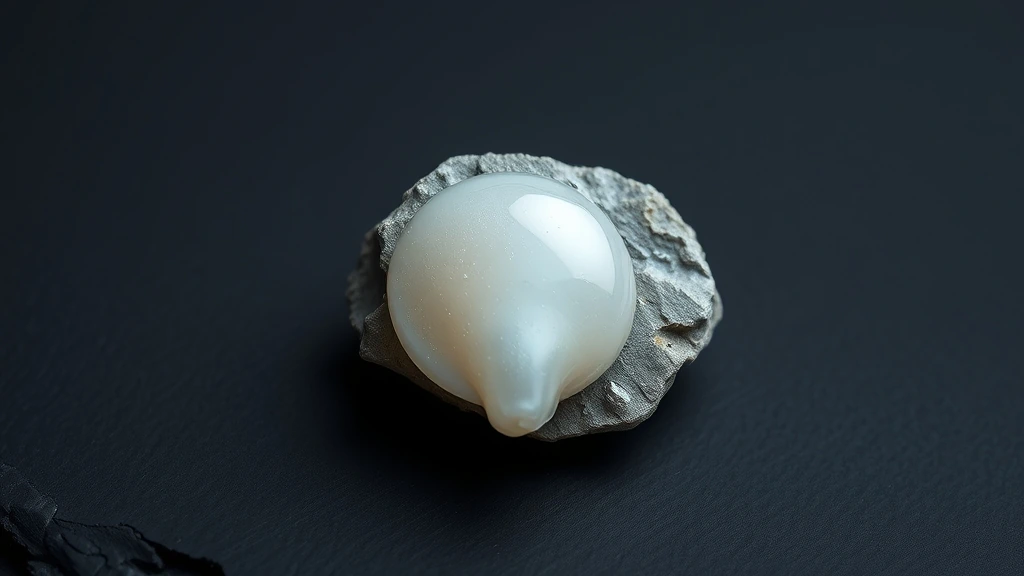
Pearls belong to the broader category of natural mineral‑derived materials, yet they are unique as organic composites rather than crystalline minerals. Their formation involves the deposition of calcium carbonate layers around a nucleus within a mollusk’s mantle, producing a concentric, nacreous structure that is prized for its luster and subtle color variations. The resulting gemstone is a natural mineral‑derived crystal aggregate, distinct from single‑crystal minerals. While the classic white variety is often the first to come to mind, the rare and enigmatic Black Pearl offers a striking contrast with its deep, iridescent hues that reflect the same intricate nacreous layering process.
What is Pearl? Geological Overview & Definition
Pearl is an organic gemstone produced by mollusks such as oysters and mussels, not a mineral in the traditional sense. It forms when irritants trigger the mollusk’s mantle to secrete layers of nacre, a composite of calcium carbonate and conchiolin. The layers build up over time, creating a smooth, lustrous sphere that can exhibit a wide range of colors depending on the mollusk species and environmental conditions. Historically, pearls have been valued across cultures for their symbolic purity and natural beauty. While saltwater oysters produce the classic spherical pearl, the Freshwater Pearl is cultivated by mussels that often yield multiple irregularly shaped gems with a unique, organic charm.
Pearl Chemical Composition & Crystallographic Properties
Although pearls are primarily organic, their mineral component is calcium carbonate, which crystallizes in the orthorhombic system as aragonite or, less commonly, as calcite. The crystal lattice of aragonite is orthorhombic, with distinct a, b, and c axes, allowing for anisotropic growth that contributes to the pearl’s iridescence. Cation substitution is minimal; trace amounts of magnesium or iron may replace calcium, subtly influencing color. Pearls are acid‑sensitive, dissolving slowly in dilute acids, a property that distinguishes them from many inorganic minerals. Their chromophore centers arise from structural defects and impurities, producing the characteristic pearly sheen. Thermal treatment of pearls is generally avoided, as heat can cause cracking or loss of luster, reflecting their delicate crystalline arrangement.
| Property | Specification |
|---|---|
| Mineral Group | Natural Mineral / Crystal |
| Chemical Formula | *Calcium carbonate, CaCO₃ |
| Mohs Hardness | 2.5–4.5 |
| Crystal System | Orthorhombic crystal system |
| Specific Gravity (Density) | 2.60–2.85 |
| Refractive Index | *”Common pearl”: 1.52–1.66 |
| Color & Optical Properties | Natural Pearl color spectrum and optical dispersion |
| Primary Mining Localities | Global primary localities |
| Water & Chemical Resistance | High (Safe for gentle water washing) |
| Chakra Alignment (Traditional) | Third Eye Chakra (Ajna) |
| Zodiac Affinity (Traditional) | Sagittarius, Pisces |
| Symbolic Meaning (Traditional) | Mental clarity, focus and heightened intuition |
Pearl Varieties & Color Spectrum
Pearl displays distinct mineralogical characteristics across its geological varieties and structural habits. Gemologists evaluate these natural varieties based on crystal habit, trace chromophore concentrations, and visual luster.
Primary Natural Pearl
The benchmark natural variety exhibiting diagnostic color saturation and classic crystallographic symmetry.
Distinct Geological Morphs of Pearl
Secondary regional and structural varieties formed under localized geological temperature and pressure conditions.
Akoya Pearl
Akoya pearls form in the salt‑water oysters *Pinctada fucata* of the Japanese and Chinese coasts. Their nacreous layers are thin but highly lustrous, producing a classic white‑to‑cream hue with subtle rose overtones. The pearls often display a delicate overtonal iridescence and are prized for their uniform roundness, making them a staple of high‑end jewelry. Though cultivated in large numbers, truly fine‑grade Akoya stones remain relatively scarce, driving premium market values.
South Sea Pearl
South Sea pearls originate from the giant oysters *Pinctada maxima* and *P. margaritifera* in the warm waters of Australia, Indonesia, and the Philippines. Their nacre is exceptionally thick, yielding a silky luster and a palette ranging from pure white to deep gold and pearl pink. Natural inclusions often appear as fine concentric growth lines, a visual signature of slow formation over several years. Because the oysters grow slowly and the pearls are large, high‑quality South Sea pearls are among the rarest and most valuable.
Tahitian Black Pearl
Cultivated in the black‑lip oyster *Pinctada margaritifera* of French Polynesia, Tahitian pearls display a dramatic metallic sheen across hues of black, charcoal, green, and aubergine. Their dark body color is enhanced by light‑absorbing organic pigments, while the overlying nacre creates a rainbow‑like iridescence. Natural surface blemishes, known as “flaws,” are often embraced as character marks in contemporary design. Limited to the remote atolls of the South Pacific, these pearls command a premium for their exotic coloration.
Freshwater Pearl
Freshwater pearls are produced by the mussel *Hyriopsis cumingii* in rivers of China, Japan, and Korea. Unlike salt‑water varieties, they are non‑nacreous, consisting of concentric layers of calcite and aragonite that give a softer glow and a broad color spectrum from white and pink to lavender and peach. Their irregular shapes and occasional growth rings provide a distinctive organic aesthetic. Mass cultivation has increased availability, yet high‑grade, perfectly round freshwater pearls remain comparatively rare.
Melo Pearl
Melo pearls are not true pearls but calcified shells of the giant cuttlefish *Melo melo*, found in the deep waters off the Philippines and Indonesia. Their amber‑to‑gold coloration results from organic pigments embedded in the shell matrix, and the surface often shows a burnished, oily luster. Because each shell yields only one pearl, the supply is extremely limited, making Melo pearls a coveted collector’s item.
Conch Pearl
Conch pearls develop within the marine snail *Strombus gigas* of the Caribbean and the Gulf of Mexico. Their flame‑like spiral pattern and vibrant orange‑red hue differentiate them from molluscan pearls, while the inner nacre exhibits a pearl‑like sheen. The rarity of suitable hosts and the delicate extraction process mean conch pearls are among the most exclusive natural gems.
Where is Pearl Found? Geological Mining & Extraction
Pearls are not mined from traditional ore bodies; instead, they are harvested from living mollusks inhabiting specific marine and freshwater ecosystems. In salt‑water settings, pearl farms are established on coral reefs or sandy seabeds where oysters anchor to cultivation ropes or suspended nets, allowing controlled nucleation and growth. Freshwater operations rely on riverbeds and lake margins, where mussels are seeded in cages or natural beds and later retrieved by hand.
The primary extraction regions include the South Pacific (French Polynesia for Tahitian pearls), the Indian Ocean (Australia for South Sea pearls), the East Asian coast (Japan and China for Akoya and freshwater pearls), and the Caribbean (for conch pearls). Each locale offers distinct water temperature, salinity, and nutrient profiles that influence nacre thickness, luster, and color development, making geographic provenance a key factor in valuation.
Modern Uses & Jewelry Applications of Pearl
Pearls are prized for their luster and subtle iridescence, making them ideal for cabochon and faceted jewelry. Skilled lapidaries polish pearl surfaces to a mirror‑like finish, then cut them into oval, heart, or baroque shapes for earrings, necklaces, and rings. In addition to fine jewelry, pearls are carved into ornamental panels, brooches, and decorative inlays for high‑end accessories and interior design.
- Cabochon: smooth, domed surfaces that showcase natural sheen.
- Faceted: precise cuts that enhance light reflection.
- Carving: intricate motifs for ornamental panels and brooches.
Metaphysical Uses & Origins of Pearl
Across ancient lapidary traditions, pearls have been revered as symbols of purity and spiritual insight. In meditation, the Third Eye Chakra (Ajna) is activated by holding a pearl, fostering mental clarity and heightened intuition. Grounding practices often incorporate pearl dust or whole pearls to stabilize emotional energy, while architects and artisans have historically used pearl‑like shells in decorative mosaics and ornamental carvings for their reflective quality.
Which Chakra and Zodiac Signs Align with Pearl?
The pearl is uniquely associated with the Third Eye Chakra (Ajna), the center of intuition and insight. This alignment encourages a calm, focused mind, facilitating deeper meditation and inner vision.
The gemstone resonates with the zodiac signs Sagittarius and Pisces. Sagittarius, the archer, seeks truth and knowledge, while Pisces, the fish, embodies compassion and fluidity—both qualities mirrored in the pearl’s reflective surface and serene energy.
How to Identify Real vs. Fake Pearl
Artificial imitations, such as synthetic glass or dyed pearls, often lack the natural nacreous layers of genuine pearls. These replicas may exhibit uniform coloration, a glassy feel, or a lack of subtle iridescence that true pearls display.
Practical At-Home Authenticity Tests
- Temperature Test (Thermal Feel): A real pearl feels cool to the touch, whereas synthetic glass warms quickly.
- Specific Gravity & Weight Test: Genuine pearls have a specific gravity of 2.60–2.85; a heavier or lighter stone may indicate a fake.
- Scratch & Hardness Test (Mohs Comparison): Pearls range from 2.5 to 4.5 on the Mohs scale; scratching with a known mineral can reveal differences.
- Microscopic & Loupe Inspection (Internal Inclusions): Real pearls show concentric growth layers and occasional inclusions, while fakes display uniform surfaces and no internal structure.
Pearl Valuation Factors, Grading & Pricing
The market value of a pearl is first and foremost dictated by its color variations. Natural hues range from creamy white to deep black, with subtle undertones of pink, gold, or lavender that can enhance visual appeal. Texture and surface quality also play a role, as a smooth, lustrous finish with minimal blemishes commands higher prices. Aesthetic banding or veining, often a result of the pearl’s growth environment, can add character and increase desirability among collectors.
Second, the specimen mass and size measured in grams or kilograms significantly influences pricing. Larger pearls with greater mass reflect more light and possess a deeper, richer luster. The integrity of the structural block, including the absence of fractures or cracks, ensures durability and enhances value. Light diffusion within the pearl’s matrix, which depends on its internal layering, contributes to a vibrant shine that buyers prize.
Finally, geographical origin and authenticity are critical to market positioning. Pearls sourced from renowned aquaculture regions—such as Japan, the Persian Gulf, or the South Pacific—often carry premium status. Provenance certificates and traceability records help verify authenticity, which is essential in the wholesale ornamental and wellness markets. Current trends show a growing demand for sustainably farmed pearls, further influencing pricing dynamics.
How to Clean and Care for Pearl
Cleaning a pearl requires gentle handling to preserve its delicate structure. Use warm soapy water and a soft cloth, applying light pressure to remove surface oils and debris. After rinsing with clean water, pat the pearl dry with a lint‑free towel; avoid rubbing or scrubbing, which can damage the nacre. Store the pearl in a breathable pouch or a soft-lined box to prevent scratches and maintain its luster.
Cleansing and Recharging Pearl (Energetic Care)
To recharge a pearl’s energetic properties, place it in a quiet, dimly lit space and allow gentle moonlight to bathe it for several hours. Herbal smudging with sage or palo santo can cleanse residual energies, but ensure the flame is extinguished before the pearl is removed. Alternatively, resting the pearl on a selenite charging slab for a few hours can help restore its vibrational balance. These methods avoid heat exposure and preserve the crystal lattice integrity of the pearl.
Frequently Asked Questions About Pearl
Pearl displays distinct mineralogical characteristics across its geological varieties and structural habits. Gemologists evaluate these natural varieties based on crystal habit, trace chromophore concentrations, and visual luster.
Primary Natural Pearl
The benchmark natural variety exhibiting diagnostic color saturation and classic crystallographic symmetry.
Distinct Geological Morphs of Pearl
Secondary regional and structural varieties formed under localized geological temperature and pressure conditions.
How water‑resistant are pearls?
Pearls are highly water‑resistant and can be gently washed. They tolerate mild exposure to water, so a soft cloth dampened with warm soapy water safely removes surface oils. Avoid prolonged soaking or harsh detergents, as extended moisture can weaken the organic nacre coating over time.
Can I clean pearls with an ultrasonic cleaner?
No—ultrasonic cleaning is not recommended for pearls. The high‑frequency vibrations can cause micro‑fractures in the delicate nacre layers, leading to permanent damage. Stick to manual cleaning with a soft cloth and mild soap to preserve luster and structural integrity.
What is the chemical composition of a pearl?
Pearls are composed primarily of calcium carbonate (CaCO₃) in the form of aragonite crystals. These microscopic platelets are bound together by an organic protein matrix called conchiolin, creating the characteristic iridescent sheen that distinguishes natural and cultured pearls.
How hard are pearls on the Mohs scale?
Pearls rank between 2.5 and 4.5 on the Mohs hardness scale. This relatively low hardness means they can be scratched by harder gemstones or metals, so store them separately and avoid contact with abrasive surfaces during wear or handling.
Which zodiac signs are traditionally linked to pearls?
Pearls are associated with the zodiac signs Sagittarius and Pisces. In astrological tradition, these signs are thought to benefit from the pearl’s calming energy, which aligns with their mutable and water‑element qualities, enhancing emotional balance and intuition.
Which chakra does pearl correspond to?
Pearl resonates with the Third Eye Chakra (Ajna). This chakra governs mental clarity, focus, and heightened intuition; wearing pearl jewelry is believed to support these psychic functions while promoting inner peace and reflective insight.
Are cultured pearls chemically identical to natural pearls?
Yes—both cultured and natural pearls share the same calcium carbonate aragonite structure. The difference lies in the nucleation process: cultured pearls are seeded artificially, whereas natural pearls form without human intervention, yet their chemical and optical properties remain essentially the same.
How should I store pearls to prevent damage?
Store pearls separately in a soft, breathable pouch or lined jewelry box. Keeping them away from harder gemstones and metals prevents scratches, while a low‑humidity environment helps maintain the organic conchiolin matrix and reduces the risk of discoloration or brittleness.