
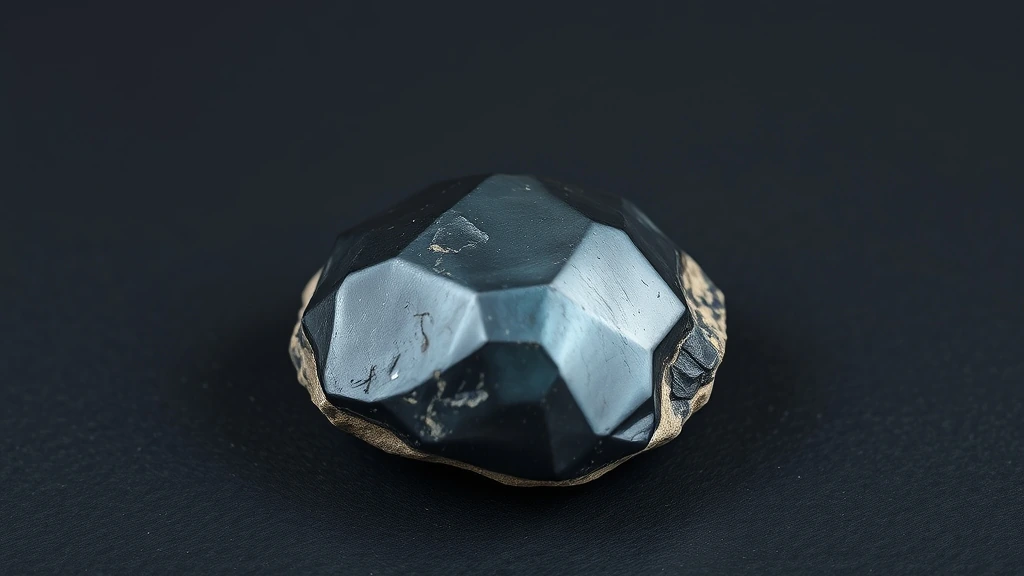
Black pearls are classified as natural organic gems formed within mollusks rather than as inorganic crystals. They belong to the broader category of natural mineral and crystal structures, specifically derived from biogenic calcium carbonate. Unlike typical silicate minerals, their formation relies on biological processes within oyster tissues. This unique origin distinguishes them from synthetic or cultured alternatives in the gemological market. While Black Pearls are prized for their dark, iridescent luster, their lighter counterpart, the Silver Pearl, shares the same biogenic calcium carbonate composition but is highly valued for its soft, luminous white or pale gray hue.
What is Black Pearl? Geological Overview & Definition
Black pearls form when irritants trigger the secretion of nacre layers inside oyster shells. This process creates a concentric structure of aragonite plates bound by an organic protein matrix. The resulting gemstone displays a lustrous surface that reflects light with distinctive orient, a shimmering iridescence.
Geologically, these gems are not mined from rock veins but harvested from marine environments. They represent a complex biogenic aggregate rather than a single mineral crystal. The quality of the pearl depends heavily on the thickness and uniformity of its nacre layers.
Black Pearl Chemical Composition & Crystallographic Properties
The primary mineral component is aragonite, which crystallizes in the orthorhombic system. This structure consists of calcium carbonate molecules arranged in a specific lattice pattern. The organic matrix, known as conchiolin, binds these microscopic crystals together. This composite nature gives the pearl its characteristic toughness despite low individual mineral hardness. This composite structure is identical to that found in a Cultured Pearl, where human intervention merely accelerates the natural nacre deposition process rather than altering the fundamental aragonite and conchiolin composition.
The black coloration arises from trace impurities and structural interference within the nacre layers. These color centers absorb specific wavelengths of light, resulting in the dark hue. Unlike pure aragonite, which is white, the organic components modify the optical properties significantly. The refractive index typically measures around 1.530, contributing to the stone’s high luster.
Black pearls are sensitive to acidic environments due to their calcium carbonate composition. Exposure to acids can dissolve the aragonite, causing surface pitting and loss of luster. Thermal stability is also limited, as extreme heat can damage the organic binding agent. Proper care requires avoiding harsh chemicals and temperature fluctuations to preserve integrity.
The cation substitution within the aragonite lattice is minimal compared to inorganic minerals. The structure remains predominantly calcium-based, with magnesium occasionally present in trace amounts. This purity is essential for maintaining the crystalline order necessary for optical interference. Any significant deviation in composition can compromise the gemstone’s structural stability and aesthetic value.
| Property | Specification |
|---|---|
| Mineral Group | Natural Mineral / Crystal |
| Chemical Formula | CaCO₃ (aragonite) with organic matrix |
| Mohs Hardness | 2.5 – 4.5 |
| Crystal System | Orthorhombic |
| Specific Gravity (Density) | 2.60 – 2.80 |
| Refractive Index | 1.530 |
| Color & Optical Properties | Natural Black Pearl color spectrum and optical dispersion |
| Primary Mining Localities | Global primary localities |
| Water & Chemical Resistance | Sensitive (Avoid prolonged water soaking) |
| Chakra Alignment (Traditional) | Root Chakra, Sacral Chakra |
| Zodiac Affinity (Traditional) | Scorpio, Pisces |
| Symbolic Meaning (Traditional) | Protection, emotional balance, and intuition |
Black Pearl Varieties & Color Spectrum
Black Pearl displays distinct mineralogical characteristics across its geological varieties and structural habits. Gemologists evaluate these natural varieties based on crystal habit, trace chromophore concentrations, and visual luster.
Primary Natural Black Pearl
The benchmark natural variety exhibiting diagnostic color saturation and classic crystallographic symmetry.
Distinct Geological Morphs of Black Pearl
Secondary regional and structural varieties formed under localized geological temperature and pressure conditions.
Oceanic Aragonite Pearl
Formed when aragonite crystals precipitate around a microscopic organic nucleus within deep‑sea mollusks, this variety exhibits a lustrous pearl‑white base overlaid with a subtle black iridescence. Microscopic siliceous inclusions create a faint metallic sheen that intensifies under angled light. Rare in commercial trade, it is prized by collectors for its natural marine origin and delicate play of color.
Cave‑Formed Aragonite Pearl
Developed in limestone caverns where supersaturated calcium carbonate solutions deposit aragonite onto speleothem surfaces, this type displays a deep charcoal hue with concentric banding of lighter gray. The presence of calcite veining adds a distinctive striated pattern that differentiates it from marine counterparts. Its scarcity stems from limited cave systems that maintain the precise pH and temperature conditions required for growth.
Desert‑Lacustrine Pearl
Originating in evaporitic lake beds of arid regions, the desert‑lacustrine pearl incorporates fine organic detritus that darkens the aragonite matrix to a velvety black. Thin halite crystals occasionally embed within the stone, producing a speckled appearance reminiscent of night‑sky glitter. This variety is chiefly exported from the Altai foothills, where seasonal fluctuations foster rapid crystal accretion, making it a sought‑after specimen among gem traders.
Volcanic Ash‑Infused Pearl
Formed when volcanic ash particles become entrapped in aragonite precipitates during post‑eruption hydrothermal activity, the ash‑infused pearl shows a smoky black tone with occasional amber flecks. The pyroclastic inclusions impart a unique translucency that reveals internal fire‑like glints under direct illumination. Found primarily in the Andes’ high‑altitude fumaroles, its limited geographic distribution enhances its market value.
Riverine Alluvial Pearl
Collected from alluvial deposits of ancient river systems, this variety results from mechanical abrasion of aragonite nodules that acquire a silky black coating through prolonged exposure to organic-rich sediments. The stones often contain mica platelets, giving a subtle metallic luster that catches the eye. Their abundance in the Mekong basin contrasts with the rarity of high‑clarity specimens, which command premium prices.
Trade‑Grade Black Pearl
Manufactured by coating high‑quality clear aragonite with a thin layer of carbonized resin, trade‑grade black pearls mimic natural coloration while offering uniformity. Though not a true mineral variety, they dominate the global market due to their affordability and consistent optical properties. Ethical sourcing standards require clear disclosure, and discerning collectors still favor authentic geological specimens for their unique inclusions.
Where is Black Pearl Found? Geological Mining & Extraction
The primary host rocks for natural black pearls are orthorhombic aragonite veins embedded in limestone and dolomite formations, often intersected by quartz‑bearing pegmatites that facilitate crystal growth. Mining operations employ careful hand‑sorting and low‑impact hydraulic techniques to preserve the delicate organic matrix, with processing plants located near the source to minimize transport stress on the fragile stones.
Significant extraction zones include the karstic regions of the Yunnan plateau in China, the limestone caverns of the Carpathians in Romania, and the evaporite basins of Kazakhstan’s Aral Sea fringe. In each locale, miners exploit natural fissures and fissile layers where carbonate saturation and temperature gradients have historically produced the darkest aragonite pearls, yielding material prized for both gem and metaphysical markets.
Historical Significance & Cultural Lore of Black Pearl
Across ancient lapidary traditions, black pearls were revered as talismans of protection and intuition, appearing in Greco‑Roman amulets inscribed with the symbol of Mercury for swift communication. Egyptian burial caches from the New Kingdom contain black aragonite beads set in gold, suggesting a belief in the stone’s ability to guard the soul on its journey through the Duat.
In Vedic texts, the stone is linked to the Root and Sacral Chakras, invoked during rites to stabilize emotional equilibrium and enhance inner vision. Chinese Daoist alchemists recorded the use of black pearls in elixirs aimed at harmonizing yin energy, while medieval European alchemists described them as “the night’s eye,” a conduit for hidden knowledge. Throughout these cultures, the black pearl’s enigmatic darkness symbolized the unknown depths of the human psyche, a motif that endures in contemporary metaphysical practice.
Modern Uses & Jewelry Applications of Black Pearl
Black pearls are prized for their deep, lustrous sheen and are often cut into cabochons that showcase their iridescence. Skilled lapidaries may also carve them into delicate facets, though the material’s softness (Mohs 2.5–4.5) limits extensive faceting. In contemporary jewelry, black pearls appear in pendants, earrings, and rings, frequently paired with dark metals to accentuate their contrast.
- Cabochon cuts highlight surface play of light.
- Faceted designs are rare but prized for their subtle sparkle.
- Ornamental carving produces filigree motifs for brooches and cufflinks.
- Black pearls are also inset in architectural stonework, lending a dramatic accent to interior design.
Metaphysical Uses & Origins of Black Pearl
Across ancient lapidary traditions, black pearls have been revered for their protective qualities, believed to shield the wearer from negative energies. In meditation, practitioners hold a black pearl to ground themselves, aligning the Root Chakra with the earth’s stability while the Sacral Chakra is soothed, fostering emotional balance and intuition. The stone’s dense, organic matrix also makes it a favored material in architectural and lapidary arts, where its dark hue is used to symbolize depth and resilience.
Which Chakra and Zodiac Signs Align with Black Pearl?
Black pearls resonate strongly with the Root Chakra, the energy center associated with grounding, safety, and survival. When balanced, this chakra supports a stable foundation for personal growth and confidence.
The stone also aligns with the Sacral Chakra, governing creativity, sexuality, and emotional fluidity. By harmonizing these two centers, black pearls are said to cultivate a balanced flow of life force and emotional insight.
The celestial connection of black pearls extends to the zodiac signs Scorpio and Pisces. Scorpio’s intensity and transformative nature find a mirror in the pearl’s deep, reflective surface, while Pisces’ sensitivity and intuitive depth are amplified by the stone’s grounding properties.
How to Identify Real vs. Fake Black Pearl
Artificial imitations of black pearls are often crafted from dyed glass or polymer composites, lacking the natural organic matrix and characteristic refractive index of true aragonite. Synthetic pearls may also exhibit uniform coloration and absence of natural inclusions, making them easier to spot with a loupe.
Practical At-Home Authenticity Tests
- Temperature Test (Thermal Feel): Hold the stone in your hand; a genuine black pearl will feel noticeably cooler than a glass imitation due to its higher thermal conductivity.
- Specific Gravity & Weight Test: Weigh the stone against a known reference; real black pearls are denser (2.60–2.80 g/cm³) and will feel heavier than a glass replica of the same size.
- Scratch & Hardness Test (Mohs Comparison): Gently scratch the surface with a steel nail; a true pearl will show a faint scratch, whereas glass will show a deeper, more pronounced mark.
- Microscopic & Loupe Inspection (Internal Inclusions): Examine the stone under a loupe; authentic pearls display fine, natural inclusions and a subtle, uneven surface texture, unlike the smooth, uniform finish of synthetic copies.
Black Pearl Valuation Factors, Grading & Pricing
Market value hinges primarily on Color Variations, where deep, uniform black tones command premium prices. Subtle iridescent overtones, often described as peacock or silver, significantly enhance aesthetic appeal. Natural surface texture and organic banding patterns further distinguish high-grade specimens from uniform, mass-produced alternatives.
Specimen Mass & Size (Grams/Kilograms) directly influences the baseline pricing structure for ornamental pieces. Carving craftsmanship determines how well the material’s inherent luster is preserved during shaping. Structural block integrity ensures the piece remains free from internal fractures that compromise longevity. Light diffusion through the nacreous layers creates a unique, soft glow that elevates visual quality.
Geographical Origin & Authenticity serve as critical differentiators in the global wholesale market. Authentic natural black pearls from specific Pacific or South American waters carry higher prestige than cultured variants. Current wellness market trends favor ethically sourced, certified organic specimens for metaphysical applications. Buyers increasingly demand provenance documentation to verify the mineral’s historical and geological background.
How to Clean and Care for Black Pearl
Due to the organic matrix within the aragonite structure, the pearl is sensitive to prolonged moisture exposure. Wipe the surface briefly with a slightly damp, lint-free cloth to remove dust and oils. Dry the specimen immediately and thoroughly with a soft, dry microfiber cloth to prevent water spots. Avoid any liquid soaps, detergents, or chemical cleaning agents that could degrade the organic protein layers.
Never place black pearls in ultrasonic cleaners, as high-frequency vibrations can cause structural fractures in the delicate nacre. Store the gemstone separately in a soft pouch to prevent scratches from harder minerals. Maintain a stable, low-humidity environment to preserve the luster and prevent organic decay. Regular gentle inspection helps identify early signs of surface erosion or structural weakness.
Cleansing and Recharging Black Pearl (Energetic Care)
For holistic maintenance, practitioners often employ herbal smudging using sage or palo santo to clear stagnant energies. Hold the pearl at a safe distance from the smoke, allowing the aromatic vapors to pass over the surface gently. This dry method avoids any moisture contact that could compromise the organic matrix structure. The ritualistic movement helps maintain the perceived energetic balance associated with the stone.
Alternatively, rest the specimen on a selenite charging slab overnight to facilitate subtle energetic renewal. Ensure the environment remains cool and dry, avoiding direct exposure to intense sunlight or heat sources. Gentle moonlight exposure is another traditional practice believed to restore the stone’s intuitive properties. These dry, low-impact methods preserve the physical integrity of the mineral while supporting metaphysical traditions.
Frequently Asked Questions About Black Pearl
Black Pearl displays distinct mineralogical characteristics across its geological varieties and structural habits. Gemologists evaluate these natural varieties based on crystal habit, trace chromophore concentrations, and visual luster.
Primary Natural Black Pearl
The benchmark natural variety exhibiting diagnostic color saturation and classic crystallographic symmetry.
Distinct Geological Morphs of Black Pearl
Secondary regional and structural varieties formed under localized geological temperature and pressure conditions.
Is black pearl safe to wear in the shower?
No, prolonged exposure to water should be avoided. Black pearl, composed of aragonite calcium carbonate with an organic matrix, is water‑sensitive; extended soaking can weaken the matrix and cause surface clouding. A quick rinse with a damp cloth followed by immediate drying is acceptable, but regular shower wear is not recommended.
How should I clean black pearl jewelry?
Wipe briefly with a damp cloth and dry immediately; avoid ultrasonic cleaners. The delicate aragonite structure can fracture under ultrasonic vibrations, and harsh chemicals may dissolve the organic binder. Use a soft, lint‑free microfiber cloth, gently removing dust, and store the piece in a low‑humidity pouch.
What is the typical hardness of black pearl?
Its Mohs hardness ranges from 2.5 to 4.5. This relatively low hardness reflects the mineral’s calcite‑type aragonite composition, making it prone to scratches from harder gemstones or metals. Handle with care, especially when setting the pearl in rings or bracelets that encounter daily wear.
Which zodiac signs are associated with black pearl?
Scorpio and Pisces are the aligned zodiac signs. In astrological tradition, these water signs are believed to resonate with black pearl’s protective and intuitive qualities, enhancing emotional depth and spiritual insight for native individuals.
Which chakras does black pearl influence?
It is linked to the Root Chakra and Sacral Chakra. These energy centers govern grounding, survival instincts, and creative vitality; black pearl’s stabilizing vibration is thought to promote emotional balance and a secure sense of self within these foundational chakras.
Can black pearl be used in everyday rings?
Yes, but with caution due to its moderate hardness and water sensitivity. Setting black pearl in protective bezels or bezel‑set designs reduces direct contact with hard surfaces. Regularly inspect the setting for loosened prongs, and avoid exposure to perfumes, lotions, or prolonged moisture.
Does black pearl have a specific refractive index?
Its refractive index is approximately 1.530. This value indicates modest light‑bending ability, contributing to the gemstone’s subtle luster rather than high brilliance. The interplay of the aragonite crystal lattice and organic matrix yields a soft, pearl‑like glow prized in ornamental pieces.
What is the typical density of black pearl?
The density falls between 2.60 and 2.80 g/cm³. This relatively low specific gravity reflects the carbonate composition and the presence of organic material, distinguishing it from denser gemstones like sapphire or diamond. The density aids gemologists in confirming authenticity during laboratory analysis.