
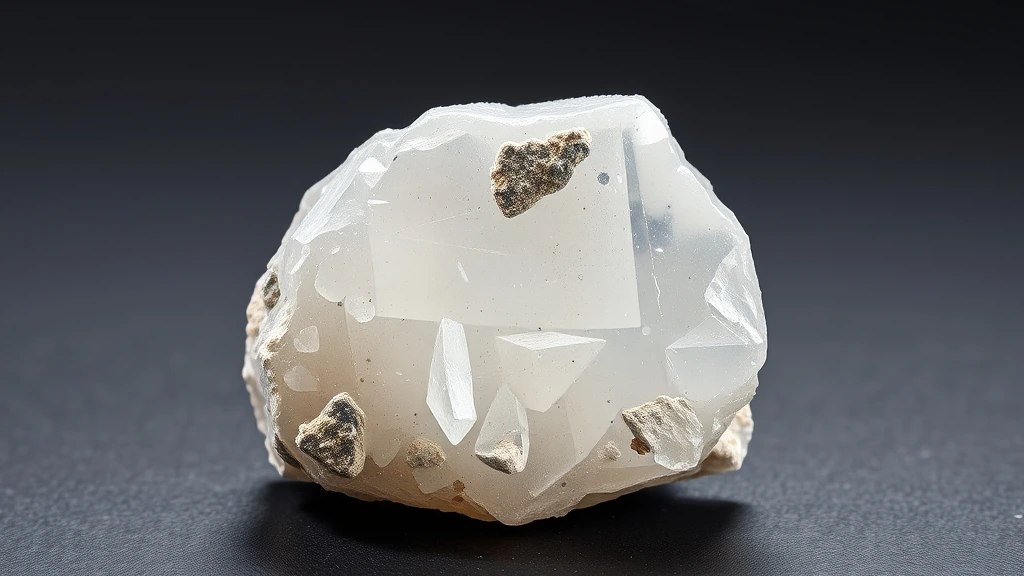
Skeletal quartz belongs to the vast silicate mineral family, specifically classified as a tectosilicate. As a member of the quartz group, it shares the fundamental framework of tetrahedrally coordinated silicon and oxygen atoms. This structural arrangement provides the mineral with its characteristic stability and resistance to chemical weathering. The formation of skeletal varieties occurs when crystal growth is interrupted, leaving behind a complex, three-dimensional network.
What is Skeletal Quartz? Geological Overview & Definition
Skeletal quartz forms through a unique crystal growth inhibition process within hydrothermal veins. Instead of solid faces, the mineral develops a hollow, lattice-like architecture resembling a microscopic cage. This morphology results from rapid silica deposition where the crystal outpaces its internal mass accumulation.
Geologists identify this variety by its translucent to transparent appearance and distinct open framework. The internal voids often trap minute fluid inclusions, adding to its visual complexity. Unlike standard quartz, this skeletal structure significantly reduces the stone’s overall density while maintaining its structural integrity.
Skeletal Quartz Chemical Composition & Crystallographic Properties
The mineral crystallizes in the trigonal crystal system, specifically within the rhombohedral or trapezohedral classes. Its unit cell is defined by a hexagonal lattice with specific axial ratios. This crystallographic symmetry dictates the characteristic six-sided prisms and pyramidal terminations observed in well-formed specimens.
Chemically, the structure relies on a rigid SiO₄ tetrahedral network without significant cation substitution. The refractive index ranges from 1.544 to 1.553, contributing to its moderate brilliance. The specific gravity remains consistent at 2.65, reflecting the dense packing of its atomic framework.
Color variations in skeletal quartz are typically driven by trace element impurities or lattice defects. These chromophore centers absorb specific wavelengths of light, producing subtle tints. The mineral exhibits isotropic thermal behavior in its optical properties, remaining stable under standard heating conditions.
The stone demonstrates high chemical inertness and resistance to most acids. However, prolonged exposure to strong alkalis can slowly degrade the silica bonds. This durability makes it suitable for permanent jewelry settings without risk of surface erosion.
| Property | Specification |
|---|---|
| Mineral Group | Silicates (Tectosilicates / Quartz Group) |
| Chemical Formula | SiO₂ (Silicon Dioxide) |
| Mohs Hardness | 7.0 |
| Crystal System | Trigonal (Rhombohedral / Trapezohedral) |
| Specific Gravity (Density) | 2.65 |
| Refractive Index | 1.544 – 1.553 |
| Color & Optical Properties | Natural Skeletal Quartz color spectrum and optical dispersion |
| Primary Mining Localities | Brazil, Madagascar, USA (Arkansas), Swiss Alps |
| Water & Chemical Resistance | High (Fully resistant to water and moisture) |
| Chakra Alignment (Traditional) | All Chakras (Universal Harmonizer) |
| Zodiac Affinity (Traditional) | All Zodiac Signs (Especially Leo and Aries) |
| Symbolic Meaning (Traditional) | Master energy amplifier, clarity, purification, and focus |
Skeletal Quartz Varieties & Color Spectrum
Skeletal Quartz displays distinct mineralogical characteristics across its geological varieties and structural habits. Gemologists evaluate these natural varieties based on crystal habit, trace chromophore concentrations, and visual luster.
Primary Natural Skeletal Quartz
The benchmark natural variety exhibiting diagnostic color saturation and classic crystallographic symmetry.
Distinct Geological Morphs of Skeletal Quartz
Secondary regional and structural varieties formed under localized geological temperature and pressure conditions.
Phantoms (Quartz Phantoms)
Formed when successive crystal generations overgrow earlier ones, phantom quartz displays translucent silhouettes of former growth stages. Thin, ghostly outlines of the original crystal are trapped within the newer matrix, often highlighted by milky inclusions. These specimens are prized for their visual narrative and occur most frequently in Brazil’s Minas Gerais pegmatites, where slow cooling preserves delicate growth layers. Rarity is moderate; high‑quality phantoms with clear, concentric outlines command premium prices.
Cactus Quartz (Cactus‑like Inclusions)
Cactus quartz develops when mineral‑rich fluids precipitate acicular rutile or tourmaline needles that radiate from a central point, resembling spiny cactus arms. The needles are typically golden‑brown to deep black, set against a clear to smoky quartz host. This morphology is characteristic of deposits in Madagascar’s Antsirabe region, where tectonic fracturing channels fluid flow. Large, well‑defined “cactus” clusters are uncommon and highly sought after by collectors.
Frosted Quartz (Apatite‑Veiled Frost)
In frosted quartz, a fine veil of microscopic apatite crystals coats the surface, scattering light to produce a soft, opalescent sheen. The underlying quartz remains transparent, but the veil imparts a pastel‑hued, almost ethereal appearance. This variety is most abundant in the high‑altitude pegmatites of the Russian Urals, where low‑temperature hydrothermal activity encourages apatite precipitation. The subtlety of the frost makes exceptional specimens relatively scarce.
Skeletal Quartz (Lattice‑Like Porosity)
Skeletal quartz exhibits a network of interstitial voids where crystal growth halted, leaving a lace‑like framework of silica. The voids are often filled with air or fluid inclusions, giving the stone a delicate, airy texture visible under magnification. Prominent occurrences are reported from the quartz veins of the United States’ Arkansas Ozarks, where episodic cooling created interrupted growth. Because the skeletal architecture is fragile, high‑quality pieces are limited and prized for their unique translucency.
Rainbow Quartz (Multichromatic Inclusions)
Rainbow quartz contains multicolored mineral inclusions—commonly hematite, goethite, and rutile—that diffract light into a spectrum of hues. The inclusions form thin, parallel bands that intersect the host crystal, producing a vibrant, rainbow‑like effect. This variety is chiefly mined in the Zambian Copperbelt, where oxidative weathering introduces iron oxides into quartz veins. The vivid coloration and rarity of well‑ordered banding make rainbow quartz a collector’s favorite.
Smoky Skeletal Quartz (Carbon‑Infused Porosity)
When organic carbon permeates the skeletal framework, the quartz adopts a smoky hue while retaining its porous lattice. The carbon particles settle within the voids, darkening the stone without obscuring its skeletal pattern. Notable deposits are found in the Kalahari region of South Africa, where ancient peat layers interacted with quartz-bearing fissures. The combination of deep coloration and skeletal texture is uncommon, rendering these specimens especially desirable.
Where is Skeletal Quartz Found? Geological Mining & Extraction
Skeletal quartz typically crystallizes in pegmatitic veins that cut through granitic host rocks, where rapid fluctuations in temperature and pressure interrupt silica deposition. The resulting porous framework is often intergrown with mica, feldspar, and tourmaline, requiring careful hand‑sorting to separate the delicate skeletal fragments from the surrounding matrix. Major mining districts include the Arkansas Ozarks (USA), the Kalahari Basin (South Africa), and the Urals (Russia), each offering distinct inclusion patterns linked to local fluid chemistry.
Extraction relies on low‑impact techniques such as selective channel mining and manual picking, because the fragile lattice can fracture under heavy equipment. Workers use fine‑toothed sieves and water‑flotation methods to isolate the lightweight skeletal pieces, then employ hand‑polishing to reveal the internal voids without compromising structural integrity. These practices preserve both the scientific value and the aesthetic appeal of the gemstones for gemological markets.
Historical Significance & Cultural Lore of Skeletal Quartz
Across ancient lapidary traditions, skeletal quartz was revered for its transparent lattice, symbolizing the unseen pathways of the spirit world. In Greco‑Roman texts, philosophers described the stone as a “crystalline skeleton of the heavens,” attributing to it the power to clarify thought and amplify intellectual pursuits. Egyptian tomb inventories from the New Kingdom list finely carved quartz lattices, suggesting ceremonial use as amulets for protection against chaos.
In early Chinese Daoist alchemy, skeletal quartz featured in talismans intended to purify qi and focus meditative energy, while Vedic scriptures reference quartz with porous structure as a conduit for divine illumination. Throughout these cultures, the stone’s ability to refract light through its delicate framework reinforced its reputation as a universal harmonizer, aligning with all chakras and zodiac signs in esoteric practice.
Modern Uses & Jewelry Applications of Skeletal Quartz
Skeletal quartz is prized for its delicate lattice of crystal arms that catch light like a natural filigree, making it a favorite for both high‑end and artisanal pieces. Lapidary artists often preserve the open framework while shaping the stone into cabochon or faceted forms, allowing the internal voids to enhance sparkle. Ornamental carving can accentuate the skeletal network, producing pendants, earrings, and brooches that double as miniature sculptures.
- Cabochon pendants that showcase the airy structure
- Faceted rings where each facet highlights the crystal’s translucence
- Carved beads and charms used in beaded necklaces or bracelets
- Decorative art objects such as crystal clusters for interior design
Metaphysical Properties & Traditional Meaning of Skeletal Quartz
According to historical traditions and metaphysical lore, skeletal quartz is regarded as a master energy amplifier, capable of clarifying thought and purifying the aura. Across ancient Mediterranean lapidary practices, the stone was placed in temples to focus sunlight, symbolizing divine illumination. Vedic texts describe quartz as a conduit for inner clarity, helping seekers align with higher consciousness while grounding emotional turbulence.
Which Chakra and Zodiac Signs Align with Skeletal Quartz?
In universal chakra systems, skeletal quartz resonates with all chakras, acting as a universal harmonizer that balances the root through the crown. Practitioners report that its vibrational frequency can synchronize the entire energy field, fostering holistic well‑being and heightened intuition.
Astrologically, skeletal quartz is linked to all zodiac signs, with a special affinity for Leo and Aries. These fire signs are said to benefit from the stone’s amplifying power, which supports courage, leadership, and the confident expression of personal truth.
How to Identify Real vs. Fake Skeletal Quartz
Artificial imitations of skeletal quartz include high‑refractive glass, resin composites, and dyed quartz that mimics the skeletal pattern. Synthetic glass often lacks the subtle internal voids and displays a uniform sheen, while dyed replicas may show uneven coloration under close inspection. Recognizing these differences helps collectors avoid costly misidentifications.
Practical At-Home Authenticity Tests
- Temperature Test (Thermal Feel): Genuine quartz feels cool to the touch and retains that coolness longer than glass, which quickly warms to skin temperature.
- Specific Gravity & Weight Test: Real skeletal quartz has a density around 2.65 g/cm³; a simple water displacement test will reveal a lighter weight than glass or resin equivalents.
- Scratch & Hardness Test (Mohs Comparison): Using a steel file (hardness ~5.5) will leave a faint mark on glass but not on quartz, which rates 7 on the Mohs scale.
- Microscopic & Loupe Inspection (Internal Inclusions): Under 10× magnification, authentic skeletal quartz shows natural crystal arms and microscopic fissures, whereas synthetic glass appears uniformly smooth with no internal structure.
Skeletal Quartz Valuation Factors, Grading & Pricing
The primary driver of market price is color saturation. Deep, vivid hues that display a uniform internal glow are prized, while pale or uneven tones reduce value. Collectors also consider the natural energetic luster that appears when light penetrates the skeletal framework, as it signals minimal alteration and high visual impact.
Crystal size & weight (grams) form the second pricing tier. Larger specimens that weigh more grams command higher fees, especially when the skeletal network remains intact and free of major fractures. A raw, unpolished piece may fetch a premium for its natural texture, whereas a tumbled, high‑polish finish adds a modest surcharge for enhanced surface brilliance.
The third factor is ethical sourcing & locality premium. Stones harvested from responsibly managed mines, with documented provenance, attract collectors who value sustainability and cultural respect. Regions known for historic quartz formations can add a geographic premium, and transparent supply chains often justify higher prices in both holistic and investment markets.
How to Clean and Care for Skeletal Quartz
Skeletal Quartz tolerates moisture well, allowing safe cleaning with warm water and a mild soap solution. Gently immerse the piece for a few seconds, then use a soft brush or cloth to remove surface debris before rinsing with lukewarm water. If the specimen shows no significant fractures, it can also be placed in an ultrasonic cleaner set to a low‑intensity cycle for a brief period.
After cleaning, pat the stone dry with a clean, lint‑free microfiber cloth and store it in a low‑humidity environment to prevent any mineral staining. Avoid exposing the crystal to harsh chemicals, abrasive pads, or prolonged soaking, as these can dull the natural luster and compromise delicate skeletal structures.
Cleansing and Recharging Skeletal Quartz (Energetic Care)
For energetic renewal, a brief session of herbal smudging with sage or cedar can be performed, allowing the gentle smoke to pass over the crystal without direct contact. This method clears residual energetic clutter while respecting the mineral’s physical integrity, and a single five‑minute pass is sufficient for most pieces.
Alternatively, place the quartz on a clean selenite charging slab or expose it to soft moonlight for an hour or two. Both approaches infuse the stone with subtle, non‑thermal energy, supporting its role as a universal harmonizer without risking thermal shock or lattice damage.
Frequently Asked Questions About Skeletal Quartz
Skeletal Quartz displays distinct mineralogical characteristics across its geological varieties and structural habits. Gemologists evaluate these natural varieties based on crystal habit, trace chromophore concentrations, and visual luster.
Primary Natural Skeletal Quartz
The benchmark natural variety exhibiting diagnostic color saturation and classic crystallographic symmetry.
Distinct Geological Morphs of Skeletal Quartz
Secondary regional and structural varieties formed under localized geological temperature and pressure conditions.
What is Skeletal Quartz and how does it form?
Skeletal Quartz is a translucent, fibrous variety of quartz that displays a skeletal or lattice-like pattern. It forms when silica-rich fluids crystallize in fractures or cavities, leaving a network of interlocking crystals that resemble a skeleton. This unique structure gives it a distinctive, almost ethereal appearance prized in jewelry and decorative objects.
Is Skeletal Quartz safe to wear in the shower or around water?
Yes, Skeletal Quartz is fully resistant to water and moisture. Its chemical stability as SiO₂ ensures it does not dissolve or degrade when exposed to rain, steam, or daily shower use. This makes it an excellent choice for everyday wear or for use in humid environments without fear of damage.
How should I clean my Skeletal Quartz jewelry to keep it looking bright?
Use warm water and mild soap, or an ultrasonic cleaner if the stone is not heavily fractured. Gently rinse and pat dry with a soft cloth. Avoid harsh chemicals or abrasive tools, as these can dull the surface or damage delicate facets. Regular cleaning preserves its clarity and the brilliance of its skeletal pattern.
Can I use an ultrasonic cleaner on Skeletal Quartz?
Yes, Skeletal Quartz can be cleaned with an ultrasonic cleaner. The ultrasonic waves help remove surface grime without harming the stone, provided it is not heavily fractured. Always test a small area first and use a mild detergent to ensure optimal results.
Which zodiac signs are most associated with Skeletal Quartz?
All Zodiac Signs are aligned with Skeletal Quartz, especially Leo and Aries. In metaphysical traditions, the stone is believed to support leadership, courage, and vitality—qualities traditionally linked to these fire signs. Its universal appeal makes it suitable for any astrological profile.
Which chakras does Skeletal Quartz influence?
Skeletal Quartz is a universal harmonizer for all chakras. It is believed to cleanse and balance each energy center, promoting clarity and focus throughout the body. Its gentle vibrational energy supports overall spiritual well‑being without targeting a specific chakra.
Does Skeletal Quartz have any special metaphysical properties?
Skeletal Quartz is known as a master energy amplifier, clarity enhancer, and focus booster. Practitioners use it to amplify intentions, purify thoughts, and sharpen concentration. Its crystalline structure is thought to channel and amplify subtle energies, making it a favorite in meditation and ritual practices.
Is Skeletal Quartz durable enough for everyday wear?
Yes, Skeletal Quartz is durable with a Mohs hardness of 7.0. This hardness level protects it against scratches from common metals and everyday wear. While it is sturdy, handling with care and avoiding impact with hard objects will preserve its intricate skeletal pattern for years.