
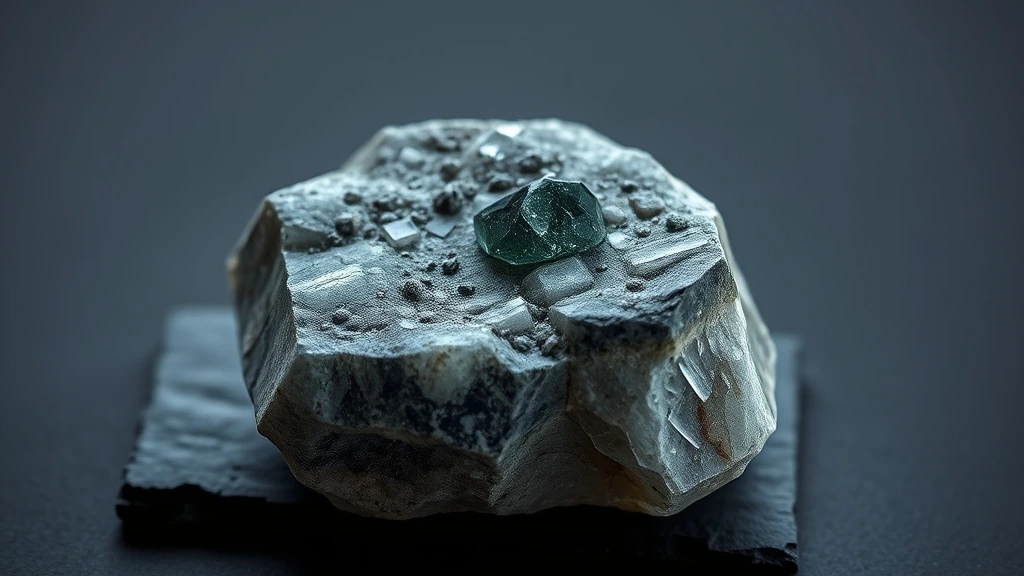
Tourmalinated quartz belongs to the tectosilicate subclass of silicates, specifically within the quartz group. This classification reflects its framework structure of silicon-oxygen tetrahedra. The stone forms through hydrothermal processes where tourmaline crystals precipitate within growing quartz veins. Its geological origin ties it to granitic and pegmatitic environments.
What is Tourmalinated Quartz? Geological Overview & Definition
Tourmalinated quartz is defined by inclusion-rich quartz crystals containing visible tourmaline needles or clusters. These inclusions create a distinctive “garden” or “drusy” appearance within the transparent host. The host quartz provides structural integrity and optical clarity. In comparative mineralogical collections, practitioners and geologists frequently study Faden Quartz alongside this crystal to appreciate their subtle energetic and structural differences.
The tourmaline inclusions often display pleochroism, showing different colors when viewed from various angles. Common inclusion colors include black, green, and brown. This multi-mineral specimen is prized for its complex internal geometry. It serves as a key indicator of specific magmatic conditions. In comparative mineralogical collections, practitioners and geologists frequently study Gem Silica alongside this crystal to appreciate their subtle energetic and structural differences.
Tourmalinated Quartz Chemical Composition & Crystallographic Properties
The host quartz crystallizes in the trigonal system, specifically rhombohedral or trapezohedral forms. Its lattice consists of a three-dimensional network of SiO₄ tetrahedra. This structure lacks true hexagonal symmetry, distinguishing it from high-temperature quartz. The unit cell parameters reflect this specific trigonal distortion.
Tourmaline inclusions possess a complex borosilicate chemistry with variable cation sites. Elements like aluminum, iron, and manganese substitute within the tourmaline structure. These substitutions act as chromophores, determining the inclusion’s specific hue. The quartz host remains chemically pure SiO₂.
The quartz matrix is highly resistant to acid etching and chemical weathering. It exhibits no significant thermal expansion anisotropy compared to its inclusions. This differential thermal behavior can induce internal stress. Proper cutting minimizes the risk of fracture along inclusion boundaries.
| Property | Specification |
|---|---|
| Mineral Group | Silicates (Tectosilicates / Quartz Group) |
| Chemical Formula | SiO₂ (Silicon Dioxide) |
| Mohs Hardness | 7.0 |
| Crystal System | Trigonal (Rhombohedral / Trapezohedral) |
| Specific Gravity (Density) | 2.65 |
| Refractive Index | 1.544 – 1.553 |
| Color & Optical Properties | Natural Tourmalinated Quartz color spectrum and optical dispersion |
| Primary Mining Localities | Brazil, Madagascar, USA (Arkansas), Swiss Alps |
| Water & Chemical Resistance | High (Fully resistant to water and moisture) |
| Chakra Alignment (Traditional) | All Chakras (Universal Harmonizer) |
| Zodiac Affinity (Traditional) | All Zodiac Signs (Especially Leo and Aries) |
| Symbolic Meaning (Traditional) | Master energy amplifier, clarity, purification, and focus |
Tourmalinated Quartz Varieties & Color Spectrum
Tourmalinated Quartz displays distinct mineralogical characteristics across its geological varieties and structural habits. Gemologists evaluate these natural varieties based on crystal habit, trace chromophore concentrations, and visual luster.
Primary Natural Tourmalinated Quartz
The benchmark natural variety exhibiting diagnostic color saturation and classic crystallographic symmetry.
Distinct Geological Morphs of Tourmalinated Quartz
Secondary regional and structural varieties formed under localized geological temperature and pressure conditions.
Pink Tourmalinated Quartz (Pink Tourmaline Quartz)
Pink tourmalinated quartz forms when tourmaline crystals grow within quartz veins, often in pegmatitic environments. The pink hue ranges from blush to deep rose, with occasional tourmaline inclusions that give a subtle sparkle. These stones are prized for their delicate color and are relatively rare in commercial markets, especially those sourced from the Brazilian and Australian regions.
Green Tourmalinated Quartz (Green Tourmaline Quartz)
Green tourmalinated quartz exhibits a muted olive to emerald tone, produced by chromium or vanadium impurities within the tourmaline inclusions. The green color is often accompanied by banded inclusions that create a distinctive visual contrast. This variety is most commonly found in South African and Sri Lankan deposits, where it remains a sought-after but limited commodity.
Black Tourmalinated Quartz (Black Tourmaline Quartz)
Black tourmalinated quartz derives its deep color from bismuth or lead-rich tourmaline inclusions. The resulting stone has a dramatic, almost opaque appearance, with occasional flame-like inclusions that enhance its mystique. Although found in Alaska and Canada, black tourmalinated quartz is considered a niche product due to its scarcity and the difficulty of extracting clear specimens.
Yellow Tourmalinated Quartz (Yellow Tourmaline Quartz)
Yellow tourmalinated quartz is characterized by a bright, buttery yellow tone, typically caused by manganese or iron within the tourmaline. The inclusions often form a fine-grained pattern that gives the stone a subtle sheen. This variety is most prevalent in Myanmar and Thailand, where it is valued for its vibrant color and relative abundance.
Blue Tourmalinated Quartz (Blue Tourmaline Quartz)
Blue tourmalinated quartz displays a cool, sky-blue hue, resulting from boron and magnesium impurities in the tourmaline. The blue tones are frequently enhanced by light refraction through the quartz matrix, creating a gentle glow. Blue tourmalinated quartz is typically sourced from Brazil and India, where it is moderately common but still prized for its serene color.
Orange Tourmalinated Quartz (Orange Tourmaline Quartz)
Orange tourmalinated quartz showcases a warm, tangerine shade, produced by iron or chromium inclusions. The stone often contains banded or speckled inclusions that add depth to its appearance. This variety is mainly found in Australia and South Africa, where it is considered a specialty item due to its limited supply.
Where is Tourmalinated Quartz Found? Geological Mining & Extraction
Tourmalinated quartz typically occurs in pegmatitic granitic formations, where slow cooling allows large quartz and tourmaline crystals to develop. The quartz matrix hosts the tourmaline inclusions, which form during the late stages of crystallization when the melt becomes enriched in boron and other trace elements.
Major extraction sites include the Brazilian Minas Gerais region, the South African Witwatersrand Basin, and the Australian Pilbara province. These areas provide the ideal combination of quartz-rich pegmatites and tourmaline-bearing veins, resulting in high-quality tourmalinated quartz specimens that are highly sought after by collectors and jewelers alike.
Historical Significance & Cultural Lore of Tourmalinated Quartz
Across ancient lapidary traditions, tourmalinated quartz has been revered for its purported metaphysical properties. In Greco-Roman culture, it was believed to protect against envy and promote clarity of thought, while Egyptian artisans incorporated it into amulets for its supposed protective qualities against the Eye of Horus. Chinese texts from the Han dynasty reference the stone as a symbol of balance and harmony, often used in ceremonial jewelry.
In Vedic lore, tourmalinated quartz was associated with the fire element, believed to enhance spiritual focus and purification. Archaeological findings from the Indus Valley and Mesopotamia reveal the use of tourmalinated quartz in decorative artifacts, underscoring its long-standing cultural significance across diverse civilizations.
Modern Uses & Jewelry Applications of Tourmalinated Quartz
Lapidaries prize tourmalinated quartz for its unique internal inclusions, which create a striking visual depth that standard clear quartz lacks. The Mohs hardness of 7.0 ensures the material withstands daily wear without significant scratching, making it ideal for rings and bracelets. Skilled cutters often preserve the natural orientation of the tourmaline needles to maximize the “inclusion effect” within the stone.
- Faceted Cuts: Standard brilliant or step cuts are used to enhance the refractive index (1.544 – 1.553), allowing light to interact with the internal fibers.
- Cabochon Polishing: Smooth, dome-shaped cuts are popular for showcasing the three-dimensional arrangement of the dark tourmaline needles.
- Ornamental Carving: Larger crystals are frequently carved into pendants or decorative objects, where the contrast between the clear matrix and inclusions serves as the primary aesthetic feature.
Metaphysical Properties & Traditional Meaning of Tourmalinated Quartz
According to historical traditions and metaphysical lore, tourmalinated quartz is revered as a Master energy amplifier that bridges the gap between physical and spiritual realms. Ancient Mediterranean and Vedic texts often associated clear quartz with purity, while the embedded tourmaline added a grounding, protective element. Practitioners believe the stone facilitates deep clarity and purification, helping to dissolve mental fog and emotional stagnation.
In contemporary spiritual practice, this gemstone is viewed as a tool for intense focus and energetic cleansing. The combination of the host mineral and the inclusion is thought to create a synergistic effect, enhancing the wearer’s ability to maintain focus during meditation. It is frequently recommended for individuals seeking to align their personal energy with universal frequencies.
Which Chakra and Zodiac Signs Align with Tourmalinated Quartz?
Tourmalinated quartz is universally recognized as a Universal Harmonizer, meaning it resonates with all seven chakras simultaneously. This broad energetic spectrum allows the stone to balance the entire chakra system rather than targeting a single center. Its ability to amplify energy makes it particularly effective for unblocking stagnant energy flow throughout the body.
Astrologically, the stone aligns with All Zodiac Signs, offering general benefits to anyone wearing it. However, it shows a specific affinity for Leo and Aries, whose fiery natures benefit from the stone’s capacity to stabilize and focus intense creative and leadership energies. This alignment helps these signs channel their power constructively without burning out.
How to Identify Real vs. Fake Tourmalinated Quartz
Artificial imitations of tourmalinated quartz are increasingly common, often crafted from synthetic glass or dyed resin to mimic the appearance of natural inclusions. These fakes may look convincing to the untrained eye, but they lack the geological complexity and physical properties of the genuine article. Understanding the differences in specific gravity and thermal conductivity is essential for distinguishing real specimens from manufactured replicas.
Practical At-Home Authenticity Tests
- Temperature Test (Thermal Feel): Hold the stone in your palm for a few seconds; genuine quartz feels cool to the touch initially, while plastic or resin imitations warm up quickly.
- Specific Gravity & Weight Test: Compare the stone to a similarly sized piece of clear quartz; real tourmalinated quartz has a density of 2.65, making it feel slightly heavier than many glass imitations.
- Scratch & Hardness Test (Mohs Comparison): Attempt to scratch the stone with a steel knife (Mohs 5.5); genuine quartz, with a Mohs hardness of 7.0, will not be scratched, whereas glass or resin may show marks.
- Microscopic & Loupe Inspection (Internal Inclusions): Examine the inclusions with a 10x loupe; natural tourmaline needles appear as distinct, sharp-edged crystals, while synthetic inclusions often look like bubbles or irregular, cloudy swirls.
Tourmalinated Quartz Valuation Factors, Grading & Pricing
Market value is primarily driven by Color Saturation and the visual vibrancy of the embedded tourmaline needles. High-grade specimens exhibit deep, contrasting hues that create a striking “snowstorm” effect within the clear quartz host. The natural energetic luster of the surface further enhances aesthetic appeal for collectors.
Valuation also depends on Crystal Size & Weight (Grams), with larger dimensions commanding higher premiums. Raw specimens are assessed by their natural matrix inclusions, while tumbled stones are graded on polish quality. Buyers prioritize dimensional integrity over faceting, as these stones are rarely cut into traditional gem shapes.
Ethical Sourcing & Locality Premium significantly influences pricing in holistic and collector markets. Provenance from reputable mines ensures transparency and supports sustainable mining practices. Specific localities with historical significance often carry a premium due to their unique geological characteristics and rarity.
How to Clean and Care for Tourmalinated Quartz
Tourmalinated quartz is fully resistant to water and moisture, allowing for easy maintenance with warm water and mild soap. Gently scrub the surface to remove oils and dust without damaging the delicate internal inclusions. This method preserves the stone’s natural luster and clarity effectively.
The stone is suitable for ultrasonic cleaning unless it is heavily fractured or contains significant internal stress. Avoid ultrasonic baths for specimens with visible cracks to prevent further propagation of fractures. Always inspect the piece thoroughly before subjecting it to high-frequency vibrations.
Cleansing and Recharging Tourmalinated Quartz (Energetic Care)
Holistic practitioners often use herbal smudging with sage or palo santo to clear energetic residues from the stone. Hold the specimen in the smoke for a few minutes while setting a clear intention for purification. This dry method avoids any risk of moisture damage to the crystal structure.
Alternatively, place the quartz on a selenite charging slab or expose it to gentle moonlight overnight. These methods allow the stone to absorb ambient energy without the risk of thermal shock. Avoid direct intense sunlight, as prolonged exposure can potentially alter the color of certain tourmaline inclusions.
Frequently Asked Questions About Tourmalinated Quartz
Tourmalinated Quartz displays distinct mineralogical characteristics across its geological varieties and structural habits. Gemologists evaluate these natural varieties based on crystal habit, trace chromophore concentrations, and visual luster.
Primary Natural Tourmalinated Quartz
The benchmark natural variety exhibiting diagnostic color saturation and classic crystallographic symmetry.
Distinct Geological Morphs of Tourmalinated Quartz
Secondary regional and structural varieties formed under localized geological temperature and pressure conditions.
What is tourmalinated quartz and how does it differ from regular quartz?
Tourmalinated quartz is quartz that contains inclusions of tourmaline crystals, giving it a distinctive speckled or mottled appearance. The chemical formula remains SiO₂, but the embedded tourmaline adds color variations and a subtle sparkle, enhancing its aesthetic and metaphysical appeal.
Is tourmalinated quartz safe to wear in the shower or during swimming?
Yes, tourmalinated quartz is fully resistant to water and moisture. Its density of 2.65 and robust crystal structure make it impervious to water damage, allowing it to be worn in wet environments without risk of degradation.
How should I clean a tourmalinated quartz?
Clean it with warm water and mild soap, or use an ultrasonic cleaner if the stone is not heavily fractured. A gentle rinse followed by a dry microfiber cloth preserves the stone’s luster while removing surface oils, ensuring long‑term brilliance.
Can I use an ultrasonic cleaner on a heavily fractured tourmalinated quartz?
Only if the fractures are minor; heavily fractured pieces may crack further. Ultrasonic cleaning is safe for intact or lightly fractured stones, but caution is advised to avoid exacerbating existing fissures.
Does tourmalinated quartz have any special metaphysical properties related to chakras?
It is considered a universal harmonizer, aligning all chakras. The stone’s balanced energy is said to promote clarity, purification, and focus, making it a popular choice for meditation and energy work across traditions.
Which zodiac signs are most associated with tourmalinated quartz?
All zodiac signs are linked, with particular emphasis on Leo and Aries. The stone’s vibrant energy resonates with the dynamic traits of these signs, enhancing confidence and vitality in those born under them.
Is tourmalinated quartz suitable for jewelry that will be exposed to sunlight or heat?
Yes, it is stable under normal sunlight and heat exposure. Quartz’s high thermal conductivity and resistance to weathering ensure that tourmalinated quartz retains its color and structural integrity over time.
Can I use tourmalinated quartz in a humid climate without fearing damage?
Absolutely, it remains unaffected by humidity. Its high water resistance protects it from moisture, making it ideal for use in tropical or damp environments without risk of surface alteration.