
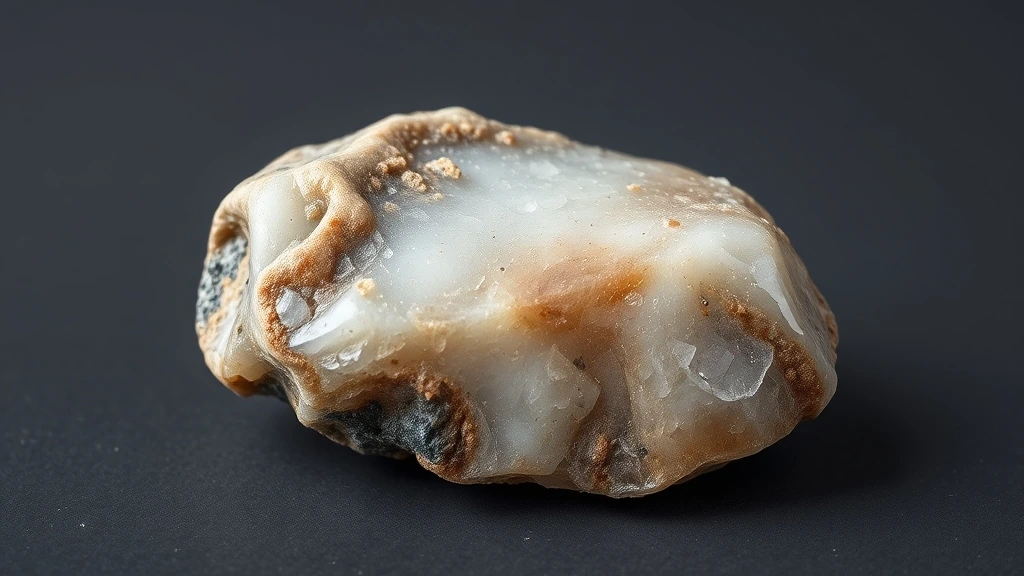
Truffle Chalcedony belongs to the extensive quartz mineral group, specifically classified as a natural crystal aggregate. It forms through the slow precipitation of silica-rich solutions within sedimentary or volcanic host rocks. This geological process creates intricate, bulbous structures resembling truffles, distinguishing it from standard chalcedony. As a natural mineral, it lacks the macroscopic crystal faces typical of single-crystal quartz. Instead, it consists of microscopic interlocking grains that produce a waxy to vitreous luster.
What is Truffle Chalcedony? Geological Overview & Definition
Truffle Chalcedony is a specific variety of chalcedony, characterized by its unique nodular or bulbous growth habit. These formations often appear as clustered, irregular masses embedded in a matrix of jasper or agate. The term “truffle” refers to the stone’s resemblance to edible fungi, a visual trait highly valued in lapidary arts.
Geologically, this stone forms in hydrothermal veins where silica-saturated fluids cool and precipitate. The cryptocrystalline structure results from rapid crystallization, preventing the development of large, visible crystals. This fine-grained texture contributes to the stone’s characteristic opacity and smooth tactile surface. In comparative mineralogical collections, practitioners and geologists frequently study K2 Jasper alongside this crystal to appreciate their subtle energetic and structural differences.
Truffle Chalcedony Chemical Composition & Crystallographic Properties
The fundamental building block of Truffle Chalcedony is silicon dioxide, arranged in a trigonal crystal system. Although the individual grains are microscopic, their collective orientation follows the alpha-quartz lattice structure. This trigonal symmetry dictates the stone’s physical properties, including its piezoelectric potential. The lattice consists of tetrahedra linked by shared oxygen atoms, creating a robust three-dimensional framework. In comparative mineralogical collections, practitioners and geologists frequently study Jaspillite alongside this crystal to appreciate their subtle energetic and structural differences.
Color variations in this stone arise from trace impurities and chromophore centers within the silica matrix. Iron oxides typically produce the earthy browns and tans associated with truffle varieties. These color centers remain stable under normal ambient conditions, ensuring the stone retains its aesthetic appeal over time.
The material exhibits high resistance to most acids, though prolonged exposure to strong alkalis can degrade the surface. Thermal behavior is stable within standard jewelry temperatures, but rapid thermal shock may cause fracturing. This durability makes it suitable for faceting and carving without significant risk of chemical alteration.
| Property | Specification |
|---|---|
| Mineral Group | Natural Mineral / Crystal |
| Chemical Formula | SiO₂ |
| Mohs Hardness | 6.5 – 7.0 |
| Crystal System | Trigonal |
| Color & Optical Properties | Natural Truffle Chalcedony color spectrum and optical dispersion |
| Primary Mining Localities | Global primary localities |
| Water & Chemical Resistance | High (Safe for gentle water washing) |
| Chakra Alignment (Traditional) | Third Eye Chakra (Ajna) |
| Zodiac Affinity (Traditional) | Taurus, Libra |
| Symbolic Meaning (Traditional) | Emotional balance, compassion and inner peace |
Truffle Chalcedony Varieties & Color Spectrum
Truffle Chalcedony displays distinct mineralogical characteristics across its geological varieties and structural habits. Gemologists evaluate these natural varieties based on crystal habit, trace chromophore concentrations, and visual luster.
Primary Natural Truffle Chalcedony
The benchmark natural variety exhibiting diagnostic color saturation and classic crystallographic symmetry.
Distinct Geological Morphs of Truffle Chalcedony
Secondary regional and structural varieties formed under localized geological temperature and pressure conditions.
Ivory Truffle
Formed in silica‑rich volcanic ash layers, Ivory Truffle chalcedony displays a milky translucent base intersected by creamy‑white cloud‑like patterns. Minute cryptocrystalline quartz intergrowths create a soft glow when back‑lit, and the stone is most commonly sourced from the river gravels of Brazil’s Minas Gerais. Its rarity stems from the narrow window of temperature (≈ 350 °C) and pH conditions required for the characteristic veining to develop.
Rose‑Blush Truffle
Rose‑Blush Truffle originates in sedimentary basins where iron oxides diffuse into the chalcedony matrix, imparting a delicate pink‑peach hue. The Fe³⁺ chromophore produces a subtle blush that deepens with exposure to natural light, while microscopic rutile needles add a faint silky sheen. Primary deposits occur in the Kashmir region of India, where the stone’s gentle coloration is prized for high‑end jewelry, though limited outcrops make it a collector’s item.
Midnight Truffle
Midnight Truffle is distinguished by its deep charcoal background punctuated by fine, iridescent siderite inclusions that catch light like tiny stars. Formed in low‑temperature hydrothermal veins within basaltic host rocks, the stone’s trigonal microcrystalline structure yields a high luster and a unique play of shadow. Significant mining sites are found in the volcanic fields of the Czech Republic, where the mineral’s scarcity and dramatic appearance command premium prices.
Golden‑Vein Truffle
Golden‑Vein Truffle exhibits a warm amber base traversed by bright, honey‑colored calcite veins that crystallize along fracture planes. The stone forms in limestone‑dominated karst systems where silica‑rich fluids precipitate chalcedony around carbonate inclusions. Notable localities include the Yucatán Peninsula of Mexico, where the interplay of calcite and quartz creates a striking contrast prized by both artisans and metaphysical practitioners.
Oceanic Truffle
Oceanic Truffle displays a sea‑foam green to teal coloration derived from trace amounts of nickel and copper within the chalcedony lattice. These transition‑metal impurities generate a subtle chromatic shift when viewed from different angles, reminiscent of ocean water. The variety is chiefly extracted from alluvial deposits in Madagascar’s Ankaratra highlands, where the mineral’s formation is linked to weathered ultramafic rocks, rendering it a relatively rare find on the global market.
Where is Truffle Chalcedony Found? Geological Mining & Extraction
Truffle chalcedony typically occurs in silica‑saturated hydrothermal veins that intersect basaltic or granitic host rocks, where slow cooling allows the formation of fine‑grained cryptocrystalline quartz. In many locales, the stone is recovered from secondary alluvial deposits, where water action concentrates the denser chalcedony nodules within river gravels, facilitating hand‑picking and small‑scale dredging.
Principal extraction regions include Brazil’s Minas Gerais (Ivory and Rose‑Blush varieties), the Kashmir foothills of India (Rose‑Blush), the Czech Republic’s Bohemian Massif (Midnight), Mexico’s Yucatán karst (Golden‑Vein), and Madagascar’s Ankaratra plateau (Oceanic). Mining operations are generally artisanal, employing traditional sluice methods that minimize environmental impact while preserving the delicate inclusions that define each variety.
Historical Significance & Cultural Lore of Truffle Chalcedony
Across ancient lapidary traditions, truffle chalcedony was valued for its soothing palette and subtle inner glow. In Greco‑Roman jewelry, the Ivory and Rose‑Blush forms adorned amulets believed to promote emotional equilibrium, while Egyptian scarabs occasionally incorporated the stone to symbolize rebirth and inner peace.
In Vedic texts, the Midnight Truffle was associated with the Ajna (Third Eye) chakra, thought to enhance intuition and meditative focus; Chinese Daoist alchemists prized the Golden‑Vein variant for its purported ability to harmonize yin‑yang energies. Throughout early archaeological records, truffle chalcedony appears in ceremonial seals, ornamental inlays, and trade beads, underscoring its enduring cross‑cultural appeal.
Modern Uses & Jewelry Applications of Truffle Chalcedony
Truffle chalcedony’s creamy, mottled appearance makes it a favorite for cabochon settings, where its subtle translucency can be showcased without the distraction of facets. Artisans also carve the stone into intricate ornamental beads and small sculptures for decorative objects. Its relatively high Mohs hardness (6.5‑7) allows both polished cabochons and modestly faceted pieces to endure daily wear, while its trigonal microstructure resists chipping during fine lapidary work.
- Polished cabochons for rings, pendants, and earrings
- Lightly faceted beads for bracelets and necklaces
- Carved miniatures and intaglios for ornamental display
Metaphysical Properties & Traditional Meaning of Truffle Chalcedony
According to historical traditions and metaphysical lore, truffle chalcedony is associated with emotional balance and the cultivation of inner compassion. Across ancient Mediterranean lapidary records, the stone was believed to soothe agitation, fostering a calm mind that could perceive subtle truths. In Vedic gemstone treatises, it is linked to the Third Eye Chakra (Ajna), encouraging intuitive insight and mental clarity while promoting a sense of inner peace.
Which Chakra and Zodiac Signs Align with Truffle Chalcedony?
The stone’s resonance with the Third Eye Chakra (Ajna) is said to enhance psychic perception and meditative focus, supporting seekers in accessing deeper layers of consciousness. Practitioners report that wearing truffle chalcedony during meditation can sharpen intuition and promote a balanced emotional state.
In astrological correspondence, truffle chalcedony aligns exclusively with Taurus and Libra. Taurus benefits from the stone’s grounding calm, while Libra finds support for harmonious relationships and balanced decision‑making, reflecting the gem’s historic reputation for fostering equilibrium and fairness.
How to Identify Real vs. Fake Truffle Chalcedony
Artificial imitations of truffle chalcedony often include dyed quartz, synthetic glass, or resin composites that mimic its creamy veining. These substitutes lack the stone’s natural silica (SiO₂) lattice and typically display uniform coloration or overly bright hues. Careful visual and tactile examination can reveal inconsistencies that distinguish genuine material from low‑cost replicas.
Practical At-Home Authenticity Tests
- Temperature Test (Thermal Feel): Natural chalcedony feels cool to the touch and retains that coolness longer than glass or plastic, which quickly equilibrate to ambient temperature.
- Specific Gravity & Weight Test: Genuine truffle chalcedony has a specific gravity around 2.60‑2.65; a simple water‑displacement test will show it feels heavier than a similarly sized glass imitation.
- Scratch & Hardness Test (Mohs Comparison): Using a steel nail (hardness ~5.5) will leave no scratch on authentic chalcedony, whereas softer imitations will show visible marks.
- Microscopic & Loupe Inspection (Internal Inclusions): Under 10× magnification, natural chalcedony reveals fine, irregular micro‑inclusions and growth lines, while synthetic glass appears uniformly clear or shows bubble patterns.
Truffle Chalcedony Valuation Factors, Grading & Pricing
Market value is primarily driven by Color Saturation, which determines the stone’s visual appeal and perceived energetic potency. High-grade specimens exhibit deep, uniform brown tones with distinct, well-defined truffle-like inclusions that contrast sharply against the chalcedony base. The natural energetic luster of the polished surface further enhances desirability, as a smooth, glassy finish reflects light effectively and signals superior material quality.
Pricing is strictly determined by Crystal Size & Weight (Grams), with larger, heavier specimens commanding significantly higher premiums in the collector market. Unlike faceted gemstones, truffle chalcedony is valued by its natural matrix inclusions and overall dimension rather than cut precision. The quality of the tumbled polish is critical, as a flawless, rounded surface without chips or cracks indicates careful lapidary work and structural integrity.
Ethical Sourcing & Locality Premium plays a decisive role in holistic and collector markets, where provenance verifies authenticity and responsible extraction practices. Stones from renowned geological regions often carry a price premium due to their documented history and consistent quality profiles. Buyers increasingly prioritize ethical sourcing to ensure that their acquisitions support sustainable mining operations and respect local geological heritage.
How to Clean and Care for Truffle Chalcedony
Truffle chalcedony possesses a Mohs hardness of 6.5 to 7.0, making it durable enough for gentle water exposure during routine maintenance. To preserve the stone’s integrity, immerse it in warm soapy water and use a soft cloth to gently remove accumulated dust and oils. This method effectively cleans the porous surface without causing damage, provided the solution is mild and non-abrasive.
It is essential to avoid ultrasonic cleaners, as the high-frequency vibrations can induce structural fractures within the intricate truffle inclusions. After washing, rinse the specimen thoroughly with clean water and allow it to air dry completely before storage. This careful approach ensures the long-term preservation of both the mineral’s aesthetic qualities and its physical stability.
Cleansing and Recharging Truffle Chalcedony (Energetic Care)
Holistic practitioners often employ herbal smudging with sage or palo santo to clear perceived energetic stagnation from the stone. This dry method involves passing the stone through the aromatic smoke, which is considered safe for the mineral’s crystal lattice structure. Alternatively, placing the specimen on a selenite charging slab allows for passive energy renewal without any physical contact or moisture exposure.
Gentle moonlight exposure is another recommended practice for recharging truffle chalcedony, as it avoids the thermal stress associated with direct sunlight. This method aligns with traditional metaphysical beliefs that lunar energy promotes emotional balance and inner peace. By utilizing these dry, low-impact techniques, collectors can maintain the stone’s metaphysical properties without risking physical degradation to its delicate inclusions.
Frequently Asked Questions About Truffle Chalcedony
Truffle Chalcedony displays distinct mineralogical characteristics across its geological varieties and structural habits. Gemologists evaluate these natural varieties based on crystal habit, trace chromophore concentrations, and visual luster.
Primary Natural Truffle Chalcedony
The benchmark natural variety exhibiting diagnostic color saturation and classic crystallographic symmetry.
Distinct Geological Morphs of Truffle Chalcedony
Secondary regional and structural varieties formed under localized geological temperature and pressure conditions.
What is the chemical composition of truffle chalcedony?
Truffle chalcedony consists entirely of silicon dioxide (SiO₂). This cryptocrystalline quartz variety shares its fundamental chemical structure with agate and jasper. The distinctive “truffle” inclusions arise from secondary mineral deposits trapped during formation. Understanding this SiO₂ base confirms its stability and durability for jewelry.
How hard is truffle chalcedony on the Mohs scale?
It measures between 6.5 and 7.0 on the Mohs hardness scale. This places it firmly in the durable quartz family, making it suitable for daily wear. The Mohs hardness ensures it resists scratching from common dust particles. However, sharp impacts can still cause chipping due to its conchoidal fracture nature.
Can I wear truffle chalcedony in the shower?
Yes, it is safe for gentle water washing. The stone possesses high water resistance, allowing it to withstand incidental exposure to rain or hand washing. It does not dissolve or degrade in moisture like softer minerals. Just avoid prolonged soaking in chlorinated pool water to maintain the surface luster of the stone.
Is ultrasonic cleaning safe for this?
No, you should avoid ultrasonic cleaners entirely. The high-frequency vibrations can cause structural fractures within the intricate inclusions. Instead, use warm soapy water and a soft cloth for maintenance. This gentle approach preserves the integrity of the cryptocrystalline structure without risking internal damage.
Which zodiac signs are aligned with truffle chalcedony?
Taurus and Libra are the primary aligned signs. These earth and air signs resonate with the stone’s grounding and balancing energies. Taurus appreciates its stability, while Libra values its harmonizing properties. This zodiacal alignment makes it a popular choice for personalized jewelry and metaphysical practices.
Which chakra does truffle chalcedony activate?
It specifically activates the Third Eye Chakra (Ajna). This energy center governs intuition, insight, and mental clarity. The stone supports emotional balance and inner peace during meditation. Focusing on the Ajna chakra while holding the stone enhances its metaphysical benefits for spiritual seekers.
What is the crystal system of truffle chalcedony?
It belongs to the trigonal crystal system. Although it appears amorphous to the naked eye, its microscopic structure follows trigonal symmetry. This classification distinguishes it from other silica-based minerals. The trigonal system contributes to its unique optical properties and physical resilience.
How should I store truffle chalcedony safely?
Store it in a soft pouch or separate compartment. While durable, the stone can scratch softer gems like opal or pearl. Keep it away from direct sunlight to prevent potential color fading over time. Proper storage protects the surface finish and maintains the stone’s aesthetic appeal for years.