
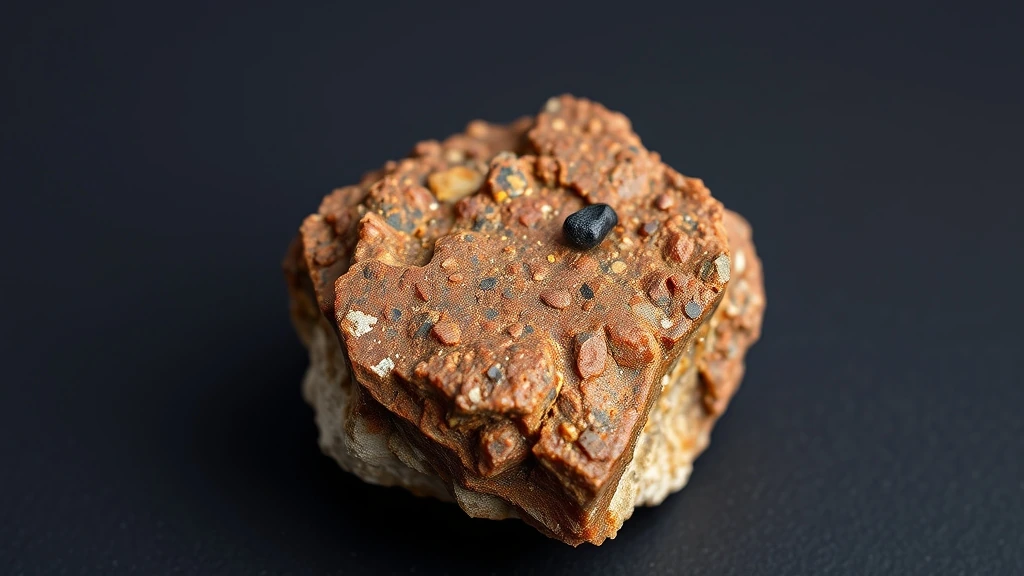
Vanadinite belongs to the natural mineral family, forming as discrete hexagonal crystals in oxidized lead‑bearing ore deposits. It crystallizes in the hexagonal crystal system, often as prismatic or tabular aggregates that replace earlier galena. The mineral is a primary source of vanadium and is prized by collectors for its striking color and well‑defined crystal habit, despite its modest hardness limiting widespread jewelry applications.
What is Vanadinite? Geological Overview & Definition
Vanadinite is a secondary mineral that precipitates in the oxidation zones of lead‑rich veins, where vanadium is mobilized by circulating fluids. It typically occurs alongside minerals such as wulfenite, mimetite, and cerussite, forming bright, barrel‑shaped crystals that can reach several centimeters in length.
The mineral is classified within the natural mineral / crystal group, reflecting its status as a discrete, stoichiometric compound rather than an aggregate or rock. Its formation requires a specific geochemical environment: acidic, oxidizing conditions that leach lead and vanadium from primary sulfides and re‑precipitate them as vanadinite.
Vanadinite Chemical Composition & Crystallographic Properties
The definitive formula Pb₅(VO₄)₃Cl reveals a structure built from lead cations coordinated to vanadate tetrahedra and a single chloride anion per formula unit. The crystal lattice adopts the hexagonal crystal system, with space group P6₃/m, producing six‑fold symmetry and characteristic prismatic terminations.
Within the lattice, lead may be partially substituted by bismuth or calcium, while vanadium can be replaced by arsenic or phosphorus, subtly altering color intensity. The vivid orange hue originates from charge‑transfer transitions between the lead and vanadate groups, acting as the mineral’s chromophore.
Vanadinite is sensitive to strong acids, which dissolve the lead‑vanadate framework, releasing chloride ions and vanadic acid. This reactivity is a diagnostic test in the field, distinguishing it from more acid‑resistant lead minerals.
Thermally, vanadinite is stable up to about 600 °C, beyond which it decomposes, liberating chlorine gas and forming lead oxide and vanadium oxides. The thermal behavior is exploited in laboratory settings to extract vanadium, underscoring the mineral’s industrial relevance.
| Property | Specification |
|---|---|
| Mineral Group | Natural Mineral / Crystal |
| Chemical Formula | Pb₅ (VO₄ )₃ Cl |
| Mohs Hardness | 3–4 |
| Crystal System | Hexagonal crystal system |
| Specific Gravity (Density) | 6.8–7.1 (measured) 6.95 (calculated) |
| Refractive Index | n ω = 2.416, n ε = 2.350 |
| Color & Optical Properties | Natural Vanadinite color spectrum and optical dispersion |
| Primary Mining Localities | Global primary localities |
| Water & Chemical Resistance | High (Safe for gentle water washing) |
| Chakra Alignment (Traditional) | Root Chakra, Sacral Chakra |
| Zodiac Affinity (Traditional) | Capricorn, Virgo |
| Symbolic Meaning (Traditional) | Grounding, stability, and transformation of negative energy |
Vanadinite Varieties & Color Spectrum
Vanadinite exhibits a remarkable range of hues, primarily driven by trace element substitutions within its crystal lattice. The most prized specimens display intense, saturated reds that command high premiums in the collector market.
Classic Red Vanadinite
This variety features the iconic deep crimson to scarlet coloration found in high-purity deposits. The intense hue results from the pure vanadium(V) oxidation state within the Pb₅(VO₄)₃Cl structure.
Specimens from historical Mexican mines often exhibit well-formed hexagonal prisms with minimal inclusions. These crystals are highly sought after for their clarity and vibrant saturation.
Orange-Red Morphs
Slight variations in trace impurities can shift the spectrum toward warmer orange-red tones. These morphs often occur in later-stage hydrothermal veins where fluid chemistry altered.
The refractive index remains consistent, but the visual warmth distinguishes these stones from classic reds. Collectors value these for their unique tonal depth and rarity.
Pinkish Varieties
Rare pinkish specimens arise from specific geochemical conditions during crystal growth. These stones often display a softer, more delicate appearance compared to their red counterparts.
Inclusions of galena or other sulfides may be present, adding textural complexity. These varieties are less common and often found in smaller crystal clusters.
Yellowish Tints
Occasional yellowish tints appear due to minor iron or other transition metal substitutions. This color shift indicates a different geological environment during formation.
These stones are rarer and often exhibit lower saturation. They are valued for their scientific interest rather than gemological brilliance.
Where is Vanadinite Found? Geological Mining & Extraction
Vanadinite typically forms in the oxidized zones of lead-zinc ore deposits. It crystallizes in hydrothermal veins and cavities within carbonate host rocks.
The mineral is strongly associated with lead and zinc mineralization. Its presence indicates specific oxidation-reduction conditions in the ore body.
Historical mining centers include Mexico, China, and the United States. These regions produced the most famous and commercially significant specimens.
Modern extraction focuses on high-quality crystal clusters rather than bulk ore. Careful hand-picking preserves the delicate hexagonal crystal system structures.
Historical Significance & Cultural Lore of Vanadinite
Vanadinite was first described in the early 19th century from Mexican mines. It served as a key mineral in the identification of the element vanadium.
Archaeological evidence suggests limited ancient use due to its Mohs hardness of 3–4. Its softness made it unsuitable for durable tools or jewelry.
Cultural lore often associates it with grounding and stability. These esoteric beliefs align with its deep red color and heavy density.
The mineral remains a significant specimen in mineralogy collections worldwide. Its historical role in elemental discovery ensures its enduring scientific importance.
Modern Uses & Jewelry Applications of Vanadinite
Vanadinite is primarily valued as a collector mineral rather than a durable gemstone due to its softness. Its vibrant red-orange hue makes it popular for ornamental carvings and small pendants. Because it is sensitive to light and heat, it requires careful handling in jewelry settings.
- Cabochon Cutting: Smooth, polished domes are preferred to protect the fragile crystal structure.
- Faceted Jewelry: Rarely faceted due to low Mohs hardness, reserved for small, protective settings.
- Ornamental Carving: Used in decorative boxes and paperweights where mechanical stress is minimal.
Safety & Mineral Profile of Vanadinite
Proper handling is essential because vanadinite contains lead, a toxic heavy metal. Always wear gloves when handling specimens to prevent skin absorption of lead compounds. Store pieces in dark, dry environments to prevent fading and chemical degradation. This mineral is scientifically significant for its crystallography, not for therapeutic use.
- Chemical Stability: Susceptible to oxidation and light-induced color loss over time.
- Identification: Distinguished by its high specific gravity and hexagonal prismatic crystals.
- Collector Value: Prized for scientific study and display rather than crystal healing.
Mineralogical Group and Planetary Lore of Vanadinite
Vanadinite belongs to the apatite group, sharing a similar phosphate structure with other minerals. Its discovery in the 19th century expanded understanding of vanadium’s geological occurrences. The name derives from the element vanadium, which imparts its characteristic red color.
Historical esoteric traditions sometimes associate it with the Root Chakra and earth elements. However, these attributions lack scientific basis and should be viewed with caution. Modern mineralogy prioritizes its structural and chemical properties over metaphysical claims.
How to Identify Real vs. Fake Vanadinite
Artificial imitations often use dyed glass or plastic to mimic vanadinite’s striking red-orange appearance. Synthetic versions may lack the natural inclusions and weight of genuine specimens. Careful examination is required to distinguish authentic minerals from these low-cost replicas.
Practical At-Home Authenticity Tests
- Temperature Test (Thermal Feel): Genuine vanadinite feels cool to the touch initially due to its high thermal conductivity. Glass imitations may warm up faster under prolonged contact.
- Specific Gravity & Weight Test: Real vanadinite is notably heavy for its size, with a density of 6.8–7.1. Glass or plastic replicas will feel significantly lighter.
- Scratch & Hardness Test (Mohs Comparison): Vanadinite has a Mohs hardness of 3–4, meaning it can be scratched by a steel knife. Harder imitations like quartz will not scratch easily.
- Microscopic & Loupe Inspection (Internal Inclusions): Use a 10x loupe to check for natural crystal flaws or fluid inclusions. Glass imitations often contain tiny air bubbles or swirl marks.
Vanadinite Valuation Factors, Grading & Pricing
Specimen aesthetic quality drives the bulk of market value. Collectors prize crystals that display vivid orange‑red hexagonal prisms with sharp terminations and a clear, unblemished surface. Any surface weathering, staining, or matrix intrusion reduces visual impact and thus price, even when the mineral is otherwise flawless.
Rarity and specimen dimensions are the next decisive criteria. Large, intact clusters measuring several centimeters and weighing multiple grams command premium prices, especially when the crystals are free of chips or fractures. Proven, unaltered specimens that retain their natural orientation and matrix context are far more desirable than broken or re‑cut pieces.
Mineralogical provenance and locality value complete the valuation equation. Vanadinite from classic deposits such as the Tsumeb Mine (Namibia) or the Broken Hill district (Australia) carries a historic premium in scientific and museum circles. Documented origin, authenticated by reputable labs, adds credibility and can double or triple a specimen’s market price.
How to Clean and Care for Vanadinite
Cleaning vanadinite should be gentle to preserve its crystal lattice. Use warm soapy water and a soft cloth, lightly wiping the surface to remove dust without applying pressure. Rinse briefly with clean water, pat dry with a microfiber cloth, and store the specimen in a stable, low‑humidity environment. Ultrasonic cleaners must be avoided, as the vibrations can cause micro‑fractures in the brittle crystal structure.
Cleansing and Recharging Vanadinite (Energetic Care)
For energetic maintenance, a brief session of herbal smudging with sage or cedar can clear stagnant vibrations without exposing the mineral to moisture. Pass the specimen through the smoke for no more than a few seconds, then allow it to air‑dry naturally before returning it to display.
Moonlight exposure offers a gentle, non‑thermal method to refresh the stone’s subtle energies; placing vanadinite on a windowsill during a clear night for one to two hours aligns it with lunar cycles. Alternatively, resting the crystal on a clean selenite slab for a short period can transmit a neutralizing field, enhancing grounding properties without risking structural damage.
Frequently Asked Questions About Vanadinite
Is vanadinite safe to wear in the shower?
Yes, vanadinite is safe for gentle water washing. The mineral possesses high water resistance, allowing it to withstand brief exposure to moisture without immediate degradation. However, prolonged soaking should be avoided to maintain surface luster. Always dry the stone thoroughly after any water contact to prevent potential spotting or dullness on the crystal faces.
How should I clean my vanadinite jewelry?
Use warm soapy water and a soft cloth for cleaning. This gentle method effectively removes oils and dust without damaging the delicate structure. Avoid ultrasonic cleaners entirely, as the vibrations can cause structural fractures. A soft-bristled brush can also be used carefully to clean intricate settings or crevices in the stone.
What is the chemical composition of vanadinite?
Vanadinite is a lead vanadate chloride with the formula Pb₅(VO₄)₃Cl. This complex chemical formula defines its unique red-orange coloration and high density. The presence of lead and vanadium creates a heavy, opaque mineral. Understanding this composition is crucial for proper identification and safe handling of the gemstone.
Which zodiac signs are aligned with vanadinite?
Capricorn and Virgo are the primary zodiac signs aligned with vanadinite. These earth signs resonate with the stone’s grounding energy and stability. Wearing vanadinite is believed to enhance practicality and discipline for these individuals. The mineral’s earthy nature supports the inherent traits of these astrological profiles.
Which chakras does vanadinite activate?
Vanadinite activates the Root Chakra and Sacral Chakra. These energy centers are associated with stability and creative flow. The mineral helps anchor spiritual energy to the physical body. It also aids in the transformation of negative energy, promoting a sense of security and emotional balance for the wearer.
How hard is vanadinite on the Mohs scale?
Vanadinite has a Mohs hardness of 3–4. This relatively low Mohs hardness makes it susceptible to scratching by common materials like steel or glass. Care must be taken to prevent physical damage during wear or storage. It should be stored separately from harder gemstones to preserve its integrity.
What is the crystal system of vanadinite?
Vanadinite crystallizes in the hexagonal crystal system. This hexagonal structure often forms distinctive prismatic crystals with pyramidal terminations. The geometry contributes to its unique optical properties and cleavage patterns. Recognizing this system helps distinguish it from other similar-looking red minerals in the field.
Can vanadinite be used in ultrasonic cleaners?
No, you must avoid ultrasonic cleaners for vanadinite. The high-frequency vibrations can cause structural fractures due to the mineral’s lower hardness. Instead, stick to manual cleaning methods with warm soapy water. This precaution ensures the long-term preservation of the stone’s physical and aesthetic qualities.