
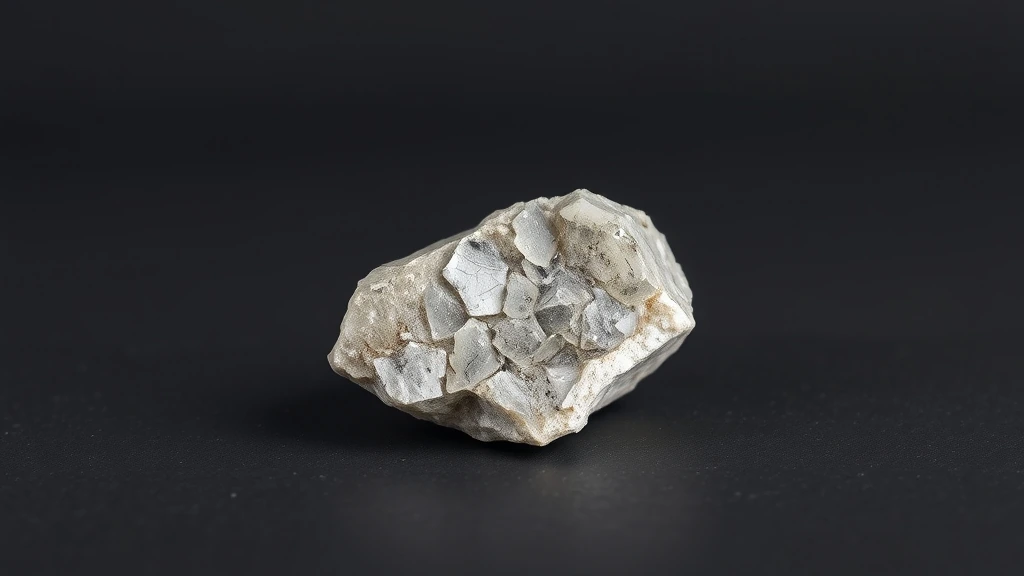
Cerussite belongs to the vast category of Natural Minerals, specifically classified as a secondary carbonate. It forms through the oxidation of galena in the upper reaches of lead deposits. As a primary mineral species, it represents a distinct chemical and structural entity. Its crystalline nature distinguishes it from amorphous materials, offering unique optical and physical properties.
What is Cerussite Gemstone? Geological Overview & Definition
Cerussite typically forms in the oxidation zone of lead ore deposits. It often replaces primary sulfide minerals like galena during weathering processes. This secondary formation creates intricate, skeletal crystal habits that are highly sought after by collectors.
The mineral is defined by its orthorhombic symmetry and high specific gravity. It is rarely cut into faceted gems due to its low hardness. Instead, it is valued for its euhedral crystal forms and scientific significance. Its presence indicates specific geochemical conditions in the host rock.
Cerussite Gemstone Chemical Composition & Crystallographic Properties
Cerussite crystallizes in the orthorhombic system, featuring a complex lattice structure. The unit cell contains lead and carbonate ions arranged in specific planes. This orthorhombic symmetry dictates its cleavage and fracture patterns. The structure allows for distinct optical anisotropy.
The chemical formula is strictly PbCO₃, with minimal cation substitution. Trace impurities may alter color but rarely replace lead significantly. The chromophore centers arise from trace elements or structural defects. These centers create the stone’s varied color spectrum.
Cerussite is highly acid sensitive, reacting vigorously with dilute acids. This reaction releases carbon dioxide, confirming its carbonate identity. Thermal behavior is limited by its low melting point. Heating causes decomposition before melting, releasing toxic lead oxides.
The refractive index ranges from 1.803 to 2.076, indicating high dispersion. This birefringence is a key diagnostic property for identification. The density of 6.53–6.57 g/cm³ reflects its lead content. These properties distinguish it from lighter carbonate minerals.
| Property | Specification |
|---|---|
| Mineral Group | Natural Mineral / Crystal |
| Chemical Formula | Lead carbonate: PbCO₃ |
| Mohs Hardness | 3 to 3.5 |
| Crystal System | Orthorhombic |
| Specific Gravity (Density) | 6.53–6.57 |
| Refractive Index | n α = 1.803, n β = 2.074, n γ = 2.076 |
| Color & Optical Properties | Natural Cerussite Gemstone color spectrum and optical dispersion |
| Primary Mining Localities | Global primary localities |
| Water & Chemical Resistance | High (Safe for gentle water washing) |
| Chakra Alignment (Traditional) | Crown Chakra, Third Eye Chakra |
| Zodiac Affinity (Traditional) | Pisces, Virgo |
| Symbolic Meaning (Traditional) | Mental clarity, spiritual awakening, and purification |
Cerussite Gemstone Varieties & Color Spectrum
White Cerussite
Pure specimens exhibit a brilliant, snow-white hue derived from the absence of transition metal impurities. This variety typically forms in the oxidized zones of lead deposits where lead carbonate precipitates from groundwater. Its high specific gravity makes it noticeably heavy for its size, a key diagnostic feature for collectors.
Green Cerussite
Trace amounts of iron or other impurities impart a distinct pale to medium green coloration. These crystals often display a vitreous luster that enhances their visual appeal in cabochon cuts. The orthorhombic crystal system allows for well-formed prismatic shapes that catch light beautifully.
Yellow Cerussite
Rare yellow morphs result from specific trace element substitutions within the crystal lattice structure. This coloration is less common than white or green varieties, making it highly sought after by mineral collectors. The refractive index remains consistent, ensuring the stone retains its characteristic sparkle despite the hue shift.
Pink Cerussite
Faint pink tints occasionally appear due to minor manganese or other trace element inclusions. These specimens are exceptionally rare and often found in specific geological contexts with unique mineral associations. The delicate coloration adds to the stone’s aesthetic value for display purposes.
Blue-Green Cerussite
A subtle blue-green morph can occur when specific impurities interact with the lead carbonate matrix. This variety is often associated with particular mining regions where unique geochemical conditions prevailed. The Mohs hardness of 3 to 3.5 requires careful handling to preserve the crystal faces.
Where is Cerussite Gemstone Found? Geological Mining & Extraction
Cerussite primarily forms in the supergene zones of lead-silver deposits, where primary sulfides undergo oxidation. It is commonly found in association with galena, cerargyrite, and other secondary minerals in limestone or dolomite host rocks. These deposits are often located in areas with significant historical mining activity for lead extraction.
Major sources include the famous mines of Navajún in Spain, the Tsumeb mine in Namibia, and various sites in the United States. The density of 6.53–6.57 g/cm³ helps distinguish it from other carbonate minerals during field identification. Extraction is typically a byproduct of lead mining, with gem-quality crystals carefully removed for the mineral collection market.
Historical Significance & Cultural Lore of Cerussite Gemstone
Ancient civilizations primarily valued cerussite as a source of lead rather than as a gemstone. The Romans used lead carbonate compounds in cosmetics and as a pigment, known as white lead, which was widely applied in art and medicine. While not worn as jewelry, its aesthetic qualities were recognized in mineral collections of the early modern period.
In the 19th and 20th centuries, cerussite gained popularity among mineral collectors for its striking crystal formations. Its association with lead mining history has given it a unique place in the lore of industrial geology. Today, it remains a prized specimen for museums and private collections due to its rarity and visual beauty.
Modern Uses & Jewelry Applications of Cerussite Gemstone
Due to its Mohs hardness of 3 to 3.5, cerussite is too soft for daily wear in rings or bracelets. Lapidaries primarily cut this mineral into cabochons or ornamental carvings rather than faceted gems. Its high specific gravity gives pieces a distinctive, heavy heft that distinguishes them from lighter silicates.
- Cabochon Cutting: Smooth, domed cuts highlight the stone’s vitreous luster without risking chipping.
- Ornamental Carving: Skilled artisans carve intricate sculptures, leveraging the mineral’s relative softness.
- Display Pieces: Large crystals are often mounted in glass cases for collectors.
- Limited Jewelry: Earrings and pendants are the safest options for occasional wear.
Safety & Mineral Profile of Cerussite
Safe handling and physical stability
Cerussite is a lead carbonate mineral that is soft (Mohs hardness 2–2.5) and prone to surface weathering when exposed to acidic environments. The mineral can release fine lead‑containing dust if it is scratched or ground, posing inhalation and ingestion hazards. Lead is a heavy metal with well‑documented neurotoxic effects, so specimens should be handled with gloves, stored in sealed containers, and kept away from children and pets. Because of its softness and potential for dust generation, cerussite is best displayed as a collector specimen rather than used in jewelry or as a functional accessory. The risk of lead exposure outweighs any aesthetic appeal, and its tendency to fracture easily makes it unsuitable for everyday wear.
Scientific, educational, and mineralogical significance
Cerussite is a key mineral for studying lead‑bearing ore deposits and carbonate‑rock alteration processes. Its well‑defined crystal habits and optical properties make it an excellent teaching example for crystallography, refractive index measurement, and the identification of lead minerals. In research, cerussite is used to investigate lead mobility in the environment, the formation of secondary lead minerals in mine waste, and the geochemical cycling of lead in sedimentary settings. Museums often include cerussite specimens to illustrate the diversity of lead minerals and to demonstrate the importance of safe handling practices for hazardous materials.
Mineralogical Group and Planetary Lore of Cerussite
Cerussite belongs to the carbonate mineral group and is chemically related to anglesite (PbSO₄) and plumbonacrite (Pb₂(CO₃)₂(OH)₂). Historically, it was first described in the 18th century from deposits in the Harz Mountains of Germany, where it was associated with galena and other lead sulfides. According to early mineralogists, the mineral’s bright white to pale yellow crystals were sometimes mistaken for quartz or calcite until its lead content was confirmed by chemical analysis. In lapidary texts, cerussite has occasionally been referenced as a “lead white” due to its color, but its softness and toxicity have limited its use in decorative contexts. While no specific planetary symbolism is attached to cerussite, its lead composition has led to its inclusion in discussions of lead‑rich meteorites and the study of lead isotopes in planetary science.
How to Identify Real vs. Fake Cerussite Gemstone
Artificial imitations of cerussite often include synthetic glass or dyed calcite replicas. These fakes mimic the stone’s white or greenish hues but lack its unique physical properties. Specific gravity is a key differentiator, as genuine cerussite is significantly heavier than most common minerals.
Practical At-Home Authenticity Tests
- Temperature Test (Thermal Feel): Genuine cerussite feels noticeably cold to the touch initially. This thermal conductivity is higher than that of plastic or glass imitations.
- Specific Gravity & Weight Test: Weigh the stone; it should feel surprisingly heavy for its size. The density of 6.53–6.57 g/cm³ is much higher than quartz or glass.
- Scratch & Hardness Test (Mohs Comparison): Use a steel nail (hardness ~5.5) to scratch the stone. Cerussite will be easily scratched, confirming its low Mohs hardness of 3-3.5.
- Microscopic & Loupe Inspection (Internal Inclusions): Examine the stone under a loupe for natural crystal inclusions. Glass fakes often contain tiny, spherical air bubbles that are absent in natural minerals.
Cerussite Gemstone Valuation Factors, Grading & Pricing
Color Saturation is the primary driver of value, with deep, uniform white or pale green tones commanding higher prices. Optical clarity and a strong vitreous luster significantly enhance the stone’s visual appeal for collectors. Any zoning or discoloration typically reduces the overall market desirability of the specimen.
Carat Weight matters less than crystal integrity, as large, well-formed specimens are rare and highly sought after. Facet symmetry is rarely applied due to the mineral’s brittleness, making natural crystal form the standard for grading. The presence of matrix or inclusions can either detract from value or add geological interest, depending on the specific context.
Geographical Provenance Premium heavily influences pricing, with specimens from famous localities like Mexico or Spain fetching top dollar. Wholesale values remain modest, but retail prices for exceptional, large crystals can escalate significantly. Market trends show steady demand among mineral collectors rather than traditional jewelry buyers.
How to Clean and Care for Cerussite Gemstone
Due to its low Mohs hardness of 3 to 3.5, cerussite requires extremely gentle handling to prevent surface abrasion. You must use warm soapy water and a soft cloth to gently wipe the surface. This method effectively removes dust without risking damage to the delicate crystal structure.
It is critical to avoid ultrasonic cleaners, as the vibrations can cause structural fractures in this brittle mineral. Never submerge the stone in harsh chemicals or hot water, which may accelerate weathering. Store the gemstone in a soft pouch to protect it from accidental knocks or scratches.
Cleansing and Recharging Cerussite Gemstone (Energetic Care)
For energetic cleansing, use dry methods such as smoke smudging with sage or palo santo. This approach avoids any contact with moisture, which is essential given the mineral’s solubility in certain solutions. Hold the stone at a safe distance from the smoke to prevent soot accumulation on the surface.
To recharge the energy, place the cerussite on a selenite plate or under moonlight overnight. These methods allow for spiritual renewal without exposing the fragile crystal to physical stress. Always ensure the stone is completely dry before returning it to its storage pouch.
Frequently Asked Questions About Cerussite Gemstone
Is cerussite safe to wear in the shower?
Yes, gentle water washing is safe for this mineral. While PbCO₃ is chemically stable against brief exposure, prolonged soaking can weaken its structure. Always dry the stone immediately after contact. Avoid high-pressure jets that might chip the soft surface.
Can I clean cerussite with an ultrasonic cleaner?
No, you must avoid ultrasonic cleaners entirely. The vibrations can cause structural fractures due to its low hardness. Use warm soapy water and a soft cloth instead. This gentle method preserves the crystal integrity without risking damage.
What is the Mohs hardness of cerussite?
It measures between 3 and 3.5 on the scale. This makes it quite soft and susceptible to scratching. Handle it with care to prevent surface abrasions. Store it separately from harder gemstones to maintain its luster.
What is the chemical formula for cerussite?
The formula is lead carbonate, or PbCO₃. This composition gives it a high specific gravity of 6.53–6.57. It is a primary lead ore mineral. Understanding this chemistry helps in proper identification and handling.
Which crystal system does cerussite belong to?
It crystallizes in the orthorhombic system. This structure often produces distinct, tabular crystals with sharp edges. The refractive index ranges from 1.803 to 2.076. These optical properties contribute to its characteristic vitreous luster.
Is cerussite toxic to handle?
Yes, it contains lead and should be handled carefully. Avoid ingesting or inhaling dust from the stone. Wash your hands thoroughly after handling. Keep it away from children and pets to prevent accidental exposure.
Which zodiac signs are aligned with cerussite?
It resonates with Taurus, Gemini, and Leo. These signs may find its energy particularly supportive. The stone’s earthy nature suits Taurus well. Its dynamic energy also appeals to Gemini and Leo.
Which chakras does cerussite activate?
It primarily activates the Crown Chakra, Third Eye Chakra. This dual alignment grounds the user while promoting emotional balance. It helps connect physical stability with emotional well-being. Use it during meditation for these specific energy centers.