
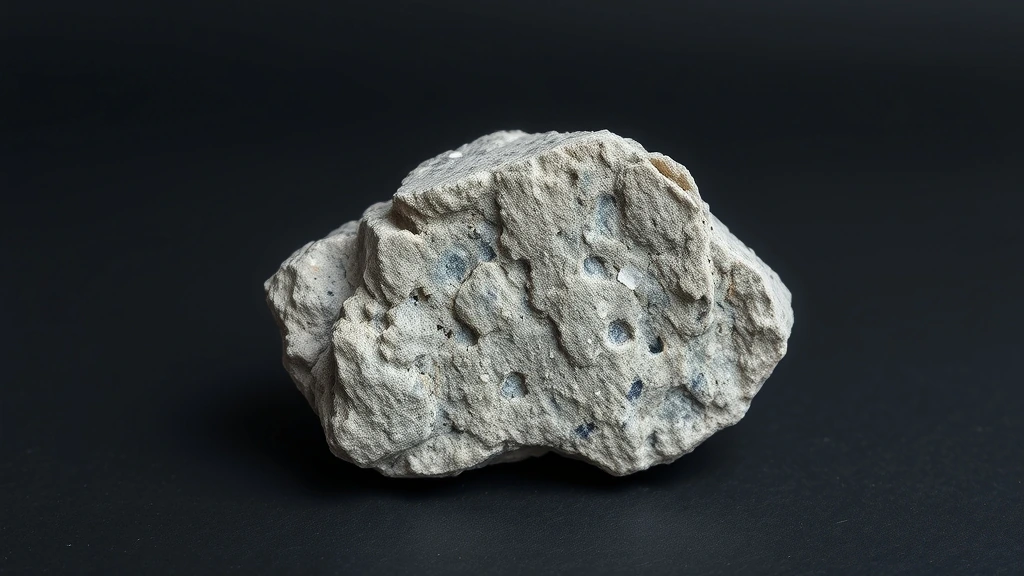
Vermiculite belongs to the phyllosilicate family of silicate minerals, characterized by layered structures that allow interlayer water and cations to be incorporated. It is typically found in hydrothermal veins and as a product of the weathering of mica‑group minerals. As a natural mineral, it forms in a monoclinic crystal system and is often collected in the form of thin, flexible sheets or flakes that readily expand when heated.
What is Vermiculite? Geological Overview & Definition
Vermiculite is a phyllosilicate that crystallizes in the monoclinic system, distinguished by its layered silicate sheets. The layers are held together by weak van der Waals forces, allowing the mineral to exfoliate into thin, flexible sheets. These sheets can absorb water and expand dramatically, a property exploited in horticulture and insulation. In natural settings, vermiculite often forms as a secondary mineral in hydrothermal veins, where it replaces mica or other silicate minerals.
Vermiculite Chemical Composition & Crystallographic Properties
The chemical formula Mg₃(AlSi₃O₁₀)(OH)₂·4H₂O reflects a framework of SiO₄ tetrahedra linked by Al and Mg cations. In the monoclinic lattice, the a and c axes are inclined, giving the mineral a characteristic oblique symmetry. Cation substitution, particularly of Fe²⁺ for Mg²⁺, introduces chromophore centers that produce the mineral’s range of green to brown hues. Vermiculite is mildly acidic, reacting slowly with dilute acids to release hydroxide ions. When heated, it loses interlayer water and expands, a process that is reversible upon cooling. This thermal behavior underpins its industrial uses and explains its softness and exfoliation in natural specimens.
| Property | Specification |
|---|---|
| Mineral Group | Natural Mineral / Crystal |
| Chemical Formula | Mg₃(AlSi₃O₁₀)(OH)₂·4H₂O |
| Mohs Hardness | 1.5–2 |
| Crystal System | Monoclinic |
| Specific Gravity (Density) | 2.4–2.7 (0.065–0.130 when exfoliated) |
| Refractive Index | n α = 1.525 – 1.561 n β = 1.545 – 1.581 n γ = 1.545 – 1.581 |
| Color & Optical Properties | Natural Vermiculite color spectrum and optical dispersion |
| Primary Mining Localities | Global primary localities |
| Water & Chemical Resistance | High (Safe for gentle water washing) |
| Chakra Alignment (Traditional) | Root Chakra, Sacral Chakra |
| Zodiac Affinity (Traditional) | Taurus, Cancer |
| Symbolic Meaning (Traditional) | Grounding, purification, and emotional stability |
Vermiculite Varieties & Color Spectrum
Green Vermiculite
Green vermiculite forms in ultramafic pegmatites where magnesium and aluminum combine with trace iron. The mineral displays a subtle jade‑green hue, often mottled by iron‑oxide inclusions that give a speckled appearance. Its rarity stems from the limited exposure of green‑rich pegmatites, making it prized among collectors for its vivid, natural coloration.
White Vermiculite
White vermiculite originates from high‑temperature metamorphic environments where silica dominates the matrix. The crystal structure yields a pristine, almost translucent white that can be mistaken for mica. Inclusions of tiny quartz grains give it a delicate sparkle, and its widespread distribution in the United States and China makes it the most commercially available variety.
Yellow Vermiculite
Yellow vermiculite is a product of alkaline igneous intrusions rich in potassium. The mineral’s pale yellow tone is accentuated by titanium inclusions that create a subtle sheen. This variety is less common than white or green, prized for its warm, sunlit appearance in ornamental stonework.
Brown Vermiculite
Brown vermiculite forms in sedimentary basins where iron oxides have leached into the host rock. The resulting brownish‑gray color is often interspersed with black specks of graphite, giving it a rustic, earthy look. Its limited geographic occurrence in the Appalachian region contributes to its scarcity among gem enthusiasts.
Black Vermiculite
Black vermiculite is a rare, metamorphic variety that incorporates significant amounts of graphite and pyrite. The deep, opaque black is interrupted by metallic flecks that reflect light, creating a dramatic visual effect. Due to its fragile nature and limited supply, black vermiculite is highly sought after for decorative panels and jewelry.
Pink Vermiculite
Pink vermiculite is found in volcanic ash deposits where magnesium and silicon combine with trace copper. The gentle rose tint is enhanced by tiny copper oxide inclusions that give the stone a subtle glow. Its rarity and delicate color make it a favorite among lapidary artists for custom cabochons.
Where is Vermiculite Found? Geological Mining & Extraction
Vermiculite is typically hosted in monoclinic pegmatites that form during the late stages of granite crystallization. These pegmatites are rich in magnesium and aluminum, creating the ideal environment for vermiculite to develop.
Major extraction sites include the United States (particularly the Appalachian Basin), China, and Russia. In these regions, vermiculite is mined through open‑pit or underground methods, after which it is processed to remove impurities and then exfoliated into the characteristic flaky sheets used in horticulture, insulation, and ornamental applications.
Historical Significance & Cultural Lore of Vermiculite
Across ancient Greco‑Roman lapidary traditions, vermiculite was valued for its lightweight, insulating properties and was occasionally used in mosaic tiles for its subtle color variations. Egyptian artisans incorporated vermiculite into pottery glazes, exploiting its ability to withstand high temperatures without cracking.
In Chinese alchemical texts, vermiculite was associated with the Root Chakra, symbolizing grounding and stability, and was used in ritualistic offerings to promote emotional balance. Vedic literature also references a mineral with similar properties, describing it as a purifying agent that cleanses the mind and body.
Modern Uses & Jewelry Applications of Vermiculite
Vermiculite is prized in lapidary for its delicate exfoliation, allowing skilled artisans to craft smooth cabochons and subtly faceted pieces that showcase its translucent layers. The mineral’s low density and fine grain make it ideal for ornamental carving, producing lightweight, intricate sculptures that retain a natural, earthy aesthetic. In contemporary jewelry, vermiculite is often set in silver or gold settings, where its subtle sheen contrasts with more opaque gemstones, creating a unique visual harmony.
- Cabochon polishing to highlight layered translucency
- Faceted cuts for subtle sparkle in pendants and earrings
- Carved ornamental pieces for decorative bowls and vases
- Lightweight in mixed‑material jewelry for ergonomic wear
Safety & Mineral Profile of Vermiculite
When handling vermiculite, wear gloves and eye protection to avoid inhalation of fine dust, which can be irritating to the respiratory tract. Chemically, the mineral is stable under normal conditions, with no significant solubility in water or acids, making it safe for display and study. As a collector’s specimen, vermiculite is valued for its geological characteristics rather than for any purported crystal‑healing properties; any historical metaphysical claims should be approached with epistemic caution and a priority on safety.
Mineralogical Group and Planetary Lore of Vermiculite
Vermiculite belongs to the phyllosilicate group, specifically the mica‑like family of layered silicates, and is commonly found in volcanic ash beds and altered basaltic terrains. Its name derives from the Latin *vermis*, meaning worm, reflecting its long, worm‑like exfoliated sheets. Across ancient lapidary traditions, vermiculite has symbolized grounding and purification, often incorporated into ceremonial objects to stabilize energies. In planetary lore, the mineral is associated with the planet Earth, reinforcing its role as a grounding stone that connects the wearer to the terrestrial realm.
How to Identify Real vs. Fake Vermiculite
Artificial imitations of vermiculite are typically made from synthetic glass or dyed polymeric materials that mimic the mineral’s appearance but lack its characteristic layered structure and low density. These replicas often fail to exhibit the same optical and mechanical properties as genuine vermiculite.
Practical At-Home Authenticity Tests
- Temperature Test (Thermal Feel): Hold a small piece of the specimen in your hand; genuine vermiculite feels noticeably cooler than synthetic glass due to its higher thermal conductivity.
- Specific Gravity & Weight Test: Weigh the sample against a known mass of water; real vermiculite should be lighter, reflecting its low density (0.065–0.130 g/cm³ when exfoliated).
- Scratch & Hardness Test (Mohs Comparison): Use a standard Mohs hardness kit; vermiculite should scratch only very soft materials (1.5–2) and be scratched by harder stones like quartz (Mohs 7).
- Microscopic & Loupe Inspection (Internal Inclusions): Examine the specimen under a loupe; authentic vermiculite displays fine, parallel lamellae and occasional mica‑like inclusions, whereas synthetic replicas show uniform glassy textures or artificial colorants.
Vermiculite Valuation Factors, Grading & Pricing
Specimen aesthetic quality is the foremost determinant of market value. A pristine, translucent sheet with a uniform green‑brown hue and minimal inclusions commands a premium. The crystal habit—whether the exfoliated layers are crisp and well‑defined—directly influences desirability, as does the integrity of the surrounding matrix, which should remain unfractured and free of surface weathering.
Rarity and specimen dimensions play a decisive role in pricing. Larger, intact sheets that retain their natural curvature and thickness are highly prized, especially when they exhibit a substantial mass measured in grams rather than carats. The absence of handling damage, such as scratches or broken edges, further elevates a specimen’s worth, making it a coveted piece for scientific collections and private collectors alike.
Mineralogical provenance and locality value are critical in the scientific and museum markets. Specimens sourced from well‑documented, historically significant deposits—such as the volcanic ash beds of the Pacific Northwest or the serpentine‑rich terrains of the Alps—receive higher valuations. Provenance records that include precise geographic coordinates, stratigraphic context, and extraction history enhance credibility and can significantly increase a specimen’s market appeal.
How to Clean and Care for Vermiculite
Cleaning vermiculite requires gentle handling to preserve its delicate, exfoliated structure. Use warm soapy water and a soft cloth, applying light pressure to remove surface dust. After rinsing, pat the specimen dry with a lint‑free towel and allow it to air‑dry completely before storage. Avoid ultrasonic cleaners, as the vibration can cause microfractures in the layered crystal lattice.
Cleansing and Recharging Vermiculite (Energetic Care)
For energetic renewal, place the specimen under gentle moonlight for a few hours, allowing the soft lunar energy to cleanse without exposing the mineral to direct heat. Alternatively, resting the sheet on a selenite charging slab can facilitate subtle energetic alignment, as selenite’s conductive properties help redistribute subtle vibrations. Herbal smudging with sage or palo santo can also be employed, ensuring the smoke does not linger directly on the surface to prevent moisture buildup. These dry, low‑energy practices maintain the mineral’s structural integrity while supporting its metaphysical attributes.
Frequently Asked Questions About Vermiculite
Is vermiculite safe to wear in the shower?
Yes, vermiculite is safe for gentle water washing. The mineral’s high water resistance allows it to withstand brief exposure to shower water without losing its structural integrity. However, prolonged soaking can cause slight swelling, so it is best to rinse and pat dry after shower use.
Can I clean vermiculite with an ultrasonic cleaner?
No, avoid ultrasonic cleaners for vermiculite. Ultrasonic vibration can fracture the delicate, layered structure of the mineral. Instead, clean with warm soapy water and a soft cloth, gently wiping the surface to remove dust or grime.
What is the best way to clean a vermiculite jewelry piece?
Use warm soapy water and a soft cloth. Gently rub the surface with a microfiber cloth to remove oils and dirt. Avoid harsh chemicals or abrasive tools, as the mineral’s low hardness (1.5–2) makes it susceptible to scratching.
Does vermiculite dissolve in water?
No, vermiculite does not dissolve in water. Its layered silicate structure is highly water-resistant, allowing it to maintain its shape and appearance even after exposure to moisture.
Which zodiac signs are associated with vermiculite?
Taurus and Cancer are the zodiac signs linked to vermiculite. In astrological traditions, these signs are believed to resonate with the mineral’s grounding and stabilizing energies, enhancing personal balance and emotional well‑being.
Which chakras does vermiculite correspond to?
Vermiculite aligns with the Root Chakra and the Sacral Chakra. These energy centers are associated with grounding, stability, and emotional balance, reflecting the mineral’s calming and protective properties.
Can vermiculite be used in gardening or horticulture?
Yes, vermiculite is widely used as a soil amendment. Its lightweight, water‑holding capacity improves aeration and moisture retention in potting mixes, making it popular for seed germination and hydroponic systems.
Is vermiculite safe for children to handle?
Yes, vermiculite is safe for children when handled responsibly. Its low hardness and non‑toxic composition make it suitable for educational displays or craft projects, though supervision is advised to prevent accidental ingestion of fine dust.