
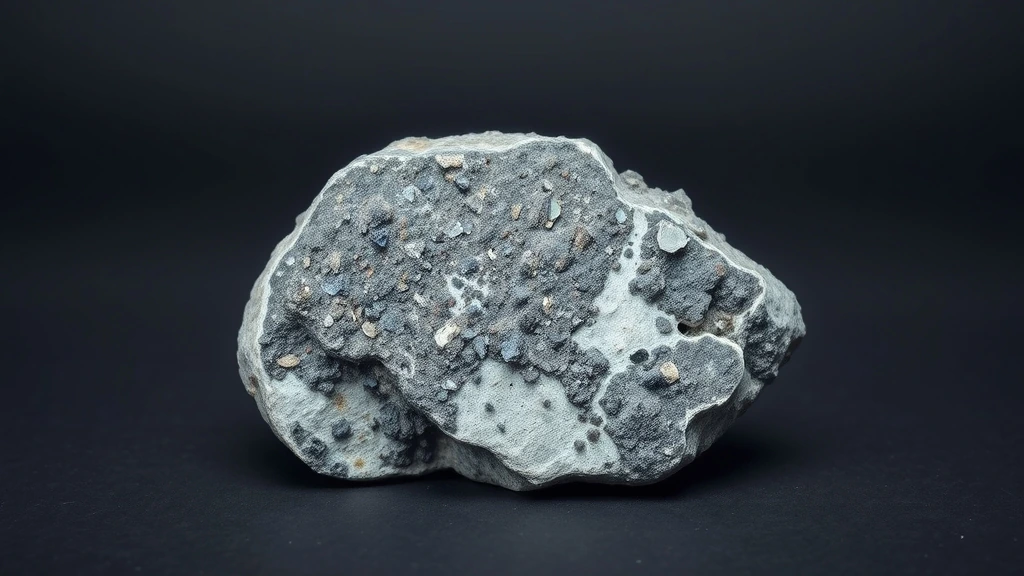
Wavellite belongs to the natural mineral class, specifically forming within the orthorhombic crystal system. As a secondary phosphate, it typically precipitates from hydrothermal solutions in limestone cavities. Its geological origin ties it closely to other aluminum-rich phosphate minerals found in sedimentary environments. This classification underscores its status as a distinct crystalline species rather than an amorphous rock aggregate.
What is Wavellite? Geological Overview & Definition
Wavellite is primarily defined as a hydrated aluminum phosphate that forms in the late stages of hydrothermal alteration. It frequently occurs in association with other phosphate minerals like hydroxylapatite or pyromorphite. These deposits are commonly found in limestone or dolomite host rocks, where acidic waters facilitate precipitation.
The mineral often presents as botryoidal, fibrous, or massive aggregates rather than well-formed crystals. Its name derives from the Greek word for “wave,” reflecting its common undulating, wavy surface texture. This morphological characteristic aids in visual identification during field collection. Understanding its formation context is crucial for accurate geological provenance assessment.
Wavellite Chemical Composition & Crystallographic Properties
Wavellite crystallizes in the orthorhombic system, displaying a lattice structure defined by specific axial ratios. The unit cell parameters reflect a non-cubic symmetry, influencing its cleavage and fracture patterns. This structural arrangement dictates how the mineral interacts with light and mechanical stress. Precise crystallographic data confirms its placement within the broader phosphate mineral family.
The chemical composition involves cation substitution within the phosphate tetrahedra, primarily involving aluminum. Iron and manganese impurities often replace aluminum, creating varied color tones. These substitutions significantly alter the mineral’s optical properties and density. The presence of water molecules in the structure adds complexity to its thermal stability profile.
Color variations stem from chromophore centers created by trace transition metals. Iron impurities typically produce green hues, while manganese can shift tones toward brown. These color centers are integral to the gemstone’s aesthetic appeal. The acid sensitivity of the phosphate structure means it can dissolve in strong acids.
Thermal behavior reveals that wavellite is sensitive to heat exposure. Dehydration can occur at moderate temperatures, potentially damaging the crystal lattice. This instability limits its use in high-heat gemological treatments. Careful handling is required to preserve its natural structural integrity and color.
| Property | Specification |
|---|---|
| Mineral Group | Natural Mineral / Crystal |
| Mohs Hardness | 3.5 – 4 |
| Crystal System | Orthorhombic |
| Specific Gravity (Density) | 2.36 |
| Refractive Index | n α = 1.518 – 1.535 n β = 1.524 – 1.543 n γ = 1.544 – 1.561 |
| Color & Optical Properties | Natural Wavellite color spectrum and optical dispersion |
| Primary Mining Localities | Global primary localities |
| Water & Chemical Resistance | Sensitive (Avoid prolonged water soaking) |
| Chakra Alignment (Traditional) | Throat Chakra (Vishuddha) |
| Zodiac Affinity (Traditional) | Sagittarius, Pisces |
| Symbolic Meaning (Traditional) | Spiritual awareness and universal harmony |
Waverville Varieties & Color Spectrum
Wavellite displays distinct mineralogical characteristics across its geological varieties and structural habits. Gemologists evaluate these natural varieties based on crystal habit, trace chromophore concentrations, and visual luster.
Primary Natural Wavellite
The benchmark natural variety exhibiting diagnostic color saturation and classic crystallographic symmetry.
Distinct Geological Morphs of Wavellite
Secondary regional and structural varieties formed under localized geological temperature and pressure conditions.
Green Wavellite
Formed in oxidized zones of tin‑bearing granitic pegmatites, green wavellite derives its hue from trace amounts of iron and vanadium. Crystals often exhibit radiating, fibrous aggregates that sparkle under daylight, creating a delicate, lace‑like appearance. High‑grade specimens from the Democratic Republic of Congo are prized for their vivid saturation and are considered moderately rare.
Yellow‑Orange Wavellite
Yellow‑orange wavellite crystallizes in hydrothermal veins where arsenic‑rich fluids interact with aluminum‑silicate host rocks. The coloration stems from minor substitutions of manganese and lead, producing a warm amber translucency. Notable deposits in Brazil’s Minas Gerais region yield large, well‑formed prisms that command premium prices among collectors.
Blue‑Violet Wavellite
Blue‑violet wavellite is a comparatively scarce variety, developing in low‑temperature, silica‑saturated environments within the United Kingdom’s Cornwall tin districts. Its distinctive purplish‑blue fluorescence under UV light is linked to trace chromium. The scarcity of sizable crystals and the delicate hue make this morph highly sought after by museums and private collectors.
Colorless (White) Wavellite
The colorless form appears as transparent, needle‑like crystals in the oxidized zones of tin and tungsten mines of Spain’s Andalusian belt. Lacking chromophoric impurities, these specimens showcase the mineral’s intrinsic orthorhombic symmetry and high refractive indices. While abundant, flawless, well‑developed clusters are valued for scientific study and decorative lapidary work.
Pink‑Reddish Wavellite
Pink‑reddish wavellite occurs in the weathered zones of tin deposits in Myanmar, where trace amounts of copper impart a subtle rose tint. Crystals often display a radial habit, forming delicate “spider‑web” aggregates that are both fragile and visually striking. The combination of color and rarity renders these pieces coveted in high‑end gemstone markets.
Brown‑Stained Wavellite
Brown‑stained wavellite forms through secondary alteration of primary wavellite crystals, incorporating organic matter and iron oxides that produce a mahogany‑brown patina. Frequently found in the oxidized zones of the United States’ Idaho tin districts, these specimens are valued more for their geological narrative than for gem use. Their muted tones contrast sharply with the mineral’s brighter counterparts, adding depth to collections.
Where is Wavellite Found? Geological Mining & Extraction
Wavellite typically occurs in the oxidation zones of tin‑rich granitic pegmatites and hydrothermal vein systems, where acidic waters leach aluminum, phosphorus, and vanadium. The mineral precipitates as radiating fibrous aggregates within quartz‑bearing matrixes, often intergrown with cassiterite, stannite, and native arsenic minerals.
Major extraction locales include the Democratic Republic of Congo, Brazil’s Minas Gerais, the United Kingdom’s Cornwall, and Myanmar’s Kabaw Valley, each offering distinct color morphs. Mining is generally artisanal, employing hand‑sorting of alluvial gravels and shallow pit extraction, followed by careful cleaning to preserve the delicate crystal habit for gem and scientific markets.
Historical Significance & Cultural Lore of Wavellite
Across ancient lapidary traditions, wavellite’s luminous green and amber tones were associated with spiritual awareness, leading Greco‑Roman physicians to prescribe it for throat ailments and vocal clarity. Egyptian tomb inventories from the New Kingdom list wavellite beads, suggesting its use as a protective amulet for travelers embarking on long journeys.
In Vedic astrology, wavellite aligns with the Throat Chakra (Vishuddha) and is linked to the zodiac signs Sagittarius and Pisces, symbolizing universal harmony and the quest for truth. Chinese mineralogists of the Song dynasty documented wavellite’s fibrous structure, noting its capacity to “channel inner voice,” a belief that persists in contemporary metaphysical circles.
Modern Uses & Jewelry Applications of Wavellite
Wavellite is primarily valued for its distinctive coloration and soft texture, making it ideal for cabochon cutting rather than faceting. Its low Mohs hardness of 3.5 to 4 renders it unsuitable for rings or bracelets that endure daily friction. Lapidaries typically polish it into smooth, domed stones to highlight its natural luster and unique internal patterns.
- Cabochon Jewelry: The most common form, showcasing the stone’s wavy, banded appearance without risking chipping.
- Ornamental Carvings: Used in small decorative objects, paperweights, or inlays where the stone is not subject to impact.
- Collector Specimens: Valued by mineral collectors for its rare orthorhombic crystal formations and vivid green or brown hues.
Metaphysical Properties & Traditional Meaning of Wavellite
According to historical traditions and metaphysical lore, wavellite is associated with spiritual awareness and the expansion of consciousness. Practitioners often regard it as a stone that facilitates a deeper connection to universal harmony and intuitive understanding. Its gentle energy is believed to support meditation and the quieting of the mind.
In broader lapidary lore, the stone is linked to emotional balance and the release of mental stagnation. It is thought to encourage open-mindedness and a sense of peace during periods of transition. These attributes align with its reputation as a calming aid for the nervous system in alternative healing contexts.
Which Chakra and Zodiac Signs Align with Wavellite?
Wavellite is canonically aligned with the Throat Chakra (Vishuddha), which governs communication, self-expression, and truth. This connection stems from the stone’s association with clarity of thought and the ability to articulate one’s inner truth. It is believed to help users express their feelings honestly and without fear of judgment.
Astrologically, wavellite resonates strongly with Sagittarius and Pisces. Sagittarius, a fire sign, benefits from the stone’s capacity to expand perspective and seek higher truths. Pisces, a water sign, finds solace in its calming influence, which supports their intuitive and empathetic nature.
How to Identify Real vs. Fake Wavellite
Artificial imitations of wavellite are less common than for high-value gems but do exist in the market. Synthetic glass or dyed quartz may be passed off as wavellite due to similar color palettes. Understanding the physical properties of the genuine mineral is essential for distinguishing it from these deceptive replicas.
Practical At-Home Authenticity Tests
- Temperature Test (Thermal Feel): Genuine wavellite feels cool to the touch initially but warms up quickly in the hand. Glass imitations tend to remain cooler for a longer duration due to different thermal conductivity.
- Specific Gravity & Weight Test: With a density of 2.36 g/cm³, wavellite feels lighter than most silicate minerals. A stone that feels unexpectedly heavy for its size may be a denser imitation.
- Scratch & Hardness Test (Mohs Comparison): Wavellite has a hardness of 3.5 – 4, meaning it can be scratched by a steel knife or a copper coin. If the stone resists scratching from a steel blade, it is likely harder than wavellite.
- Microscopic & Loupe Inspection (Internal Inclusions): Under a 10x loupe, real wavellite often displays wavy, banded internal structures or tiny fractures. Glass imitations may show circular bubbles or flow lines that are absent in natural mineral formations.
Wavellite Valuation Factors, Grading & Pricing
The market value of wavellite hinges first on Color Saturation, where a vivid, saturated blue or green hue commands premium prices. The visual vibrancy of the specimen, coupled with its natural energetic luster, attracts collectors seeking both aesthetic appeal and metaphysical resonance.
Second, Crystal Size & Weight (Grams) drives pricing, as larger, heavier pieces command higher fees. Raw, unpolished crystals are valued for their raw, unaltered form, whereas tumbled, polished specimens appeal to those desiring a refined finish. Natural matrix inclusions add character and can increase value when they enhance the stone’s visual narrative.
Finally, Ethical Sourcing & Locality Premium influences the market, with responsibly mined specimens from renowned localities such as the United Kingdom, the United States, or the Czech Republic receiving a collector’s premium. Transparent provenance and adherence to sustainable mining practices elevate the stone’s desirability in both holistic and investment circles.
How to Clean and Care for Wavellite
Wavellite is moisture‑sensitive, so cleaning should be performed with a damp cloth only briefly, followed by immediate drying. Avoid any prolonged soaking or ultrasonic cleaning, as these can cause microfractures in the delicate crystal lattice. Use a soft, lint‑free microfiber cloth to wipe the surface gently, ensuring no residual moisture remains on the stone.
Cleansing and Recharging Wavellite (Energetic Care)
For energetic renewal, place wavellite under gentle moonlight for several hours, allowing the soft lunar illumination to cleanse its subtle vibrations. Alternatively, resting the stone on a selenite charging slab can transfer positive energy without exposing the crystal to heat or direct sunlight, preserving its structural integrity. These dry, low‑energy methods respect the mineral’s sensitivity while supporting its metaphysical properties.
Frequently Asked Questions About Wavellite
Wavellite displays distinct mineralogical characteristics across its geological varieties and structural habits. Gemologists evaluate these natural varieties based on crystal habit, trace chromophore concentrations, and visual luster.
Primary Natural Wavellite
The benchmark natural variety exhibiting diagnostic color saturation and classic crystallographic symmetry.
Distinct Geological Morphs of Wavellite
Secondary regional and structural varieties formed under localized geological temperature and pressure conditions.
What is wavellite and where does it typically form?
Wavellite is a hydrated phosphate mineral that crystallizes in the orthorhombic system. It commonly occurs in the oxidized zones of copper and lead deposits, often forming fibrous or botryoidal masses. Its distinctive greenish‑blue hues and delicate crystal habits make it prized among collectors and lapidaries worldwide.
Is wavellite safe to wear in everyday jewelry?
Yes, but it should be handled with care. Wavellite’s Mohs hardness of 3.5–4 makes it vulnerable to scratches, and its water sensitivity means prolonged exposure to moisture can weaken the crystal structure. Wearing it in environments with high humidity or frequent contact with water should be avoided.
How should I clean a wavellite?
Wipe it briefly with a damp microfiber cloth and dry immediately. Avoid ultrasonic cleaners or soaking, as these can cause fractures or surface damage. Light brushing with a soft brush can remove dust, but always keep the stone dry afterward to preserve its integrity.
Can wavellite be used in a humid climate or near a shower?
No, it is water‑sensitive and should not be exposed to prolonged moisture. Even brief soaking can weaken wavellite’s structure, leading to cracks or loss of luster. Store it in a dry, low‑humidity environment and remove it before showering or swimming.
Does wavellite have any metaphysical or astrological associations?
It is linked to the Throat Chakra (Vishuddha) and the zodiac signs Sagittarius and Pisces. In esoteric traditions, wavellite is believed to enhance communication, spiritual awareness, and universal harmony, resonating with the expansive qualities of these astrological signs.
What is the best way to store wavellite to prevent damage?
Keep it in a soft, padded jewelry box or a cloth pouch away from direct sunlight and moisture. Avoid stacking heavy items on top of it, and periodically inspect for any signs of cracking or surface degradation. Proper storage preserves both its aesthetic and structural qualities.
Can wavellite be cut or polished like other gemstones?
Yes, but it requires specialized techniques. Due to its low hardness and water sensitivity, wavellite is best cut with a diamond saw and polished using a fine-grit diamond paste. Careful handling during cutting prevents microfractures that could compromise the stone’s stability.
Is wavellite commonly found in any particular country or region?
It is most frequently mined in the United States, particularly in the Appalachian region, as well as in parts of Brazil and China. These localities provide the oxidized environments necessary for wavellite’s formation, yielding specimens prized for their unique fibrous textures and vibrant colors.