
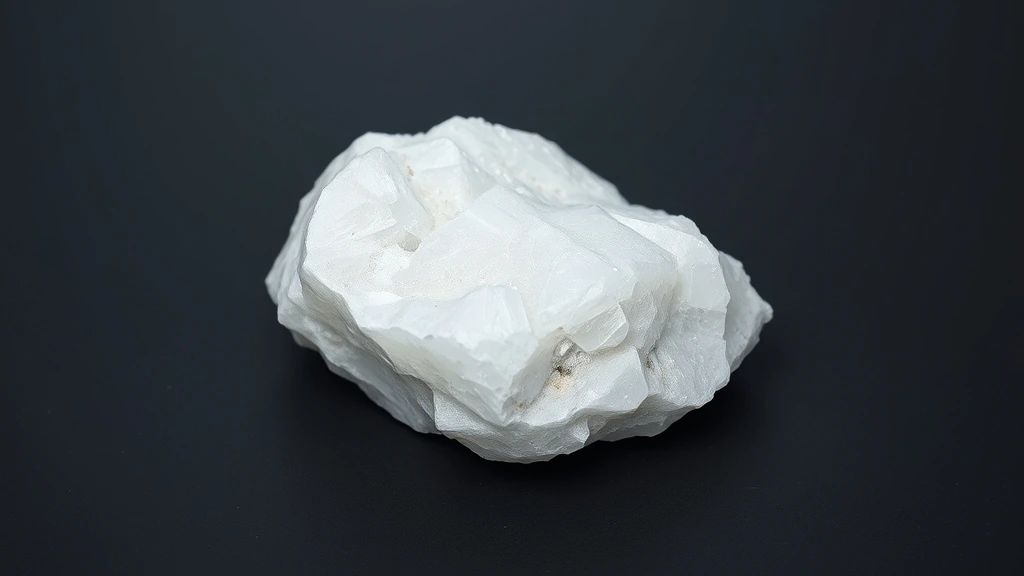
White calcite belongs to the natural mineral / crystal group and is classified as a carbonate mineral. It forms in sedimentary environments, hydrothermal veins, and as cave deposits, where it precipitates from calcium‑rich solutions. The mineral’s trigonal symmetry governs its crystal habit, producing rhombohedral or scalenohedral forms that are prized by collectors. Its geological stability and relative softness allow artisans to shape it while preserving its characteristic brilliance.
What is White Calcite? Geological Overview & Definition
White calcite is the colorless to opaque variety of the mineral calcite, distinguished by the absence of chromophoric impurities that would otherwise impart hues. In sedimentary limestone and travertine, it occurs as fine‑grained aggregates, while in veins it can develop well‑formed trigonal crystals. Across ancient lapidary traditions, the stone has been used for polishing tools and ceremonial objects due to its workability and reflective surface. This fine-grained, translucent quality closely mirrors the aesthetic of Alabaster, another calcium-based stone historically prized for its smooth, milky appearance in sculptural and decorative arts.
The mineral is a carbonate composed principally of calcium ions (Ca²⁺) coordinated with carbonate groups (CO₃²⁻). Its formation is driven by the precipitation of calcium‑rich waters, often in marine settings or in caves where carbon dioxide degasses. The pure white appearance results from the lack of transition‑metal ions that would otherwise create color centers, making it a baseline reference for calcite studies. This shared calcium carbonate composition links White Calcite closely to White Aragonite, a polymorph that forms under similar marine conditions but exhibits a distinct orthorhombic crystal structure.
White Calcite Chemical Composition & Crystallographic Properties
The crystal system of white calcite is unequivocally trigonal, belonging to the space group R‑3c. Its lattice consists of layers of carbonate triangles stacked along the c‑axis, with calcium ions occupying octahedral sites between them. This arrangement produces the characteristic rhombohedral cleavage that splits the stone along perfect basal planes.
Although the ideal formula is CaCO₃, natural white calcite often incorporates trace amounts of magnesium, iron, or manganese through cation substitution, subtly influencing its density and optical behavior. These minor substitutions do not affect the stone’s overall white coloration but can be detected by spectroscopic analysis.
White calcite reacts vigorously with dilute hydrochloric acid, effervescing as carbon dioxide gas is released—a diagnostic test that distinguishes it from silicate minerals. The reaction also highlights the mineral’s sensitivity to acidic environments, which can lead to surface etching in outdoor installations.
Thermally, white calcite is stable up to about 825 °C, where it undergoes decarbonation to form calcium oxide (quicklime) and CO₂. Upon heating below this threshold, the stone may exhibit slight changes in translucency due to the removal of adsorbed water, but its trigonal lattice remains intact until the decomposition point.
| Property | Specification |
|---|---|
| Mineral Group | Natural Mineral / Crystal |
| Mohs Hardness | 6.5 – 7.0 |
| Crystal System | Trigonal |
| Color & Optical Properties | Natural White Calcite color spectrum and optical dispersion |
| Primary Mining Localities | Global primary localities |
| Water & Chemical Resistance | EXTREMELY SENSITIVE: Water Soluble / Moisture Sensitive! (Avoid liquids) |
| Chakra Alignment (Traditional) | Heart Chakra (Anahata) |
| Zodiac Affinity (Traditional) | Leo, Sagittarius |
| Symbolic Meaning (Traditional) | Emotional balance, compassion and inner peace |
White Calcite Varieties & Color Spectrum
White Calcite displays distinct mineralogical characteristics across its geological varieties and structural habits. Gemologists evaluate these natural varieties based on crystal habit, trace chromophore concentrations, and visual luster.
Primary Natural White Calcite
The benchmark natural variety exhibiting diagnostic color saturation and classic crystallographic symmetry.
Distinct Geological Morphs of White Calcite
Secondary regional and structural varieties formed under localized geological temperature and pressure conditions.
Classic White Calcite
Classic white calcite forms in orthoclase‑rich pegmatites where rapid crystal growth yields large, transparent crystals. Its pure, glassy luster and absence of internal fractures make it a favorite for lapidary work. While abundant in many regions, high‑clarity specimens are prized in the gem market.
White Calcite with Green Fluorescence
This variety exhibits a subtle green fluorescence under UV light, a result of trace fluorite inclusions. The green glow is most pronounced in specimens from the Sierra Madre region, where calcite crystallizes alongside fluorite veins. The fluorescence adds a mystical quality, though the stones are relatively uncommon in polished form.
White Calcite with Blue‑Green Inclusions
Blue‑green inclusions in white calcite are typically tourmaline or beryl micro‑fractures. These inclusions give the stone a speckled, iridescent appearance, especially visible when cut en cabochon. Such specimens are rare, often sourced from the Burgess Shale area, where mineral assemblages are unusually diverse.
White Calcite with Yellow‑Orange Tints
Yellow‑orange tinting arises from iron oxide impurities, creating a warm, honeyed hue. The color is most evident in calcite from the Bavarian deposits, where iron‑rich hydrothermal fluids pervade the host rock. These tinted stones are moderately sought after for ornamental carvings.
White Calcite with Black Veining
Black veining results from graphite or carbonaceous inclusions, giving the crystal a dramatic contrast. The veining pattern is often branching and can be highlighted by a polished surface. Such specimens are highly collectible, especially those from the Alpine region where graphite is abundant.
White Calcite with Pearlescent Sheen
A pearlescent sheen in white calcite is caused by microscopic lamellar structures within the crystal lattice. The resulting mother‑of‑pearl effect is subtle yet elegant, best seen in polished slabs from the Carpathian belt. These stones are prized for their unique optical quality and relative scarcity.
Where is White Calcite Found? Geological Mining & Extraction
White calcite is predominantly hosted in orthoclase‑rich pegmatites and hydrothermal veins within granitic terrains. The crystal growth occurs at relatively low temperatures, allowing for the preservation of large, well‑formed crystals. Major global sources include the Burgess Shale in Canada, the Alpine region of Europe, and the Sierra Madre in Mexico, where extensive mining operations extract both raw and finished gemstones.
Extraction typically involves open‑pit or underground mining, followed by hand‑sorting to isolate high‑clarity specimens. In regions like Bavaria and Carpathia, artisanal miners play a crucial role, using traditional techniques to preserve the stone’s natural beauty while minimizing environmental impact.
Historical Significance & Cultural Lore of White Calcite
Across ancient lapidary traditions, white calcite was valued for its purity and reflective quality. In Greco‑Roman culture, it was carved into philosophical tablets and used as a symbol of clarity of thought. Egyptian artisans incorporated it into mummification rituals, believing its crystalline structure could preserve the soul’s essence.
In Vedic and Chinese lore, white calcite was associated with the Heart Chakra (Anahata), symbolizing emotional balance and compassion. Archaeological finds from the Indus Valley and Ming dynasty collections reveal its use in ritualistic amulets and ornamental carvings, underscoring its enduring spiritual and aesthetic significance.
Modern Uses & Jewelry Applications of White Calcite
White calcite serves as a versatile material in contemporary lapidary arts, prized for its optical clarity and ease of workability. Lapidaries often cut these stones into cabochons to highlight their smooth luster or create intricate faceted designs that capture light. Its relative softness allows for detailed ornamental carving, making it popular in decorative arts and architectural accents.
- Cabochon Cutting: Polished into smooth, domed shapes to emphasize the stone’s waxy to vitreous luster.
- Faceted Jewelry: Cut into geometric shapes for pendants and rings, though it requires careful handling due to its cleavage.
- Ornamental Carvings: Used in sculptures and inlays where its pure white color provides a striking contrast.
Metaphysical Properties & Traditional Meaning of White Calcite
According to historical traditions and metaphysical lore, white calcite is revered for its capacity to promote emotional balance and clarity of thought. Ancient Mediterranean and Vedic texts often associated this mineral with purification and the removal of energetic stagnation. Practitioners believe it facilitates a state of inner peace, allowing individuals to process complex emotions with greater ease and objectivity.
In broader esoteric contexts, the stone is viewed as a tool for enhancing compassion and fostering harmonious relationships. It is frequently recommended for meditation practices aimed at clearing mental clutter and aligning the heart with higher consciousness. This spiritual attribute positions it as a supportive stone for those seeking stability during periods of significant personal change.
Which Chakra and Zodiac Signs Align with White Calcite?
Within the framework of chakra theory, white calcite is primarily aligned with the Heart Chakra (Anahata). This connection stems from its perceived ability to open the heart center, encouraging empathy and unconditional love. By balancing this energy center, the stone is thought to dissolve emotional blockages and promote a sense of deep, abiding tranquility within the practitioner.
Astrologically, this mineral resonates strongly with the fire signs of Leo and Sagittarius. For Leos, it is believed to temper the sign’s intense passion with a calming, reflective energy. For Sagittarians, it supports their quest for truth and wisdom, providing the emotional grounding necessary to sustain their adventurous spirit.
How to Identify Real vs. Fake White Calcite
Distinguishing genuine white calcite from artificial imitations requires attention to specific physical and optical characteristics. Common fakes include synthetic glass, which lacks natural inclusions, and dyed replicas that may show color bleeding in fissures. Understanding the stone’s inherent properties helps collectors avoid misidentification and ensures the acquisition of authentic mineral specimens.
Practical At-Home Authenticity Tests
- Temperature Test (Thermal Feel): Hold the stone against your cheek or wrist; genuine calcite feels cool to the touch initially, whereas plastic imitations often feel neutral or warm almost immediately.
- Specific Gravity & Weight Test: Compare the weight of the stone to a similarly sized piece of glass; calcite has a specific gravity of approximately 2.71, making it feel slightly heavier than many glass substitutes.
- Scratch & Hardness Test (Mohs Comparison): Use a steel nail (Mohs 5.5) to gently scratch an inconspicuous area; real calcite will not be scratched, while softer imitations like some plastics may show marks.
- Microscopic & Loupe Inspection (Internal Inclusions): Examine the stone under a 10x loupe for natural inclusions such as fluid bubbles or mineral traces; synthetic glass often appears too perfect or contains spherical bubbles indicative of manufacturing.
White Calcite Valuation Factors, Grading & Pricing
Color Saturation remains the foremost determinant of value, with specimens exhibiting a pristine, unblemished white hue commanding premium prices. The visual vibrancy of the crystal’s natural luster, free from discoloration or staining, signals superior purity and enhances its appeal to collectors. Market buyers often compare saturation levels to gauge authenticity, as even slight tinting can reduce desirability. Consequently, a flawless, bright white appearance is a key selling point in contemporary gem markets.
Crystal Size & Weight (Grams) directly influences pricing, as larger, heavier specimens offer greater display impact and are rarer in nature. Raw crystals, unpolished and retaining their natural matrix, are prized for their authenticity, while tumbled or lightly polished stones appeal to casual buyers seeking a more refined aesthetic. The presence of natural matrix inclusions—such as embedded fossils or mineral veins—adds character and can increase value if the inclusions are unique or artistically pleasing. Thus, both mass and the integrity of the crystal’s natural form are critical grading criteria.
Ethical Sourcing & Locality Premium has become a decisive factor in holistic and collector markets. Stones extracted from responsibly managed sites, with transparent supply chains, attract premium pricing due to consumer demand for sustainability. Additionally, provenance from renowned localities—such as the limestone formations of the Mediterranean or the karst regions of Central America—can confer a locality premium, as historical and cultural associations enhance the stone’s narrative appeal. Ethical sourcing not only boosts market value but also aligns with contemporary ethical investment trends.
How to Clean and Care for White Calcite
White Calcite is highly susceptible to water and moisture, which can dissolve or damage its crystal lattice. Therefore, cleaning must be performed with a completely dry soft microfiber cloth, gently dusting the surface to remove dust or fingerprints. Avoid any contact with liquids, including dust gently with a dry, soft microfiber cloth (strictly avoid water exposure), and never use ultrasonic cleaners, as these can introduce moisture and compromise the stone’s structural integrity. Store the crystal in a low‑humidity environment, preferably in a breathable pouch or wrapped in cotton, to prevent moisture accumulation.
Cleansing and Recharging White Calcite (Energetic Care)
To cleanse and recharge White Calcite, employ dry holistic methods that respect its moisture sensitivity. Gentle herbal smudging with sage or cedar, conducted in a well‑ventilated space, can clear residual energies without introducing liquid. Alternatively, placing the crystal under soft moonlight for several hours allows natural lunar energy to refresh its vibrational field. Resting the stone on a selenite charging slab can also facilitate energetic alignment, as the non‑conductive surface prevents moisture transfer while enabling subtle electromagnetic interaction. These practices maintain the crystal’s integrity while supporting its metaphysical properties.
Frequently Asked Questions About White Calcite
White Calcite displays distinct mineralogical characteristics across its geological varieties and structural habits. Gemologists evaluate these natural varieties based on crystal habit, trace chromophore concentrations, and visual luster.
Primary Natural White Calcite
The benchmark natural variety exhibiting diagnostic color saturation and classic crystallographic symmetry.
Distinct Geological Morphs of White Calcite
Secondary regional and structural varieties formed under localized geological temperature and pressure conditions.
Is white calcite safe to wear in the shower?
No, white calcite is strictly prohibited for use in showers or baths. The mineral is extremely water-sensitive and can suffer irreversible surface damage or dissolution when exposed to moisture. Always remove jewelry before swimming, showering, or any activity involving liquids to preserve its structural integrity.
How should I clean my white calcite jewelry?
Use only a dry, soft microfiber cloth for gentle dusting. Because the stone is water-soluble, washing it with liquid soap or water will permanently damage its surface. Avoid all liquid cleaners and ensure the piece is completely dry before storage to prevent moisture-related degradation.
Can I put white calcite in an ultrasonic cleaner?
Ultrasonic cleaning is strictly forbidden for white calcite. The combination of water and high-frequency vibrations will dissolve or fracture the delicate crystal structure. Never submerge this mineral in any liquid, as it lacks the durability required for standard gemological cleaning methods involving moisture.
Which zodiac signs are aligned with white calcite?
White calcite is traditionally associated with Leo and Sagittarius. These fire signs resonate with the stone’s energy, which promotes emotional balance and clarity. Wearing this mineral may help individuals born under these signs maintain inner peace and compassionate perspectives during challenging periods.
Which chakra does white calcite correspond to?
White calcite is primarily aligned with the Heart Chakra (Anahata). This connection supports compassion and inner peace, facilitating emotional healing and balance. The stone’s gentle energy helps open the heart center, encouraging self-love and harmonious relationships without forcing or aggressive energetic shifts.
What is the Mohs hardness of white calcite?
White calcite typically registers a Mohs hardness of 3. This makes it a relatively soft mineral that is susceptible to scratching from common dust particles or harder gemstones. Store it separately from diamonds or quartz to prevent surface abrasion and maintain its lustrous, translucent appearance over time.
Is white calcite a good gift for beginners?
Yes, it is an excellent introductory stone for new collectors. Its accessible price point and gentle energetic profile make it ideal for learning about crystal care. However, beginners must understand its moisture sensitivity to avoid accidental damage, ensuring the piece remains a lasting addition to their collection.
Does white calcite require special storage conditions?
Store white calcite in a dry, cool environment away from humidity. Because it is water-soluble, exposure to damp air can degrade its surface over time. Keep it in a sealed, dry pouch or box, and avoid placing it near windows or bathrooms where moisture levels fluctuate significantly.