
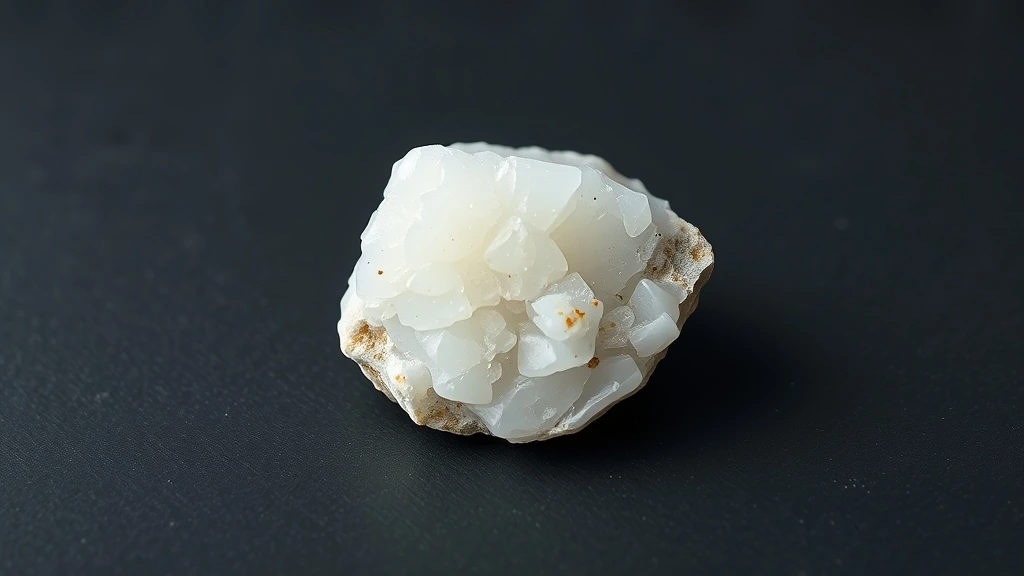
White chalcedony belongs to the broader family of minerals and is classified as a natural crystal. It forms through the slow precipitation of silica from silica‑rich solutions, often in quartz veins or as a fibrous aggregate. The resulting material is a fine‑grained, microcrystalline form of quartz that displays a characteristic banded or opaque texture. Its geological occurrence spans volcanic, sedimentary, and hydrothermal settings worldwide, reflecting the widespread distribution of silica in the Earth’s crust.
What is White Chalcedony? Geological Overview & Definition
White chalcedony is a microcrystalline variant of quartz, distinguished by its fine, interlocking crystal structure that scatters light to produce a milky appearance. It is often found as a fibrous or nodular aggregate, forming in quartz veins, hydrothermal cavities, and occasionally in sedimentary deposits. The stone’s translucency and subtle banding make it a popular choice for ornamental carvings and jewelry. Historically, white chalcedony has been valued for its clarity and perceived purity, appearing in artifacts from ancient Egypt to medieval Europe.
White Chalcedony Chemical Composition & Crystallographic Properties
The chemical composition of white chalcedony is SiO₂, identical to that of pure quartz. However, its crystallographic structure is trigonal, belonging to the hexagonal crystal system with a three‑fold rotational axis. The lattice is composed of tetrahedral SiO₄ units linked in a continuous framework, but the microcrystalline nature results in a lack of long‑range order. Cation substitution is minimal; trace amounts of aluminum or iron may be present, but they do not alter the fundamental SiO₂ stoichiometry.
White chalcedony is chemically inert to most acids, though it can be slowly etched by hydrofluoric acid. Its chromophore centers are primarily due to structural defects and trace impurities that scatter light, giving rise to its characteristic opacity. Thermal treatment of white chalcedony does not significantly change its color or hardness; the material remains stable up to about 573 °C, beyond which it transforms into crystalline quartz (cristobalite) and may release water vapor.
| Property | Specification |
|---|---|
| Mineral Group | Natural Mineral / Crystal |
| Chemical Formula | SiO₂ |
| Mohs Hardness | 6.5 – 7.0 |
| Crystal System | Trigonal |
| Color & Optical Properties | Natural White Chalcedony color spectrum and optical dispersion |
| Primary Mining Localities | Global primary localities |
| Water & Chemical Resistance | High (Safe for gentle water washing) |
| Chakra Alignment (Traditional) | Solar Plexus Chakra (Manipura) |
| Zodiac Affinity (Traditional) | Capricorn, Taurus |
| Symbolic Meaning (Traditional) | Clear communication, truth and serenity |
White Chalcedony Varieties & Color Spectrum
White Chalcedony displays distinct mineralogical characteristics across its geological varieties and structural habits. Gemologists evaluate these natural varieties based on crystal habit, trace chromophore concentrations, and visual luster.
Primary Natural White Chalcedony
The benchmark natural variety exhibiting diagnostic color saturation and classic crystallographic symmetry.
Distinct Geological Morphs of White Chalcedony
Secondary regional and structural varieties formed under localized geological temperature and pressure conditions.
Snowflake Chalcedony
Formed in volcanic tuff and rhyolitic ash layers, snowflake chalcedony displays microscopic white calcite crystals that resemble delicate snowflakes. The host silica precipitates from low‑temperature hydrothermal fluids, trapping the calcite inclusions in a milky matrix. This variety is most abundant in Brazil’s Minas Gerais region and is prized for its subtle translucency, though large flawless pieces remain scarce.
White Onyx (Alabaster Chalcedony)
White onyx develops in compacted sedimentary layers where silica replaces limestone through silicification, yielding a banded, opaque appearance. Its microcrystalline quartz structure produces a smooth, waxy luster that is highly favored for carving. Major sources include the United States (Arizona) and Mexico, where mining yields thick slabs for architectural use, yet fine‑grained blocks suitable for gem cutting are comparatively rare.
Milk‑White Chalcedony (Muscovite‑Stained)
In certain Siberian deposits, trace muscovite mica flakes become intergrown with silica, imparting a faint pearlescent sheen to the otherwise pure white chalcedony. The mineral forms in low‑grade metamorphic zones where silica‑rich fluids infiltrate siliceous shales. Because the muscovite inclusions are unevenly distributed, high‑quality, uniformly milky stones command premium prices on the international market.
White Agate (Banded Chalcedony)
White agate originates in volcanic lava flows where silica fills gas bubbles and fissures, later solidifying into concentric bands of varying opacity. The banding pattern often shows subtle gray or ivory layers that enhance its visual depth. Notable localities include India’s Gujarat state and the Czech Republic, where the stone is harvested from alluvial deposits and valued for both jewelry and ornamental carving.
White Chrysoprase (Nickel‑Stained)
Although typically green, a rare nickel‑infused variant of chalcedony appears as a bright, almost sterile white, known as white chrysoprase. The coloration results from trace nickel substituting for aluminum in the silica lattice during formation in lateritic soils. This variety is exceptionally scarce, found only in limited pockets of Western Australia, and is sought after by collectors for its unusual chemistry.
White Sardonyx (Layered Chalcedony)
White sardonyx exhibits alternating layers of pure white chalcedony and thin bands of reddish‑brown quartz, created by rhythmic changes in silica saturation during deposition. The layered structure is a hallmark of slow‑growth environments within ancient riverbeds. Primary sources lie in the Zagros Mountains of Iran, where artisanal miners extract the stone for traditional inlay work, though large, defect‑free slabs are uncommon.
Where is White Chalcedony Found? Geological Mining & Extraction
White chalcedony commonly occurs in silica‑rich volcanic tuffs, rhyolites, and sedimentary sandstones where low‑temperature hydrothermal fluids precipitate microcrystalline quartz. In these settings, the mineral fills cavities, fractures, and pore spaces, often developing alongside calcite, mica, or iron oxides that influence its hue and translucency.
Major extraction zones include Brazil’s Minas Gerais, the United States (Arizona and California), and the Siberian plateau, where open‑pit and underground methods expose extensive chalcedony seams. In India and Iran, artisanal mining targets alluvial deposits and weathered volcanic outcrops, employing hand tools and water‑flotation techniques to separate the dense silica from host rock.
Historical Significance & Cultural Lore of White Chalcedony
Across ancient lapidary traditions, white chalcedony was carved into seals, amulets, and ceremonial vessels, prized for its smooth, non‑reflective surface that symbolized purity. The Egyptians fashioned scarab inlays from the stone, while Greco‑Roman artisans used it for cameo portraits, believing it enhanced diplomatic communication and truthfulness.
In Vedic texts, white chalcedony is linked to the Solar Plexus Chakra (Manipura), where it was ground into powders for ritual offerings intended to promote clear speech and inner serenity. Chinese jade workshops of the Han dynasty incorporated the mineral into ornamental hairpins, attributing to it the power to calm the mind and foster harmonious relationships.
Modern Uses & Jewelry Applications of White Chalcedony
White chalcedony is prized in the lapidary arts for its translucent to opaque appearance and exceptional durability. Lapidaries typically cut this stone into smooth cabochons to highlight its waxy luster and subtle internal banding. Its hardness makes it ideal for intricate intaglio carving, a technique popularized in ancient Mediterranean gemology.
- Cabochon Cutting: Polished into domed, un-faceted shapes to maximize the stone’s soft, milky glow.
- Ornamental Carving: Used for cameos, seals, and decorative inlays due to its resistance to chipping.
- Faceted Jewelry: Occasionally faceted, though its translucency often favors polished surfaces for better light interaction.
- Architectural Ornamentation: Historically employed in mosaic work and temple decorations across various ancient civilizations.
Metaphysical Properties & Traditional Meaning of White Chalcedony
According to historical traditions and metaphysical lore, white chalcedony is revered as a stone of emotional serenity and mental clarity. Ancient Greek and Roman texts often associated this variety of chalcedony with the calming of the mind and the promotion of truthful communication. It is believed to help practitioners maintain composure during stressful situations, acting as a stabilizing anchor for the psyche.
In Vedic and broader esoteric practices, this stone is linked to spiritual purification and the alignment of one’s intent with action. It is thought to dissolve negative energy and foster a sense of inner peace. By promoting emotional balance, it encourages a state of mindfulness that supports clear decision-making and honest self-reflection.
Which Chakra and Zodiac Signs Align with White Chalcedony?
White chalcedony is canonically aligned with the Solar Plexus Chakra (Manipura), which governs personal power, self-esteem, and digestive health. By resonating with this energy center, the stone is believed to strengthen willpower and enhance personal confidence. This alignment supports the individual’s ability to assert their boundaries and maintain a strong sense of self-identity.
In astrological traditions, this gemstone is specifically associated with the earth signs Capricorn and Taurus. These signs value stability, reliability, and groundedness, qualities that mirror the stone’s earthy energy. Wearing white chalcedony is thought to amplify these inherent traits, providing additional support for individuals seeking to manifest their goals with patience and determination.
How to Identify Real vs. Fake White Chalcedony
Distinguishing genuine white chalcedony from imitations requires attention to subtle physical and optical characteristics. Common fakes include synthetic glass, which often contains tiny air bubbles, and dyed quartz or other low-value minerals treated to mimic the stone’s milky appearance. Understanding these differences is crucial for ensuring the authenticity of your gemstone investment.
Practical At-Home Authenticity Tests
- Temperature Test (Thermal Feel): Genuine chalcedony feels noticeably cool to the touch initially and warms slowly. Glass imitations tend to warm up much faster when held in the hand.
- Specific Gravity & Weight Test: Real white chalcedony has a specific gravity of approximately 2.60–2.65. It should feel heavier than similarly sized glass or plastic substitutes.
- Scratch & Hardness Test (Mohs Comparison): With a Mohs hardness of 6.5–7.0, genuine chalcedony will scratch glass but may not scratch a steel knife blade. Softer imitations will scratch easily.
- Microscopic & Loupe Inspection (Internal Inclusions): Use a 10x loupe to check for natural inclusions like tiny mineral flecks or flow lines. Glass often reveals perfect clarity or uniform, spherical air bubbles.
White Chalcedony Valuation Factors, Grading & Pricing
The market places great emphasis on color saturation, even though white chalcedony lacks vivid hues. Subtle variations in translucency and the presence of a gentle, natural sheen can elevate a piece’s desirability. Buyers often seek stones that display a calm, even glow that reflects light without harsh glare, associating this visual vibrancy with purity and serenity.
Crystal size & weight (grams) are the primary metrics for pricing, with larger, heavier specimens commanding higher premiums. Raw blocks are evaluated for their potential yield, while tumbled pieces are judged on the smoothness of their polish and the absence of surface blemishes. Natural matrix inclusions, when fine and evenly distributed, can add character, but coarse fractures or heavy veining typically reduce value.
In the holistic and collector arenas, ethical sourcing & locality premium significantly influence price. Stones extracted from regions with transparent mining practices and documented provenance often fetch a premium, as buyers value responsible stewardship of the earth. Additionally, historic sources known for high‑quality chalcedony, such as certain Turkish or Brazilian deposits, can add a cultural cachet that further enhances market appeal.
How to Clean and Care for White Chalcedony
Gentle cleaning with warm soapy water and a soft cloth is safe for white chalcedony, preserving its smooth surface and subtle luster. Use a mild, pH‑neutral soap, dip a soft, lint‑free cloth in the warm solution, and wipe the stone lightly to remove fingerprints or dust. Rinse briefly with clean lukewarm water, pat dry with another soft cloth, and avoid prolonged immersion. Ultrasonic cleaners should never be employed, as the vibrations can create micro‑fractures in the fine silica structure.
Cleansing and Recharging White Chalcedony (Energetic Care)
For energetic maintenance, a brief session of herbal smudging with sage or cedar can clear lingering impressions without exposing the stone to moisture. Pass the chalcedony through the gentle smoke for a few seconds, allowing the aromatic vapors to envelop the surface before setting it aside to air‑dry.
Another safe method is to place the stone under soft moonlight for an hour or rest it on a clean selenite slab overnight, allowing lunar energy or the neutralizing properties of selenite to refresh its vibrational field. These practices avoid heat and direct sunlight, ensuring the crystal lattice remains intact while the stone’s metaphysical qualities are revitalized.
Frequently Asked Questions About White Chalcedony
White Chalcedony displays distinct mineralogical characteristics across its geological varieties and structural habits. Gemologists evaluate these natural varieties based on crystal habit, trace chromophore concentrations, and visual luster.
Primary Natural White Chalcedony
The benchmark natural variety exhibiting diagnostic color saturation and classic crystallographic symmetry.
Distinct Geological Morphs of White Chalcedony
Secondary regional and structural varieties formed under localized geological temperature and pressure conditions.
Is white chalcedony safe to wear in the shower?
Yes, it tolerates gentle water exposure. The microcrystalline quartz structure is highly resistant to moisture, so routine showering or light rain will not damage the stone. However, prolonged immersion in hot water or harsh detergents can weaken any pre‑existing fractures, so rinse briefly and pat dry.
How should I clean white chalcedony at home?
Use warm, mildly soapy water and a soft cloth. Gently wipe the surface to remove oils, then rinse with lukewarm water and dry with a lint‑free microfiber. Avoid abrasive pads, as the microcrystalline texture can be scratched, and never use harsh chemicals that may etch the silica surface.
Can I use an ultrasonic cleaner on white chalcedony?
No, ultrasonic cleaning is not recommended. The high‑frequency vibrations can create micro‑fractures within the trigonal quartz lattice, especially in stones with natural inclusions. Stick to manual cleaning methods to preserve clarity and structural integrity over time.
What zodiac signs are associated with white chalcedony?
Capricorn and Taurus are the aligned signs. In astrological gem lore, these earth‑signs are said to benefit from the stone’s stabilizing energy, which complements their grounded nature. The association is rooted in centuries‑old lapidary traditions linking mineral properties to celestial archetypes.
Which chakra does white chalcedony balance?
It resonates with the Solar Plexus Chakra (Manipura). This energy center governs personal power, confidence, and clear communication. By placing the stone on the upper abdomen, practitioners aim to enhance self‑assertion and promote a sense of inner serenity, echoing historic metaphysical teachings.
Does white chalcedony improve communication?
Yes, it is believed to aid clear expression. The stone’s translucent white hue is symbolically linked to purity of thought, helping wearers articulate ideas without distortion. Across ancient lapidary traditions, such as Greco‑Roman and Vedic texts, chalcedony was prized for its calming influence on speech.
Is white chalcedony suitable for everyday jewelry?
Absolutely, its hardness of 6.5–7.0 makes it durable for daily wear. While not as hard as pure quartz, the microcrystalline fabric resists scratches from typical contact. Nonetheless, avoid impact with harder gemstones or metals to prevent chipping of the silica matrix.
Can white chalcedony be set in rings without risk of breakage?
Yes, when set properly it holds up well in rings. Secure prongs or bezel settings distribute stress evenly across the stone, reducing the chance of fracture. Because the material is water‑resistant, routine hand washing will not compromise the setting, though occasional professional inspection is advisable.