
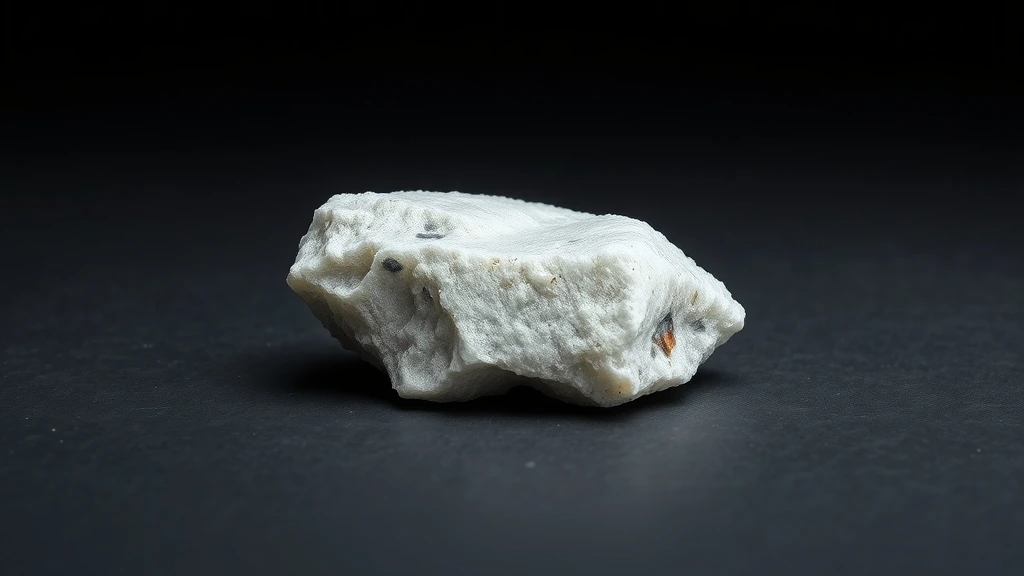
Wollastonite belongs to the natural mineral family of silicate crystals and is classified as a single‑crystal silicate rather than an aggregate rock. It forms in metamorphic environments where limestone or dolomite reacts with silica‑rich fluids, producing elongated, fibrous crystals that are prized for their clarity and subtle coloration. The mineral’s low specific gravity (2.86–3.09) and high refractive indices give it a bright, glass‑like luster that appeals to gem cutters and collectors alike.
What is Wollastonite? Geological Overview & Definition
Wollastonite is a calcium metasilicate that crystallizes in a triclinic lattice, though it exhibits a monoclinic polymorph in certain high‑temperature industrial syntheses. It is most commonly found in skarn deposits, contact metamorphic zones, and volcanic tuffs where calcium‑rich carbonates have been metasomatized by silica‑bearing fluids.
Across ancient lapidary traditions, the stone’s milky translucency was valued for ornamental inlays and ritual objects, while modern geology recognizes it as a key indicator of calcium‑silicate metasomatism. Its fibrous habit can range from fine, hair‑like aggregates to well‑developed prismatic crystals suitable for faceting.
Wollastonite Chemical Composition & Crystallographic Properties
The ideal formula CaSiO₃ reflects a 1:1 ratio of calcium to silicon, yet natural specimens often incorporate minor cationic substitutions such as Mg²⁺, Fe²⁺, or Al³⁺ within the crystal lattice. These trace elements can subtly shift the refractive indices (nα = 1.616–1.640, nβ = 1.628–1.650, nγ = 1.631–1.653) and occasionally impart faint greenish hues.
Wollastonite’s crystal system is Triclinic
Monoclinic Polymorphism (materials science), meaning the basic structure is triclinic while high‑temperature synthetic forms adopt a monoclinic symmetry. The lattice consists of chains of SiO₄ tetrahedra linked by Ca²⁺ ions, creating a robust framework that resists cleavage but yields a conchoidal fracture.
In acidic environments, wollastonite readily reacts, releasing silica and calcium ions; this acid sensitivity is exploited in soil amendment and waste‑water treatment. Thermal analysis shows that the mineral remains stable up to ~1,200 °C, after which it decomposes to form wollastonite‑type glass and free silica, a property harnessed in ceramic engineering.
Color in gem‑grade wollastonite arises from chromophore color centers associated with trace iron or manganese, rather than from large-scale impurity phases. These centers absorb specific wavelengths, producing the subtle gray‑green to white palette prized by collectors, while the high specific gravity and low birefringence contribute to its distinctive sparkle when cut.
| Property | Specification |
|---|---|
| Mineral Group | Natural Mineral / Crystal |
| Chemical Formula | Calcium metasilicate, CaSiO₃ |
| Mohs Hardness | 4.5 to 5.0 |
| Crystal System | Triclinic Monoclinic Polymorphism (materials science) |
| Specific Gravity (Density) | 2.86–3.09 |
| Refractive Index | n α = 1.616–1.640 n β = 1.628–1.650 n γ = 1.631–1.653 |
| Color & Optical Properties | Natural Wollastonite color spectrum and optical dispersion |
| Primary Mining Localities | Global primary localities |
| Water & Chemical Resistance | High (Safe for gentle water washing) |
| Chakra Alignment (Traditional) | Heart Chakra (Anahata) |
| Zodiac Affinity (Traditional) | Capricorn, Taurus |
| Symbolic Meaning (Traditional) | Creativity, motivation and self-confidence |
Wollastonite Varieties & Color Spectrum
Wollastonite displays distinct mineralogical characteristics across its geological varieties and structural habits. Gemologists evaluate these natural varieties based on crystal habit, trace chromophore concentrations, and visual luster.
Primary Natural Wollastonite
The benchmark natural variety exhibiting diagnostic color saturation and classic crystallographic symmetry.
Distinct Geological Morphs of Wollastonite
Secondary regional and structural varieties formed under localized geological temperature and pressure conditions.
Classic White Wollastonite
The most common variety is the translucent white form, crystallizing in the triclinic crystal system. It forms in low‑temperature metamorphic environments where calcium‑rich shales undergo recrystallization. The mineral displays a silky luster and is prized for its high clarity and subtle sheen. Though abundant, it is often overlooked in gem markets due to its resemblance to quartz.
Ivory‑Toned Wollastonite
This subtle off‑white variety contains microscopic silica inclusions that scatter light, giving it a milky appearance. It typically forms in sedimentary basins where volcanic ash layers are interbedded with calcareous strata. The ivory hue is prized in jewelry for its understated elegance, yet its scarcity in polished form makes it a niche collector’s item.
Green‑Veined Wollastonite
Green veining arises from trace amounts of iron or manganese incorporated during recrystallization. These veins are often ribbon‑like, creating a striking contrast against the white matrix. The green‑veined type is found mainly in the Appalachian region of the United States and is valued for its unique visual signature.
Pink‑Tinted Wollastonite
The pink variant incorporates copper or chromium impurities, producing a delicate blush. It is commonly sourced from the Bengal region of India, where sedimentary basins host calcium‑rich deposits. The rarity of natural pink coloration, combined with its gentle hue, makes it a sought‑after choice for contemporary designers.
Black‑Lacquered Wollastonite
A rare form where graphite or carbonaceous material is trapped within the crystal lattice, giving a deep black sheen. This variety is typically found in the Sierra Nevada deposits of California, where hydrothermal fluids introduce carbon. Its dramatic appearance is balanced by its fragility, limiting its use to decorative accents.
Blue‑Glazed Wollastonite
Blue coloration results from titanium or vanadium inclusions, creating a subtle azure tint. It is primarily mined in the Alaska region, where glacial activity exposes calcium‑silicate veins. The blue‑glazed variety is prized for its rarity and the serene color it imparts to jewelry pieces.
Where is Wollastonite Found? Geological Mining & Extraction
Wollastonite typically occurs in Wollastonite is typically found in low‑temperature metamorphic rocks and hydrothermal veins. and in silicified limestone where calcium‑rich shales have undergone recrystallization. The mineral is also found in hydrothermal veins that traverse carbonate host rocks, often accompanied by quartz and calcite. Major mining regions include the Appalachian Basin in the United States, the Sierra Nevada in California, and the Bengal sedimentary basins of India. Extraction involves careful crushing and screening to isolate the fine, translucent crystals, followed by hand‑polishing for gem‑grade material.
Historical Significance & Cultural Lore of Wollastonite
Across ancient Greco‑Roman lapidary traditions, wollastonite was valued for its resemblance to quartz and was occasionally used in ornamental carvings. In Egyptian tombs, fragments of the mineral have been found embedded in burial artifacts, suggesting a symbolic association with purity and regeneration. Chinese artisans in the Han dynasty incorporated wollastonite into jade‑like composites for ceremonial objects, while Vedic texts reference a “white stone of the earth” that may correspond to this mineral. These historical uses underscore wollastonite’s enduring appeal as a subtle yet meaningful gemstone.
Modern Uses & Jewelry Applications of Wollastonite
Wollastonite is prized for its fine grain and subtle translucency, making it an excellent candidate for lapidary cutting into cabochons and small facets that highlight its silky luster. Jewelers often employ the mineral in delicate rings, pendants, and earrings, where its soft Mohs hardness of 4.5–5.0 allows for intricate detailing without compromising durability. In ornamental carving, artisans carve the stone into ornamental plaques, figurines, and architectural accents, exploiting its resistance to weathering and its ability to take a polished finish.
- Cabochon and faceted jewelry pieces
- Decorative carvings for interiors and exteriors
- Functional architectural accents (e.g., wall panels, moldings)
Metaphysical Properties & Traditional Meaning of Wollastonite
According to historical traditions and metaphysical lore, Wollastonite is associated with the Heart Chakra (Anahata), where it is believed to foster emotional balance and compassionate love. Across ancient Mediterranean and Vedic lapidary lore, the stone is thought to enhance creativity and bolster self‑confidence, encouraging individuals to pursue their aspirations with renewed vigor. In general metaphysical circles, Wollastonite’s gentle energy is said to soothe anxiety, inviting a calm, centered mindset that supports personal growth and harmonious relationships.
Which Chakra and Zodiac Signs Align with Wollastonite?
The Heart Chakra (Anahata) is the central focus of Wollastonite’s energetic profile, resonating with the heart’s capacity for love, empathy, and emotional healing. This alignment is consistent across diverse cultural traditions, from ancient Greek to modern New Age practices, underscoring the stone’s universal appeal.
The stone’s celestial affinity is firmly tied to the zodiac signs of Capricorn and Taurus. In astrological frameworks, these signs share qualities of determination, practicality, and groundedness, which Wollastonite is said to amplify, providing steadfast support for personal and professional endeavors.
How to Identify Real vs. Fake Wollastonite
Collectors and dealers must remain vigilant against artificial imitations, such as synthetic glass or dyed replicas that mimic Wollastonite’s color and translucency. These fakes often lack the mineral’s characteristic internal structure and may exhibit inconsistent optical properties.
Practical At-Home Authenticity Tests
- Temperature Test (Thermal Feel): Hold the stone in your hand; genuine Wollastonite feels cool to the touch, reflecting its low thermal conductivity compared to glass.
- Specific Gravity & Weight Test: Weigh the stone against a known sample of similar size; real Wollastonite should have a specific gravity between 2.86 and 3.09, noticeably heavier than glass.
- Scratch & Hardness Test (Mohs Comparison): Use a reference mineral of known hardness (e.g., quartz at 7); Wollastonite should scratch only materials softer than 5, confirming its 4.5–5.0 Mohs rating.
- Microscopic & Loupe Inspection (Internal Inclusions): Examine the stone under a loupe; authentic Wollastonite often displays fine fibrous inclusions or subtle pleochroism absent in synthetic substitutes.
Wollastonite Valuation Factors, Grading & Pricing
Market value is primarily determined by Color Saturation and the stone’s inherent visual vibrancy. High-grade specimens exhibit a pure, bright white hue that maximizes light reflection. This natural energetic luster significantly enhances the mineral’s aesthetic appeal for collectors.
Valuation also depends heavily on Crystal Size & Weight (Grams) and the quality of the surface finish. Raw specimens are priced by dimension, while tumbled stones are graded by polish clarity. Natural matrix inclusions can either increase rarity value or reduce commercial appeal depending on their prominence.
Ethical Sourcing & Locality Premium plays a critical role in the holistic and collector markets. Buyers increasingly prioritize minerals extracted through environmentally responsible and socially conscious mining practices. Specific localities with documented provenance often command higher prices due to their historical significance.
How to Clean and Care for Wollastonite
To maintain the integrity of the stone, immerse it in warm soapy water and gently scrub with a soft cloth. This method effectively removes surface oils and dust without damaging the delicate crystal structure. Always rinse thoroughly with clean water and allow the specimen to air dry completely.
It is essential to avoid ultrasonic cleaners when handling wollastonite to prevent structural fractures. The high-frequency vibrations can exploit natural cleavage planes, leading to irreversible internal damage. Store the mineral in a dry, padded container to protect its surface from scratches.
Cleansing and Recharging Wollastonite (Energetic Care)
For holistic maintenance, place the stone in gentle moonlight overnight to restore its vibrational balance. This passive method avoids thermal shock that could destabilize the crystal lattice. Alternatively, rest the specimen on a selenite charging slab to facilitate energetic renewal.
Herbal smudging offers another safe, dry approach to clearing residual energies from the mineral. Pass the stone through the smoke of sage or palo santo without applying direct heat. These methods respect the physical limitations of the triclinic structure while addressing metaphysical beliefs.
Frequently Asked Questions About Wollastonite
Wollastonite displays distinct mineralogical characteristics across its geological varieties and structural habits. Gemologists evaluate these natural varieties based on crystal habit, trace chromophore concentrations, and visual luster.
Primary Natural Wollastonite
The benchmark natural variety exhibiting diagnostic color saturation and classic crystallographic symmetry.
Distinct Geological Morphs of Wollastonite
Secondary regional and structural varieties formed under localized geological temperature and pressure conditions.
Is Wollastonite safe to wear in the shower?
Yes, it is safe for gentle water washing. The mineral possesses high water resistance, allowing it to withstand brief exposure to shower water without immediate degradation. However, prolonged soaking or high-pressure jets should be avoided to maintain the stone’s luster and structural integrity over time.
How should I clean my Wollastonite jewelry?
Use warm soapy water and a soft cloth. Gently wipe the surface to remove oils and dirt, then rinse with lukewarm water. Avoid ultrasonic cleaners entirely, as their high-frequency vibrations can cause structural fractures in the relatively soft crystal lattice of this calcium metasilicate.
What is the Mohs hardness of Wollastonite?
It measures between 4.5 and 5.0 on the Mohs scale. This moderate hardness makes it suitable for pendants and earrings but less ideal for rings subject to daily impact. The triclinic crystal system contributes to its specific cleavage patterns, requiring careful handling to prevent chipping or scratching during wear.
Which zodiac signs are aligned with Wollastonite?
Capricorn and Taurus are the primary aligned signs. These earth signs resonate with the stone’s grounding properties and steady energy. In esoteric traditions, Wollastonite is believed to support creativity and self-confidence, offering stability that complements the practical nature of these astrological profiles.
Which chakra does Wollastonite correspond to?
It is primarily aligned with the Heart Chakra (Anahata). This connection emphasizes emotional balance, compassion, and open-heartedness. Practitioners use the stone to facilitate motivational energy and foster a sense of inner peace, helping to clear emotional blockages associated with the heart center.
Can I use an ultrasonic cleaner on Wollastonite?
No, you should avoid ultrasonic cleaners. The intense vibrations can induce structural fractures within the mineral’s lattice. Instead, rely on manual cleaning with a soft cloth and mild soap. This gentle approach preserves the stone’s refractive index and prevents micro-cracks that could compromise its durability.
What is the chemical composition of Wollastonite?
It is a calcium metasilicate with the formula CaSiO₃. This composition gives the stone its characteristic white to pale green coloration. The density ranges from 2.86 to 3.09, contributing to its substantial feel. Understanding this chemistry helps in identifying natural specimens versus synthetic imitations in the gem market.
Is Wollastonite durable enough for daily wear?
It is moderately durable for occasional jewelry use. With a hardness of 4.5 to 5.0, it is softer than quartz or sapphire. To ensure longevity, remove the piece before heavy physical activities. Proper care maintains its polished finish and prevents abrasion from harder particles in the environment.