
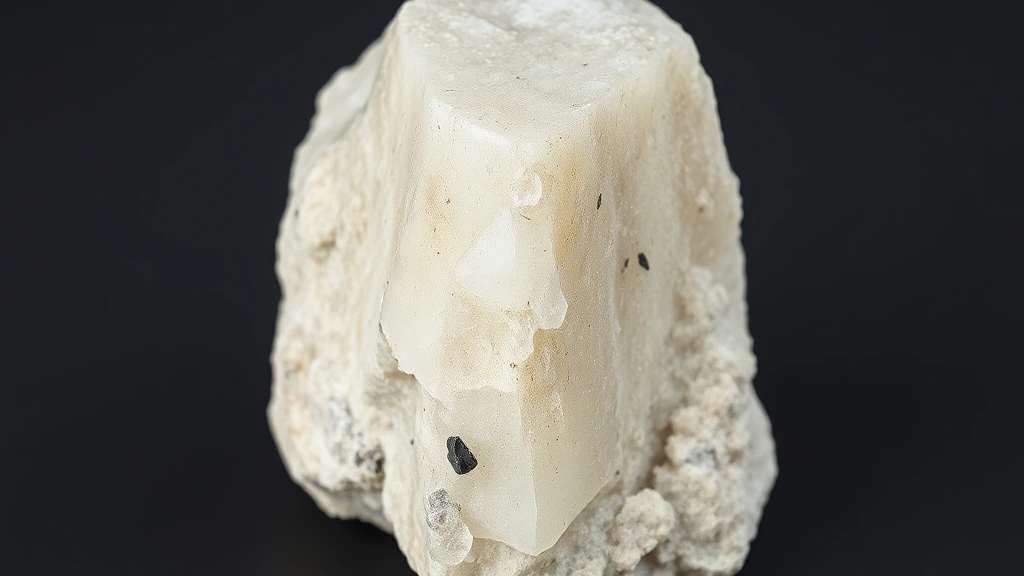
Amblygonite belongs to the natural mineral / crystal group and is classified as a phosphate of lithium, aluminum, and fluorine. Occurring in pegmatitic veins and granitic aplites, it crystallizes in the triclinic system, producing tabular to prismatic habits that can be cut for jewelry. Its density ranges from 2.98 to 3.11 g/cm³, and its refractive indices vary modestly, giving the stone a gentle brilliance prized by collectors.
What is Amblygonite? Geological Overview & Definition
Amblygonite is a lithium‑bearing phosphate that forms in late‑stage granitic pegmatites, often alongside spodumene, lepidolite, and beryl. The mineral’s name derives from the Greek “amblys” (blunt) and “gonos” (angle), reflecting its typically blunt crystal terminations.
In the field, amblygonite appears as transparent to translucent crystals, ranging from colorless to pale yellow, green, or brown, sometimes exhibiting a faint fluorescence under short‑wave UV light. Its occurrence is documented in historic mining districts of Brazil, Madagascar, and the United States, where it has been both a lithium ore and a decorative gemstone.
Amblygonite Chemical Composition & Crystallographic Properties
Amblygonite’s idealized formula is LiAlPO₄F, but natural specimens display extensive cation substitution, with Na⁺, Ca²⁺, and even rare earth elements partially replacing lithium and aluminum. This solid‑solution behavior influences both color and physical properties, making each specimen uniquely variable.
The mineral crystallizes in the triclinic system, characterized by three unequal axes intersecting at oblique angles, producing a low‑symmetry lattice that lacks any perpendicular faces. Its crystal structure consists of alternating layers of PO₄ tetrahedra and AlO₆ octahedra linked by lithium‑fluoride polyhedra, creating channels that accommodate substituting ions.
Amblygonite is acid‑sensitive; exposure to dilute hydrochloric acid can cause surface etching and release of fluoride ions, a diagnostic test for gemologists. Thermal treatment at temperatures above 400 °C can induce a reversible color change, as heat alters the occupancy of chromophore sites responsible for its pale hues.
The chromophore color centers in amblygonite are primarily associated with Fe³⁺ and Mn²⁺ impurities, which absorb specific wavelengths and impart yellow to green tones. Upon heating, these centers can be partially annealed, leading to a lightening of color, a property sometimes exploited to enhance gemstone appearance.
| Property | Specification |
|---|---|
| Mineral Group | Natural Mineral / Crystal |
| Mohs Hardness | 5.5–6 |
| Crystal System | Triclinic |
| Specific Gravity (Density) | 2.98–3.11 |
| Refractive Index | n a =1.577 – 1.591, n b =1.592 – 1.605, n c =1.596 – 1.613 |
| Color & Optical Properties | Natural Amblygonite color spectrum and optical dispersion |
| Primary Mining Localities | Global primary localities |
| Water & Chemical Resistance | High (Safe for gentle water washing) |
| Chakra Alignment (Traditional) | Heart Chakra, Crown Chakra |
| Zodiac Affinity (Traditional) | Taurus, Virgo |
| Symbolic Meaning (Traditional) | Emotional balance, spiritual growth, and harmony |
Amblygonite Varieties & Color Spectrum
Amblygonite displays distinct mineralogical characteristics across its geological varieties and structural habits. Gemologists evaluate these natural varieties based on crystal habit, trace chromophore concentrations, and visual luster.
Primary Natural Amblygonite
The benchmark natural variety exhibiting diagnostic color saturation and classic crystallographic symmetry.
Distinct Geological Morphs of Amblygonite
Secondary regional and structural varieties formed under localized geological temperature and pressure conditions.
White–Blue Amblygonite
White–blue amblygonite forms in orthoclase‑rich pegmatites where lithium and boron migrate into the crystal lattice. The gemstone displays a subtle blue‑white hue with occasional black inclusions that resemble tiny graphite flakes. Its scarcity in commercial markets stems from the limited size of suitable crystals and the difficulty of separating it from similar‑looking lithium‑rich feldspars.
Yellow‑Orange Amblygonite
Yellow‑orange amblygonite is produced by trace amounts of iron and manganese incorporated during crystallization. The resulting color ranges from pale amber to deep orange, often with a fine grainy texture that gives a subtle opalescent effect. This variety is prized by collectors for its rarity; large, well‑cut specimens are rarely found outside a few select South African deposits.
Green Amblygonite
Green amblygonite owes its hue to chromium and vanadium impurities. The crystals exhibit a deep emerald tone, sometimes with a sterile, glassy luster that enhances their visual appeal. Green specimens are uncommon, with most known examples originating from Brazilian pegmatites where the mineral forms in close association with bauxite.
Pink Amblygonite
Pink amblygonite is a rare variant that incorporates cobalt and titanium during growth. The resulting soft pink coloration is often accompanied by minute needle‑shaped inclusions that give the stone a subtle sparkle. This variety is highly sought after in the fine‑gem market, with significant finds reported from India’s Kolar region.
Gray Amblygonite
Gray amblygonite forms in high‑pressure metamorphic environments where the mineral undergoes partial recrystallization. Its muted gray tone is frequently interspersed with silicate inclusions that create a distinctive speckled appearance. The rarity of this form is due to the narrow geological window required for its formation, with notable occurrences in Alaska and Siberia.
Black Amblygonite
Black amblygonite is the most elusive variety, developing in lithium‑rich pegmatites that contain high concentrations of graphite. The gemstone displays a deep black color with occasional metallic luster. Its scarcity is compounded by the difficulty of extracting large, clear crystals, making it a coveted specimen among high‑end collectors.
Where is Amblygonite Found? Geological Mining & Extraction
Amblygonite crystallizes in lithium‑rich, boron‑bearing pegmatites that are typically associated with granitic intrusions. The mineral is most abundant in the Siberian and Alaskan regions, where extensive pegmatite bodies provide ideal conditions for its growth.
Commercial extraction occurs primarily in South Africa, Brazil, and India, where mining operations target large pegmatite veins. The extraction process involves careful crushing and screening to isolate the relatively fragile amblygonite crystals, followed by hand‑cutting to preserve their delicate optical properties.
Historical Significance & Cultural Lore of Amblygonite
Across ancient Greco‑Roman lapidary traditions, amblygonite was valued for its soft hues and was often used in cameo carving and ornamental inlay. The mineral’s association with lithium—though not understood at the time—conferred a symbolic link to mental clarity in early alchemical texts.
In Egyptian funerary artifacts, fragments of amblygonite were incorporated into amulets believed to protect the soul during the afterlife. Chinese metallurgical records from the Han dynasty mention amblygonite in the context of metallurgical fluxes, highlighting its role in early smelting processes. The stone’s presence in these diverse cultures underscores its long‑standing appeal and multifaceted utility.
Modern Uses & Jewelry Applications of Amblygonite
Amblygonite is prized for its subtle blue‑green hues and moderate hardness, making it suitable for delicate lapidary work. Skilled cutters often produce cabochons that highlight the stone’s natural luster, while faceted pieces accentuate its refractive indices. The mineral’s relatively low density also allows for intricate ornamental carvings in jewelry settings.
- Cabochon polishing to showcase its silky sheen.
- Faceted cuts that enhance refractive brilliance.
- Ornamental carving for pendants, brooches, and decorative accents.
Metaphysical Properties & Traditional Meaning of Amblygonite
According to historical traditions and metaphysical lore, amblygonite is believed to foster emotional balance and encourage spiritual growth. Across ancient Mediterranean and Vedic lapidary practices, the stone is associated with the Heart Chakra, promoting compassion, and the Crown Chakra, facilitating higher consciousness. Its calming blue tones are thought to soothe turbulence, while its crystalline structure symbolizes clarity of thought.
Which Chakra and Zodiac Signs Align with Amblygonite?
Amblygonite is traditionally linked to the Heart Chakra, the center of love and emotional harmony. This association encourages practitioners to use the stone in meditation or healing rituals aimed at nurturing empathy and compassion.
The mineral also aligns with the Crown Chakra, the gateway to spiritual insight and universal connection. In astrological contexts, amblygonite is specifically connected to the zodiac signs Taurus and Virgo, reflecting its grounding qualities and meticulous nature.
How to Identify Real vs. Fake Amblygonite
Collectors often encounter artificial imitations such as dyed glass or synthetic analogues that mimic amblygonite’s appearance. Genuine specimens exhibit a characteristic low thermal conductivity and a distinct refractive index range that differs from common glass. Careful comparison with reference samples can reveal subtle discrepancies in color saturation and internal structure.
Practical At-Home Authenticity Tests
- Temperature Test (Thermal Feel): Hold the stone near your wrist; real amblygonite feels noticeably cooler than synthetic glass, indicating its lower thermal conductivity.
- Specific Gravity & Weight Test: Weigh the stone against a known mass of a similar-sized quartz sample; amblygonite’s specific gravity (2.98–3.11) will make it noticeably lighter.
- Scratch & Hardness Test (Mohs Comparison): Use a standard Mohs kit; amblygonite should scratch glass (Mohs 5.5–6) but be scratched by a steel file, distinguishing it from harder synthetic materials.
- Microscopic & Loupe Inspection (Internal Inclusions): Examine under a loupe for fine, fibrous inclusions typical of natural amblygonite; synthetic replicas often display uniform, glassy interiors without such features.
Amblygonite Valuation Factors, Grading & Pricing
Color Saturation remains the foremost determinant of value, as the vivid turquoise to green hues of amblygonite command premium prices. The depth and uniformity of the tint directly influence visual vibrancy, while a natural energetic luster enhances the stone’s metaphysical appeal. Collectors often seek specimens with the most saturated, eye‑catching coloration, which can command a 30–40 % price premium over more muted samples.
Crystal Size & Weight (Grams) is the next critical metric. Larger, well‑formed crystals that retain their natural shape after tumbled polishing fetch higher prices than smaller, heavily weathered pieces. The weight in grams, coupled with the overall dimensions, provides a clear, objective basis for grading, while natural matrix inclusions add character and can increase value if they are aesthetically pleasing rather than detrimental.
Ethical Sourcing & Locality Premium drives market differentiation in both holistic and collector circles. Stones sourced from responsibly managed mines or with documented provenance from renowned localities such as the Ural Mountains or the U.S. Southwest receive a premium. Ethical sourcing signals transparency and sustainability, qualities that resonate strongly with contemporary buyers.
How to Clean and Care for Amblygonite
Gentle maintenance preserves the integrity of amblygonite. Use warm soapy water and a soft cloth to wipe the surface, ensuring the solution is not too hot to avoid thermal shock. After cleaning, dry the stone with a lint‑free cloth and store it in a low‑humidity environment to prevent moisture absorption. Avoid ultrasonic cleaners, as the vibration can induce microfractures in the delicate lattice.
Cleansing and Recharging Amblygonite (Energetic Care)
To recharge amblygonite, place it in a quiet, dimly lit space under gentle moonlight for several hours. The subtle lunar energy can restore the stone’s vibrancy without exposing it to direct heat or intense light. Alternatively, resting the crystal on a selenite charging slab allows the selenite’s conductive properties to cleanse and amplify its energetic field safely. These methods maintain the structural integrity of amblygonite while supporting its metaphysical qualities.
Frequently Asked Questions About Amblygonite
Amblygonite displays distinct mineralogical characteristics across its geological varieties and structural habits. Gemologists evaluate these natural varieties based on crystal habit, trace chromophore concentrations, and visual luster.
Primary Natural Amblygonite
The benchmark natural variety exhibiting diagnostic color saturation and classic crystallographic symmetry.
Distinct Geological Morphs of Amblygonite
Secondary regional and structural varieties formed under localized geological temperature and pressure conditions.
What is amblygonite and where does it form?
Amblygonite is a rare phosphate mineral that crystallizes in the triclinic system. It typically forms in hydrothermal veins and pegmatites, often associated with fluorite, quartz, and feldspar. The mineral’s composition includes lithium, sodium, and boron, giving it a distinctive chemical signature.
Is amblygonite suitable for everyday jewelry wear?
Yes, amblygonite can be worn daily, but it should be handled with care. Its Mohs hardness of 5.5–6 makes it moderately durable, yet it is prone to scratches from harder stones. Protect it from abrasive surfaces and avoid prolonged exposure to harsh chemicals.
Can amblygonite be safely washed in water?
Amblygonite is water‑resistant and safe for gentle washing. A mild soapy solution and a soft cloth are sufficient; avoid harsh detergents or abrasive scrubbers that could damage its surface. The mineral’s structure tolerates occasional contact with rain or shower water.
How should I clean amblygonite without causing damage?
Use warm soapy water and a soft cloth, then dry with a microfiber towel. Avoid ultrasonic cleaners, as the vibration can induce microfractures in the fragile crystal lattice. Gentle cleaning preserves the stone’s luster and structural integrity.
Is amblygonite safe for use in ultrasonic cleaners?
No, ultrasonic cleaning should be avoided for amblygonite. The high-frequency vibrations can cause cracks or fractures in the mineral’s delicate crystal structure, compromising its durability and appearance.
Which zodiac signs are associated with amblygonite?
Amblygonite aligns with the zodiac signs Taurus and Virgo. These signs are believed to resonate with the stone’s grounding and analytical qualities, enhancing focus and emotional balance for those born under these constellations.
Which chakras does amblygonite correspond to?
Amblygonite corresponds to the Heart Chakra and Crown Chakra. These chakras are linked to emotional harmony and spiritual insight, making the stone a popular choice for meditation and energy healing practices.
Does amblygonite have any notable historical or cultural significance?
Amblygonite has appeared in ancient lapidary traditions across the Mediterranean and Central Asia. Its unique crystal habits and subtle hues were prized by early artisans for ornamental carvings and symbolic jewelry, reflecting its perceived metaphysical properties.