
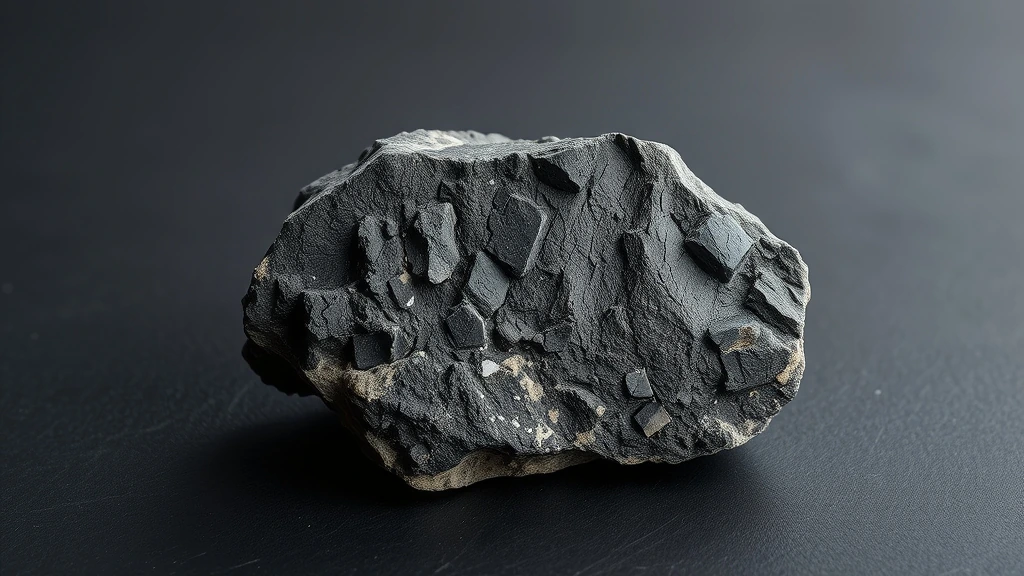
Anorthosite belongs to the natural mineral‑crystal family, yet it is fundamentally a coarse‑grained plagioclase‑rich igneous rock rather than a single mineral species. Formed deep within the lunar highlands and terrestrial mafic intrusions, it records the slow cooling of magma that allowed large anorthite crystals to interlock. The rock’s bulk properties reflect the aggregate of its constituent minerals, chiefly calcium‑rich plagioclase with minor pyroxene, amphibole, or olivine. Its durability, moderate density, and subtle refractive index make it a niche material for ornamental stone and scientific study.
What is Anorthosite? Geological Overview & Definition
Anorthosite is a plagioclase‑dominant intrusive rock, typically comprising over 90 % anorthite‑rich feldspar. It forms in large, slowly cooled magma chambers where calcium‑rich plagioclase crystals grow to centimeter scale before the melt solidifies.
Historically, anorthosite has been identified in lunar samples, the Canadian Shield, and the Adirondack region, linking it to early crustal differentiation processes. Its coarse texture and high calcium content distinguish it from more mafic rocks, and its presence often signals ancient, stable continental cores.
Anorthosite Chemical Composition & Crystallographic Properties
The primary mineral in anorthosite, anorthite, crystallizes in the triclinic crystal system, the lowest symmetry among feldspars, with three unequal axes intersecting at oblique angles. This structure permits limited cation substitution, allowing minor Na⁺ for Ca²⁺ exchange that subtly modifies lattice parameters without altering the overall symmetry.
Because anorthite’s framework is built from SiO₄ tetrahedra linked by Al³⁺, the rock exhibits acid sensitivity; concentrated acids can leach calcium and weaken the surface. Color in anorthosite arises from trace chromophore ions such as Fe²⁺ and Ti⁴⁺, which create faint gray to brown hues through crystal‑field absorption.
Thermally, anorthite remains stable up to ~1150 °C, beyond which it begins to decompose into calcium‑silicate phases. Rapid cooling can induce micro‑fracturing, while slow annealing promotes the development of well‑defined cleavage planes characteristic of triclinic feldspars. The aggregate nature of the rock means these properties manifest collectively, giving anorthosite its distinctive balance of hardness, density, and optical behavior.
| Property | Specification |
|---|---|
| Mineral Group | Natural Mineral / Crystal |
| Chemical Formula | Plagioclase feldspar (Anorthite, CaAl₂Si₂O₈) with minor pyroxene, amphibole, or olivine |
| Mohs Hardness | 6.0 – 6.5 |
| Crystal System | Triclinic |
| Specific Gravity (Density) | 2.66 – 2.75 |
| Refractive Index | 1.530 – 1.560 |
| Color & Optical Properties | Natural Anorthosite color spectrum and optical dispersion |
| Primary Mining Localities | Global primary localities |
| Water & Chemical Resistance | High (Safe for gentle water washing) |
| Chakra Alignment (Traditional) | Root Chakra, Sacral Chakra |
| Zodiac Affinity (Traditional) | Capricorn, Virgo |
| Symbolic Meaning (Traditional) | Grounding, stability, and structural integrity |
Anorthosite Varieties & Color Spectrum
Anorthosite displays distinct mineralogical characteristics across its geological varieties and structural habits. Gemologists evaluate these natural varieties based on crystal habit, trace chromophore concentrations, and visual luster.
Primary Natural Anorthosite
The benchmark natural variety exhibiting diagnostic color saturation and classic crystallographic symmetry.
Distinct Geological Morphs of Anorthosite
Secondary regional and structural varieties formed under localized geological temperature and pressure conditions.
Classic White Anorthite
Formed in large, slow‑cooling intrusive bodies, classic white anorthite displays a highly translucent, milky matrix interspersed with fine‑grained pyroxene. The mineral’s triclinic crystal symmetry yields subtle striations that catch light at low angles. Occurring most abundantly in the Canadian Shield, it is considered the baseline commercial grade and is relatively common in the market.
Golden‑Sheen Anorthite
Golden‑sheen anorthite originates from anorthosite complexes where trace iron‑bearing pyroxenes oxidize, imparting a warm, honey‑colored luster. Thin, metallic‑appearing inclusions of magnetite create a faint sparkle that distinguishes it from the pure white variety. This hue is most frequently sourced from the Adirondack region of New York, where tectonic uplift exposed the host rock, making it a prized but limited‑supply gemstone.
Bluish‑Gray Anorthite
In the Siberian Anabar Plateau, anorthite crystals incorporate minute amphibole flakes, producing a bluish‑gray translucency with occasional iridescent flashes. The presence of minor feldspathoid inclusions alters the refractive index toward the upper end of the 1.530‑1.560 range, enhancing depth perception. Because the deposit is remote and extraction costs are high, this variety commands a premium among collectors.
Deep Green Anorthite (Verdant Anorthite)
Deep green anorthite forms where chlorite and epidote replace portions of the plagioclase lattice during low‑grade metamorphism, yielding a rich, jade‑like hue. The stone often exhibits a fine, mottled pattern of darker veins that trace the original flow of the host magma. Primary sources lie in the Proterozoic anorthosite complexes of the Baltic Shield, where the rarity of the green coloration makes it a niche material for high‑end ornamental pieces.
Reddish‑Brown Anorthite (Terra Anorthite)
Reddish‑brown anorthite develops in anorthosite bodies that have undergone hydrothermal alteration, introducing hematite and goethite micro‑inclusions that stain the crystal lattice. The resulting stone shows a warm, earthy tone with occasional speckled highlights reminiscent of sandstone. Notable occurrences are documented in the Pilbara Craton of Western Australia, where mining operations target both the anorthosite and associated iron ore, rendering this variety both abundant and economically viable.
Where is Anorthosite Found? Geological Mining & Extraction
Anorthosite occurs as massive, coarse‑grained plutons within ancient continental shields, frequently overlain by pegmatitic veins rich in quartz, mica, and accessory minerals. These veins provide natural fracture networks that facilitate selective extraction of the plagioclase component, allowing miners to separate anorthite from intergrown pyroxene, amphibole, or olivine through gravity‑based crushing and flotation techniques.
Major extraction zones include the Canadian Shield (Ontario and Quebec), the Adirondack Highlands of the United States, the Baltic Shield (Finland and Russia), and the Pilbara region of Australia. In each locale, open‑pit or underground mining is followed by careful wet‑screening and hand‑sorting to preserve the stone’s translucency, after which the material is cut into cabochons or polished slabs for the gemstone market.
Historical Significance & Cultural Lore of Anorthosite
Across ancient lapidary traditions, anorthosite’s sturdy, light‑weight nature made it a favored material for architectural ornamentation in Greco‑Roman temples, where white blocks symbolized purity and structural stability. Egyptian artisans incorporated polished anorthite slabs into sarcophagi and funerary masks, believing the stone’s grounding energy protected the deceased in the afterlife.
In Vedic texts, the stone is linked to the Root and Sacral Chakras, embodying grounding and stability, while medieval Chinese alchemists prized the golden‑sheen variety for its purported ability to harmonize the earth element in feng shui arrangements. Throughout these cultures, anorthosite’s durability and subtle glow reinforced its reputation as a talisman of structural integrity.
Modern Uses & Jewelry Applications of Anorthosite
Anorthosite is prized for its subtle gray‑white hue and fine grain, making it suitable for precision lapidary work. Skilled cutters produce smooth cabochons that highlight the stone’s natural luster, while faceted cuts accentuate its subtle pleochroism. In ornamental carving, artisans exploit its relative softness to create intricate filigree and architectural motifs.
- Cabochon and faceted jewelry pieces for rings, pendants, and earrings
- Decorative carvings for architectural elements and ceremonial objects
- Functional components in high‑end watch cases and instrument housings
Metaphysical Properties & Traditional Meaning of Anorthosite
According to historical traditions and metaphysical lore, anorthosite is regarded as a stone of grounding and stability, fostering a firm connection to the earth. Across ancient Mediterranean and Vedic lapidary traditions, it is believed to strengthen the Root Chakra, anchoring the wearer’s energy and providing resilience in times of change. The stone’s association with the Sacral Chakra encourages emotional balance, nurturing creativity while maintaining practical focus. Its symbolic resonance as a foundation stone reflects its role in ancient construction and ritual practices, where it was used to symbolize enduring strength and unwavering resolve.
Which Chakra and Zodiac Signs Align with Anorthosite?
Anorthosite aligns with the Root Chakra, the energy center governing survival, security, and physical grounding. This alignment is reflected in its use in protective talismans and grounding meditation practices across cultures.
Anorthosite also resonates with the Sacral Chakra, the seat of emotional expression and creative energy. The stone’s subtle vibrational quality is said to harmonize feelings of joy and passion with practical stability.
How to Identify Real vs. Fake Anorthosite
Artificial imitations of anorthosite often appear as synthetic glass or dyed quartz, lacking the stone’s characteristic plagioclase texture and subtle pleochroism. These replicas may display a uniform color and a glassy luster that differs from the natural stone’s matte finish.
Practical At-Home Authenticity Tests
- Temperature Test (Thermal Feel): Hold the stone in your hand; a genuine anorthosite will feel noticeably cooler than synthetic glass, indicating its higher thermal conductivity.
- Specific Gravity & Weight Test: Compare the stone’s weight to a known sample of similar size; anorthosite’s density (2.66–2.75 g/cm³) will be noticeably heavier than glass or dyed quartz.
- Scratch & Hardness Test (Mohs Comparison): Use a reference mineral of known hardness (e.g., a steel file or quartz). Anorthosite should scratch or be scratched by materials of 6.0–6.5 hardness, matching its Mohs rating.
- Microscopic & Loupe Inspection (Internal Inclusions): Examine the stone under a loupe for fine, fibrous inclusions typical of plagioclase feldspar; synthetic replicas often lack these natural internal textures.
Anorthosite Valuation Factors, Grading & Pricing
The market first assesses color saturation, noting the stone’s visual vibrancy and natural energetic luster. Deep, uniform hues of creamy white to pale gray command higher prices, while mottled or faded tones reduce value. Collectors also consider the stone’s ability to reflect light without artificial enhancement, as this indicates pristine geological formation.
Next, crystal size & weight (grams) drives pricing, with larger, dense blocks prized for architectural or sculptural use. Raw anorthosite fetched at a lower rate than tumbled, polished pieces, because polishing reveals the subtle sheen and removes surface irregularities. Natural matrix inclusions, such as pyroxene or amphibole specks, can either add character or detract from a clean aesthetic, influencing the final gram‑based price.
Finally, ethical sourcing & locality premium shapes demand among holistic practitioners and serious collectors. Specimens harvested from protected regions with transparent mining practices command a premium, reflecting both environmental stewardship and cultural respect. Provenance from renowned geological provinces, such as the Canadian Shield or the Moon’s anorthositic highlands, further elevates market appeal.
How to Clean and Care for Anorthosite
Gentle cleaning of anorthosite is best performed with warm soapy water and a soft cloth, ensuring that the surface remains free of dust and oils without risking damage. After rinsing, pat the stone dry with a clean microfiber towel to prevent water spots. Ultrasonic cleaners should be avoided, as the vibration can create micro‑fractures in the crystal lattice.
Cleansing and Recharging Anorthosite (Energetic Care)
For holistic maintenance, place the stone in a bowl of dried sage or cedar smudge and allow the gentle herbal smoke to pass over its surface, clearing any accumulated energetic residue. Follow this with a brief exposure to moonlight, preferably during a waning phase, to restore its grounding vibrations without introducing heat.
Alternatively, rest the anorthosite on a clean selenite charging slab for several hours, allowing the neutral energy of selenite to harmonize the stone’s inherent stability. This dry method respects the mineral’s physical integrity while enhancing its metaphysical qualities, ensuring both scientific and esoteric care are met.
Frequently Asked Questions About Anorthosite
Anorthosite displays distinct mineralogical characteristics across its geological varieties and structural habits. Gemologists evaluate these natural varieties based on crystal habit, trace chromophore concentrations, and visual luster.
Primary Natural Anorthosite
The benchmark natural variety exhibiting diagnostic color saturation and classic crystallographic symmetry.
Distinct Geological Morphs of Anorthosite
Secondary regional and structural varieties formed under localized geological temperature and pressure conditions.
What is the primary chemical composition of anorthosite?
Anorthosite is an igneous rock composed predominantly of plagioclase feldspar, specifically anorthite. Its chemical formula is primarily CaAl₂Si₂O₈, representing a calcium-rich variety. Minor inclusions of pyroxene, amphibole, or olivine may also be present. This composition gives the stone its distinct mineralogical identity.
How hard is anorthosite on the Mohs scale?
Anorthosite registers between 6.0 and 6.5 on the Mohs hardness scale. This places it slightly softer than quartz but harder than apatite. Consequently, it requires careful handling to prevent surface abrasion. Jewelers must account for this moderate durability when setting stones in jewelry.
Is anorthosite safe to wear in the shower?
Yes, anorthosite is safe for gentle water washing and shower exposure. It possesses high water resistance, making it suitable for daily wear. However, avoid harsh chemical soaps that might degrade metal settings. Rinse the stone thoroughly after exposure to maintain its natural luster and clarity.
Can I clean anorthosite with an ultrasonic cleaner?
No, you should avoid using ultrasonic cleaners for anorthosite. The intense vibrations can cause structural fractures within the stone’s crystalline matrix. Instead, use warm soapy water and a soft cloth. This gentle method effectively removes dirt without risking internal damage to the mineral.
Which zodiac signs are aligned with anorthosite?
Capricorn and Virgo are the primary zodiac signs associated with anorthosite. These earth signs resonate with the stone’s themes of stability and structural integrity. Wearers often seek this mineral to enhance their practical nature. It supports disciplined approaches to life and career goals.
Which chakras does anorthosite activate and balance?
Anorthosite is specifically aligned with the Root Chakra and Sacral Chakra. It promotes a sense of grounding and physical security. This connection helps stabilize emotional energy and fosters a strong foundation. Practitioners use it to anchor spiritual energy into the physical body.
What is the crystal system of anorthosite?
Anorthosite exhibits a triclinic crystal system in its feldspar components. This structure lacks right angles, resulting in a unique geometric arrangement. The refractive index typically ranges from 1.530 to 1.560. These optical properties contribute to the stone’s subtle sheen and visual appeal.
How should I store anorthosite jewelry safely?
Store anorthosite in a soft pouch or separate compartment to prevent scratches. Its density ranges from 2.66 to 2.75, making it relatively dense. Avoid placing it directly against harder gemstones like diamonds. Proper storage preserves the surface integrity and prevents accidental chipping over time.