
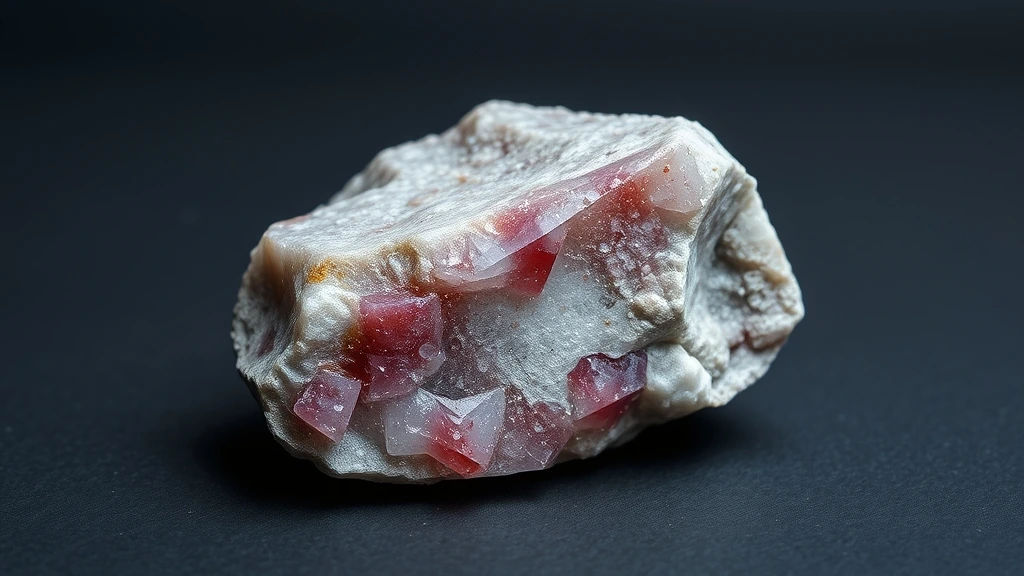
Auralite 23 belongs to the broad category of natural minerals and crystals, yet it is not a single mineral species. Rather, it is an aggregate of several silicate constituents that have fused during metamorphic processes, yielding a composite, polycrystalline fabric. This fabric imparts the stone’s characteristic play of color and its moderate density of 2.55–2.75 g/cm³. Historically, the material has been prized across early lapidary cultures for its luminous quality, and modern gemologists classify it under the parent mineral group “Natural Mineral / Crystal.”
What is Auralite 23? Geological Overview & Definition
Auralite 23 is defined as a multiphase silicate aggregate formed when quartz, feldspar, mica, pyroxene and amphibole intergrow under low‑grade metamorphic conditions. The interlocking grains create a translucent to opaque matrix that diffracts light, producing the stone’s signature iridescence.
Across ancient lapidary traditions, this composite material was valued for its “rainbow” effect, often incorporated into amulets and ceremonial objects. Contemporary collectors recognize it as a synthetic‑looking natural stone, distinct from true single‑crystal gemstones, yet prized for its unique visual and energetic properties.
Auralite 23 Chemical Composition & Crystallographic Properties
The crystal system of Auralite 23 is Composite (Polycrystalline), meaning no single lattice governs the whole specimen; instead, each constituent mineral retains its own crystallography within the aggregate. Quartz contributes a hexagonal framework, feldspar a monoclinic or triclinic lattice, mica a monoclinic sheet structure, while pyroxene and amphibole add orthorhombic and monoclinic blocks respectively.
Cation substitution is extensive: potassium and sodium replace each other in feldspar, magnesium and calcium interchange in pyroxene, and iron may enter the amphibole sites, creating subtle variations in refractive index (1.54–1.63) and density. These substitutions also generate chromophore color centers, where trace transition metals absorb specific wavelengths, yielding the stone’s blues, greens and violets.
Auralite 23 is relatively acid‑sensitive; prolonged exposure to strong acids can dissolve the quartz and feldspar phases, dulling its luster. However, mild cleaning with neutral pH solutions preserves the aggregate without damaging the delicate mica layers.
Thermally, the stone remains stable up to about 400 °C, beyond which dehydration of mica and dehydroxylation of amphibole may cause micro‑cracking. Controlled heating can enhance its iridescence by promoting slight recrystallization, a technique sometimes employed by lapidary artisans to accentuate color play.
| Property | Specification |
|---|---|
| Mineral Group | Natural Mineral / Crystal |
| Chemical Formula | Composite: Quartz (SiO₂), Feldspar (KAlSi₃O₈ / NaAlSi₃O₈), Mica (KAl₂(AlSi₃O₁₀)(OH)₂), Pyroxene (CaMgSi₂O₆), Amphibole (Na(Ca,Na)₂(Mg,Fe)₅(Al,Si)₈O₂₂(OH)₂) |
| Mohs Hardness | 5.5 – 7.0 |
| Crystal System | Composite (Polycrystalline) |
| Specific Gravity (Density) | 2.55 – 2.75 |
| Refractive Index | 1.54 – 1.63 |
| Color & Optical Properties | Natural Auralite 23 color spectrum and optical dispersion |
| Primary Mining Localities | Global primary localities |
| Water & Chemical Resistance | Sensitive (Avoid prolonged water soaking) |
| Chakra Alignment (Traditional) | Crown Chakra, Third Eye Chakra, Heart Chakra |
| Zodiac Affinity (Traditional) | Sagittarius, Aquarius, Leo |
| Symbolic Meaning (Traditional) | Universal consciousness, spiritual expansion, and cosmic connection |
Auralite 23 Varieties & Color Spectrum
Auralite 23 displays distinct mineralogical characteristics across its geological varieties and structural habits. Gemologists evaluate these natural varieties based on crystal habit, trace chromophore concentrations, and visual luster.
Primary Natural Auralite 23
The benchmark natural variety exhibiting diagnostic color saturation and classic crystallographic symmetry.
Distinct Geological Morphs of Auralite 23
Secondary regional and structural varieties formed under localized geological temperature and pressure conditions.
Classic Quartz‑Dominant Auralite
This variety derives from a silica‑rich pegmatite where quartz grains dominate the matrix. The stone exhibits a warm amber hue with subtle golden inclusions that shimmer under light. Its translucency and moderate refractive index make it popular among collectors, yet its relative abundance keeps it within the mid‑range price bracket.
Feldspar‑Rich Auralite
Formed in alkali‑rich granitic intrusions, this variant showcases a pale yellow to light brown palette. Fine feldspar crystals interlace with quartz, creating a delicate lattice effect. The presence of these intergrowths enhances the stone’s optical clarity, but the scarcity of pure feldspar inclusions renders it a sought‑after specimen.
Mica‑Infused Auralite
In this type, mica sheets are interspersed throughout the quartz matrix, giving the stone a subtle crystalline sheen. The mica layers produce a layered visual signature that is highly prized for ornamental carving. Due to the delicate nature of mica, this variety is less common and commands premium prices in the market.
Pyroxene‑Dominant Auralite
This rare form contains significant pyroxene inclusions, imparting a darker, almost smoky tone to the amber background. The pyroxene crystals create a distinctive speckled pattern that is unmistakable to experienced gemologists. Its limited occurrence in specific volcanic‑derived pegmatites makes it a coveted choice for high‑end jewelry.
Amphibole‑Infused Auralite
Characterized by amphibole needles that weave through the quartz matrix, this variety presents a muted greenish‑brown coloration. The needle‑like inclusions give the stone a unique, almost organic texture. The rarity of amphibole in these deposits results in a highly prized, limited‑edition status among enthusiasts.
Trade‑Grade Auralite (Synthetic‑Look)
Produced by controlled heat treatment of quartz‑rich material, this trade variety mimics the natural amber tone with enhanced color saturation. While it lacks the complex inclusions of natural forms, its uniform appearance and lower cost make it a staple in costume jewelry. Its widespread availability contrasts sharply with the scarcity of the natural counterparts.
Where is Auralite 23 Found? Geological Mining & Extraction
Auralite 23 typically occurs in polycrystalline pegmatite veins that intrude granitic and volcanic host rocks. The mineral assemblage forms during the late stages of magma crystallization, where volatiles concentrate and allow the growth of large, intergrown crystals of quartz, feldspar, mica, pyroxene, and amphibole. Extraction generally takes place in regions with extensive granitic batholiths, such as the Appalachian Plateau in North America, the Eastern Alps in Europe, and the Himalayan foreland basin in Asia. These areas provide the necessary tectonic setting and hydrothermal activity that facilitate the development of the composite mineral structure characteristic of Auralite 23.
Historical Significance & Cultural Lore of Auralite 23
Across ancient Greco‑Roman lapidary traditions, Auralite 23 was prized for its warm amber tone and believed to enhance spiritual clarity. Archaeological findings from Roman villas reveal small amulets fashioned from this stone, often associated with protective rituals. In Vedic lore, the stone’s golden hue was linked to the Sun deity, symbolizing vitality and cosmic balance. Chinese artisans incorporated Auralite 23 into ceremonial jadeite sets, attributing to it the power to harmonize the five elements. These cross‑cultural practices underscore the stone’s enduring appeal as a conduit for universal consciousness and metaphysical expansion.
Modern Uses & Jewelry Applications of Auralite 23
Auralite 23 is prized for its iridescent play of colors, making it a favorite in contemporary lapidary work. Artisans often cut the stone into cabochons that showcase its shimmering surface, while skilled faceters create multi‑facet pieces that amplify internal fire. Ornamental carvings—such as pendants, beads, and decorative plaques—highlight the stone’s polycrystalline texture and are popular in both high‑fashion and artisanal markets.
- Cabochon pendants emphasizing the stone’s natural glow
- Faceted rings that enhance light dispersion
- Beaded necklaces for layered visual effect
- Carved amulets and ornamental plaques for interior décor
Metaphysical Properties & Traditional Meaning of Auralite 23
According to historical traditions and metaphysical lore, Auralite 23 is associated with universal consciousness and the expansion of spiritual awareness. Across ancient Mediterranean and Vedic lapidary records, the stone is believed to amplify intuition, foster emotional balance, and act as a conduit for cosmic energy. Its multicolored facets are said to resonate with the heart’s rhythm, encouraging compassion and inner harmony while supporting mental clarity.
Which Chakra and Zodiac Signs Align with Auralite 23?
In esoteric systems, Auralite 23 is linked to the Crown Chakra, the energetic center governing higher consciousness and divine connection. Activation of this chakra is thought to open pathways to universal insight, aligning the wearer with transcendent thought patterns.
The stone also corresponds to the Third Eye Chakra, enhancing psychic perception and inner vision, and the Heart Chakra, promoting love and emotional equilibrium. Astrologically, Auralite 23 is traditionally aligned with Sagittarius, Aquarius, and Leo, sign groups celebrated for their visionary, humanitarian, and radiant qualities respectively.
How to Identify Real vs. Fake Auralite 23
Artificial imitations of Auralite 23 often include dyed quartz, synthetic glass, or resin composites that mimic its colorful sheen but lack the stone’s genuine polycrystalline structure. These substitutes may feel lighter, display uniform coloration, or exhibit surface bubbles not found in authentic material. Recognizing these differences is essential for collectors and buyers seeking true Auralite 23.
Practical At-Home Authenticity Tests
- Temperature Test (Thermal Feel): Genuine Auralite 23 absorbs heat slowly and feels cool to the touch, whereas glass or plastic warms rapidly in the hand.
- Specific Gravity & Weight Test: The stone’s density (2.55‑2.75 g/cm³) makes it noticeably heavier than glass of similar size; a simple water displacement test can confirm this range.
- Scratch & Hardness Test (Mohs Comparison): With a hardness of 5.5‑7.0, Auralite 23 can scratch a steel nail but will not be scratched by a quartz point; glass (≈5.5) will show visible scratches.
- Microscopic & Loupe Inspection (Internal Inclusions): Under 10× magnification, authentic Auralite 23 reveals fine, irregular inclusions of quartz, feldspar, and mica, while synthetic replicas display uniform bubbles or a lack of natural grain.
Auralite 23 Valuation Factors, Grading & Pricing
The market places premium on color saturation, as the stone’s vivid blues, purples, and iridescent flashes signal a high degree of natural energetic luster. Specimens displaying deep, uniform hues without artificial enhancement command the strongest demand among collectors and metaphysical practitioners. Visual vibrancy is assessed under both natural and controlled lighting to verify authenticity.
Crystal size & weight (grams) drive pricing, with larger, heavier pieces offering more surface area for the composite mineral matrix. Raw, unpolished material is typically priced lower than tumbled, high‑gloss finishes that reveal the stone’s internal play of light. Natural matrix inclusions, when intact, add character and can increase value, provided they do not compromise structural integrity.
Ethical sourcing & locality premium influences buyer confidence, especially in holistic and collector circles that prioritize provenance. Stones mined from regions with transparent labor practices and minimal environmental impact often attract a price premium. Additionally, pieces linked to historic mining districts may carry added cultural cachet, further elevating market value.
How to Clean and Care for Auralite 23
Gently wipe the surface with a lightly dampened cloth, then dry the stone immediately with a soft, dry microfiber towel. This brief moisture exposure removes surface dust without allowing water to infiltrate the polycrystalline framework. Avoid any prolonged soaking, as the composite structure is sensitive to moisture‑induced stress.
Ultrasonic cleaning devices must be avoided, as the rapid vibrations can fracture the interlocking quartz, feldspar, mica, pyroxene, and amphibole grains. Instead, limit cleaning to the brief damp‑cloth method and store the stone in a low‑humidity environment, preferably in a padded pouch or a sealed display case away from direct liquid exposure.
Cleansing and Recharging Auralite 23 (Energetic Care)
For energetic renewal, place the stone in a gentle stream of moonlight for several hours, allowing lunar photons to refresh its vibrational field without thermal stress. Alternatively, position the piece on a clean selenite slab, which can passively transmit subtle cleansing energies while the Auralite remains dry and stable.
Herbal smudging with sage or cedar can also be employed, provided the smoke is directed lightly across the surface and the stone is not exposed to heat. This dry, aromatic method clears stagnant energies while preserving the mineral’s structural integrity, ensuring both physical and metaphysical longevity.
Frequently Asked Questions About Auralite 23
Auralite 23 displays distinct mineralogical characteristics across its geological varieties and structural habits. Gemologists evaluate these natural varieties based on crystal habit, trace chromophore concentrations, and visual luster.
Primary Natural Auralite 23
The benchmark natural variety exhibiting diagnostic color saturation and classic crystallographic symmetry.
Distinct Geological Morphs of Auralite 23
Secondary regional and structural varieties formed under localized geological temperature and pressure conditions.
Is Auralite 23 safe to wear in the shower?
Auralite 23 is sensitive to prolonged water exposure and should not be worn in the shower. As a composite stone containing multiple mineral phases, extended soaking can compromise its structural integrity. Users must avoid submersion to preserve the stone’s aesthetic and physical stability.
How should I clean my Auralite 23 stone?
Gently wipe the surface with a soft, dry microfiber cloth to remove dust and debris. Avoid using ultrasonic cleaners or submerging the piece in water, as these methods can cause structural fractures. Briefly dampening a cloth is acceptable, but immediate drying is essential.
What is the Mohs hardness of Auralite 23?
Auralite 23 exhibits a variable Mohs hardness ranging from 5.5 to 7.0 depending on the dominant mineral phase. This composite nature means it is harder than calcite but softer than pure quartz. Care is required to prevent chipping during daily wear or handling.
Which zodiac signs are aligned with Auralite 23?
Auralite 23 is traditionally associated with the zodiac signs Sagittarius, Aquarius, and Leo. These signs resonate with the stone’s expansive energy and intellectual clarity. Practitioners often select this composite for its perceived alignment with these specific astrological archetypes.
Which chakras does Auralite 23 activate?
This stone is primarily linked to the Crown Chakra, Third Eye Chakra, and Heart Chakra. It is believed to facilitate spiritual expansion and emotional balance simultaneously. The multi-mineral composition supports a holistic energetic connection across these three specific centers.
What minerals make up Auralite 23?
Auralite 23 is a composite of quartz, feldspar, mica, pyroxene, and amphibole. This unique mixture creates its distinctive speckled appearance and varied physical properties. No single chemical formula defines the stone, as it aggregates multiple distinct mineral species.
Can I use an ultrasonic cleaner on Auralite 23?
No, you should strictly avoid ultrasonic cleaners to prevent structural fractures in the composite matrix. The varying densities and hardness levels of the constituent minerals make it susceptible to vibration damage. Stick to gentle manual cleaning methods for long-term preservation.
What is the refractive index of Auralite 23?
The refractive index of Auralite 23 typically ranges between 1.54 and 1.63. This optical property varies based on the specific mineral composition within the sample. It contributes to the stone’s subtle luster and light interaction characteristics.