
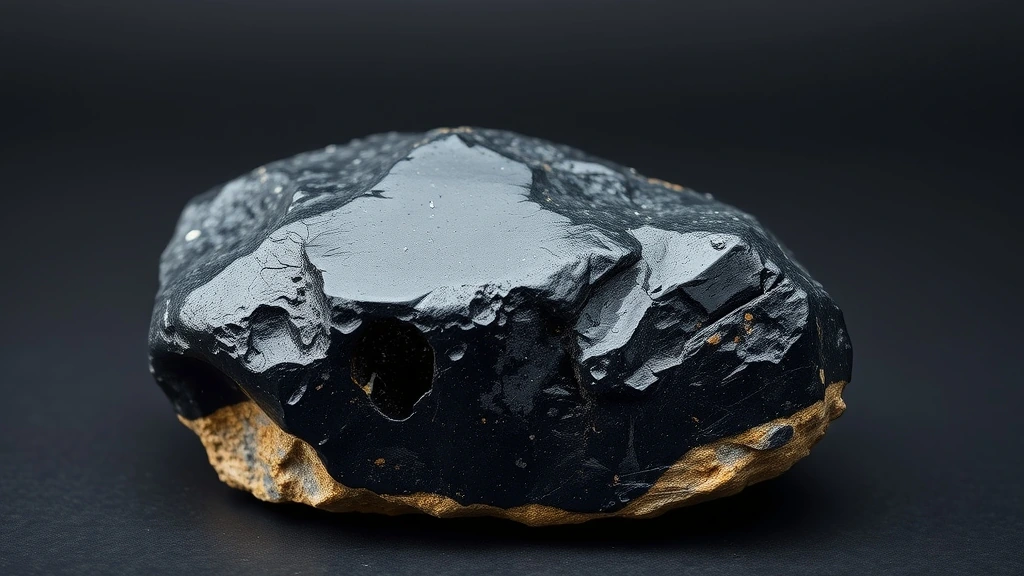
Black Onyx belongs to the silicate family, specifically the chalcedony subgroup of the quartz group. As an aggregate of intergrown fibrous quartz crystals, it forms in volcanic or sedimentary settings where silica‑rich fluids precipitate fine‑grained layers. The stone’s characteristic parallel banding results from rhythmic growth, producing a sleek, opaque black that has been prized across cultures for millennia.
What is Black Onyx? Geological Overview & Definition
Black Onyx is a microcrystalline chalcedony distinguished by its solid black coloration and smooth, glossy finish when polished. It occurs as nodular or massive formations within volcanic tuffs, alluvial deposits, and hydrothermal veins, where silica saturation promotes rapid fibrous crystal growth. The stone’s uniform darkness is often enhanced by heat treatment, which deepens the color without altering its fundamental structure.
Historically, the gem has been carved into cameos, seals, and intaglios, reflecting its workability and resistance to scratching. Across ancient lapidary traditions, artisans valued its ability to take a high polish, making it a staple in both ornamental and protective amulets. Its geological stability also ensures long‑term durability in architectural applications such as inlays and mosaics. In comparative mineralogical collections, practitioners and geologists frequently study Cheetah Jasper alongside this crystal to appreciate their subtle energetic and structural differences.
Black Onyx Chemical Composition & Crystallographic Properties
The mineral aggregate is fundamentally silicon dioxide (SiO₂), organized as a dense network of interlocking quartz fibers. Its trigonal crystal system—specifically microcrystalline fibrous chalcedony—means each fiber aligns along the c‑axis, producing the characteristic parallel banding observed in polished slabs. Although the aggregate lacks a single stoichiometric formula, the overall composition mirrors that of quartz, with minor trace impurities influencing color.
Color in black onyx arises from chromophore centers where iron oxides or organic inclusions absorb visible light, creating the deep black hue. These impurities substitute for silicon in the lattice at low concentrations, a process known as cation substitution, which does not disrupt the overall trigonal symmetry. Heat treatment can modify these centers, intensifying darkness without recrystallizing the structure. In comparative mineralogical collections, practitioners and geologists frequently study Candlequartz alongside this crystal to appreciate their subtle energetic and structural differences.
The aggregate is acid‑sensitive; prolonged exposure to strong acids can dissolve surface silica, leading to pitting or loss of polish. However, its relatively low density (2.60‑2.65 g/cm³) and moderate refractive index (1.544‑1.553) confer a pleasant heft and subtle luster. Thermal stability is high; black onyx tolerates temperatures up to ~600 °C before undergoing irreversible structural changes, at which point the fibrous network may recrystallize into macrocrystalline quartz.
| Property | Specification |
|---|---|
| Mineral Group | Silicates (Chalcedony / Quartz Group) |
| Chemical Formula | SiO₂ (Microcrystalline Chalcedony with parallel banding) |
| Mohs Hardness | 6.5 – 7.0 |
| Crystal System | Trigonal (Microcrystalline fibrous Chalcedony) |
| Specific Gravity (Density) | 2.60 – 2.65 |
| Refractive Index | 1.544 – 1.553 |
| Color & Optical Properties | Natural Black Onyx color spectrum and optical dispersion |
| Primary Mining Localities | Brazil, India, Madagascar, Uruguay, Germany |
| Water & Chemical Resistance | High (Safe in warm soapy water) |
| Chakra Alignment (Traditional) | Root Chakra (Muladhara) |
| Zodiac Affinity (Traditional) | Leo, Capricorn, Scorpio |
| Symbolic Meaning (Traditional) | Willpower, emotional discipline, grounding protection, and stamina |
Black Onyx Varieties & Color Spectrum
Black Onyx displays distinct mineralogical characteristics across its geological varieties and structural habits. Gemologists evaluate these natural varieties based on crystal habit, trace chromophore concentrations, and visual luster.
Primary Natural Black Onyx
The benchmark natural variety exhibiting diagnostic color saturation and classic crystallographic symmetry.
Distinct Geological Morphs of Black Onyx
Secondary regional and structural varieties formed under localized geological temperature and pressure conditions.
Pure Black Onyx
This variety exhibits a uniform, jet-black appearance resulting from parallel banding of chalcedony and carbonaceous impurities. It lacks the distinct white or brown stripes found in other forms, making it highly sought after for cabochon cutting. The stone’s deep saturation provides a sleek, modern aesthetic that contrasts sharply with metallic settings.
Banded Onyx
Characterized by striking alternating layers of white, gray, and black chalcedony, this morph displays a rhythmic, striped pattern. These bands form as silica-rich fluids deposit in successive cycles within volcanic cavities. The high contrast between the siliceous bands creates a visually dynamic surface often used in ornamental carvings.
Agate Onyx
This transitional variety features irregular, chaotic banding rather than the strict parallel lines of pure onyx. The irregular banding often includes earthy browns and grays mixed with black, reflecting complex geological environments. It is geologically distinct from true onyx due to its non-parallel fibrous structure and varied color palette.
Mexican Black Onyx
Originating primarily from the state of Querétaro, this regional type is known for its exceptional opacity and depth. The stone typically contains minimal inclusions, allowing for a smooth, glassy polish that enhances its luster. Its consistent dark tone makes it a preferred choice for high-end jewelry manufacturing.
Brazilian Black Onyx
Found in the Minas Gerais region, this variety often displays subtle brownish undertones beneath the surface black. The microcrystalline structure remains dense, but the coloration can vary slightly depending on the specific iron oxide content. It is valued for its durability and ability to withstand rigorous tumbling processes without fracturing.
Indian Black Onyx
Sourced from the Deccan Traps, this variety is frequently associated with volcanic basalt host rocks. The stones often exhibit a slightly matte finish compared to their Mexican counterparts, requiring careful polishing. Its widespread availability has made it a staple in traditional lapidary practices across South Asia.
Where is Black Onyx Found? Geological Mining & Extraction
Black onyx forms within volcanic basalt and rhyolite rocks, where silica-rich fluids fill vesicles and cavities. The microcrystalline chalcedony precipitates in thin, parallel layers over millions of years, creating the characteristic banded structure. These deposits are typically located in areas with significant historical volcanic activity, providing the necessary chemical environment for growth.
Primary extraction regions include Mexico, Brazil, India, and Germany, where open-pit mining is common. Miners extract large blocks of host rock and carefully separate the onyx nodules using diamond-tipped saws. The stones are then sorted by color uniformity and banding quality before undergoing cutting and polishing for the global gem market.
Historical Significance & Cultural Lore of Black Onyx
Ancient Greco-Roman civilizations revered black onyx as a stone of protection and strength, often carving it into intaglio gems for seals. Roman soldiers reportedly wore onyx amulets to ward off evil spirits and enhance their physical endurance in battle. The stone’s dark color was associated with the earth and stability, symbolizing unyielding willpower in various mythological contexts.
In Vedic traditions, black onyx was linked to the planet Saturn, believed to promote discipline and focus. Archaeological findings in Mesopotamia reveal onyx beads and carvings dating back to the Sumerian period, indicating its early trade value. Throughout these ancient cultures, the gemstone served as a powerful talisman for grounding and emotional resilience.
Modern Uses & Jewelry Applications of Black Onyx
Black onyx is prized for its deep, uniform black color and high polish, making it a staple in contemporary jewelry design. Lapidaries typically cut this microcrystalline chalcedony into smooth cabochons to maximize its luster and reveal any subtle banding. Its durability allows for intricate carving, often used in cameos or ornamental plaques where fine detail is required.
- Cabochon Setting: Ideal for rings and pendants, showcasing the stone’s vitreous to waxy luster without faceting.
- Carved Cameos: Historically used for relief carvings, leveraging the contrast between black layers and lighter chalcedony bands.
- Beads and Pendants: Frequently strung into bracelets or necklaces due to its consistent coloration and ease of drilling.
- Ornamental Inlays: Used in architectural and furniture inlays for its aesthetic depth and structural stability.
Metaphysical Properties & Traditional Meaning of Black Onyx
According to historical traditions and metaphysical lore, black onyx has long been associated with grounding protection and emotional stability. Ancient Mediterranean and Vedic texts often describe it as a shield against negative influences and a source of inner strength. Practitioners believe the stone helps maintain emotional discipline during times of stress or conflict.
In esoteric practice, the stone is viewed as a tool for enhancing willpower and stamina. It is said to anchor the user to the physical realm, preventing spiritual or mental drift. This grounding effect supports clear decision-making and resilience in challenging situations.
Which Chakra and Zodiac Signs Align with Black Onyx?
Black onyx is canonically aligned with the Root Chakra (Muladhara), which governs survival, security, and physical vitality. This connection stems from the stone’s deep black color and its perceived ability to anchor energy to the earth. It is believed to stabilize the base of the energy system, promoting a sense of safety and presence.
Astrologically, the stone resonates strongly with Leo, Capricorn, and Scorpio. These signs are associated with leadership, discipline, and intensity, qualities that black onyx is thought to amplify. The stone’s grounding nature complements the dynamic energies of these zodiac signs, fostering balance and focus.
How to Identify Real vs. Fake Black Onyx
Artificial imitations of black onyx are common, including synthetic glass, dyed chalcedony, and plastic replicas. Glass imitations often contain bubbles or swirls, while dyed stones may show uneven color distribution. Plastic fakes are lighter in weight and lack the natural thermal conductivity of genuine mineral specimens.
Practical At-Home Authenticity Tests
- Temperature Test (Thermal Feel): Genuine onyx feels cool to the touch initially and warms slowly, whereas plastic imitations warm up quickly and feel warmer overall.
- Specific Gravity & Weight Test: Real onyx has a density of 2.60 – 2.65, making it feel heavier than similarly sized plastic or glass fakes.
- Scratch & Hardness Test (Mohs Comparison): With a Mohs hardness of 6.5 – 7.0, onyx will not be scratched by a steel knife (hardness ~5.5), while glass may show minor scratches.
- Microscopic & Loupe Inspection (Internal Inclusions): Use a 10x loupe to check for natural microcrystalline fibrous structures; glass often reveals bubbles, and dyed stones may show color in surface cracks.
Black Onyx Valuation Factors, Grading & Pricing
Market valuation primarily hinges on Color Saturation, where deep, uniform jet-black tones command the highest premiums. Stones exhibiting a natural, glassy luster without cloudy inclusions are considered top-tier specimens. Visual vibrancy is critical, as any grayish or brownish undertones significantly reduce the gem’s commercial desirability.
Pricing is determined by Crystal Size & Weight (Grams), with larger, well-proportioned pieces fetching higher per-gram rates. Raw specimens are valued for their natural matrix inclusions, while tumbled stones are graded strictly on polish quality. Dimensional integrity and surface smoothness are the primary metrics for assessing tumbled stone value.
Ethical Sourcing & Locality Premium heavily influences pricing in both holistic and collector markets. Stones from verified, conflict-free mines often carry a significant price premium due to transparency. Collectors frequently pay more for pieces with documented provenance from renowned geological localities.
How to Clean and Care for Black Onyx
Black onyx is durable and water-resistant, allowing for safe cleaning with warm soapy water and a soft cloth. Gently scrub the surface to remove oils and dust, then rinse thoroughly with clean water. Pat the stone dry immediately with a lint-free towel to prevent water spots.
Ultrasonic cleaners are safe for natural black onyx, provided the stone has not been dyed or treated. However, always verify the treatment status before using high-frequency vibrations to avoid potential damage. Regular maintenance preserves the stone’s deep luster and structural integrity over time.
Cleansing and Recharging Black Onyx (Energetic Care)
Holistic practitioners often use herbal smudging to clear perceived energetic stagnation from black onyx. Passing the stone through the smoke of sage or palo santo is a traditional method for resetting its vibrational frequency. This dry approach ensures the mineral’s physical structure remains completely intact and undisturbed.
For recharging, placing the stone under gentle moonlight is a popular and safe practice. Alternatively, resting the onyx on a selenite charging slab allows for passive energy exchange without physical contact. These methods avoid thermal stress, preserving the crystal lattice while aligning with metaphysical traditions.
Frequently Asked Questions About Black Onyx
Black Onyx displays distinct mineralogical characteristics across its geological varieties and structural habits. Gemologists evaluate these natural varieties based on crystal habit, trace chromophore concentrations, and visual luster.
Primary Natural Black Onyx
The benchmark natural variety exhibiting diagnostic color saturation and classic crystallographic symmetry.
Distinct Geological Morphs of Black Onyx
Secondary regional and structural varieties formed under localized geological temperature and pressure conditions.
Is black onyx safe to wear in the shower?
Yes, black onyx is water‑resistant and can be worn in warm soapy water. The quartz matrix of black onyx resists moisture, so everyday exposure to shower steam or mild soap solutions does not damage its structure or appearance. Avoid harsh chemicals or prolonged soaking in hot water, which could dull the surface.
How should I clean a black onyx jewelry piece?
Clean with warm soapy water and a soft cloth; ultrasonic cleaners are safe unless the stone is dyed. Gently wipe the surface to remove oils and dirt, then rinse and pat dry. If the onyx has a colored coating, use a dry microfiber cloth to prevent pigment loss.
Can I use an ultrasonic cleaner on black onyx?
Yes, Ultrasonic cleaners should generally be avoided or used with extreme caution, as high-frequency vibrations can cause microscopic fissures. The cleaning process uses mild vibrations that remove grime without affecting the stone’s integrity. Always test a small area first if the piece has a delicate finish or color treatment.
Does black onyx have any special care instructions for storage?
Store black onyx separately from softer stones to prevent scratching. Keep it in a padded jewelry box or a soft pouch, and avoid contact with abrasive materials. This protects the fine parallel banding that gives black onyx its characteristic look.
Which zodiac signs are associated with black onyx?
Black onyx is linked to Leo, Capricorn, and Scorpio. These signs are said to benefit from the stone’s grounding and protective energies, which align with the traits of confidence, ambition, and resilience.
Which chakra does black onyx correspond to?
Black onyx corresponds to the Root Chakra (Muladhara). This chakra governs grounding, stability, and physical safety, and black onyx’s earthy tone reinforces these qualities in meditation or daily wear.
Is black onyx suitable for use in jewelry that will be exposed to sunlight?
Yes, black onyx tolerates sunlight well, though prolonged exposure can slightly fade its surface. The stone’s dense silica structure resists UV damage, but it is advisable to store pieces away from direct, intense light to preserve their deep hue.
Can black onyx be used in high‑impact environments, such as sports or heavy‑work settings?
Black onyx is moderately durable (Mohs 6.5–7.0) but not ideal for high‑impact activities. While it can withstand everyday wear, repeated impacts may cause microfractures or surface scratches, so it is best reserved for less strenuous uses.