
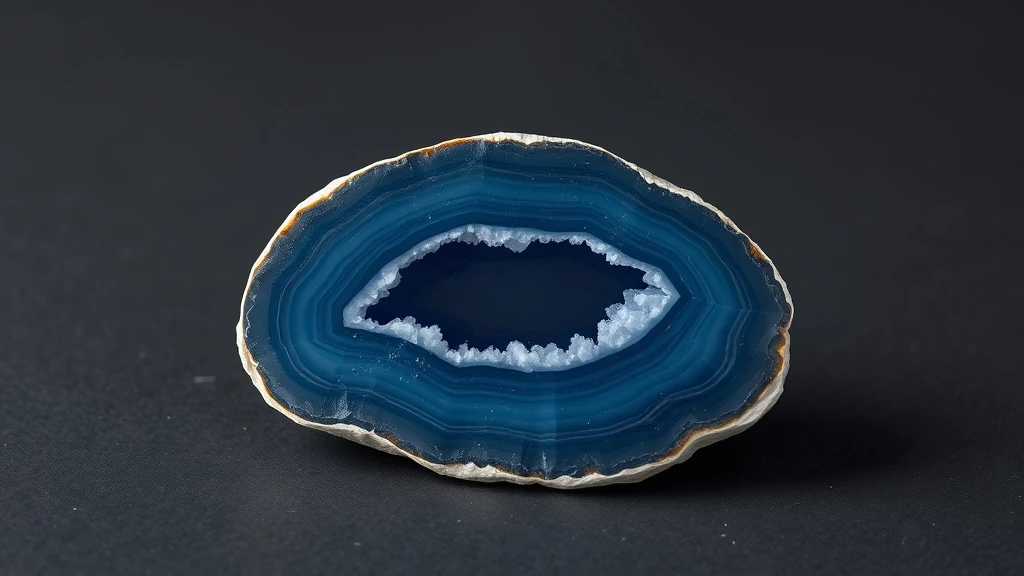
Blue agate belongs to the broader class of silicates, specifically the chalcedony subgroup of cryptocrystalline quartz. Its formation occurs in volcanic or sedimentary cavities where silica-rich fluids precipitate in fibrous, fibrous‑aggregate structures. The resulting stone is prized for its banded appearance and relative durability, making it a staple in ornamental and metaphysical contexts.
What is Blue Agate? Geological Overview & Definition
Blue agate is a fibrous cryptocrystalline quartz that crystallizes in the trigonal system. The stone is formed from silica‑rich fluids that deposit in cavities of volcanic or sedimentary rocks, creating concentric bands of varying color. Its distinctive blue tones arise from trace elements and structural defects within the quartz lattice. The mineral is typically found in basaltic or rhyolitic host rocks, where it can occur as nodules or embedded inclusions.
Blue Agate Chemical Composition & Crystallographic Properties
The chemical identity of blue agate is SiO₂, identical to other quartz varieties. Its crystal structure is trigonal, with a hexagonal lattice that is microcrystalline and fibrous. Cation substitution is minimal; the lattice may incorporate trace amounts of iron, titanium, or manganese, which act as chromophores and produce the blue coloration. While the microcrystalline fibrous lattice of blue agate is often found in smaller specimens, it is most dramatically displayed in the layered, hollow formations known as an Agate Geode.
Acid sensitivity is low; dilute hydrofluoric acid can etch the surface, but the stone is generally resistant to common acids. The chromophore centers responsible for blue hues are typically color centers created by structural defects and trace metal ions. Thermal behavior shows that blue agate retains its color and structural integrity up to about 600 °C, beyond which it begins to recrystallize into ordinary quartz. While blue agate maintains its structural integrity under moderate heat, its delicate color centers are more susceptible to thermal stress than the synthetic silicate inclusions found in Blue Goldstone.
| Property | Specification |
|---|---|
| Mineral Group | Silicates (Chalcedony / Cryptocrystalline Quartz) |
| Chemical Formula | SiO₂ (Silicon Dioxide) |
| Mohs Hardness | 6.5 – 7.0 |
| Crystal System | Trigonal (Microcrystalline / Cryptocrystalline fibrous aggregates) |
| Specific Gravity (Density) | 2.60 – 2.65 |
| Refractive Index | 1.544 – 1.553 |
| Color & Optical Properties | Natural Blue Agate color spectrum and optical dispersion |
| Primary Mining Localities | Brazil, Uruguay, Turkey, India, Madagascar |
| Water & Chemical Resistance | High (Safe for gentle warm water and mild soap; avoid harsh acids and chlorine) |
| Chakra Alignment (Traditional) | Root Chakra and Sacral Chakra |
| Zodiac Affinity (Traditional) | Gemini, Virgo, Taurus |
| Symbolic Meaning (Traditional) | Grounding, emotional balance, physical endurance, and protection |
Blue Agate Varieties & Color Spectrum
Blue agate presents a complex chromatic landscape, ranging from pale sky tones to deep indigo hues. The coloration primarily stems from trace impurities or post-depositional treatments. Understanding these distinctions is vital for accurate gemological identification and valuation.
Natural Blue Agate
True natural blue agate is exceptionally rare in the global gem trade. Its coloration arises from minute iron oxide inclusions or specific mineral traces within the cryptocrystalline silica matrix. Collectors prize these stones for their unaltered geological integrity and subtle, muted tones.
Dyed Blue Agate
The majority of commercial blue agate is chemically enhanced through dyeing processes. Manufacturers typically use iron salts or organic dyes to intensify the natural pale hues. This treatment results in a vibrant, uniform blue that is highly sought after for jewelry.
Blue Lace Agate
This variety features delicate, web-like bands of blue against a translucent white background. The intricate banding patterns form as silica precipitates in successive layers within volcanic cavities. It is prized for its ethereal appearance and high transparency.
Blue Fire Agate
Characterized by iridescent flashes of blue, green, and purple, this variety is visually striking. The play-of-color effect is caused by thin layers of hematite within the chalcedony structure. It is a rare and highly collectible form of blue agate.
Blue Chert Agate
Often found in sedimentary deposits, this variety displays a more opaque and granular texture. The color is typically a duller, slate blue compared to the vibrant dyed stones. It is commonly used in carvings and ornamental objects due to its workability.
Where is Blue Agate Found? Geological Mining & Extraction
Blue agate forms in volcanic cavities and sedimentary basins where silica-rich fluids precipitate over millions of years. The primary host rocks include basalt and rhyolite, which create the necessary geodes for crystal growth. These formations are often found in regions with significant volcanic activity.
Major mining regions include Brazil, India, and the United States, particularly in Oregon and Arizona. Brazil is renowned for producing high-quality blue lace agate with exceptional clarity. India supplies a significant volume of dyed blue agate to the global jewelry market.
Historical Significance & Cultural Lore of Blue Agate
Ancient civilizations revered agate as a protective talisman and a symbol of emotional stability. In Greco-Roman mythology, the gemstone was believed to possess healing properties and ward off evil spirits. Egyptian artisans frequently incorporated agate into amulets and scarabs for burial purposes.
Throughout Vedic traditions, agate was associated with grounding energy and physical endurance. Chinese imperial records document its use in ceremonial objects and medicinal practices. These historical uses underscore the gemstone’s enduring cultural significance across diverse ancient societies.
Modern Uses & Jewelry Applications of Blue Agate
Blue agate’s cryptocrystalline texture makes it ideal for cabochon cutting, where its smooth, rounded surfaces showcase the stone’s characteristic blue bands. Artisans also facet select pieces to highlight subtle internal iridescence, though cabochons remain the most popular form. In ornamental carving, the stone is sculpted into beads, cameos, and small figurines for decorative objects.
- Cabochon pendants and rings emphasizing banding patterns
- Faceted earrings that catch light for a subtle sparkle
- Carved beads for mala strands and prayer rosaries
- Decorative inlays for watch faces, belt buckles, and furniture accents
Metaphysical Properties & Traditional Meaning of Blue Agate
According to historical traditions and metaphysical lore, blue agate is revered for its grounding influence, helping the wearer feel stable while navigating emotional currents. Across ancient Mediterranean and Vedic lapidary records, the stone is linked to emotional balance, soothing anxiety and fostering clear communication. Its cool hue is also associated with physical endurance, offering subtle protection against fatigue and stress.
Which Chakra and Zodiac Signs Align with Blue Agate?
In esoteric systems, blue agate resonates strongly with the Root Chakra, anchoring personal energy to the earth, and the Sacral Chakra, enhancing creative flow and emotional harmony. This dual alignment supports both foundational stability and expressive vitality.
The stone’s astrological affinity is limited to Gemini, Virgo, and Taurus. Gemini benefits from the stone’s calming communication aid, Virgo finds reinforcement for practical focus, and Taurus experiences reinforced grounding and sensual comfort. No other zodiac signs are traditionally associated with blue agate.
How to Identify Real vs. Fake Blue Agate
Artificial imitations of blue agate often include dyed quartz, colored glass, or synthetic resin that mimic the banded appearance but lack the stone’s natural microstructure. Synthetic glass may display uniform color without the subtle variations typical of genuine agate, while dyed replicas can show overly bright, unnatural hues. Recognizing these differences requires careful visual and tactile examination.
Practical At-Home Authenticity Tests
- Temperature Test (Thermal Feel): Real blue agate feels cool to the touch and retains that coolness longer than glass or plastic, which quickly warm to skin temperature.
- Specific Gravity & Weight Test: Hold the stone; genuine agate (density 2.60‑2.65 g/cm³) feels noticeably heavier than glass or resin of comparable size.
- Scratch & Hardness Test (Mohs Comparison): Using a steel file (hardness 5.5), a genuine agate (hardness 6.5‑7) will resist scratching, whereas glass or dyed quartz may show surface marks.
- Microscopic & Loupe Inspection (Internal Inclusions): Under 10× magnification, authentic agate reveals fine, concentric banding and occasional micro‑fractures; synthetic glass appears uniformly smooth with no natural inclusions.
Blue Agate Valuation Factors, Grading & Pricing
The market value of blue agate is primarily driven by Color Saturation. Stones exhibiting deep, uniform azure or indigo hues with minimal banding command higher prices, as their visual vibrancy enhances both aesthetic appeal and perceived energetic luster. Collectors often seek specimens that display a natural, almost luminous glow, which is considered a hallmark of quality.
Crystal Size & Weight (Grams) is the next decisive factor. Larger, heavier agates—measured in grams rather than carats—are prized for their substantial presence and durability. Raw, unpolished pieces retain a rugged, authentic character, while tumbled, polished specimens offer a refined finish that appeals to decorative markets. Natural matrix inclusions, such as fibrous or banded patterns, add uniqueness and can increase value when they are well-preserved and not overly fractured.
Ethical Sourcing & Locality Premium influences both holistic and collector circles. Stones sourced from responsibly managed mines, particularly those in regions with a long history of lapidary craftsmanship, often carry a premium. Provenance from renowned localities—such as the Blue Agate deposits of the Himalayas or the volcanic terrains of the Caribbean—adds cultural significance and can elevate a specimen’s desirability in the global marketplace.
How to Clean and Care for Blue Agate
Physical cleaning of blue agate should be performed with warm soapy water. Gently rinse the stone in a basin of lukewarm water mixed with a mild, fragrance‑free soap, then use a soft microfiber cloth to remove any residual dirt. Avoid ultrasonic cleaners, especially for dyed, heavily fractured, or treated specimens, as the vibration can exacerbate surface damage. After cleaning, dry the agate with a clean, dry cloth and store it in a low‑humidity environment away from direct moisture.
Cleansing and Recharging Blue Agate (Energetic Care)
To cleanse the energetic field of blue agate, place the stone in a gentle, indirect light setting, such as near a softly lit window or under a full moon. Allow the agate to absorb natural lunar energy for several hours, which can help reset its vibrational balance. Alternatively, resting the stone on a selenite charging slab for a few minutes can transfer the selenite’s purifying influence, enhancing the agate’s grounding properties. These dry, low‑heat methods preserve the crystal lattice while supporting the stone’s metaphysical integrity.
Frequently Asked Questions About Blue Agate
Blue Agate displays distinct mineralogical characteristics across its geological varieties and structural habits. Gemologists evaluate these natural varieties based on crystal habit, trace chromophore concentrations, and visual luster.
Primary Natural Blue Agate
The benchmark natural variety exhibiting diagnostic color saturation and classic crystallographic symmetry.
Distinct Geological Morphs of Blue Agate
Secondary regional and structural varieties formed under localized geological temperature and pressure conditions.
Is blue agate safe to wear in the shower?
Yes, it is generally safe for gentle exposure to warm water and mild soap. The stone’s high water resistance allows it to withstand brief contact with moisture without structural damage. However, you should avoid prolonged soaking or exposure to harsh chemicals. Chlorine and acidic shampoos can degrade surface treatments over time. Always rinse the piece thoroughly with fresh water after showering to remove any residual soap or chlorine that might dull the luster.
Can I clean blue agate in an ultrasonic cleaner?
Warm soapy water is the ideal method for cleaning solid agates. You should avoid ultrasonic cleaners if the specimen is dyed, heavily fractured, or treated. The intense vibrations can loosen colorants or widen existing fissures in the cryptocrystalline structure. Use a soft-bristled brush to gently scrub away dirt from intricate carvings. Pat the stone dry with a lint-free microfiber cloth to prevent water spots.
What is the chemical composition of blue agate?
Blue agate is composed of silicon dioxide, or SiO₂, in a microcrystalline form. It belongs to the quartz family, sharing the same fundamental chemical formula as clear rock crystal. The blue coloration is typically achieved through heat treatment or dyeing of naturally gray or white agate. This process enhances the visual appeal without altering the underlying trigonal crystal system.
How hard is blue agate on the Mohs scale?
Blue agate rates between 6.5 and 7.0 on the Mohs hardness scale. This makes it quite durable for everyday jewelry use, resisting scratches from common household objects. However, it is softer than sapphire or diamond, so it can still be scratched by harder minerals. Store your agate pieces separately from other gemstones to maintain their polished surface integrity.
Which zodiac signs are associated with blue agate?
Blue agate is traditionally aligned with Gemini, Virgo, and Taurus. In historical lapidary lore, these signs are believed to benefit from the stone’s grounding properties. Gemini finds emotional balance, while Virgo appreciates its clarity and precision. Taurus values the stone’s connection to physical stability and endurance. This association stems from ancient metaphysical traditions linking earthy tones to elemental grounding.
What chakras does blue agate activate?
Blue agate is primarily associated with the Root Chakra and Sacral Chakra. It helps anchor energy to the earth, promoting a sense of security and stability. Simultaneously, it supports the flow of creative and emotional energy in the sacral region. This dual alignment makes it a versatile stone for meditative practices and energy balancing. It encourages a harmonious connection between physical presence and emotional expression.
Does blue agate change color over time?
Natural blue agate is stable, but dyed varieties may fade with prolonged sun exposure. The refractive index remains consistent, but surface colorants can degrade under intense UV light. To preserve the vibrant blue hue, avoid leaving the stone in direct sunlight for extended periods. Regular cleaning with mild soap helps remove oils that might accelerate fading. Proper storage in a dark, dry place ensures long-term color retention.
Is blue agate a natural or treated?
Most commercial blue agate is heat-treated or dyed to enhance its color. Naturally occurring blue agate is extremely rare and usually appears in pale shades. The microcrystalline fibrous aggregates allow dyes to penetrate deeply, creating a uniform appearance. Reputable dealers disclose treatment methods, as this affects the stone’s value and durability. Understanding the treatment helps you care for the gemstone appropriately.