
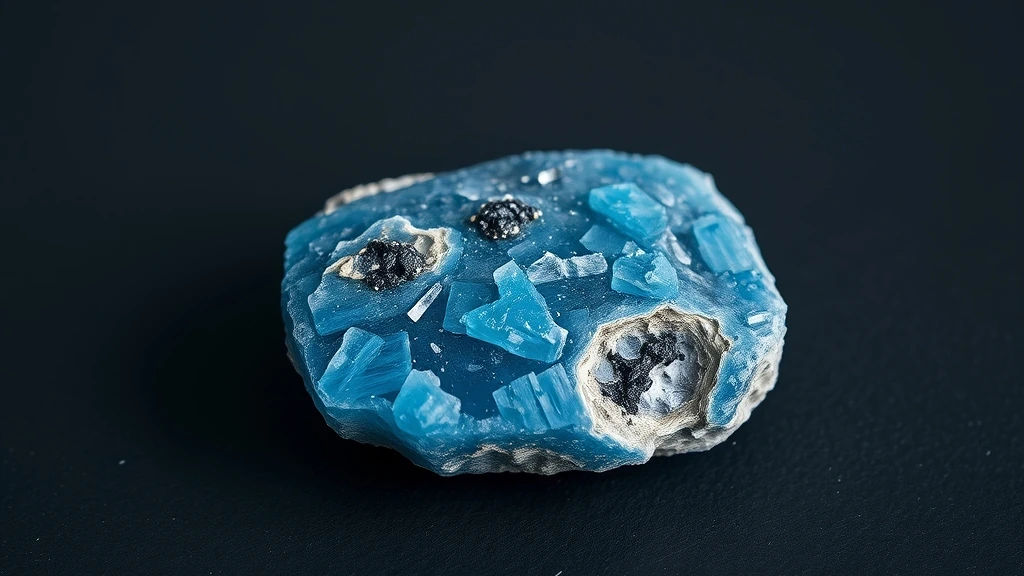
Blue aventurine belongs to the broad family of natural minerals and is classified as a variety of quartz, a tectosilicate composed chiefly of silicon dioxide. Its formation occurs in hydrothermal veins where silica precipitates around microscopic iron‑oxide particles, creating the characteristic shimmering effect. Though marketed as a single stone, it is an aggregate of quartz crystals intergrown with magnetite or hematite inclusions, each contributing to its distinctive optical properties.
What is Blue Aventurine? Geological Overview & Definition
Blue aventurine is a tectosilicate variety of quartz distinguished by its blue‑gray coloration produced by submicroscopic iron‑oxide inclusions. These inclusions scatter light, generating a glittering “aventurine” sheen that is prized in lapidary work. The stone typically forms in low‑temperature hydrothermal environments where silica‑rich fluids infiltrate fractures and solidify around dispersed mineral particles.
In mineralogical terms, blue aventurine is not a separate mineral species but an aggregate of quartz crystals cemented by magnetite or hematite specks. Its occurrence is documented in pegmatitic and vein deposits worldwide, with notable localities in Brazil, India, and the United States. The gemstone’s color range spans from pale sky‑blue to deep teal, depending on the concentration and oxidation state of the iron inclusions.
Blue Aventurine Chemical Composition & Crystallographic Properties
The host matrix of blue aventurine is pure SiO₂ quartz, crystallizing in the trigonal system with a three‑fold rotational axis and hexagonal symmetry elements. Quartz’s framework consists of interconnected SiO₄ tetrahedra forming a continuous lattice that imparts the stone’s high hardness and durability. While blue aventurine’s optical character is defined by its specific inclusions, its structural foundation remains identical to that of Yellow Aventurine, which shares the same robust trigonal quartz lattice.
Iron‑oxide inclusions such as Fe₃O₄ (magnetite) or Fe₂O₃ (hematite) substitute into interstitial spaces rather than entering the quartz lattice, acting as chromophore centers that absorb specific wavelengths and produce the blue hue. These inclusions are typically submicron in size, creating a light‑scattering effect known as aventurescence.
Blue aventurine is chemically stable in neutral environments but can be sensitive to strong acids, which may etch the quartz surface and alter the visibility of the metallic inclusions. Thermal treatment above 500 °C can cause the iron oxides to oxidize further, sometimes shifting the color toward greenish tones or diminishing the aventurine sheen.
Overall, the stone’s trigonal crystal symmetry, combined with its composite quartz‑iron‑oxide structure, governs both its physical resilience and its unique optical characteristics prized by gemologists and collectors alike.
| Property | Specification |
|---|---|
| Mineral Group | Natural Mineral / Crystal |
| Chemical Formula | SiO₂ (Quartz matrix) + Fe₃O₄ (Hematite/Magnetite inclusions) |
| Mohs Hardness | 7.0 |
| Crystal System | Trigonal |
| Specific Gravity (Density) | 2.65 – 2.70 |
| Refractive Index | 1.544 – 1.553 |
| Color & Optical Properties | Natural Blue Aventurine color spectrum and optical dispersion |
| Primary Mining Localities | Global primary localities |
| Water & Chemical Resistance | High (Safe for gentle water washing) |
| Chakra Alignment (Traditional) | Heart Chakra, Throat Chakra |
| Zodiac Affinity (Traditional) | Taurus, Libra |
| Symbolic Meaning (Traditional) | Emotional balance, serenity, and communication |
Blue Aventurine Varieties & Color Spectrum
Blue Aventurine displays distinct mineralogical characteristics across its geological varieties and structural habits. Gemologists evaluate these natural varieties based on crystal habit, trace chromophore concentrations, and visual luster.
Primary Natural Blue Aventurine
The benchmark natural variety exhibiting diagnostic color saturation and classic crystallographic symmetry.
Distinct Geological Morphs of Blue Aventurine
Secondary regional and structural varieties formed under localized geological temperature and pressure conditions.
Classic Blue Aventurine
Classic Blue Aventurine derives from a quartz matrix infused with fine hematite or magnetite inclusions that scatter light, creating a subtle azure sheen. The inclusions are typically needle‑like, giving the stone a delicate, translucent sparkle. This variety is most frequently found in the Brazilian and South African pegmatite deposits, where the mineral’s blue hue ranges from pale sky to deep cobalt. Its relative abundance makes it a staple in contemporary jewelry, yet the finest specimens with the richest color are still prized by collectors.
Blue Smoky Aventurine
Blue Smoky Aventurine incorporates graphite or pyrite flakes within the quartz matrix, producing a smoky overlay that deepens the blue tone. The smoky effect is most pronounced when light passes through the stone, revealing a subtle subtle gradient from blue to gray. This variety is rarer, often sourced from the Czech Republic and India, where the geological conditions favor the coexistence of quartz and metallic inclusions. Its unique visual signature makes it a favorite for high‑end ornamental pieces.
Blue Green Aventurine
Blue Green Aventurine is a hybrid form where chlorite or tourmaline inclusions impart a greenish tint to the base blue quartz. The resulting color palette ranges from turquoise to teal, with the green veins creating a natural banded effect. This variety is typically extracted from the Sri Lankan and Malaysian deposits, where the mineralization process introduces both iron oxides and green phyllosilicates. Due to its dual‑tone appearance, it is highly sought after for bespoke jewelry designs.
Blue Aventurine with Agate Veining
Blue Aventurine featuring agate veining displays fine, parallel layers of amorphous silica that intersect the quartz matrix. These veining patterns give the stone a striking, almost lace‑like appearance, enhancing its visual depth. The variety is predominantly found in the Mongolia and Myanmar regions, where the geological environment promotes the intergrowth of agate and quartz. Its rarity and intricate veining make it a coveted choice for collectors and artisans alike.
Blue Aventurine from the Ural Mountains
The Ural‑derived Blue Aventurine is distinguished by its high concentration of magnetite inclusions, which produce a pronounced metallic luster. The stone often exhibits a cobalt‑blue hue with a subtle greenish undertone, reflecting the unique mineral assemblage of the Ural pegmatites. Although less common than its Brazilian counterpart, this variety is prized for its robust color and the historical significance of its provenance. Its scarcity and distinctive appearance make it a valuable addition to any gemstone collection.
Blue Aventurine with Fluorite Inclusions
Blue Aventurine containing fluorite inclusions presents a rare combination of blue quartz with bright, crystal‑like fluorite specks. The fluorite crystals, often pale green or clear, create a striking contrast against the blue background, giving the stone a sparkling effect. This variety is typically sourced from the Yunnan Province in China, where fluorite and quartz coexist in the same pegmatitic environment. Its unique visual appeal and limited supply contribute to its high demand among connoisseurs.
Where is Blue Aventurine Found? Geological Mining & Extraction
Blue Aventurine is predominantly hosted in silicic pegmatite formations where quartz crystallizes alongside iron oxides and other accessory minerals. These pegmatites are often associated with granitic intrusions, providing the necessary thermal and chemical conditions for the growth of quartz with embedded hematite or magnetite inclusions. The primary extraction regions include Brazil’s Santos Basin, South Africa’s Northern Cape, and the Czech Republic’s Bohemian Massif, each offering distinct color variations due to local geochemical environments.
The extraction process typically involves open‑pit or underground mining followed by crushing and gravity separation to isolate the heavier quartz grains. Once separated, the stones undergo meticulous sorting, polishing, and quality grading to preserve their natural color and inclusions. Advanced beneficiation techniques, such as magnetic separation, are employed to concentrate the iron‑oxide‑rich fractions that give Blue Aventurine its characteristic hue.
Historical Significance & Cultural Lore of Blue Aventurine
Across ancient lapidary traditions, Blue Aventurine was revered for its calming properties and was often incorporated into amulets and jewelry by the Greco‑Roman artisans who believed it promoted emotional balance and clear communication. In Egyptian tombs, fragments of blue‑tinged quartz have been found, suggesting that the stone was valued for its aesthetic appeal and metaphysical associations with the heart and throat chakras.
In Vedic lore, the stone was associated with the Heart Chakra (Heart Chakra), believed to foster compassion and serenity, while Chinese alchemists documented its use in jade‑like carvings that symbolized harmony. These historical uses underscore the stone’s enduring appeal across diverse cultures, reflecting a universal appreciation for its serene blue glow and symbolic resonance.
Modern Uses & Jewelry Applications of Blue Aventurine
Blue Aventurine is prized for its subtle green‑blue hue and shimmering inclusions, making it a favorite in contemporary lapidary work. Artisans typically cut the stone into cabochons to accentuate its natural luster, or into faceted cuts for a more reflective appearance. In addition, the mineral is carved into ornamental pieces such as pendants, brooches, and decorative panels, where its subtle play of light enhances visual appeal.
- Cabochon polishing for smooth, glossy surfaces
- Faceted cuts to maximize sparkle and internal reflection
- Carved ornamental motifs for jewelry and decorative art
Metaphysical Properties & Traditional Meaning of Blue Aventurine
According to historical traditions and metaphysical lore, Blue Aventurine is associated with emotional balance and serenity, inviting calmness into the wearer’s life. Across ancient Mediterranean and Vedic lapidary lore, the stone is believed to soothe the heart, fostering compassion and nurturing emotional healing. Its subtle blue undertones are thought to encourage clear communication, aligning with the Throat Chakra and enhancing expressive confidence. In broader metaphysical circles, the stone is also linked to the Heart Chakra, promoting love, harmony, and emotional resilience.
Which Chakra and Zodiac Signs Align with Blue Aventurine?
Blue Aventurine resonates strongly with the Heart Chakra, the center of love and compassion, and the Throat Chakra, the gateway to authentic expression. The stone’s calming influence supports emotional equilibrium, allowing the wearer to communicate with clarity and empathy.
The gemstone is traditionally associated with the zodiac signs Taurus and Libra. Taurus, ruled by Venus, values stability and beauty, while Libra seeks harmony and balance—both qualities that Blue Aventurine embodies through its tranquil color and soothing energy.
How to Identify Real vs. Fake Blue Aventurine
Collectors and buyers should be aware that artificial imitations, such as dyed glass or synthetic quartz, can mimic Blue Aventurine’s appearance. These replicas often lack the characteristic magnetite or hematite inclusions and may display uniform coloration or unrealistic sparkle.
Practical At-Home Authenticity Tests
- Temperature Test (Thermal Feel): Hold the stone in your palm; a genuine quartz will feel cool to the touch for a few seconds, whereas glass or dyed replicas tend to warm quickly.
- Specific Gravity & Weight Test: Compare the stone’s weight to a known quartz sample of the same size; real Blue Aventurine should feel slightly heavier due to its iron inclusions.
- Scratch & Hardness Test (Mohs Comparison): Use a standard Mohs hardness kit; Blue Aventurine should scratch a glass plate but not be scratched by a steel file, confirming a hardness around 7.0.
- Microscopic & Loupe Inspection (Internal Inclusions): Under a jeweler’s loupe, look for natural magnetite or hematite specks; synthetic versions often show uniform, glassy textures without these inclusions.
Blue Aventurine Valuation Factors, Grading & Pricing
Market valuation primarily hinges on Color Saturation, which determines the stone’s visual appeal and perceived energetic potency. High-grade specimens exhibit a deep, uniform blue hue with distinct, evenly distributed hematite inclusions that create a shimmering aventurescence. This natural luster enhances the stone’s vibrancy, making it highly desirable for both jewelry and metaphysical applications.
Pricing is strictly determined by Crystal Size & Weight (Grams), as loose stones are weighed rather than measured in carats. The quality of the tumbled polish significantly impacts value, with high-gloss finishes commanding higher prices than matte or irregularly shaped pieces. Natural matrix inclusions are also assessed, where balanced distribution of iron oxides contributes to the stone’s overall aesthetic and structural integrity.
Ethical Sourcing & Locality Premium plays a critical role in the holistic and collector markets, where provenance directly influences buyer confidence. Stones from reputable, environmentally responsible mines often carry a premium due to their verified origin and sustainable extraction practices. This transparency ensures that collectors can trust the authenticity and ethical background of their acquisitions, reinforcing long-term market stability.
How to Clean and Care for Blue Aventurine
Due to its high water resistance and Mohs Hardness of 7.0, Blue Aventurine is safe for gentle washing with warm soapy water and a soft cloth. This method effectively removes oils and dirt without damaging the quartz matrix or the delicate iron oxide inclusions. After washing, rinse thoroughly with clean water and dry immediately with a lint-free microfiber cloth to prevent water spots.
The stone is also safe for ultrasonic cleaning, which can be used for intricate jewelry settings to remove stubborn residue from crevices. However, always ensure the ultrasonic cleaner is set to a low intensity to avoid stressing any potential micro-fractures in the stone. Regular maintenance with these methods preserves the natural luster and clarity of the aventurescent effect over time.
Cleansing and Recharging Blue Aventurine (Energetic Care)
Holistic practitioners often use herbal smudging with sage or palo santo to clear accumulated negative energy from Blue Aventurine. The stone should be held gently in the smoke for a few minutes, allowing the aromatic compounds to interact with its surface. This dry method respects the mineral’s physical structure while fulfilling traditional energetic cleansing protocols without introducing moisture or heat.
For recharging, placing the stone on a selenite charging slab or under gentle moonlight is recommended to restore its vibrational frequency. These methods avoid direct intense sunlight or domestic heating, which could potentially stress the crystal lattice or fade the color. Resting the stone in a cool, dark environment overnight allows it to absorb ambient energy safely and effectively.
Frequently Asked Questions About Blue Aventurine
Blue Aventurine displays distinct mineralogical characteristics across its geological varieties and structural habits. Gemologists evaluate these natural varieties based on crystal habit, trace chromophore concentrations, and visual luster.
Primary Natural Blue Aventurine
The benchmark natural variety exhibiting diagnostic color saturation and classic crystallographic symmetry.
Distinct Geological Morphs of Blue Aventurine
Secondary regional and structural varieties formed under localized geological temperature and pressure conditions.
Is Blue Aventurine safe to wear in the shower?
Yes, it is safe for gentle water washing. The stone’s quartz matrix provides excellent durability against moisture. However, prolonged exposure to hot water may degrade certain adhesions in multi-stone jewelry settings.
Can I clean Blue Aventurine with an ultrasonic cleaner?
Yes, it is safe for ultrasonic cleaning. The mineral’s Mohs hardness of 7.0 ensures it withstands high-frequency vibrations without fracturing. Always use warm soapy water and a soft cloth for routine maintenance to preserve its luster.
What are the primary chemical components of Blue Aventurine?
It consists of SiO₂ quartz with Fe₃O₄ inclusions. The blue coloration arises from microscopic hematite or magnetite particles suspended within the crystalline structure. These inclusions create the characteristic aventurescence effect seen in the gemstone.
Which zodiac signs are aligned with Blue Aventurine?
Taurus and Libra are the primary aligned signs. These earth and air signs resonate with the stone’s emotional balance properties. Wearing the gem is believed to enhance stability for Taurus and harmony for Libra.
Which chakras does Blue Aventurine activate?
It activates the Heart Chakra and Throat Chakra. This dual alignment supports serenity in emotional centers while facilitating clear communication in the throat. It bridges physical feelings with verbal expression effectively.
How hard is Blue Aventurine on the Mohs scale?
It measures 7.0 on the Mohs scale. This hardness makes it highly resistant to scratching during daily wear. It is as durable as quartz, ensuring long-term structural integrity for jewelry pieces.
What is the refractive index of Blue Aventurine?
It ranges from 1.544 to 1.553. This optical property determines how light bends through the crystal lattice. The trigonal crystal system contributes to its distinct sparkle and internal reflection patterns.
Does Blue Aventurine have historical significance in lapidary traditions?
Yes, it holds value in global metaphysical lore. Ancient cultures associated similar quartz varieties with communication and emotional healing. Its use spans from Vedic practices to modern Western crystal healing traditions.