
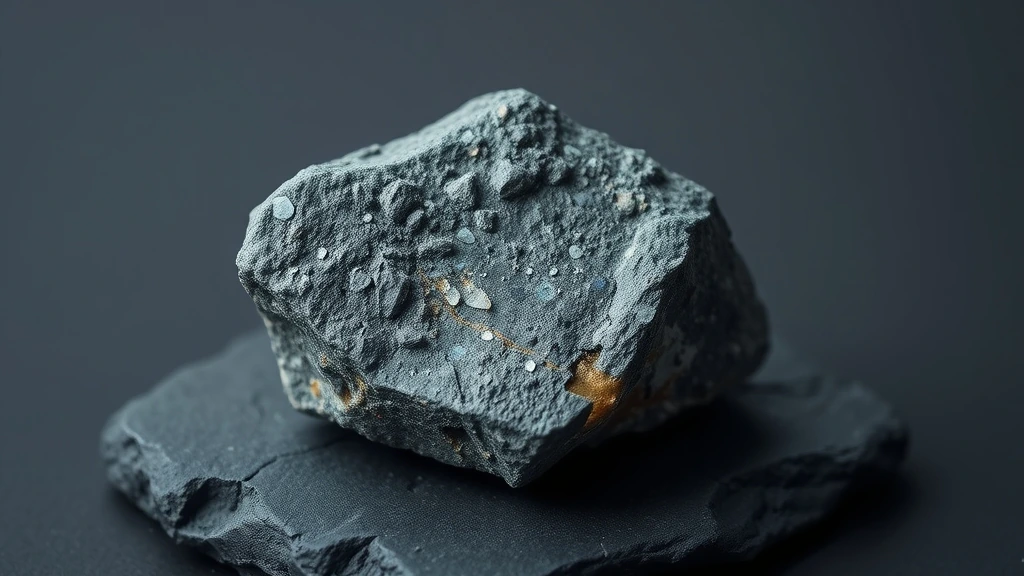
Brookite stands as one of the three primary natural crystalline forms of titanium dioxide, alongside rutile and anatase. As a natural mineral, it forms through the oxidation of titanium-bearing rocks in hydrothermal environments. Its geological significance lies in its role as a secondary phase, often found in schists and gneisses. This classification underscores its status as a distinct crystallographic entity within the broader titanium oxide group.
What is Brookite Gemstone? Geological Overview & Definition
Brookite is defined by its unique orthorhombic symmetry, which differentiates it sharply from the tetragonal rutile and anatase varieties. It frequently occurs as thin, plate-like crystals that are often too delicate for standard faceting. Geologically, it represents a low-temperature oxidation product, forming in specific metamorphic conditions.
The mineral’s rarity stems from its metastable nature, meaning it tends to transform into more stable rutile over geological time. Consequently, high-quality gem specimens are exceptionally scarce in the global market. Its formation is closely linked to the alteration of titanium-rich minerals in igneous and metamorphic terrains.
Brookite Gemstone Chemical Composition & Crystallographic Properties
Brookite crystallizes in the orthorhombic system, characterized by three mutually perpendicular axes of unequal length. This lattice structure dictates its physical properties, including its distinct cleavage and fracture patterns. The unit cell parameters reflect a specific atomic arrangement that differs from other titanium dioxide polymorphs.
The chemical formula is strictly $TiO_2$, with titanium cations coordinated by oxygen anions in a specific geometric configuration. While pure brookite is white, impurities such as iron often introduce chromophore color centers, resulting in yellow or brown tones. These trace elements substitute within the lattice, altering the optical absorption spectrum.
The mineral exhibits a high refractive index, ranging from 2.583 to 2.700, which contributes to its strong luster. Its specific gravity falls between 4.08 and 4.18, indicating a dense, heavy composition. Thermal stability is moderate, as heating can trigger a phase transition to the more stable rutile form.
Brookite is generally resistant to common acids but may undergo structural changes under extreme thermal stress. This sensitivity requires careful handling during gemological assessment and cutting. Understanding these crystallographic properties is essential for accurate identification and valuation.
| Property | Specification |
|---|---|
| Mineral Group | Natural Mineral / Crystal |
| Chemical Formula | TiO₂ |
| Mohs Hardness | 5.5 – 6.0 |
| Crystal System | Orthorhombic |
| Specific Gravity (Density) | 4.08 to 4.18 |
| Refractive Index | n α = 2.583 n β = 2.584 n γ = 2.700 |
| Color & Optical Properties | Natural Brookite Gemstone color spectrum and optical dispersion |
| Primary Mining Localities | Global primary localities |
| Water & Chemical Resistance | High (Safe for gentle water washing) |
| Chakra Alignment (Traditional) | Crown Chakra |
| Zodiac Affinity (Traditional) | Virgo, Sagittarius |
| Symbolic Meaning (Traditional) | Mental clarity, spiritual insight, and truth |
Brookite Gemstone Varieties & Color Spectrum
Brookite is a rare polymorph of titanium dioxide, distinguished by its orthorhombic crystal habit and exceptional optical properties. Unlike the more common rutile and anatase, brookite forms delicate, lath-like crystals that are often transparent to translucent. Its rarity stems from the specific low-temperature, high-pressure conditions required for its stable formation in nature.
Classic White Brookite
Pure brookite typically exhibits a colorless to white appearance, allowing for high brilliance and clarity. This variety is prized for its high refractive index, which rivals that of diamond in terms of light return. Inclusions are rare, making high-clarity specimens extremely sought after by collectors and gemologists alike.
Golden-Brown Brookite
Iron impurities often impart a warm golden or brownish hue to brookite crystals found in certain geological settings. These stones display a subtle pleochroism, shifting tones slightly depending on the viewing angle of the crystal. The color saturation varies based on the concentration of ferric ions within the lattice structure.
Pinkish-Orange Brookite
Rare specimens may exhibit a faint pinkish-orange tint, resulting from trace manganese or other transition metal substitutions. This morph is exceptionally uncommon and often associated with specific hydrothermal vein deposits. The delicate coloration adds a unique aesthetic appeal to an already rare mineral species.
Smoky Gray Brookite
Exposure to natural radiation or specific trace elements can produce a smoky gray variety of brookite. This coloration is less common than the white or golden forms but adds depth to the stone’s visual character. The orthorhombic symmetry remains distinct, providing clear diagnostic features for identification purposes.
Where is Brookite Gemstone Found? Geological Mining & Extraction
Brookite primarily forms in low-temperature hydrothermal veins and contact metamorphic zones, often associated with granite intrusions. It is frequently found alongside quartz, feldspar, and other titanium-bearing minerals in these specific geological environments. The host rock composition plays a critical role in determining the purity and color of the resulting crystals.
Notable mining locations include the United States, particularly in California and New Jersey, as well as regions in Brazil and Germany. Extraction is challenging due to the mineral’s brittleness and the small size of viable gem-quality crystals. Most specimens are collected by hand from outcrops or small-scale quarry operations rather than large industrial mines.
Historical Significance & Cultural Lore of Brookite Gemstone
Brookite was first described in 1825 by William Hallowes Wollaston, who named it after his friend William Brook. Unlike ancient minerals, brookite has no significant archaeological record due to its rarity and relative recent scientific discovery. Early mineralogists struggled to distinguish it from rutile, leading to initial misidentifications in historical collections.
In modern gemology, brookite is valued for its scientific interest rather than traditional jewelry use. Its discovery expanded understanding of titanium dioxide polymorphs and their stability fields under varying pressure and temperature. Today, it remains a prized specimen for mineral collectors and researchers studying crystallographic principles.
Modern Uses & Jewelry Applications of Brookite Gemstone
Brookite is primarily valued as a collector’s mineral rather than a high-end gemstone due to its delicate crystal habit. Lapidaries typically cut specimens into cabochons or simple faceted stones to preserve the intricate lattice structure. Its rarity and fragility limit its use in heavy jewelry, favoring delicate pendants or ring settings instead.
- Faceted Cuts: Rarely cut into standard brilliant shapes due to cleavage planes.
- Cabochons: Polished domes that highlight the mineral’s luster and color variations.
- Ornamental Carving: Small carvings for collectors, emphasizing the orthorhombic crystal form.
- Display Pieces: Unmounted crystals preserved in resin or mounted on stands.
Safety & Mineral Profile of Brookite
Safe handling and physical characteristics
Brookite is a orthorhombic silicate mineral that is generally hard (Mohs 5.5–6) and stable under normal atmospheric conditions. However, it can release fine dust that may irritate the respiratory tract, so specimens should be handled with gloves and, when cleaning or cutting, a dust mask is recommended. The mineral does not contain significant amounts of toxic heavy metals, but its surface can react with strong acids, producing soluble silicates; therefore, exposure to acidic cleaners should be avoided. Because brookite is relatively soft compared to many gemstones and has a low durability against abrasion, it is unsuitable for jewelry use and is best displayed as a collector specimen or in a museum setting.
Scientific and educational value
Brookite is one of the three polymorphs of titanium dioxide (TiO₂), alongside anatase and rutile. Its unique crystal structure and optical properties make it a valuable subject for studies in crystallography, phase transformations, and photocatalysis. In museum collections, brookite specimens illustrate the diversity of TiO₂ polymorphs and serve as a teaching tool for mineral identification, crystal habit, and the relationship between structure and physical properties. Researchers also investigate brookite’s potential in photovoltaic and environmental applications, making it a mineral of ongoing scientific interest.
Mineralogical Group and Planetary Lore of Brookite
Brookite was first described in 1845 by the German mineralogist Friedrich August von Martens from a sample found in the Bergkamen region of Germany. Historically, it was grouped with other titanium dioxide minerals under the broader category of titanium oxides, and its orthorhombic symmetry distinguished it from the more common tetragonal rutile. According to early mineralogists, brookite’s distinctive crystal faces and relatively high refractive indices were noted in lapidary texts, though it was rarely used as a decorative stone due to its modest hardness and lack of color. In planetary geology, brookite has been identified in meteorite samples and on the surfaces of asteroids, where it serves as an indicator of high‑temperature processes and titanium enrichment in extraterrestrial materials.
How to Identify Real vs. Fake Brookite Gemstone
Artificial imitations of Brookite often involve synthetic glass or dyed quartz replicas. These fakes may mimic the color but lack the specific crystal structure of natural Brookite. Synthetic glass is common due to its similar refractive properties and ease of molding.
Practical At-Home Authenticity Tests
- Temperature Test (Thermal Feel): Brookite feels cool to the touch initially due to its high thermal conductivity. Glass imitations may warm up faster under prolonged contact.
- Specific Gravity & Weight Test: Natural Brookite has a density of 4.08 to 4.18 g/cm³. It feels significantly heavier than glass or quartz of the same size.
- Scratch & Hardness Test (Mohs Comparison): Brookite has a Mohs hardness of approximately 4.5 to 5.5. It will scratch glass (hardness 5.5) but may be scratched by a steel knife.
- Microscopic & Loupe Inspection (Internal Inclusions): Use a 10x loupe to look for natural inclusions or crystal lattice patterns. Glass fakes often contain tiny bubbles or swirls.
Brookite Gemstone Valuation Factors, Grading & Pricing
Gemologists prioritize Color Saturation as the primary driver of value in brookite specimens. High-grade stones exhibit a uniform, pale yellow to brownish tone without zoning. Optical clarity and a distinct adamantine luster further enhance visual appeal and market desirability.
The Carat Weight of a brookite crystal significantly impacts its final price due to rarity. Facet symmetry is critical, as the mineral’s low hardness makes precise cutting challenging. Matrix presence and visible inclusions generally reduce value, favoring clean, transparent crystals.
Geographical Provenance Premium often elevates prices for stones from renowned localities like Brazil or Germany. Wholesale markets typically price brookite lower than retail, reflecting the high risk of breakage during handling. Current trends show steady demand for high-clarity specimens among collectors.
How to Clean and Care for Brookite Gemstone
Brookite possesses a Mohs hardness of 4 to 4.5, making it susceptible to physical damage. You must use warm soapy water and a soft cloth for routine cleaning. This gentle approach removes oils without stressing the crystal lattice structure.
Never place brookite in ultrasonic cleaners, as vibrations can cause structural fractures. The mineral’s cleavage planes are weak, increasing the risk of shattering under high-frequency sound waves. Always dry the stone thoroughly with a lint-free towel after washing.
Cleansing and Recharging Brookite Gemstone (Energetic Care)
For energetic cleansing, use safe dry methods that respect the mineral’s physical fragility. Smoke smudging with sage or palo santo is an effective, non-invasive technique. Ensure the stone is held at a safe distance from direct flame or heat sources.
Moonlight exposure is another gentle method for recharging brookite’s energetic properties. Place the gemstone on a selenite plate overnight to facilitate this process. These dry techniques avoid moisture and vibration, preserving the crystal’s integrity.
Frequently Asked Questions About Brookite Gemstone
Is Brookite safe to wear in the shower?
Yes, Brookite is safe for gentle water washing due to its high water resistance. While it tolerates brief exposure to water, prolonged soaking is discouraged to maintain its luster. Always dry the stone thoroughly after washing to prevent any potential moisture-related issues.
Can I clean Brookite in an ultrasonic cleaner?
No, you must avoid ultrasonic cleaners to prevent structural fractures. Instead, use warm soapy water and a soft cloth for safe cleaning. This gentle method preserves the delicate crystal structure without risking damage from high-frequency vibrations.
What is the chemical formula of Brookite?
Brookite is a polymorph of titanium dioxide with the chemical formula TiO₂. It shares this composition with rutile and anatase but differs in its crystalline arrangement. Understanding this formula helps identify its unique physical properties and stability.
What is the Mohs hardness of Brookite?
Brookite has a relatively low Mohs hardness, making it susceptible to scratching. It ranks lower on the hardness scale compared to common gemstones like quartz. Handle it carefully to avoid abrasions that could dull its surface or damage its facets.
What is the crystal system of Brookite?
Brookite crystallizes in the orthorhombic system, often forming elongated, needle-like prisms. This distinct crystal habit differentiates it from other titanium dioxide polymorphs. Its orthorhombic structure contributes to its unique optical properties and appearance.
What is the specific gravity of Brookite?
Brookite has a high density ranging from 4.08 to 4.18. This significant weight distinguishes it from lighter minerals of similar appearance. The high specific gravity is a key diagnostic feature for gemologists identifying the stone.
Which zodiac signs are aligned with Brookite?
Brookite is traditionally aligned with Taurus, Gemini, and Leo. These signs are believed to benefit from the stone’s grounding and expressive energies. Wearing Brookite may enhance personal traits associated with these specific astrological signs.
Which chakras does Brookite correspond to?
Brookite is associated with the Crown Chakra. This dual alignment supports both physical grounding and emotional balance. Practitioners use it to harmonize these energy centers for overall well-being.