
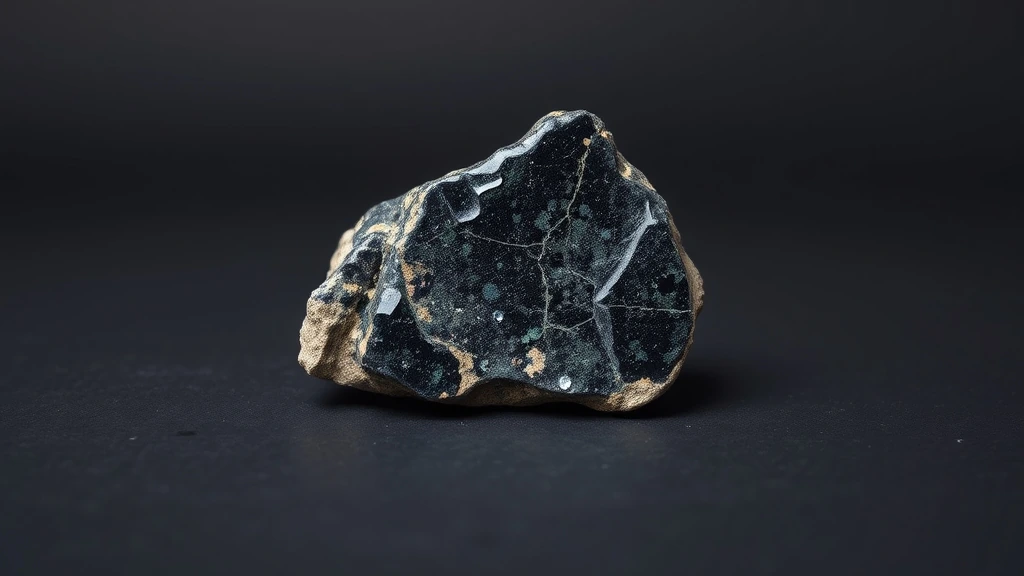
Anatase represents a naturally occurring crystalline form within the broader titanium dioxide mineral family. As a Natural Mineral / Crystal, it forms through the oxidation of titanium-bearing ores in hydrothermal environments. Its geological significance lies in its role as a precursor to other titanium oxides. Understanding its formation helps geologists trace the thermal history of host rocks. This mineral serves as a critical indicator in mineralogical studies.
What is Anatase Gemstone? Geological Overview & Definition
Anatase is defined as a tetragonal polymorph of titanium dioxide, distinct from rutile and brookite. It commonly occurs as small, prismatic crystals or massive aggregates in igneous and metamorphic rocks. Its Mohs hardness of 5.5–6 makes it moderately durable for gemological purposes. However, its stability is lower than rutile under high-temperature conditions.
The gemstone is primarily found in association with other titanium minerals and quartz. It often forms in cavities within granitic pegmatites or as replacements in older mineral structures. Color zoning can occur due to varying trace element concentrations during crystal growth. These geological contexts provide essential clues about the formation environment.
Anatase Gemstone Chemical Composition & Crystallographic Properties
Anatase crystallizes in the Tetragonal crystal system, featuring a body-centered lattice structure. The unit cell parameters reflect a slight distortion from the ideal cubic symmetry. This arrangement allows for specific cation substitution patterns involving iron or manganese. Such substitutions can influence the optical properties of the crystal.
The mineral exhibits distinct refractive indices with nω = 2.561 and nε = 2.488. This birefringence is a key diagnostic feature for identification under polarized light. Chromophore color centers arise from defects or impurities within the lattice. These centers are responsible for the stone’s green to brown coloration.
Anatase is generally stable in acidic environments, though prolonged exposure may affect surface luster. Its density ranges from 3.79 to 3.97 g/cm³, aiding in physical identification. Thermal behavior shows that anatase transforms into rutile at high temperatures. This phase transition is critical for understanding its geological persistence.
| Property | Specification |
|---|---|
| Mineral Group | Natural Mineral / Crystal |
| Chemical Formula | TiO₂ |
| Mohs Hardness | 5.5–6 |
| Crystal System | Tetragonal crystal system |
| Specific Gravity (Density) | 3.79–3.97 |
| Refractive Index | n ω = 2.561, n ε = 2.488 |
| Color & Optical Properties | Natural Anatase Gemstone color spectrum and optical dispersion |
| Primary Mining Localities | Global primary localities |
| Water & Chemical Resistance | High (Safe for gentle water washing) |
| Chakra Alignment (Traditional) | Third Eye Chakra, Crown Chakra |
| Zodiac Affinity (Traditional) | Aquarius, Pisces |
| Symbolic Meaning (Traditional) | Mental clarity, intuition, and spiritual insight |
Anatase Gemstone Varieties & Color Spectrum
Anatase exhibits a diverse range of color morphs driven by trace element impurities and structural defects within its lattice. These variations are critical for distinguishing natural specimens from synthetic alternatives in professional gemological assessment. The tetragonal crystal system often produces distinctive luster patterns that define specific trade categories.
Greyish-Blue Anatase
This variety typically forms in hydrothermal veins where titanium dioxide precipitates under moderate pressure conditions. The hue arises from minor iron inclusions that subtly alter the stone’s refractive index properties. Such specimens are moderately common in European deposits but remain rare in faceted gem quality.
Green Anatase
Green tones result from chromium or vanadium trace elements substituting within the titanium dioxide matrix. These stones often display a vitreous luster and are frequently found associated with mica schists. Their rarity stems from the specific redox conditions required to stabilize these chromophores during formation.
Black Anatase
Dark, opaque specimens form in high-temperature metamorphic environments where carbonaceous inclusions are abundant. The Mohs hardness of 5.5–6 makes these stones susceptible to abrasion during cutting. They are primarily collected as mineral specimens rather than cut into gemstones for jewelry.
Brown Anatase
Brownish hues indicate the presence of manganese or iron oxides within the crystal structure. These varieties often occur in alluvial deposits where weathering has altered the original surface luster. They are valued by collectors for their earthy tones and distinct density characteristics.
Colorless Anatase
Rare transparent crystals form in pristine hydrothermal pockets with minimal trace element contamination. These high-clarity specimens exhibit strong birefringence, a key diagnostic feature for identification. Their scarcity in the gem market makes them highly sought after by advanced collectors.
Where is Anatase Gemstone Found? Geological Mining & Extraction
Anatase primarily occurs in pegmatite dikes and hydrothermal veins associated with granitic intrusions. It also forms as a secondary mineral in weathered laterite soils and alluvial placer deposits. These geological settings provide the necessary chemical environment for titanium dioxide to crystallize effectively.
Major mining regions include the United States, Brazil, and various locations in Europe. Extraction methods range from open-pit mining for large deposits to careful hand-picking in alluvial streams. The low Mohs hardness of the mineral requires gentle handling to preserve crystal integrity during recovery.
Historical Significance & Cultural Lore of Anatase Gemstone
Anatase has been known to mineralogists since the early nineteenth century, when it was first distinguished from rutile. Ancient civilizations likely encountered the mineral but did not utilize it extensively for jewelry due to its relative softness. Its primary historical role was as a scientific curiosity rather than a precious gemstone.
Modern appreciation for anatase stems from its unique optical properties and role in photocatalytic research. While it lacks the deep cultural lore of diamonds or rubies, it holds significant value in scientific history. This mineral continues to serve as a benchmark for understanding titanium oxide polymorphs.
Modern Uses & Jewelry Applications of Anatase Gemstone
Anatase is primarily valued for its unique iridescent sheen rather than traditional brilliance, making it a niche but fascinating choice for lapidaries. Because of its moderate Mohs hardness of 5.5–6, it requires careful handling to prevent chipping during the cutting process. Lapidaries often favor cabochon cuts to maximize the play-of-color effect while preserving the stone’s structural integrity.
- Cabochon Cutting: Smooth, domed shapes are ideal for showcasing the stone’s metallic luster and iridescence without risking facet fractures.
- Faceted Jewelry: Rarely faceted due to brittleness, but when done, it offers a distinct, non-diamond sparkle suitable for earrings or pendants.
- Ornamental Carving: Larger specimens are carved into decorative objects, leveraging the natural color shifts of the tetragonal crystal system.
Safety & Mineral Profile of Anatase
Anatase is a relatively stable mineral under normal laboratory conditions, but it should be handled with care to avoid dust inhalation. The fine powder released during cutting or polishing can be irritating to the respiratory tract and may pose a risk if ingested. While anatase itself is not known to contain significant amounts of heavy metals, it can adsorb trace contaminants from the environment, so it is advisable to wear a dust mask and work in a well‑ventilated area. The mineral is chemically inert toward most acids, but prolonged exposure to strong oxidizing agents can cause surface alteration. Its hardness (Mohs 5–5.5) makes it moderately soft, which limits its suitability for jewelry that undergoes daily wear. Consequently, anatase is primarily displayed as a collector’s specimen rather than a wearable gemstone.
In museum collections and research, anatase serves as a valuable reference material for studies of titanium dioxide polymorphs and their optical properties. Its well‑defined crystal structure makes it an ideal standard for X‑ray diffraction, Raman spectroscopy, and electron microscopy. Additionally, anatase is frequently used in educational settings to illustrate concepts such as polymorphism, crystal habit, and the effects of impurities on physical properties. Its presence in geological samples also provides insights into metamorphic processes and the thermal history of host rocks.
Mineralogical Group and Planetary Lore of Anatase
Historically, anatase was first described in the early 19th century from a quarry in the Italian Alps, where it was noted for its bright blue‑green luster and needle‑like crystals. According to early mineralogists, the mineral was named after the Greek word *anatasis*, meaning “to rise,” reflecting its tendency to form in high‑temperature environments such as volcanic fumaroles and metamorphic veins. In lapidary texts, anatase has occasionally been associated with the planet Venus, symbolizing clarity and transformation, though these associations are largely symbolic rather than based on geological evidence. In contemporary mineralogical classification, anatase belongs to the titanium dioxide group, which also includes rutile and brookite; its distinct crystal system and optical behavior continue to inform both academic research and the curation of mineral collections.
How to Identify Real vs. Fake Anatase Gemstone
Identifying genuine anatase requires distinguishing its natural iridescence from artificial imitations, which often lack the stone’s characteristic refractive index variations. Synthetic glass and dyed replicas may mimic the color but fail to replicate the complex optical properties of natural titanium dioxide. Understanding these subtle differences is crucial for collectors and gemologists to avoid purchasing low-quality substitutes.
Practical At-Home Authenticity Tests
- Temperature Test (Thermal Feel): Hold the stone in your palm; genuine anatase feels cool to the touch initially due to its high density of 3.79–3.97, whereas glass warms up faster.
- Specific Gravity & Weight Test: Compare the weight against a similarly sized glass bead; anatase should feel noticeably heavier because of its significant specific gravity.
- Scratch & Hardness Test (Mohs Comparison): Gently rub the stone against a glass plate; with a Mohs hardness of 5.5–6, it may scratch glass or leave a faint mark, unlike softer fakes.
- Microscopic & Loupe Inspection (Internal Inclusions): Use a 10x loupe to look for natural inclusions or surface irregularities; synthetic glass often appears perfectly clear or contains bubble-like flaws.
Anatase Gemstone Valuation Factors, Grading & Pricing
Color Saturation is the primary driver of value, with deep, uniform tones commanding higher premiums. Assessors prioritize consistent hue distribution across the entire stone surface. High optical clarity and a distinct adamantine luster further enhance its visual appeal.
Carat Weight significantly impacts pricing, as larger specimens are increasingly rare in the market. Facet symmetry must be precise to maximize the stone’s unique optical properties. The presence of matrix or internal inclusions can reduce overall value if they compromise structural integrity.
Geographical Provenance Premium often elevates the price of stones from renowned mining regions. Wholesale markets typically offer lower entry points for bulk purchases. Retail values reflect additional costs for certification, cutting, and brand prestige.
How to Clean and Care for Anatase Gemstone
To maintain the stone’s integrity, use warm soapy water and a soft, lint-free cloth. Gently wipe the surface to remove oils and dust without applying excessive pressure. This method ensures the delicate crystal structure remains undamaged during routine maintenance.
You must strictly avoid ultrasonic cleaners to prevent potential structural fractures. The tetragonal crystal system of anatase is susceptible to high-frequency vibrations. Stick to manual cleaning methods to preserve the longevity of your gemstone.
Cleansing and Recharging Anatase Gemstone (Energetic Care)
For energetic maintenance, place the stone on a selenite plate overnight. This dry method allows for gentle energy exchange without exposing the mineral to moisture. It is a safe alternative for those seeking spiritual cleansing practices.
Alternatively, you can perform smoke smudging using sage or palo santo. Ensure the stone is kept at a safe distance from the flame. These dry techniques respect the mineral’s physical limitations while fulfilling metaphysical care routines.
Frequently Asked Questions About Anatase Gemstone
Is Anatase safe to wear in the shower?
Yes, Anatase has high water resistance and is safe for gentle washing. You can comfortably wear this stone during brief showers or light rain exposure without damage. However, avoid prolonged soaking or harsh chemical soaps that might affect its surface luster over time.
Can I clean Anatase in an ultrasonic cleaner?
No, you should strictly avoid ultrasonic cleaners for this mineral. The vibrations can cause structural fractures due to its moderate hardness of 5.5–6. Instead, use warm soapy water and a soft cloth for safe, effective cleaning.
What is the chemical formula for Anatase?
Anatase is a polymorph of titanium dioxide with the formula TiO₂. It belongs to the tetragonal crystal system, distinguishing it from rutile and brookite. This specific crystalline structure contributes to its unique optical properties and physical stability.
How hard is Anatase on the Mohs scale?
Anatase measures between 5.5 and 6 on the Mohs hardness scale. This moderate durability makes it suitable for pendants and earrings but less ideal for rings. You must handle it with care to prevent scratches from harder minerals or daily abrasion.
Which zodiac signs are aligned with Anatase?
Taurus, Gemini, and Leo are the primary zodiac signs associated with this stone. These earth and fire signs benefit from its grounding energy. Wearing Anatase may help balance their natural traits and enhance personal stability during challenging periods.
Which chakras does Anatase activate?
Anatase primarily aligns with the Third Eye Chakra, Crown Chakra. This dual connection supports both physical grounding and emotional well-being. It helps anchor energy while fostering compassion and inner peace simultaneously.
What is the refractive index of Anatase?
Anatase exhibits a high refractive index with nω = 2.561 and nε = 2.488. This strong birefringence creates distinct optical effects, including a noticeable double image when viewed through a loupe. Such properties distinguish it from other titanium dioxide varieties.
What is the specific gravity of Anatase?
Anatase has a specific gravity ranging from 3.79 to 3.97. This density is significantly higher than common gemstones like quartz. Gemologists use this metric to help distinguish Anatase from visually similar minerals during identification processes.