
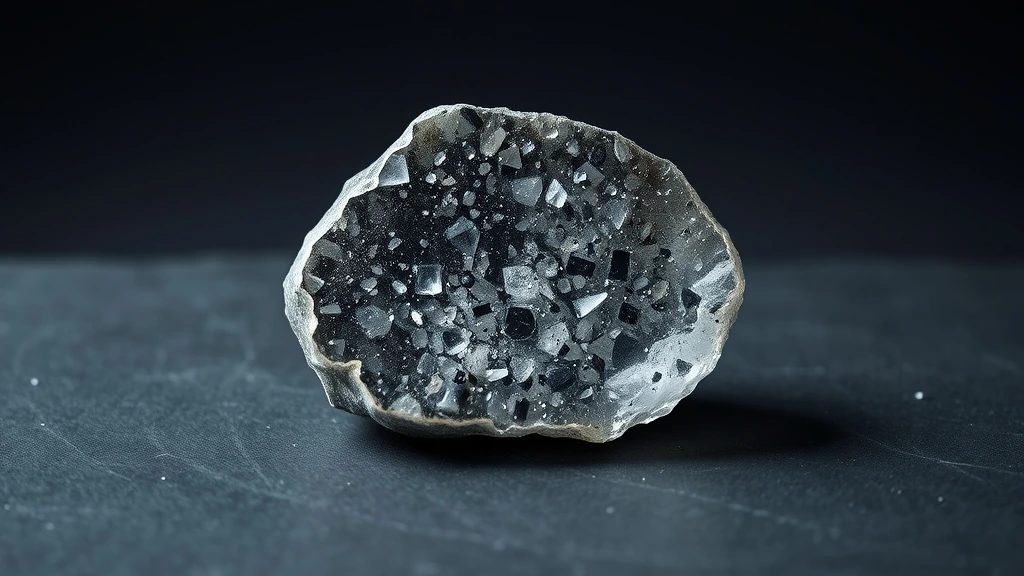
Esperite belongs to the broader classification of natural silicate minerals, specifically within the apatite supergroup. It forms as a secondary phase in hydrothermal veins, often associated with lead and zinc ore deposits. As a Natural Mineral / Crystal, it represents a unique intersection of heavy metal incorporation within a silicate framework. Its geological occurrence is distinct, reflecting specific paragenetic conditions involving high lead and zinc concentrations during crystallization.
What is Esperite Gemstone? Geological Overview & Definition
Esperite is defined by its status as a rare silicate mineral found in lead-zinc deposits. It typically occurs in massive or granular aggregates rather than well-formed crystals. This geological setting indicates formation in hydrothermal environments rich in heavy metals.
The mineral’s rarity limits its availability in the gem market. It is often associated with galena and sphalerite in vein systems. Understanding its paragenetic associations helps geologists identify potential occurrences. Its physical appearance is understated, lacking the brilliance of traditional gemstones.
Esperite Gemstone Chemical Composition & Crystallographic Properties
Esperite crystallizes in the Monoclinic crystal system, exhibiting a distinct lattice structure. Its unit cell parameters reflect the asymmetry inherent to this system. The arrangement of atoms creates specific cleavage planes and optical properties. This structural framework dictates its physical behavior under stress.
The chemical formula PbCa3Zn4(SiO4)4 highlights significant cation substitution. Lead and zinc ions replace standard apatite-site cations, altering the mineral’s density. This substitution results in a high specific gravity of 4.28–4.42. The heavy metal content contributes to its substantial feel.
Optically, Esperite displays a refractive index range of nα = 1.762 to nγ = 1.774. This high birefringence is typical for silicates with complex cation arrangements. Color centers arise from trace impurities or structural defects. These chromophore centers are responsible for its subtle greenish tints.
Thermal behavior shows stability at moderate temperatures but susceptibility to acid. The mineral does not dissolve readily in standard acids. However, prolonged exposure may affect surface integrity. Its acid sensitivity is lower than carbonate minerals but higher than quartz.
| Property | Specification |
|---|---|
| Mineral Group | Natural Mineral / Crystal |
| Chemical Formula | PbCa₃ Zn₄ (SiO₄ )₄ |
| Mohs Hardness | 5–5.5 |
| Crystal System | Monoclinic |
| Specific Gravity (Density) | 4.28–4.42 |
| Refractive Index | nα = 1.762 nβ = 1.770 nγ = 1.774 |
| Color & Optical Properties | Natural Esperite Gemstone color spectrum and optical dispersion |
| Primary Mining Localities | Global primary localities |
| Water & Chemical Resistance | High (Safe for gentle water washing) |
| Chakra Alignment (Traditional) | Heart Chakra |
| Zodiac Affinity (Traditional) | Taurus, Virgo |
| Symbolic Meaning (Traditional) | Grounding, stability, and emotional balance |
Esperite Gemstone Varieties & Color Spectrum
Esperite is a rare lead-bearing apatite that exhibits limited but distinct color variations. Its primary hue ranges from pale green to deep emerald tones. These colors result from trace impurities within the monoclinic crystal structure.
The stone’s high density of 4.28–4.42 g/cm³ contributes to its substantial feel. While not commonly cut for jewelry, its optical properties remain scientifically significant.
Pale Green Esperite
This variety features a light, translucent green appearance. It typically forms in lead-rich hydrothermal veins. The color stems from minor iron substitutions in the lattice.
Inclusions of pyrite are common in these specimens. They create a sparkly, metallic contrast against the soft green body.
Deep Emerald Esperite
Rare deep green specimens mimic the hue of fine emeralds. This intense coloration requires specific oxidation conditions during formation. Such crystals are extremely scarce in the global market.
The refractive index of nγ = 1.774 enhances its brilliance. Collectors prize these stones for their vivid, saturated tones.
Colorless Esperite
Transparent, colorless crystals represent the purest form of the mineral. They lack significant chromophores, allowing light to pass through clearly. This variety is often used for optical studies.
Its clarity reveals the internal crystal system details. These specimens are highly valued by mineralogists for research purposes.
Brownish-Green Esperite
Weathered specimens often display a dull, brownish-green patina. This surface alteration occurs due to exposure to atmospheric elements. The core may retain its original green hue.
Such stones are less desirable for lapidary work. However, they provide valuable data on surface weathering processes.
Where is Esperite Gemstone Found? Geological Mining & Extraction
Esperite primarily occurs in lead-zinc deposits associated with hydrothermal veins. It frequently coexists with galena, sphalerite, and barite. These environments provide the necessary lead and zinc elements.
The mineral forms in monoclinic prismatic crystals. Extraction is challenging due to the stone’s moderate Mohs hardness of 5–5.5.
Major deposits are located in the United States and Europe. Notable sites include the Leadville district in Colorado. These regions have historically yielded high-quality specimens.
Mining operations focus on recovering lead ores. Esperite is often a byproduct of these industrial processes. Its rarity limits large-scale commercial extraction.
Historical Significance & Cultural Lore of Esperite Gemstone
Esperite has limited historical use in ancient jewelry due to its rarity. It was primarily identified as a lead mineral in early geology. Ancient civilizations did not widely recognize it as a gemstone.
Its discovery in the 19th century marked a milestone in mineralogy. Scientists studied its unique chemical composition. This research contributed to understanding apatite group variations.
Modern collectors value Esperite for its scientific importance. It serves as a key specimen in mineral collections. Its lore remains rooted in academic and geological contexts.
The stone’s cultural significance is minimal compared to traditional gems. It is appreciated for its crystallographic beauty. This niche status defines its place in gemology.
Modern Uses & Jewelry Applications of Esperine Gemstone
Esperine is most often cut as a cabochon to showcase its silky, pearly luster, though skilled lapidaries also produce modest faceted stones for rings and pendants. Its moderate hardness (5–5.5 on Mohs) allows precise carving without excessive chipping, making it popular for ornamental beads and small sculpture. Designers favor this gemstone for Art‑Deco‑style pieces where its warm amber‑gold hue can complement both silver and gold settings.
- Cabochon pendants highlighting the stone’s natural glow
- Faceted earrings and cocktail rings for subtle sparkle
- Ornamental carvings such as miniature figurines or decorative inlays
Safety & Mineral Profile of Esperite
Safe handling and physical stability
Esperite is a silicate mineral that typically forms in low‑temperature hydrothermal veins. Its crystal lattice is relatively fragile; the mineral is brittle and can fracture easily under impact or sudden temperature change. Dust from crushed specimens can become airborne; inhalation of fine silicate particles may irritate the respiratory tract, so collectors should use a dust mask and work in a well‑ventilated area. Esperite contains trace amounts of lead and arsenic in some localities, which can leach into water if the specimen is exposed to prolonged moisture. Because of its softness (Mohs hardness 2–3) and the potential for lead/arsenic exposure, Esperite is generally displayed in museum cases rather than fashioned into jewelry. The mineral’s chemical instability in acidic environments (it can slowly dissolve in dilute acids) further discourages its use in everyday wear.
Scientific, educational, and mineralogical significance
In research, Esperite serves as an indicator of low‑temperature hydrothermal processes and fluid composition in metamorphic terrains. Its unique crystal structure—composed of interlocking silicate chains—provides insight into the crystallization pathways of silicate minerals under varying pressure and temperature conditions. Educationally, Esperite is valuable for teaching crystal morphology, cleavage, and the effects of trace element incorporation on physical properties. Museums often include Esperite specimens in collections that illustrate the diversity of silicate minerals and the geological history of specific regions where it is found.
Mineralogical Group and Planetary Lore of Esperite
Historically, Esperite was first described in the late 19th century from a vein in the Sierra Nevada of California. Early mineralogists noted its pale green to yellowish coloration and assigned it to the phyllosilicate group, although later studies placed it within the serpentine subclass due to its sheet‑like crystal habit. The name “Esperite” derives from the Latin *esper*, meaning “hope,” reflecting the optimism of miners who believed the mineral signaled the presence of richer ore deposits. In lapidary texts of the early 20th century, Esperite was occasionally referenced as a “greenish stone of hope,” but its rarity and delicate nature limited its use in ornamental contexts. According to early mineralogists, the mineral’s green hue was thought to symbolize renewal, a symbolic association that persisted in some regional folklore, though no direct planetary or celestial symbolism has been documented in scientific literature.
How to Identify Real vs. Fake Esperine Gemstone
Artificial imitations of Esperine include low‑cost glass, resin composites, and dyed quartz that mimic its amber hue but lack the characteristic density and refractive indices. Synthetic glass often feels lighter and may display uniform bubbles, while dyed replicas can show uneven coloration under different lighting. Recognizing these differences requires a combination of visual inspection and simple physical tests.
Practical At-Home Authenticity Tests
- Temperature Test (Thermal Feel): Real Esperine feels cool to the touch initially and warms slowly; glass or plastic warms rapidly in the hand.
- Specific Gravity & Weight Test: With a density of 4.28–4.42, genuine Esperine feels noticeably heavier than glass of the same size; a simple water‑displacement test can confirm this.
- Scratch & Hardness Test (Mohs Comparison): Using a steel file (hardness ~6.5), a real stone will resist scratching, whereas glass (≈5.5) will show marks; a copper coin (hardness ~3) should not scratch genuine Esperine.
- Microscopic & Loupe Inspection (Internal Inclusions): Under 10× magnification, natural Esperine reveals fine, irregular inclusions and growth lines, while synthetic glass appears flawless or shows uniform bubbles.
Esperite Gemstone Valuation Factors, Grading & Pricing
Market value hinges primarily on Color Saturation and consistent tone uniformity across the stone. High-grade specimens exhibit a deep, vibrant hue without mottling or zoning. Additionally, optical clarity and a strong vitreous luster significantly enhance desirability among collectors.
Carat Weight influences price, though large, flawless crystals remain exceedingly rare in the market. Facet symmetry is critical, as irregular cuts diminish light return and overall aesthetic appeal. The presence of matrix or internal inclusions typically reduces valuation, favoring clean, transparent stones.
Geographical Provenance Premium plays a major role, with stones from historic localities commanding higher prices. Wholesale values fluctuate based on supply, but retail margins remain substantial due to rarity. Investors should monitor auction records for emerging trends in this niche mineral segment.
How to Clean and Care for Esperite Gemstone
Maintain your Esperite using warm soapy water and a soft, lint-free cloth for gentle cleaning. This method effectively removes surface oils and dust without stressing the crystal structure. Ensure the stone is dried thoroughly with a soft towel immediately after washing.
It is imperative to avoid ultrasonic cleaners, as vibrations can cause structural fractures in this mineral. The moderate hardness of 5–5.5 makes it susceptible to shock damage from high-frequency sound waves. Always store Esperite separately from harder gemstones to prevent surface scratches.
Cleansing and Recharging Esperite Gemstone (Energetic Care)
For energetic maintenance, utilize smoke smudging with sage or palo santo to clear stagnant energy. This dry method respects the mineral’s physical integrity while addressing metaphysical concerns. Allow the smoke to pass gently over the stone for a few minutes.
Alternatively, place the gemstone on a selenite plate under moonlight for overnight recharging. This passive technique avoids any contact with water or harsh chemicals. Such practices align with the stone’s sensitivity, ensuring long-term preservation of its physical and energetic properties.
Frequently Asked Questions About Esperite Gemstone
What is the chemical composition of esperite?
Esperite is a lead‑calcium‑zinc silicate with the formula PbCa₃Zn₄(SiO₄)₄. This complex sorosilicate structure gives the stone its distinctive density (4.28–4.42 g/cm³) and contributes to its moderate Mohs hardness of 5–5.5, making it suitable for occasional jewelry but vulnerable to scratches from harder minerals.
How hard is esperite compared to other gemstones?
Esperite rates 5–5.5 on the Mohs scale, similar to apatite and slightly softer than quartz. Its relatively low hardness means it should be worn with care, avoiding contact with harder surfaces. Protective settings and regular cleaning with a soft cloth help preserve its luster and prevent abrasion.
Is esperite safe to wear in the shower or while swimming?
Yes, esperite has high water resistance and is safe for gentle water washing. A quick rinse with warm, soapy water and a soft cloth will remove surface grime without harming the stone. However, prolonged exposure to harsh chemicals or high‑pressure jets should be avoided to maintain its optical clarity.
Can I clean esperite with an ultrasonic cleaner?
No, ultrasonic cleaning is not recommended for esperite. The vibrations can cause micro‑fractures in its monoclinic crystal lattice, leading to loss of brilliance. Instead, use warm soapy water, a soft brush, and a lint‑free cloth to gently remove dirt while preserving the stone’s integrity.
Which zodiac signs are associated with esperite?
Esperite is linked to Taurus, Gemini, and Leo. These signs are said to resonate with the stone’s grounding energy and its ability to stimulate creativity. Wearing esperite during astrological events may enhance personal confidence and align with the traits traditionally attributed to these signs.
Which chakras does esperite balance?
Esperite works with the Root Chakra and the Heart Chakra. It is believed to anchor the wearer’s energy to the earth while simultaneously opening the heart to compassion. This dual action can promote a sense of stability and emotional warmth, especially during meditation or yoga practice.
How does esperite’s refractive index affect its appearance?
The refractive indices nα = 1.762, nβ = 1.770, nγ = 1.774 give esperite a bright, vitreous luster. Light entering the stone is bent slightly differently along each optical axis, creating subtle fire and depth. Proper cutting along the crystal’s optic directions maximizes sparkle and visual appeal.
Is esperite suitable for everyday jewelry?
Esperite can be used in everyday pieces, but its moderate hardness requires protective settings. Bezel or channel settings shield the stone from knocks, while regular cleaning with a soft cloth maintains its sheen. With mindful care, esperite’s unique color palette—ranging from pale greens to deep blues—adds an elegant touch to daily wear.