
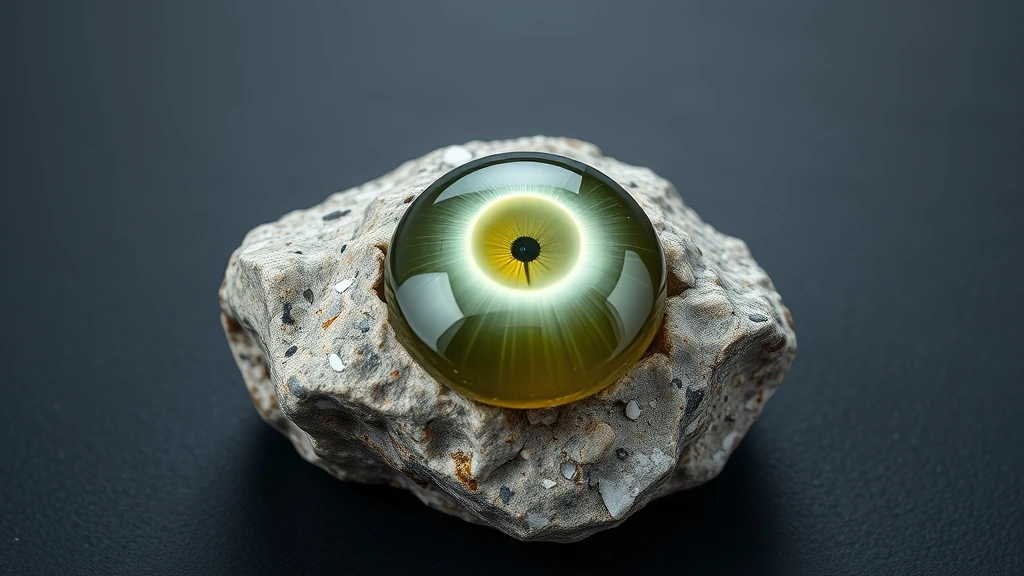
Chrysoberyl belongs to the natural mineral class, forming distinct crystals within igneous and metamorphic rocks. Unlike organic gems or rock aggregates, it is a stoichiometric compound with a defined lattice. This classification places it among the hardest gemstones, second only to diamond and corundum in practical jewelry applications. Its geological origin ensures exceptional durability and resistance to environmental degradation over geological timescales.
What is Cat’s Eye Chrysoberyl Gemstone? Geological Overview & Definition
Cat’s eye chrysoberyl is a variety of chrysoberyl exhibiting chatoyancy, a unique optical phenomenon. This effect creates a sharp, luminous band of light that moves across the stone’s surface. It results from the reflection of light off parallel, needle-like inclusions within the crystal structure.
The parent mineral, chrysoberyl, typically forms in pegmatites and granitic rocks. It is often found associated with other beryllium-bearing minerals like beryl and topaz. The specific alignment of these inclusions is critical for the gem-quality cat’s eye effect. Proper cutting is essential to maximize this distinctive visual characteristic.
Cat’s Eye Chrysoberyl Gemstone Chemical Composition & Crystallographic Properties
Chrysoberyl crystallizes in the orthorhombic system, featuring a complex lattice structure. The unit cell contains beryllium and aluminum cations coordinated by oxygen anions. This specific arrangement contributes to the mineral’s high density and refractive index range of 1.746 to 1.755. The crystal habit often appears as short, prismatic columns or tabular forms.
The chemical composition is defined by the formula BeAl₂O₄, representing a precise stoichiometric ratio. Cation substitution is minimal, maintaining the structural integrity of the lattice. This purity ensures the mineral’s exceptional thermal stability and resistance to chemical alteration. No significant solid solution series exists for this specific gem variety.
The stone is highly resistant to acids and alkalis, making it chemically inert. Its chromophore centers are primarily responsible for the golden to greenish colors. These color centers arise from trace impurities or lattice defects rather than major elemental substitution. The optical properties remain stable under normal lighting and temperature conditions.
Thermal behavior indicates high resistance to heat shock and thermal expansion. The Mohs hardness of 8.5 provides significant abrasion resistance in jewelry settings. This durability allows for faceting and polishing without excessive material loss. The mineral maintains its optical clarity and structural integrity over extended periods.
| Property | Specification |
|---|---|
| Mineral Group | Natural Mineral / Crystal |
| Chemical Formula | BeAl₂O₄ |
| Mohs Hardness | 8.5 |
| Crystal System | Orthorhombic |
| Specific Gravity (Density) | 3.73 – 3.79 |
| Refractive Index | 1.746 – 1.755 |
| Color & Optical Properties | Natural Cat’s Eye Chrysoberyl Gemstone color spectrum and optical dispersion |
| Primary Mining Localities | Global primary localities |
| Water & Chemical Resistance | High (Safe for gentle water washing) |
| Chakra Alignment (Traditional) | Heart Chakra, Third Eye Chakra |
| Zodiac Affinity (Traditional) | Leo, Virgo |
| Symbolic Meaning (Traditional) | Clarity of vision, protection from negative energies, and the development of intuition |
Beryl Varieties & Comprehensive Sub-Types
Emeralds derive their prized deep green hue from trace amounts of Chromium (Cr³⁺) and vanadium. These stones often exhibit the characteristic *jardin* effect, a network of three-phase inclusions that serve as geological fingerprints. With a Mohs hardness of 7.5 to 8.0, they require careful cutting to preserve structural integrity.
Aquamarine displays a serene sea-blue to cyan coloration caused by Fe²⁺ iron impurities. Gemologists prioritize exceptional clarity, as this variety typically lacks the heavy inclusions found in emeralds. Its high gemological grade makes it a versatile and durable choice for fine jewelry.
Morganite presents a delicate peach-pink tone resulting from Manganese (Mn²⁺) substitution within the crystal lattice. This variety is often found in large, clean crystals suitable for substantial faceted gemstones. Its soft color palette appeals to modern markets seeking alternative pink gemstones.
Heliodor, or golden beryl, features a warm golden-yellow to greenish-yellow appearance driven by Fe³⁺ iron content. These stones are generally transparent and exhibit excellent brilliance under natural light. They are valued for their sunny hues and consistent optical properties.
Goshenite is the purest form of beryl, appearing colorless due to the absence of chromophore impurities. It is prized for its high optical clarity and exceptional transparency. This variety serves as a base material for synthetic beryl production and high-end jewelry.
Red Beryl, known as bixbite, is an exceptionally rare variety colored by Mn³⁺ ions. Found primarily in the Wah Wah Mountains of Utah, it is estimated to be 1,000 times rarer than gold. Its scarcity and vibrant red hue make it a highly sought-after collector’s item.
Gemologists differentiate these beryl varieties primarily through spectroscopic analysis and visual color assessment. While all share the same hexagonal crystal system, their distinct chromophores dictate specific market valuations. Lapidary practices adjust cutting techniques to maximize the unique optical characteristics of each sub-variety.
Where is Cat’s Eye Chrysoberyl Gemstone Found? Geological Mining & Extraction
Cat’s eye chrysoberyl typically forms within pegmatite dikes and marble deposits, where specific geochemical conditions favor its growth. These host rocks provide the necessary beryllium and aluminum sources required for the BeAl₂O₄ formula. The stone’s formation is closely linked to granitic intrusions in continental crust settings.
Primary extraction regions include Sri Lanka, India, and Brazil, where alluvial deposits yield high-quality cabochons. Mining operations focus on recovering stones with a distinct, sharp chatoyancy band. Geologists assess the host rock composition to predict the likelihood of finding gem-grade material.
Historical Significance & Cultural Lore of Cat’s Eye Chrysoberyl Gemstone
Ancient civilizations revered chrysoberyl for its perceived protective powers and association with wisdom. Archaeological artifacts from the Roman and Byzantine eras often feature this stone in ornate jewelry. Its golden hue symbolized wealth and divine favor in various historical contexts.
In modern lore, the stone is linked to the Heart Chakra and Third Eye Chakra, enhancing intuition. Collectors value its rarity and the mesmerizing effect of its moving light band. This enduring legacy ensures its continued prominence in both gemological and esoteric traditions.
Modern Uses & Jewelry Applications of Cat’s Eye Chrysoberyl Gemstone
Lapidaries prioritize the cabochon cut to maximize the chatoyancy effect, where a single band of light moves across the stone’s surface. This optical phenomenon is best displayed in domed, polished stones rather than faceted gems, which would disrupt the light reflection. High-quality specimens are often set in rings, pendants, or earrings to showcase their unique luster and durability.
- Cabochon Dominance: The primary cut for displaying the “cat’s eye” effect.
- Faceted Variants: Rarely used, but applied when the stone lacks strong chatoyancy.
- Ornamental Carving: Used in sculptural art due to its high Mohs hardness of 8.5.
- Jewelry Settings: Commonly mounted in gold or platinum to complement its golden hues.
Carat, Quality Grades & Value Factors of Cat’s Eye Chrysoberyl
According to historical traditions and metaphysical lore, this gemstone is revered for its ability to enhance clarity of vision and sharpen mental focus. Practitioners believe it acts as a shield against negative energies, promoting a sense of security and emotional balance. The stone is often associated with protection and the development of intuition, helping wearers navigate complex life decisions with confidence.
- Clarity of Vision: Symbolizes mental sharpness and the ability to see through deception.
- Protection: Believed to deflect negative influences and create a protective aura.
- Intuition Development: Encourages trust in inner wisdom and subconscious insights.
Which Chakra and Zodiac Signs Align with Cat’s Eye Chrysoberyl Gemstone?
In esoteric practices, Cat’s Eye Chrysoberyl is primarily aligned with the Heart Chakra and the Third Eye Chakra. The Heart Chakra connection fosters emotional healing and love, while the Third Eye Chakra association enhances intuition and spiritual perception. This dual alignment makes the stone particularly powerful for balancing emotional and spiritual well-being.
- Heart Chakra: Promotes emotional stability, compassion, and open-heartedness.
- Third Eye Chakra: Enhances intuition, insight, and spiritual awareness.
For zodiac compatibility, this gemstone is most beneficial for individuals born under the signs of Leo and Virgo. Leos may find it enhances their natural charisma and confidence, while Virgos can use it to sharpen their analytical skills and attention to detail. These signs resonate with the stone’s energy, amplifying their inherent strengths.
- Leo: Boosts confidence, creativity, and leadership qualities.
- Virgo: Enhances precision, analytical thinking, and practical wisdom.
How to Identify Real vs. Fake Cat’s Eye Chrysoberyl Gemstone
Artificial imitations of Cat’s Eye Chrysoberyl are common, including synthetic glass, dyed quartz, and cubic zirconia. These fakes often mimic the chatoyancy effect but lack the natural inclusions and specific gravity of the genuine mineral. Understanding the differences in optical properties and physical characteristics is crucial for accurate identification.
Practical At-Home Authenticity Tests
- Temperature Test (Thermal Feel): Genuine chrysoberyl feels cool to the touch initially and warms slowly, whereas glass imitations warm up more quickly due to lower thermal conductivity.
- Specific Gravity & Weight Test: Real Cat’s Eye Chrysoberyl has a density of 3.73 – 3.79, making it feel significantly heavier than similarly sized glass or quartz imitations.
- Scratch & Hardness Test (Mohs Comparison): With a Mohs hardness of 8.5, genuine chrysoberyl can scratch quartz (hardness 7) but will not be scratched by it. Glass imitations are typically softer and may show scratches.
- Microscopic & Loupe Inspection (Internal Inclusions): Use a 10x loupe to look for natural inclusions like silk or rutile needles, which are characteristic of genuine chrysoberyl. Glass imitations often contain bubbles or swirls instead.
Cat’s Eye Chrysoberyl Gemstone Valuation Factors, Grading & Pricing
Market valuation primarily depends on Color Saturation and the intensity of the chatoyant band. Ideal stones exhibit a vivid golden-yellow hue with perfect tone uniformity across the surface. High optical clarity and a sharp, well-centered cat’s eye effect significantly elevate the gem’s desirability among collectors.
Carat Weight influences pricing, though large specimens with excellent optical properties command substantial premiums. Facet symmetry must be precise to maximize the reflection of light through the crystal structure. Minimal matrix or inclusion presence ensures the stone maintains its structural integrity and visual brilliance.
Geographical Provenance Premium plays a critical role in determining final market value. Stones from renowned deposits like Sri Lanka often fetch higher wholesale and retail prices. Current trends show steady demand for high-quality chrysoberyl, driven by its rarity and exceptional durability.
How to Clean and Care for Cat’s Eye Chrysoberyl Gemstone
For routine maintenance, immerse the gem in warm soapy water and gently scrub with a soft cloth. This method effectively removes oils and dust without damaging the delicate surface finish. The mineral’s high hardness makes it resilient to gentle manual cleaning procedures.
You may safely use an ultrasonic cleaner for deeper maintenance of this durable orthorhombic crystal. Ensure the setting is secure before placing the piece in the ultrasonic bath. Avoid harsh chemicals or abrasive materials that could compromise the gemstone’s luster.
Cleansing and Recharging Cat’s Eye Chrysoberyl Gemstone (Energetic Care)
To energetically cleanse the stone, place it on a selenite plate under natural moonlight. This dry method aligns with the mineral’s low solubility and avoids any risk of water damage. It is a gentle approach that respects the stone’s physical integrity.
Alternatively, use smoke smudging with sage or palo santo to clear negative energies. Keep the gemstone at a safe distance from the direct flame to prevent thermal shock. These dry techniques ensure the crystal remains pristine while restoring its vibrational balance.
Frequently Asked Questions About Cat’s Eye Chrysoberyl Gemstone
What is the chemical composition of cat’s eye chrysoberyl?
Cat’s eye chrysoberyl is chemically defined as beryllium aluminum oxide, with the formula BeAl₂O₄. This specific mineral structure creates its exceptional durability and optical properties. The orthorhombic crystal system allows for the unique arrangement of inclusions. This alignment is responsible for the distinct chatoyancy effect seen in high-quality specimens.
How hard is cat’s eye chrysoberyl on the Mohs scale?
It ranks at 8.5 on the Mohs hardness scale, making it extremely resistant to scratching. This high hardness level ensures the stone retains its polish over decades of wear. It is significantly harder than quartz and topaz. Consequently, it is an ideal choice for daily-wear rings and bracelets that face frequent mechanical contact.
Is cat’s eye chrysoberyl safe to wear in water?
Yes, it is safe for gentle water washing due to its high water resistance. The stone does not dissolve or degrade when exposed to moisture. You can safely wear it during handwashing or light rain. However, avoid prolonged submersion in harsh chemicals or chlorinated pools to maintain the luster of the surface.
Can I use an ultrasonic cleaner on this gemstone?
Yes, cat’s eye chrysoberyl is safe for ultrasonic cleaning. The stone’s structural integrity withstands high-frequency vibrations without damage. For routine maintenance, use warm soapy water and a soft cloth. This method effectively removes oils and dirt while preserving the delicate chatoyant band within the gem.
Which zodiac signs are aligned with cat’s eye chrysoberyl?
Leo and Virgo are the primary zodiac signs associated with this gemstone. These earth and fire signs resonate with the stone’s grounding yet vibrant energy. Wearing this gem may enhance personal traits linked to these astrological profiles. It serves as a powerful talisman for those born under these specific celestial influences.
Which chakras does cat’s eye chrysoberyl activate?
It primarily activates the Heart Chakra and the Third Eye Chakra. This dual alignment balances emotional openness with heightened intuition. The stone helps clear mental fog while fostering compassion. This synergy supports spiritual growth by connecting the heart’s feelings with the inner eye of perception.
What causes the cat’s eye effect in this gem?
The effect is caused by parallel needle-like inclusions of rutile or other minerals. These inclusions reflect light in a single, sharp band across the stone’s surface. This optical phenomenon is known as chatoyancy. The quality of the effect depends on the precision of the cut and the alignment of these internal structures.
What is the refractive index of cat’s eye chrysoberyl?
It has a refractive index ranging from 1.746 to 1.755. This high value indicates strong light dispersion and brilliance. The stone captures and reflects light effectively, enhancing its visual appeal. Combined with its specific gravity of 3.73 to 3.79, it feels notably dense in the hand.