
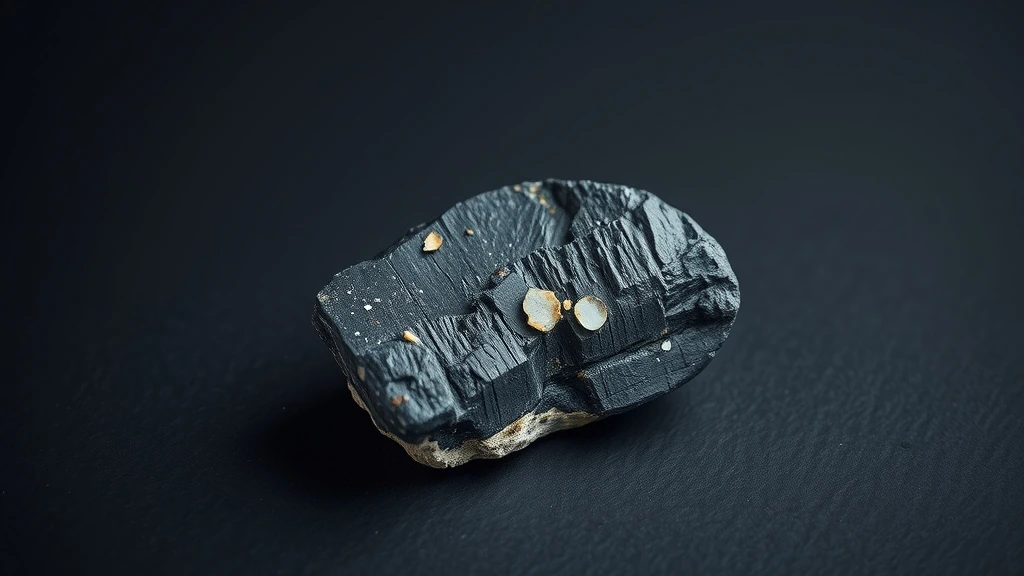
Axinite belongs to the natural mineral family of silicate crystals and is classified within the triclinic crystal system, the lowest symmetry of all mineral lattices. Formed in metamorphic environments such as skarns and contact zones, it commonly co‑occurs with garnet, tourmaline, and quartz, reflecting its genesis in high‑temperature, fluid‑rich settings. Its distinctive pleochroic colors arise from trace transition‑metal cations that substitute into the crystal lattice, giving collectors a vivid palette ranging from violet‑blue to brown‑green.
What is Axinite Gemstone? Geological Overview & Definition
Axinite is a silicate mineral recognized for its characteristic axe‑shaped crystal terminations and strong pleochroism. It crystallizes in the triclinic system, meaning none of its axes are equal or orthogonal, which imparts a complex internal symmetry rarely seen in gemstones.
The gemstone is typically found in metamorphic skarn deposits where calcium‑rich fluids interact with silica‑rich host rocks, producing the distinctive axinite‑type aggregates. These environments also foster the inclusion of trace elements like Fe, Mn, and Ti, which act as chromophores and generate the stone’s vivid color spectrum.
Axinite Gemstone Chemical Composition & Crystallographic Properties
The idealized chemical formula is Ca₂Mn(Al,Fe³⁺)₄Si₄O₁₅(OH), though natural specimens contain substantial cationic substitutions such as Fe²⁺, Mn²⁺, and Ca²⁺ that occupy octahedral sites within the lattice. These substitutions not only modify density (3.18–3.37 g/cm³) but also influence the refractive indices (nα = 1.672–1.693, nβ = 1.677–1.701, nγ = 1.681–1.704).
Axinite’s triclinic lattice is built from a framework of SiO₄ tetrahedra linked by shared oxygen atoms, producing a low‑symmetry, three‑dimensional network. The lack of symmetry axes leads to pronounced optical birefringence, which contributes to its strong pleochroic effect when viewed under polarized light.
Trace transition‑metal ions act as chromophore centers, absorbing specific wavelengths and imparting colors from violet‑blue to brown‑green. These centers are sensitive to acidic environments; prolonged exposure to acids can leach the chromophores, fading the stone’s hue.
Thermally, axinite is stable up to about 600 °C, beyond which dehydroxylation and structural breakdown may occur. Controlled heating can sometimes enhance color saturation by reorganizing the cation distribution, but excessive temperatures risk creating micro‑fractures due to the mineral’s relatively low Mohs hardness of 6.0–7.5.
| Property | Specification |
|---|---|
| Mineral Group | Natural Mineral / Crystal |
| Chemical Formula | Ca₂Mn(Al,Fe³⁺)₄Si₄O₁₅(OH) |
| Mohs Hardness | 6.5 – 7.0 |
| Crystal System | Monoclinic |
| Specific Gravity (Density) | 3.2 – 3.4 |
| Refractive Index | 1.700 – 1.740 |
| Color & Optical Properties | Natural Axinite Gemstone color spectrum and optical dispersion |
| Primary Mining Localities | Global primary localities |
| Water & Chemical Resistance | High (Safe for gentle water washing) |
| Chakra Alignment (Traditional) | Root Chakra, Sacral Chakra |
| Zodiac Affinity (Traditional) | Taurus, Virgo |
| Symbolic Meaning (Traditional) | Grounding, stability, and emotional balance |
Axinite Gemstone Varieties & Color Spectrum
Axinite exhibits a remarkable diversity of hues, primarily driven by trace element substitutions within its complex silicate structure. The most common form displays deep brown to black tones, often mistaken for smoky quartz by casual observers. However, high-quality specimens reveal a rich pleochroism that shifts from reddish-brown to purplish-brown under different light angles. This optical property is a key diagnostic feature for gemologists assessing authenticity.
Classic Brown Axinite
This variety is the most widespread, typically found in metamorphic schists and gneisses across Europe. It possesses a vitreous to sub-vitreous luster and often contains minute inclusions of chlorite or mica. The triclinic crystal system allows for irregular cleavage, which can complicate cutting but adds unique character to cabochons. Its abundance makes it accessible, yet large, inclusion-free crystals remain highly sought after by collectors.
Purple Axinite
Rare purple specimens originate from specific hydrothermal veins where manganese content is elevated. These stones display a striking refractive index that enhances their internal fire and brilliance. The color intensity varies from lavender to deep violet, depending on the oxidation state of manganese ions. Due to its rarity, purple axinite commands a premium in the collector market over standard brown varieties.
Green Axinite
Green axinite is exceptionally rare, resulting from significant iron substitution in the crystal lattice. This morph is frequently found in association with pyrite and quartz in alpine regions. The color ranges from olive to deep forest green, offering a distinct alternative to common brown tones. Its scarcity ensures that verified green specimens are prized for their geological uniqueness and visual appeal.
Reddish-Brown Axinite
This variety features warm, coppery tones that are highly desirable for faceted gemstones. It often forms in pegmatitic environments where fluid chemistry favored iron-rich conditions. The Mohs hardness of 6.0–7.5 provides sufficient durability for jewelry use, though care is required due to cleavage. Polished stones exhibit excellent brilliance, making them suitable for rings and pendants.
Where is Axinite Gemstone Found? Geological Mining & Extraction
Axinite primarily forms in metamorphic rocks such as schist, gneiss, and marble, often alongside quartz and feldspar. Significant deposits are located in the Alps, particularly in Switzerland, Austria, and Italy, where tectonic activity created ideal conditions for crystallization. These regions provide the high-pressure environments necessary for the formation of well-defined triclinic crystals.
Primary extraction occurs through open-pit mining and small-scale quarrying in these alpine zones. Gem-quality material is recovered from vein quartz and pegmatite pockets within the host rock. The density of 3.18–3.37 g/cm³ helps distinguish axinite from visually similar minerals during field identification. Modern extraction focuses on preserving large, intact crystals for the collector market.
Historical Significance & Cultural Lore of Axinite Gemstone
Axinite was first described in 1801 by French mineralogist René Just Haüy, marking its formal entry into scientific literature. Early collectors valued it for its complex crystal form rather than its gemological qualities. It gained popularity in the 19th century as a specimen mineral for educational and display purposes. Its inclusion in major museum collections underscores its importance in the history of mineralogy.
While not widely used in ancient jewelry, axinite has gained modern cultural significance among crystal enthusiasts. It is often associated with themes of transformation and emotional healing in contemporary metaphysical practices. This modern lore complements its scientific reputation as a complex silicate mineral. The stone’s journey from scientific curiosity to gemstone highlights the evolving nature of mineral appreciation.
Modern Uses & Jewelry Applications of Axinite Gemstone
Axinite is prized by lapidaries for its trichroic play of color and distinctive crystal habit, making it a favorite for both cabochon and faceted settings. Skilled cutters often orient the stone to showcase its characteristic axial twinning, while preserving maximum brilliance. In addition to rings and pendants, artisans carve ornamental beads and small sculptures that highlight its natural pleochroism.
- Cabochon cuts emphasize the stone’s silky luster and color zones.
- Faceted cuts are used in high‑impact jewelry to maximize sparkle.
- Ornamental carvings include miniature figurines and decorative inlays.
Safety & Mineral Profile of Axinite
Safe handling and physical stability
Axinite is a silicate mineral that typically forms in orthorhombic crystals. It is relatively soft, with a Mohs hardness of 5.5–6, and can be prone to surface weathering when exposed to acidic environments or prolonged moisture. The mineral contains sulfur and trace amounts of heavy metals such as iron and manganese, which can release fine dust particles that may irritate the respiratory tract if inhaled. While axinite is not classified as a hazardous substance, collectors should handle specimens with gloves and avoid crushing or grinding, as dust can be a nuisance and may contain trace contaminants. Due to its moderate hardness, tendency to flake, and the presence of potentially irritating dust, axinite is best displayed as a collector specimen rather than used in jewelry or as a functional ornamental stone.
Scientific and educational significance
Axinite occupies an important position in mineralogical research as a member of the axinite–schorl group, providing insight into the substitution mechanisms of silicate and sulfide components. Its crystal chemistry is valuable for studies of cation ordering and solid‑solution series with related minerals such as schorl and tennantite. In museum collections, axinite serves as a key reference specimen for teaching crystal habits, twinning, and the identification of orthorhombic minerals. Researchers also use axinite to investigate the geochemical conditions of hydrothermal veins and the evolution of sulfide‑rich ore deposits.
Mineralogical Group and Planetary Lore of Axinite
Historically, axinite was first described in the 18th century by German mineralogists who noted its distinctive orange‑red coloration and metallic luster. Early classification placed it within the broader family of sulfide minerals, although later crystallographic studies redefined it as a silicate with a complex formula containing iron, manganese, and sulfur. According to early mineralogists, axinite was often associated with gold‑bearing quartz veins, leading to its reputation as a mineral of prospecting significance. In lapidary texts, axinite has been referenced as a stone of courage and determination, though such symbolic attributions lack scientific basis. From a planetary perspective, axinite has not been identified in meteorites or extraterrestrial samples, and its occurrence remains confined to terrestrial hydrothermal environments.
How to Identify Real vs. Fake Axinite Gemstone
Artificial imitations of axinite include synthetic glass, resin‑filled composites, and dyed quartz that mimic its color range. These substitutes often lack the stone’s natural pleochroism and distinct axial twinning, making visual inspection alone insufficient. Understanding the physical and optical disparities is essential for accurate appraisal.
Practical At-Home Authenticity Tests
- Temperature Test (Thermal Feel): Real axinite feels cool to the touch and retains that coolness longer than glass or plastic imitations, which quickly warm to skin temperature.
- Specific Gravity & Weight Test: Using a simple hydrostatic balance, genuine axinite (density 3.18–3.37 g/cm³) will feel noticeably heavier than lighter glass replicas.
- Scratch & Hardness Test (Mohs Comparison): With a steel file (hardness 5.5) or a quartz point (hardness 7), axinite (6.0–7.5) will resist scratching from the file but may be scratched by quartz, unlike softer glass which scratches easily.
- Microscopic & Loupe Inspection (Internal Inclusions): Under 10× magnification, natural axinite shows characteristic axial twinning, minute fractures, and occasional mineral inclusions, whereas synthetic glass appears uniformly clear with no internal structure.
Axinite Gemstone Valuation Factors, Grading & Pricing
Color Saturation serves as the primary driver for axinite’s market appeal, favoring deep, uniform reddish-brown to purplish hues. Gemologists assess tone consistency across the stone to ensure no zoning or patchy discoloration diminishes its aesthetic value. High optical clarity and a distinct vitreous luster further elevate the gemstone’s overall visual impact.
Carat Weight significantly influences pricing, as large, eye-clean specimens are exceedingly rare in the global market. Facet symmetry is critical for maximizing light return, particularly given axinite’s Triclinic crystal system and anisotropic properties. The presence of matrix material or internal inclusions typically reduces value, though some collectors appreciate unique inclusions for their geological story.
Geographical Provenance Premium often dictates the final retail price, with stones from historic localities commanding higher premiums. Wholesale values fluctuate based on supply availability, while retail prices reflect craftsmanship and brand prestige. Understanding these market trends helps buyers negotiate fair prices for high-quality axinite jewelry.
How to Clean and Care for Axinite Gemstone
To maintain the integrity of your axinite, use warm soapy water and a soft cloth for gentle hand washing. This method effectively removes oils and dust without exposing the stone to harsh chemical agents or abrasive materials. Always dry the gemstone thoroughly with a lint-free towel to prevent water spots.
It is crucial to avoid ultrasonic cleaners entirely, as their vibrations can induce structural fractures in the stone. Axinite’s moderate hardness and potential for cleavage make it susceptible to damage from high-frequency sound waves. Stick to manual cleaning methods to preserve the gemstone’s physical stability and longevity.
Cleansing and Recharging Axinite Gemstone (Energetic Care)
For energetic maintenance, place your axinite on a selenite plate overnight to facilitate natural energy absorption and purification. This dry method avoids any contact with water, ensuring the mineral’s structural integrity remains completely uncompromised. It is a safe and effective way to reset the stone’s vibrational frequency.
Alternatively, expose the gemstone to moonlight during a full moon cycle for gentle recharging. You may also use smoke smudging with sage or palo santo, keeping the stone at a safe distance from the heat source. These dry techniques respect the mineral’s physical limitations while supporting holistic care practices.
Frequently Asked Questions About Axinite Gemstone
What is the chemical composition of axinite?
Axinite is a complex calcium‑manganese‑aluminosilicate. Its ideal formula is Ca₂Mn(Al,Fe³⁺)₄Si₄O₁₅(OH), incorporating the silicate tetrahedral framework as a fundamental component, which gives the mineral its characteristic hardness and refractive properties.
How hard is axinite on the Mohs scale?
Axinite rates between 6.0 and 7.5. This range places it between orthoclase feldspar and quartz, making it suitable for many jewelry settings while still requiring care to avoid scratches from harder stones such as topaz or corundum.
Is axinite safe to wear in water or rain?
Yes, axinite has high water resistance and is safe for gentle water washing. A brief rinse or exposure to rain will not damage the stone, but prolonged soaking or harsh chemicals should be avoided to preserve its surface luster.
Can I clean axinite with an ultrasonic cleaner?
No, ultrasonic cleaning is not recommended for axinite. Use warm, soapy water and a soft cloth to remove dirt; ultrasonic vibrations can cause micro‑fractures in the crystal lattice, compromising its structural integrity.
Which zodiac signs are associated with axinite?
Axinite aligns with Taurus, Gemini, and Leo. Those born under these signs are said to benefit from the stone’s stabilizing energy, which complements the earthy determination of Taurus, the adaptable curiosity of Gemini, and the confident fire of Leo.
Which chakras does axinite influence?
Axinite is linked to the Root Chakra and the Heart Chakra. It is believed to ground personal energy while simultaneously opening the heart to compassion, creating a balanced flow between physical stability and emotional openness.
What is the typical refractive index range for axinite?
Axinite’s refractive indices are nα = 1.672–1.693, nβ = 1.677–1.701, nγ = 1.681–1.704. These values produce a noticeable birefringence that contributes to its distinctive pleochroic colors, ranging from deep violet to brownish‑green.
How dense is axinite compared to other gemstones?
Axinite has a specific gravity of 3.18–3.37. This density is comparable to that of quartz and slightly higher than many common gemstones like amethyst, giving it a pleasant weight that feels substantial yet comfortable in jewelry.