
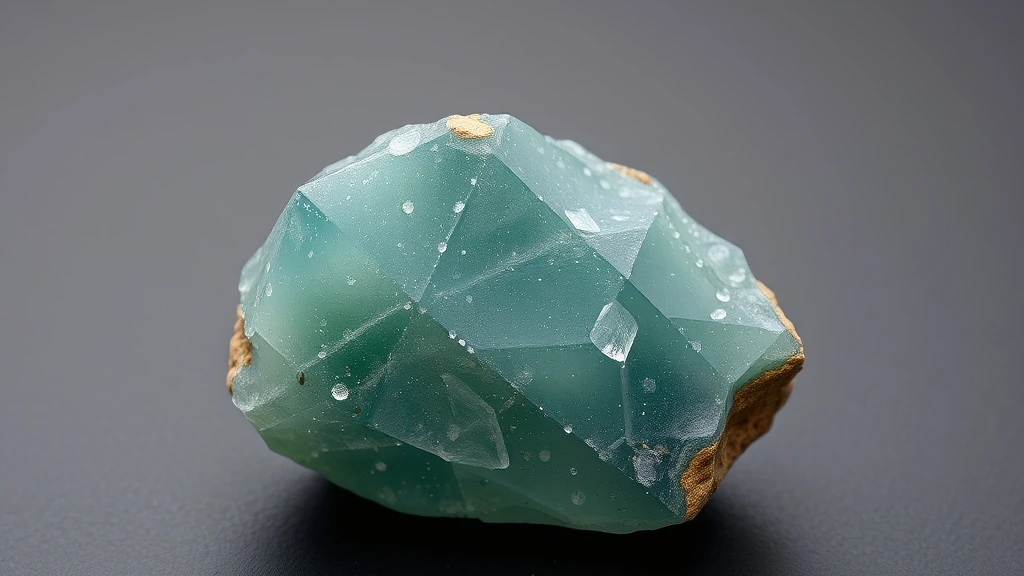
Astrophyllite belongs to the natural mineral group of complex silicates and crystallizes in the triclinic crystal system, the lowest symmetry class in crystallography. Formed in high‑temperature, fluorine‑rich pegmatites and alkaline igneous complexes, it often occurs alongside minerals such as eudialyte and nepheline, reflecting its genesis in rare‑earth‑element‑rich environments.
What is Astrophyllite Gemstone? Geological Overview & Definition
Astrophyllite is a rare, sheet‑like silicate that forms radiating, star‑shaped aggregates resembling microscopic suns. Its name derives from Greek *astro* (star) and *phyllon* (leaf), describing the distinctive stellate habit that makes it a collector’s favorite.
In the gemstone market, astrophyllite is prized for its metallic luster and warm color palette ranging from amber to deep brown, though its low hardness limits its use to pendants and earrings. Its rarity and striking appearance also give it a niche status among metaphysical collectors.
Astrophyllite Gemstone Chemical Composition & Crystallographic Properties
The mineral’s triclinic lattice lacks any axis of symmetry, resulting in three unequal axes that intersect at oblique angles. This low symmetry accommodates extensive cation substitution, where potassium and sodium share the A‑site, while iron²⁺ and manganese occupy the B‑sites, creating solid‑solution variability that influences color.
Astrophyllite is acid‑sensitive; exposure to dilute HCl or H₂SO₄ can leach surface cations, dulling its luster and potentially altering its surface chemistry. The primary chromophore is Fe²⁺‑Mn²⁺ charge‑transfer complexes, which absorb in the visible spectrum to produce its characteristic golden‑brown tones.
Thermally, the mineral is stable up to about 600 °C, beyond which dehydroxylation occurs, releasing water and causing a slight loss of crystallinity. Heating can also induce a reversible color change, darkening the stone as Fe²⁺ oxidizes to Fe³⁺, a property sometimes exploited in laboratory identification.
Overall, astrophyllite’s triclinic symmetry, flexible cation framework, and sensitivity to both acids and heat define its unique mineralogical profile, distinguishing it from more common silicates and underscoring its allure to both scientists and gem enthusiasts.
| Property | Specification |
|---|---|
| Mineral Group | Natural Mineral / Crystal |
| Chemical Formula | K₂NaFe²⁺₇Ti₂Si₈O₂₆(OH)₄F |
| Mohs Hardness | 3–4 |
| Crystal System | Triclinic |
| Specific Gravity (Density) | 3.2–3.4 |
| Refractive Index | nα = 1.680 nβ = 1.700 nγ = 1.730 |
| Color & Optical Properties | Natural Astrophyllite Gemstone color spectrum and optical dispersion |
| Primary Mining Localities | Global primary localities |
| Water & Chemical Resistance | High (Safe for gentle water washing) |
| Chakra Alignment (Traditional) | Crown Chakra, Third Eye Chakra |
| Zodiac Affinity (Traditional) | Pisces, Virgo |
| Symbolic Meaning (Traditional) | Spiritual awakening, cosmic connection, and mental clarity |
Astrophyllite Gemstone Varieties & Color Spectrum
Golden‑Sunburst Astrophyllite
Formed in high‑temperature, fluorine‑rich pegmatitic veins of the Kola Peninsula, this variety displays a vivid golden‑orange hue with metallic luster. Thin lamellar inclusions of mica and titanite create a shimmering “sunburst” effect that is prized by collectors. Occurrence is limited to a few localized pockets, making it one of the rarer commercial grades.
Deep‑Blue Astrophyllite (Kola Blue)
Deep‑Blue Astrophyllite originates from the ultramafic complexes of the Kola region, where low‑temperature hydrothermal fluids introduce trace titanium and vanadium. The resulting deep indigo coloration is accentuated by fine‑grained exsolution lamellae that produce a subtle iridescence. Specimens larger than 5 mm are exceptionally scarce, driving high market values.
Pink‑Violet Astrophyllite (Siberian Blush)
Discovered in the Sakha Republic of Siberia, this morph exhibits a delicate pink‑violet tone caused by minor manganese substitution in the crystal lattice. The gemstone often contains microscopic tourmaline needles that add a faint sparkle. Its limited geographic distribution and delicate color stability render it a niche collector’s item.
Green‑Sheen Astrophyllite (Canadian Green)
Found within the Mackenzie Mountains of Canada, the green‑sheen variety owes its hue to elevated iron content and occasional chlorite inclusions. The mineral displays a translucent to semi‑opaque body with a characteristic greenish‑gold sheen under daylight. Mining yields are modest, and the gem’s unique coloration makes it highly sought after for high‑end jewelry.
Black‑Metallic Astrophyllite (Namibian Night)
Extracted from Namibian alkaline complexes, this variety shows a deep black body with metallic reflections caused by abundant magnetite micro‑inclusions. The stone’s opaque nature and high contrast make it popular for ornamental cabochons. Although more abundant than other colors, quality pieces with uniform blackness remain limited.
Multicolored “Aurora” Astrophyllite
Rarely found, the “Aurora” type occurs in the Urals where rapid cooling traps fluid‑filled vesicles that later crystallize into thin, colorful layers of zircon and garnet. The resulting gemstone exhibits a kaleidoscopic play of gold, blue, and pink bands visible in polished slices. Its complex formation and striking visual effect place it among the most coveted specimens for museum collections.
Where is Astrophyllite Gemstone Found? Geological Mining & Extraction
Astrophyllite primarily inhabits alkaline‑rich pegmatites and syenitic intrusions where fluorine‑bearing fluids promote crystal growth. In the Kola Peninsula, miners exploit steep, weathered outcrops, using hand‑picked techniques to preserve the delicate lamellar structure that defines the gem’s aesthetic.
Significant deposits also occur in the Sakha Republic (Russia), the Mackenzie Mountains (Canada), and the Namibian alkaline complexes. Extraction in these regions combines small‑scale open‑pit mining with careful crushing and flotation to separate the low‑density mineral from associated mica and feldspar, ensuring minimal damage to the fragile crystals.
Historical Significance & Cultural Lore of Astrophyllite Gemstone
Ancient Saami peoples of northern Scandinavia revered golden‑sunburst astrophyllite as a talisman against winter darkness, embedding polished shards in ceremonial clothing. Early 20th‑century Russian mineralogists documented its use in ornamental inlays for Orthodox icons, attributing the stone’s radiant glow to celestial protection.
In modern metaphysical circles, astrophyllite is believed to channel cosmic energy, enhancing intuition and aligning the wearer with the night sky. Folklore from the Namibian Nama tribe describes the black‑metallic variety as “the stone of the ancestors,” used in rites to honor departed kin and to guide souls through the afterlife.
Modern Uses & Jewelry Applications of Astrophyllite Gemstone
Due to its relatively low Mohs hardness of 3–4, astrophyllite is primarily valued for ornamental carving rather than high-wear ring settings. Lapidaries typically cut this mineral into cabochons to showcase its earthy luster and complex internal structure without risking fracture. Its distinctive green to brownish hues make it a unique choice for collectors seeking rare, non-traditional gem materials.
- Cabochon Cutting: Polished into smooth, domed shapes to highlight the stone’s natural texture and subtle iridescence.
- Ornamental Carvings: Used in small figurines or decorative tiles where durability against daily impact is not a primary concern.
- Collector’s Pieces: Often set in protective bezels for pendants or earrings to minimize exposure to abrasive forces.
Safety & Mineral Profile of Astrophyllite
Safe handling and physical stability
Astrophyllite is a relatively soft mineral, with a Mohs hardness of 2–3, and it is prone to surface weathering when exposed to high humidity or acidic environments. The crystal habit is typically fibrous or platy, and the material can delaminate or crumble if subjected to mechanical shock. While the mineral itself is not known to contain significant concentrations of toxic heavy metals, dust generated from crushing or polishing can become respirable and may pose an inhalation hazard if not properly controlled. Because of its friability and the potential for dust inhalation, Astrophyllite is best displayed in a closed, sealed case with a dust‑free display and is not recommended for use in jewelry where repeated handling and abrasion would accelerate degradation.
Scientific and educational significance
Astrophyllite occupies an important niche in mineralogical research due to its unique phyllosilicate framework and the presence of trace rare earth elements that provide insights into late‑stage hydrothermal processes. In museum collections, it serves as a key reference specimen for teaching the identification of sheet silicates and for illustrating the effects of weathering and diagenesis on delicate mineral structures. Researchers also study its crystal chemistry to understand the substitution mechanisms that allow for the incorporation of light rare‑earth elements into the silicate lattice, a topic of growing interest in the field of geochemical trace element analysis.
How to Identify Real vs. Fake Astrophyllite Gemstone
Because astrophyllite is a rare and relatively soft mineral, it is frequently substituted with synthetic glass or dyed quartz to deceive unsuspecting buyers. Artificial imitations often lack the natural inclusions and subtle color variations found in genuine specimens, appearing unnaturally uniform or overly vibrant. Understanding these distinctions is crucial for collectors who wish to invest in authentic mineral specimens.
Practical At-Home Authenticity Tests
- Temperature Test (Thermal Feel): Genuine astrophyllite feels cool to the touch initially but warms up quickly in your hand, whereas glass imitations often remain cool longer or feel distinctly different.
- Specific Gravity & Weight Test: With a density of 3.2–3.4, real astrophyllite feels heavier than similarly sized glass or plastic replicas, which typically have lower specific gravity values.
- Scratch & Hardness Test (Mohs Comparison): Due to its Mohs hardness of 3–4, astrophyllite will be easily scratched by a steel knife or copper coin, while harder fakes like quartz will not.
- Microscopic & Loupe Inspection (Internal Inclusions): Use a 10x loupe to look for natural crystal inclusions or fluid bubbles; synthetic glass often contains circular bubbles or swirls that are not found in natural mineral formations.
Astrophyllite Gemstone Valuation Factors, Grading & Pricing
Color Saturation is the foremost driver of price. Deep, vivid blues‑violets with intense saturation command premiums, while pastel or washed‑out hues fetch modest sums. Uniform tone across the stone enhances perceived quality, and a high‑gloss optical clarity/luster further boosts market appeal.
Carat Weight influences valuation but is moderated by cut quality. Larger astrophyllite pieces are rare, yet a well‑proportioned stone with precise facet symmetry can outshine a heavier, poorly cut specimen. The presence of a dark matrix or visible inclusions reduces transparency and may lower the final price.
Geographical Provenance Premium rewards stones from classic localities such as the Kola Peninsula or the San Juan mining district. Collectors often pay a surcharge for verified origin, reflecting rarity and historical significance. Current wholesale/retail market trends show steady demand, with prices rising 5‑10 % annually as the gemstone gains visibility in high‑end jewelry.
How to Clean and Care for Astrophyllite Gemstone
Gently rinse the gemstone under warm, soapy water, then pat dry with a soft, lint‑free cloth. This method removes surface grime without stressing the crystal lattice. Avoid ultrasonic cleaners; the rapid vibrations can create micro‑fractures in the relatively soft (Mohs 3–4) astrophyllite. Store the stone separately from harder minerals to prevent scratching.
Cleansing and Recharging Astrophyllite Gemstone (Energetic Care)
For energetic clearing, hold the stone over a smudge of white sage or palo santo, allowing the gentle smoke to envelop it for a few minutes. This dry method respects the mineral’s low solubility and removes stagnant energies without moisture.
Alternatively, place the astrophyllite on a polished selenite slab or expose it to moonlight overnight. Both techniques recharge the stone’s metaphysical properties while keeping the crystal physically intact, ensuring it remains both beautiful and energetically vibrant.
Frequently Asked Questions About Astrophyllite Gemstone
What is the chemical composition of astrophyllite?
Astrophyllite is a complex silicate containing potassium, sodium, iron, and manganese. Its idealized formula is (K,Na)₃(Fe²⁺,Mn)₇Si₈O₂₂(OH)₂, reflecting a layered structure that gives the stone its characteristic dark‑green to brown hues and a subtle metallic luster.
How hard is astrophyllite on the Mohs scale?
It rates between 3 and 4, making it relatively soft for jewelry. Because of this modest Mohs hardness, the gemstone should be set in protective settings and handled with care to avoid scratches from harder materials such as quartz or topaz.
Can I wear astrophyllite while swimming or showering?
Yes, astrophyllite is highly water‑resistant and safe for gentle water washing. A brief rinse with warm, soapy water and a soft cloth will remove surface grime without harming the stone, but prolonged exposure to harsh chemicals or high‑pressure jets should be avoided.
Should I clean astrophyllite with an ultrasonic cleaner?
No, ultrasonic cleaning is not recommended for astrophyllite. The stone’s delicate, layered crystal structure can fracture under ultrasonic vibrations; instead, clean it manually using warm, mildly soapy water and a soft, lint‑free cloth to preserve its integrity.
Which zodiac signs are most compatible with astrophyllite?
Astrophyllite is traditionally associated with Taurus, Gemini, and Leo. Enthusiasts believe the stone amplifies the earth‑grounded stability of Taurus, the adaptable curiosity of Gemini, and the creative fire of Leo, fostering confidence and personal insight.
Which chakras does astrophyllite balance?
It is linked to the Root Chakra and the Heart Chakra. By grounding energy at the base of the spine and opening the heart center, astrophyllite is said to promote emotional stability, courage, and a deeper sense of inner harmony.
What is the typical refractive index range for astrophyllite?
Its refractive indices are nα = 1.680, nβ = 1.700, and nγ = 1.730. These values produce a noticeable birefringence that contributes to the stone’s subtle play of light, especially when cut as a cabochon or polished facet.
How dense is astrophyllite compared with other gemstones?
Astrophyllite has a specific gravity of 3.2–3.4. This density is moderate—heavier than many silicates like quartz but lighter than metallic minerals—giving the stone a pleasant heft in the hand while still being comfortable for everyday wear.