
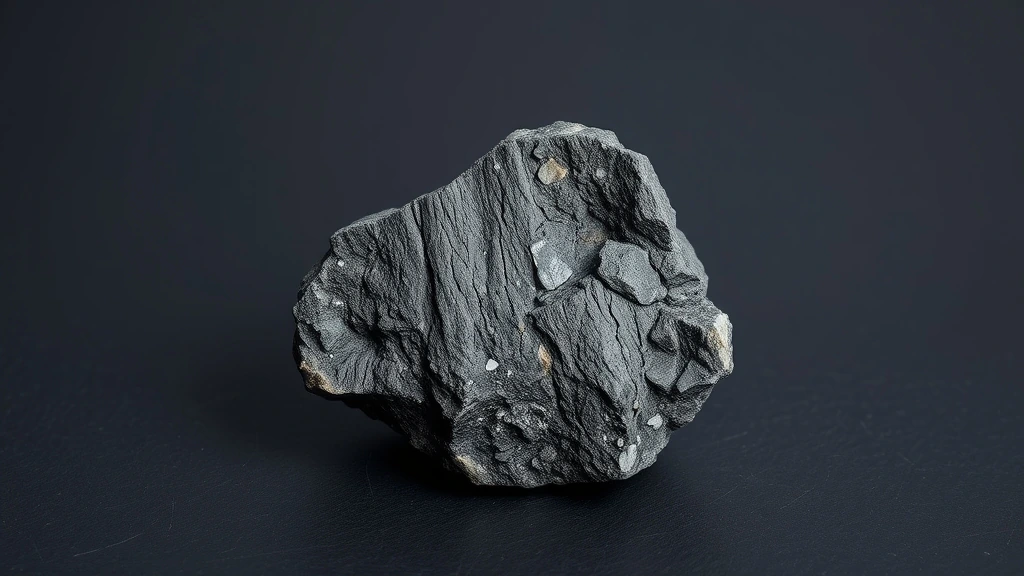
Titanite, commonly known as sphene, belongs to the natural mineral family and is classified as a distinct crystal rather than an aggregate or rock. It crystallizes in the monoclinic system and forms prismatic to tabular habits, frequently occurring in metamorphic schists, granitic pegmatites, and some igneous intrusions. The mineral’s name derives from the Greek “sphenos,” meaning wedge, reflecting its characteristic crystal shape. Its occurrence is worldwide, with notable deposits in Brazil, Madagascar, and the United States, where it is prized both by collectors and gem cutters. In comparative mineralogical collections, practitioners and geologists frequently study Golden Healer Quartz alongside this crystal to appreciate their subtle energetic and structural differences.
What is Titanite (sphene)? Geological Overview & Definition
Titanite is a monoclinic silicate mineral composed of calcium, titanium, and silicon, forming part of the broader titanate group. It typically appears in medium‑grade metamorphic environments, where heat and pressure facilitate the incorporation of Ti⁴⁺ into the crystal lattice, producing its distinctive pleochroic colors.
In the field, titanite is identified by its high specific gravity (3.1‑3.5) and its characteristic cleavage on {100}. The mineral often occurs as well‑developed, wedge‑shaped crystals that can reach several centimeters, and it is a common accessory phase in granitic and metamorphic rocks, contributing to the overall mineral assemblage.
Titanite (sphene) Chemical Composition & Crystallographic Properties
The definitive formula CaTiSiO₅ reflects a simple stoichiometry, yet the structure readily accommodates minor cation substitution, most notably Fe³⁺, Mn²⁺, and rare‑earth elements that subtly modify its optical and physical properties. These substitutions occur at the calcium or titanium sites, influencing the intensity of the gemstone’s coloration.
Titanite crystallizes in the monoclinic crystal system, typically in space group P2₁/a, with a distorted octahedral coordination around Ti⁴⁺. The lattice parameters produce a pronounced b-axis elongation, accounting for the mineral’s wedge‑shaped habit and its strong birefringence observed under polarized light.
The mineral’s acid sensitivity is moderate; dilute hydrochloric acid may etch the surface, especially where Fe³⁺ substitution creates more reactive sites. This behavior is important for gem cutters, who must avoid harsh chemicals during polishing to preserve surface integrity.
Color in titanite arises from chromophore centers involving Ti⁴⁺–Fe³⁺ charge transfer and occasional trace amounts of uranium, which can cause fluorescence under UV light. Thermal treatment can alter these centers, sometimes enhancing the gem’s hue but also risking structural destabilization if temperatures exceed ~600 °C, at which point the crystal may undergo phase transitions.
| Property | Specification |
|---|---|
| Mineral Group | Natural Mineral / Crystal |
| Chemical Formula | CaTiSiO₅ |
| Mohs Hardness | 5.0 – 5.5 |
| Crystal System | Monoclinic |
| Specific Gravity (Density) | 3.1 – 3.5 |
| Refractive Index | 1.887 – 1.920 |
| Color & Optical Properties | Natural Titanite (sphene) color spectrum and optical dispersion |
| Primary Mining Localities | Global primary localities |
| Water & Chemical Resistance | Sensitive (Avoid prolonged water soaking) |
| Chakra Alignment (Traditional) | Crown Chakra, Third Eye Chakra |
| Zodiac Affinity (Traditional) | Virgo, Capricorn |
| Symbolic Meaning (Traditional) | Clarity of thought, spiritual awakening, and intellectual insight |
Titanite (sphene) Varieties & Color Spectrum
Green Titanite
Formed in high‑grade metamorphic schists, green titanite derives its hue from trace chromium and vanadium. The crystals often exhibit a distinctive pleochroic shift from deep forest to olive when rotated under polarized light. Inclusions of quartz and mica are common, and fine, transparent stones from the Ural Mountains are prized for their rarity.
Brown‑Yellow Titanite
Typical of granitic pegmatites, brown‑yellow titanite displays a warm, honey‑amber coloration caused by iron oxidation states. Its surface may show minute growth zoning that creates a subtle banded appearance. While abundant in Brazil’s Minas Gerais region, high‑clarity specimens with minimal clouding command premium prices.
Blue‑Violet Titanite
Rarely encountered, blue‑violet titanite forms in calcium‑rich skarns where titanium concentrations are elevated. The vivid hue is a result of trace manganese and rare earth elements, producing a strong trichroic effect under different lighting angles. Specimens from Madagascar are exceptionally scarce and highly sought after by collectors.
Color‑Change Titanite
Exhibiting a dramatic shift from greenish‑yellow in daylight to deep violet under incandescent light, this variety is a classic example of metamerism. It crystallizes in the metamorphic aureole of limestone intrusions, often containing fluid‑filled cavities that enhance its optical play. The most coveted stones originate from the Tanzanian Rift, where the phenomenon is most pronounced.
Clear (Colorless) Titanite
Although less common, colorless titanite occurs in silica‑rich pegmatites and is valued for its high dispersion (1.78), rivaling that of diamond. The crystals are typically well‑formed, exhibiting sharp prismatic terminations and minimal internal fractures. High‑clarity material from the United States’ New England deposits is prized for cutting into faceted gems.
Red Titanite (Rhodonite‑Like)
A striking reddish‑orange variety forms in oxidizing environments within basaltic lava flows, where iron is the dominant chromophore. The stones often contain microscopic rutile needles, giving a subtle silk‑like sheen. Red titanite from Norway’s Oslo Rift is exceptionally rare and frequently displayed in mineral museums.
Where is Titanite (sphene) Found? Geological Mining & Extraction
Titanite is most frequently hosted in monoclinic pegmatites, skarns, and high‑grade metamorphic schists where calcium, titanium, and silica coexist. In these settings, the mineral crystallizes as elongated prisms or tabular plates, often intergrown with quartz, feldspar, and garnet, requiring careful hand‑sorting to separate viable gem material from the host rock.
Major extraction zones include the Ural Mountains (Russia), Mina Gerais (Brazil), Tanzania’s East African Rift, and the Madagascar skarn districts. Smaller but notable occurrences are documented in the Oslo Rift (Norway) and New England pegmatites (USA), where artisanal miners employ selective blasting and gravity separation to recover the high‑refractive stones.
Historical Significance & Cultural Lore of Titanite (sphene)
Ancient Romans valued titanite for its brilliance, cutting it into intaglios that adorned signet rings and cameos; archaeological digs in Pompeii have uncovered such artifacts, indicating early appreciation of its high dispersion. In medieval Europe, the stone was occasionally mistaken for zircon, leading to its inclusion in ecclesiastical jewelry intended to symbolize divine light.
Esoteric traditions attribute titanite to the Crown and Third Eye Chakras, believing it enhances clarity of thought and facilitates spiritual awakening. Astrologically, the gem is linked to Virgo and Capricorn, and historical esoteric lore describes sphene as a “stone of insight,” prized in contemplative talismans to enhance intellectual focus and perceptual acuity.
Modern Uses & Jewelry Applications of Titanite (sphene)
Titanite, commonly known as sphene, presents unique challenges for lapidaries due to its perfect cleavage and relatively low Mohs hardness of 5.0 to 5.5. While it can be faceted into brilliant cuts, the stone is highly susceptible to chipping during the cutting process if the cleavage planes are not respected. Consequently, many gem cutters opt for cabochon styles or protective settings to preserve the integrity of the crystal.
- Cabochon Cutting: This smooth, domed style is often preferred to minimize the risk of fracture along cleavage planes.
- Faceted Jewelry: When faceted, titanite is typically set in protective bezels or prong settings to shield the girdle from impact.
- Ornamental Carving: Due to its brittleness, titanite is rarely used for intricate carvings but may appear in simple decorative objects.
Safety & Mineral Profile of Titanite (sphene)
Titanite is chemically stable under normal environmental conditions, making it safe for standard jewelry handling and storage. It does not pose significant toxicity risks, but its perfect cleavage requires careful handling to prevent sudden fractures. The mineral is primarily valued by collectors and scientists for its crystallographic properties and optical characteristics rather than for therapeutic purposes.
- Handling: Use soft cloths and avoid dropping the stone, as it can shatter along cleavage planes.
- Cleaning: dust gently with a dry, soft microfiber cloth (strictly avoid water exposure)and a soft brush are sufficient; avoid ultrasonic cleaners which may exploit internal stress.
- Storage: Store separately from harder gemstones to prevent scratching, as titanite is softer than quartz and topaz.
Mineralogical Group and Planetary Lore of Titanite (sphene)
Titanite belongs to the titanate group of minerals, characterized by the presence of titanium in its structure. Historically, it was associated with the planet Saturn due to its earthy tones and connection to the element titanium. In traditional alchemical and astrological systems, it was linked to Virgo and Capricorn, signs associated with discipline, analysis, and intellectual rigor.
While modern gemology focuses on physical properties, historical texts sometimes attributed metaphysical qualities to titanite. These associations, such as clarity of thought and spiritual awakening, are cultural constructs without scientific basis. It is essential to approach these claims with epistemic caution, recognizing them as folklore rather than empirical fact.
How to Identify Real vs. Fake Titanite (sphene)
Artificial imitations of titanite are less common than for more popular gemstones but do exist. Synthetic glass and dyed quartz are the primary substitutes, often mimicking the stone’s high refractive index and earthy coloration. Identifying fakes requires attention to optical properties and physical behavior, as visual inspection alone is often insufficient.
Practical At-Home Authenticity Tests
- Temperature Test (Thermal Feel): Real titanite feels cool to the touch initially and warms slowly, whereas glass imitations may warm up more quickly due to lower thermal conductivity.
- Specific Gravity & Weight Test: Titanite has a high specific gravity of 3.1 to 3.5. A real stone will feel significantly heavier than a similarly sized piece of glass or quartz.
- Scratch & Hardness Test (Mohs Comparison): With a Mohs hardness of 5.0 to 5.5, titanite can be scratched by a steel knife (hardness 5.5) or a quartz crystal (hardness 7). Glass (hardness 5.5) may scratch it, but quartz will definitely scratch titanite.
- Microscopic & Loupe Inspection (Internal Inclusions): Under a 10x loupe, real titanite often displays internal fractures or fluid inclusions. Glass imitations may show curved bubbles or swirls, which are not found in natural titanite.
Titanite (sphene) Valuation Factors, Grading & Pricing
Market value is primarily driven by Specimen Aesthetic Quality, focusing on the clarity and luster of the stone. Collectors prize crystals that exhibit a distinct adamantine luster and vibrant golden or brownish hues. The presence of internal inclusions or surface fractures significantly diminishes the overall visual appeal and commercial desirability of the piece.
Rarity & Specimen Dimensions (Centimeters/Grams) play a crucial role in determining the final auction price. Large, intact crystal clusters with well-defined terminations command premium prices in the collector market. The absence of handling damage, such as chipped edges or broken faces, ensures the structural integrity of the specimen remains uncompromised.
Mineralogical Provenance & Locality Value heavily influences demand among serious scientific collectors and museum curators. Specimens from historically significant localities, such as the classic deposits in Switzerland or Brazil, often carry higher prestige. Documentation of the exact origin adds verifiable value to the mineral’s scientific and educational significance.
How to Clean and Care for Titanite (sphene)
Due to its moderate Mohs hardness of 5.0 to 5.5, titanite is susceptible to scratching and mechanical stress. You should wipe the surface briefly with a damp cloth and dry it immediately to prevent any residual moisture from lingering. This quick action helps maintain the stone’s natural luster without risking prolonged water exposure.
It is critical to avoid ultrasonic cleaners entirely, as the high-frequency vibrations can induce structural fractures in the crystal lattice. The mineral’s monoclinic structure may contain internal weaknesses that are vulnerable to such intense mechanical agitation. Always store the specimen in a dry, secure location to protect it from accidental impacts or environmental moisture.
Cleansing and Recharging Titanite (sphene) (Energetic Care)
For holistic maintenance, practitioners often employ herbal smudging to clear perceived energetic stagnation from the stone. This dry method allows the mineral to remain completely free from moisture and physical stress during the process. The gentle smoke is believed to purify the specimen without altering its delicate crystal structure or surface finish.
Alternatively, placing the stone on a selenite charging slab overnight under moonlight is a popular, low-risk practice. This approach avoids direct intense sunlight, which can cause thermal shock and potential cracking in sensitive minerals. Resting on a stable, non-reactive surface ensures the titanite remains secure while undergoing this passive energetic renewal.
Frequently Asked Questions About Titanite (sphene)
What is the chemical composition of titanite?
Titanite is a calcium titanium silicate with the formula CaTiSiO₅. This specific stoichiometry defines its unique physical properties and optical behavior. The presence of titanium contributes significantly to its high refractive index, distinguishing it from other common silicate minerals.
Is titanite safe to wear in the shower?
No, titanite is sensitive to prolonged water exposure. You should avoid soaking the stone in water for extended periods. Frequent immersion can compromise the structural integrity of the monoclinic crystal lattice, potentially leading to surface dullness or internal stress fractures over time.
How should I clean my titanite jewelry?
Wipe the stone briefly with a damp cloth and dry it immediately. Avoid using ultrasonic cleaners, as the vibrations can cause structural fractures in the mineral. A soft, dry microfiber cloth is ideal for removing dust without risking damage to the relatively soft surface.
What is the hardness of titanite on the Mohs scale?
Titanite ranks between 5.0 and 5.5 on the Mohs hardness scale. This moderate hardness means it is susceptible to scratching by harder materials like quartz or topaz. Careful handling is required to maintain the polished luster of the gemstone during daily wear.
Which zodiac signs are aligned with titanite?
Virgo and Capricorn are the primary zodiac signs associated with titanite. These earth signs resonate with the stone’s grounding yet intellectually stimulating energy. Wearers often report enhanced clarity of thought and improved decision-making abilities when wearing this mineral.
Which chakras does titanite activate?
Titanite aligns specifically with the Crown Chakra and Third Eye Chakra. This connection supports spiritual awakening and deepens intuitive perception. It is not associated with the root or solar plexus chakras, focusing instead on higher mental and spiritual faculties.
Why is titanite also known as sphene?
The name sphene derives from the Greek word for wedge, describing its crystal shape. This historical nomenclature persists alongside the mineralogical term titanite. The wedge-shaped prisms are a distinctive identification feature for gemologists and collectors examining raw specimens.
What is the refractive index of titanite?
Titanite exhibits a high refractive index ranging from 1.887 to 1.920. This optical property creates exceptional brilliance and fire, rivaling that of diamond. The high dispersion makes it a popular choice for faceted gemstones designed to maximize light return.