
Quartz belongs to the silicate mineral family, specifically classified within the tectosilicate subgroup. This structural classification defines its framework of tetrahedrally coordinated silicon and oxygen atoms. As a member of the Quartz Group, it shares fundamental lattice properties with other silica polymorphs. Its geological formation occurs in hydrothermal veins, where silica-rich fluids precipitate over millions of years. This process results in the distinct crystalline structures observed in gem-quality specimens worldwide.
What is Golden Healer Quartz? Geological Overview & Definition
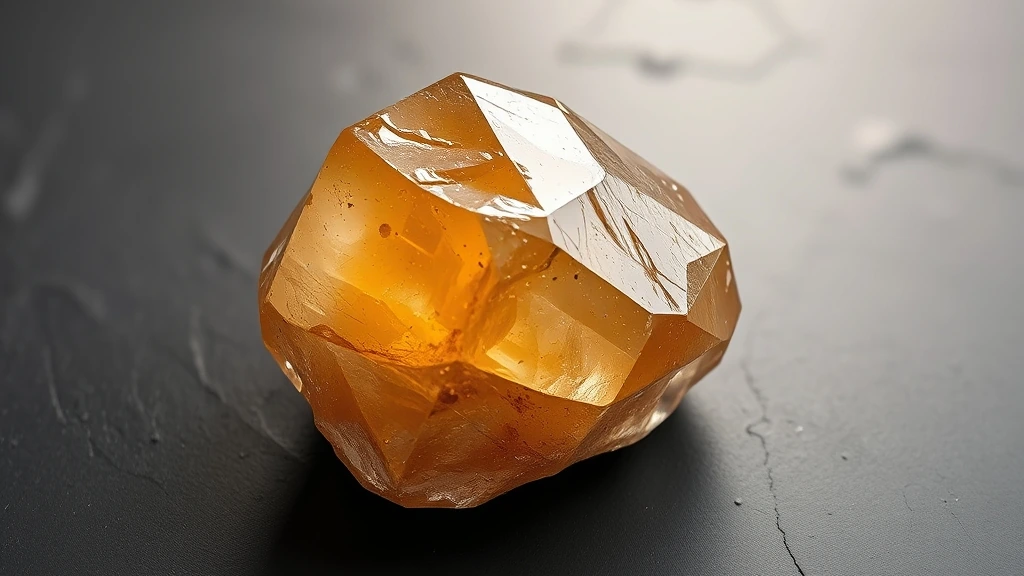
Golden Healer Quartz is a gem-quality variety of alpha-quartz, distinguished by its golden to amber coloration. This hue typically arises from trace impurities or radiation-induced color centers within the crystal lattice. Geologically, it forms in hydrothermal environments associated with granitic intrusions or metamorphic terrains. These conditions allow for the slow growth of well-formed, translucent crystals. If you’re drawn to the warm glow of Golden Healer Quartz, you may also appreciate the delicate, bone‑like formations of Skeletal Quartz, which share the same quartz structure while offering a strikingly different visual texture.
The term “Healer” is a lapidary designation rather than a strict mineralogical classification. It reflects the stone’s perceived energetic properties in metaphysical traditions. However, scientifically, it remains a pure silicon dioxide mineral. Its value derives from optical clarity, color saturation, and crystal perfection. Collectors often seek specimens with minimal inclusions and high transparency. Collectors often seek the same qualities in Rwanda Amethyst, noting its deep violet hue and flawless crystal structure that echo the purity prized in Golden Healer Quartz.
Golden Healer Quartz Chemical Composition & Crystallographic Properties
The mineral crystallizes in the Trigonal crystal system, exhibiting rhombohedral or trapezohedral habits. Its lattice structure consists of a continuous three-dimensional framework of silicon-oxygen tetrahedra. This tectosilicate arrangement creates a rigid, stable network that resists chemical weathering. The unit cell parameters define the specific symmetry and angle relationships unique to this mineral group.
The primary chemical composition is SiO₂, with a standard density of 2.65 g/cm³. Minor cation substitutions, such as aluminum or lithium, may occur but do not significantly alter the base stoichiometry. The golden color is often attributed to color centers created by lattice defects or trace elements. These defects absorb specific wavelengths of light, resulting in the observed warm tones.
Quartz is highly resistant to most acids, except for strong hydrofluoric acid. This chemical inertness makes it suitable for long-term preservation and display. Thermally, the mineral undergoes a phase transition at 573°C, shifting from alpha to beta quartz. This change alters the crystal symmetry but does not destroy the fundamental silica framework.
| Property | Specification |
|---|---|
| Mineral Group | Silicates (Tectosilicates / Quartz Group) |
| Chemical Formula | SiO₂ (Silicon Dioxide) |
| Mohs Hardness | 7.0 |
| Crystal System | Trigonal (Rhombohedral / Trapezohedral) |
| Specific Gravity (Density) | 2.65 |
| Refractive Index | 1.544 – 1.553 |
| Color & Optical Properties | Natural Golden Healer Quartz color spectrum and optical dispersion |
| Primary Mining Localities | Brazil, Madagascar, USA (Arkansas), Swiss Alps |
| Water & Chemical Resistance | High (Fully resistant to water and moisture) |
| Chakra Alignment (Traditional) | All Chakras (Universal Harmonizer) |
| Zodiac Affinity (Traditional) | All Zodiac Signs (Especially Leo and Aries) |
| Symbolic Meaning (Traditional) | Master energy amplifier, clarity, purification, and focus |
Golden Healer Quartz Varieties & Color Spectrum
Golden Healer Quartz displays distinct mineralogical characteristics across its geological varieties and structural habits. Gemologists evaluate these natural varieties based on crystal habit, trace chromophore concentrations, and visual luster.
Primary Natural Golden Healer Quartz
The benchmark natural variety exhibiting diagnostic color saturation and classic crystallographic symmetry.
Distinct Geological Morphs of Golden Healer Quartz
Secondary regional and structural varieties formed under localized geological temperature and pressure conditions.
Golden Sun Quartz
Golden Sun Quartz forms in silica‑rich pegmatites where iron and manganese impurities impart a warm amber hue. Its crystals often display radiating inclusions of mica or tourmaline, giving a subtle fire to the stone. This variety is prized for its luminous glow and is relatively rare, found mainly in the Appalachian region of the United States and the Harz Mountains of Germany.
Honey Quartz
Honey Quartz derives its name from its rich, honey‑colored matrix, produced by trace amounts of iron oxide. The stone frequently contains needle‑like inclusions of quartz fibers, creating a delicate, translucent effect. Although widely available in South Africa and Brazil, high‑grade specimens with deep amber tones are considered premium and scarce.
Amber Quartz
Amber Quartz is a silica‑based variety that exhibits a deep, almost black amber tint due to high concentrations of iron and titanium. Its crystals are often turbid with fine, cloudy inclusions, giving a velvety appearance. This type is uncommon, with notable deposits in the Yunnan Province of China and the Sierra Nevada of Spain.
Citrine Quartz (Golden Healer Variant)
Citrine Quartz, when classified as a Golden Healer, displays a golden‑yellow spectrum ranging from pale lemon to deep amber. The color results from ferric oxidation within the crystal lattice. While citrine is abundant in Brazil and the United States, the most sought‑after Golden Healer citrine comes from the Sierra Madre region of Mexico, where the hue is exceptionally vibrant.
Golden Tourmaline‑Infused Quartz
This hybrid variety incorporates tourmaline inclusions that give the quartz a subtle, metallic sheen. The tourmaline crystals are often needle‑like and can range from green to black, creating a striking contrast against the golden quartz matrix. Such specimens are rare, with significant finds reported in the Kashmir region and the Sikkim state of India.
Golden Quartz from the Kola Peninsula
The Kola Peninsula hosts a unique golden quartz that owes its color to high levels of vanadium and chromium. The crystals are typically well‑formed with a smooth, glassy surface and minimal inclusions, making them highly prized among collectors. This variety is exceptionally scarce, with only a handful of large, high‑quality specimens documented.
Where is Golden Healer Quartz Found? Geological Mining & Extraction
Golden Healer Quartz is predominantly extracted from silica‑rich pegmatite veins that form in granitic intrusions. These pegmatites are typically hosted in metamorphic or igneous terrains where high‑temperature fluids concentrate silica and trace metals, producing the characteristic golden hues. Major mining districts include the Brazilian Minas Gerais, the South African Witwatersrand, and the Sierra Madre in Mexico, each offering distinct color profiles and inclusion patterns.
Historical Significance & Cultural Lore of Golden Healer Quartz
Across ancient Greco‑Roman lapidary traditions, Golden Healer Quartz was revered for its purifying properties and believed to amplify divine energy. Egyptian artisans incorporated the stone into amulets and burial artifacts, attributing to it protective qualities against malevolent spirits. In Vedic texts, the quartz was associated with the solar deity Surya, symbolizing clarity and focus, while Chinese alchemists prized its golden tint as a conduit for Qi. These enduring traditions underscore the stone’s universal appeal as a symbol of healing and spiritual alignment.
Modern Uses & Jewelry Applications of Golden Healer Quartz
Lapidaries prize this variety for its warm, honeyed hue, which enhances the stone’s natural luster during cutting. The high Mohs hardness of 7.0 ensures durability for daily wear in rings and pendants. Faceted cuts maximize brilliance, while polished cabochons showcase the stone’s internal golden inclusions.
- Faceted Gemstones: Ideal for solitaire rings, earrings, and bracelets where light refraction is key.
- Cabochon Cuts: Smooth, domed shapes that highlight the stone’s color and internal “healer” patterns.
- Ornamental Carvings: Used in decorative sculptures, paperweights, and architectural accents for interior design.
- Beaded Jewelry: Strung into necklaces and bracelets, often paired with gold or silver settings.
Metaphysical Properties & Traditional Meaning of Golden Healer Quartz
According to historical traditions and metaphysical lore, this stone serves as a Master energy amplifier for clarity and focus. Ancient Mediterranean and Vedic texts often associated golden-hued quartz with solar vitality and mental purification. Practitioners believe it helps dispel mental fog and promotes a state of heightened awareness.
The stone is revered for its capacity to facilitate purification and emotional resonance during meditation. It is thought to align the wearer’s intent with universal energies, fostering a sense of grounded stability. This symbolic connection to light and clarity makes it a staple in holistic wellness practices.
Which Chakra and Zodiac Signs Align with Golden Healer Quartz?
This gemstone is recognized as a Universal Harmonizer, meaning it resonates with all seven chakras simultaneously. It does not target a single energy center but instead balances the entire system. This holistic alignment supports overall spiritual well-being and energetic equilibrium.
In astrological practice, it aligns with All Zodiac Signs, with specific potency for Leo and Aries. These fire signs benefit from the stone’s amplifying properties, which enhance their natural confidence and drive. The golden hue complements the solar energy associated with these zodiacal placements.
How to Identify Real vs. Fake Golden Healer Quartz
Artificial imitations often use synthetic glass, dyed rock crystal, or plastic to mimic the stone’s appearance. These fakes lack the natural internal complexity and thermal properties of genuine Silicon Dioxide (SiO₂). Careful inspection is required to distinguish authentic specimens from these common market substitutes.
Practical At-Home Authenticity Tests
- Temperature Test (Thermal Feel): Genuine quartz feels noticeably cool to the touch initially and warms slowly, whereas plastic or glass may feel warmer or heat up rapidly.
- Specific Gravity & Weight Test: Real quartz has a density of 2.65, making it feel heavier than similarly sized glass or plastic imitations.
- Scratch & Hardness Test (Mohs Comparison): With a Mohs hardness of 7.0, genuine quartz will scratch glass (hardness 5.5) but will not be scratched by a steel knife (hardness 5.5).
- Microscopic & Loupe Inspection (Internal Inclusions): Use a 10x loupe to look for natural fluid inclusions or feather-like fractures; glass often contains tiny, spherical air bubbles.
Golden Healer Quartz Valuation Factors, Grading & Pricing
The market value of Golden Healer Quartz is primarily driven by Color Saturation, where a deep, uniform amber hue and natural energetic luster command premium prices. Stones exhibiting a vibrant, even coloration with minimal surface blemishes are considered superior, as they reflect the mineral’s intrinsic clarity and perceived metaphysical potency. Across the trade, specimens with the richest, most saturated tones consistently fetch higher prices than those with muted or uneven coloration.
Crystal Size & Weight (Grams) is the next decisive factor. Larger, heavier crystals—measured in grams—are prized for their commanding presence and perceived power. Whether raw or tumbled, the polish quality influences value: a smooth, satin finish enhances visual appeal without the need for faceting. Natural matrix inclusions, such as embedded quartz veins or mineral streaks, add character and can increase desirability, provided they do not obscure the core color or structural integrity.
Ethical Sourcing & Locality Premium plays a crucial role in contemporary markets. Stones sourced from responsibly managed deposits, with transparent supply chains, attract collectors who prioritize sustainability. Provenance from renowned localities—such as the historic quartz beds of the American Southwest or the famed deposits of the Himalayas—can command a premium, reflecting both geological uniqueness and cultural heritage.
How to Clean and Care for Golden Healer Quartz
Physical cleaning of Golden Healer Quartz is straightforward and safe. Gently rinse the stone with warm water and a mild soap solution, then pat dry with a soft, lint‑free cloth. The mineral’s high water resistance allows for ultrasonic cleaning; however, avoid ultrasonic baths if the crystal is heavily fractured, as vibrations could exacerbate existing damage. After cleaning, store the quartz in a dry, low‑humidity environment to preserve its natural luster.
Cleansing and Recharging Golden Healer Quartz (Energetic Care)
To cleanse the energetic field of Golden Healer Quartz, place the stone in a gentle, indirect moonlight setting for several hours, allowing the subtle lunar energy to refresh its vibrational signature. Alternatively, resting the quartz on a selenite charging slab can facilitate a subtle, non‑thermal energy transfer, enhancing its natural amplifying properties. Avoid any form of direct heat exposure, including ovens, heat guns, or intense sunlight, as thermal stress can disrupt the crystal lattice and diminish the stone’s metaphysical efficacy.
Frequently Asked Questions About Golden Healer Quartz
Golden Healer Quartz displays distinct mineralogical characteristics across its geological varieties and structural habits. Gemologists evaluate these natural varieties based on crystal habit, trace chromophore concentrations, and visual luster.
Primary Natural Golden Healer Quartz
The benchmark natural variety exhibiting diagnostic color saturation and classic crystallographic symmetry.
Distinct Geological Morphs of Golden Healer Quartz
Secondary regional and structural varieties formed under localized geological temperature and pressure conditions.
Is Golden Healer Quartz safe to wear in the shower?
Yes, it is fully resistant to water and moisture. The mineral’s stable silicon dioxide structure prevents any chemical degradation when exposed to humidity. You can confidently wear this gemstone during bathing or swimming without worrying about surface damage or structural weakening.
How should I clean my Golden Healer Quartz piece?
Use warm water and mild soap for routine maintenance. This gentle method effectively removes oils and dust without harming the crystal lattice. For intricate settings, ensure the piece is securely mounted before submersion to prevent accidental loss or mechanical stress.
Can I use an ultrasonic cleaner on this?
Yes, it is suitable for ultrasonic cleaning unless heavily fractured. The Mohs hardness of 7.0 provides excellent resistance to the high-frequency vibrations used in these devices. However, inspect the stone for internal fissures first, as intense vibrations may exacerbate existing structural weaknesses.
Which zodiac signs are most compatible with this stone?
It aligns with all zodiac signs, especially Leo and Aries. Its universal energy resonates broadly, but its fiery warmth specifically amplifies the confidence and vitality associated with these fire signs. This makes it a versatile accessory for anyone seeking energetic balance and personal empowerment.
What chakra system does Golden Healer Quartz support?
It functions as a universal harmonizer for all chakras. Rather than targeting a single energy center, it promotes flow and alignment across the entire chakra system. This holistic approach helps balance the body’s energy field, fostering overall spiritual and physical well-being simultaneously.
How durable is Golden Healer Quartz for daily jewelry use?
Its Mohs hardness of 7.0 makes it highly durable for daily wear. This rating indicates strong resistance to scratching from common materials like dust or other gemstones. Proper care ensures the stone retains its luster and structural integrity over many years of regular use.
What is the chemical composition of this?
It consists primarily of silicon dioxide, or SiO₂. This pure chemical formula defines its crystalline nature and physical properties. Trace inclusions may vary, but the base composition remains consistent with standard quartz varieties found globally.
Does Golden Healer Quartz have a specific crystal structure?
It forms within the trigonal crystal system. This structure typically manifests as rhombohedral or trapezohedral shapes, influencing its optical properties. The refractive index of 1.544 to 1.553 contributes to its characteristic brilliance and light interaction.