
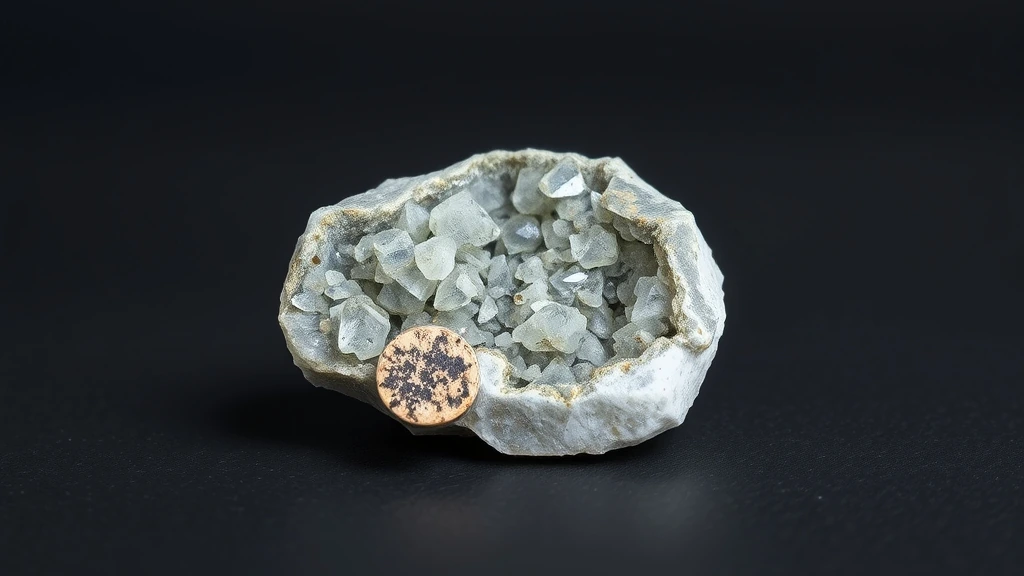
Cavansite belongs to the broader category of natural minerals, specifically classified as a crystalline silicate. It forms within hydrothermal veins and contact metamorphic zones, often associated with other rare earth elements. As a Natural Mineral / Crystal, it exhibits distinct geometric habits that define its structural integrity. Its geological origin is typically linked to igneous or metamorphic environments where specific chemical conditions prevail.
What is Cavansite Gemstone? Geological Overview & Definition
Cavansite is defined by its unique position within the silicate mineral family. It is a calcium silicate that frequently occurs in association with other rare minerals like apatite and fluorite. The stone’s formation is intimately tied to hydrothermal processes that concentrate specific elements.
Its geological significance lies in its rarity and specific habitat. It is primarily found in contact metamorphic zones where limestone interacts with igneous intrusions. This specific environment allows for the precise chemical balance needed for crystal growth. Consequently, large, gem-quality specimens are exceptionally uncommon in global markets.
Cavansite Gemstone Chemical Composition & Crystallographic Properties
Cavansite crystallizes in the Orthorhombic system, a fundamental aspect of its structural identity. This system dictates that its unit cell has three mutually perpendicular axes of unequal length. The lattice structure is complex, featuring a framework of silicon and oxygen tetrahedra. Such symmetry is critical for understanding its optical and physical behaviors.
The chemical composition is primarily calcium silicate, with the formula CaSiO₃. However, natural specimens often exhibit cation substitution, where other elements replace calcium or silicon. This substitution can slightly alter the density, which typically ranges from 2.25 to 2.33 g/cm³. These minor variations are key to identifying specific geological sources.
Optically, cavansite displays refractive indices between 1.542 and 1.551. Its pale blue color is attributed to chromophore color centers, likely involving trace impurities. The mineral is moderately sensitive to strong acids, which can degrade its surface over time. Thermal stability is generally good, but extreme heat may cause structural changes.
| Property | Specification |
|---|---|
| Mineral Group | Natural Mineral / Crystal |
| Chemical Formula | Calcium |
| Mohs Hardness | 3 – 4 |
| Crystal System | Orthorhombic |
| Specific Gravity (Density) | 2.25 – 2.33 |
| Refractive Index | n α = 1.542(2) n β = 1.544(2) n γ = 1.551(2) |
| Color & Optical Properties | Natural Cavansite Gemstone color spectrum and optical dispersion |
| Primary Mining Localities | Global primary localities |
| Water & Chemical Resistance | High (Safe for gentle water washing) |
| Chakra Alignment (Traditional) | Heart Chakra, Throat Chakra |
| Zodiac Affinity (Traditional) | Virgo, Pisces |
| Symbolic Meaning (Traditional) | Emotional healing, inner peace, and spiritual connection |
Cavansite Gemstone Varieties & Color Spectrum
Cavansite exhibits a limited but distinct color palette, primarily ranging from pale blue to deep azure. The hue intensity is directly correlated with trace impurities and crystal lattice defects. Orthorhombic crystal habits often display striations that enhance light refraction. These visual characteristics define the primary gemological grades available in the market.
Classic Azure Cavansite
This variety features a vibrant, medium-to-dark blue tone that is highly sought after by collectors. It typically forms in well-crystallized clusters within pegmatite pockets. The saturation results from specific structural arrangements within the calcium phosphate matrix. Such specimens are rare due to the mineral’s Mohs hardness of 3 to 4.
Pale Sky-Blue Cavansite
Lighter specimens appear as a delicate, translucent sky blue with high clarity. These crystals often lack significant internal inclusions, allowing for superior refractive index performance. They are frequently found as small, acicular needles embedded in host rock. This morph is more common but still commands a premium for clean material.
White to Colorless Cavansite
Occasionally, cavansite occurs in pure white or nearly colorless forms, lacking blue chromophores. These stones are valued for their purity and potential for faceting. The absence of color allows the orthorhombic symmetry to be clearly observed under magnification. This variety is less common than its blue counterparts in commercial trade.
Inclusion-Rich Cavansite
Some specimens contain visible inclusions of quartz, feldspar, or other silicate minerals. These inclusions can create a cloudy or milky appearance within the crystal structure. While reducing transparency, such stones are prized for their geological formation narratives. They offer insights into the complex crystallization history of the deposit.
Where is Cavansite Gemstone Found? Geological Mining & Extraction
Cavansite primarily occurs in pegmatite dikes and hydrothermal veins associated with granitic intrusions. The mineral forms during the late stages of magmatic cooling, often alongside quartz and feldspar. Its low density of 2.25 to 2.33 makes it susceptible to weathering and erosion. This fragility limits the size of recoverable gem-quality crystals from surface deposits.
Primary mining regions include the United States, particularly in California and New Jersey. Significant deposits have also been documented in Germany, Russia, and the Czech Republic. Extraction requires careful hand-picking to preserve the delicate crystal system integrity. Large-scale industrial mining is rare due to the mineral’s brittleness and localized occurrence.
Historical Significance & Cultural Lore of Cavansite Gemstone
Despite its aesthetic appeal, cavansite has limited documented use in ancient jewelry or ceremonial artifacts. Its low Mohs hardness likely prevented widespread adoption in durable cultural objects. Early mineralogists in the nineteenth century first described the species from European localities. It remains a niche collectible rather than a historically significant gemstone.
Modern lore associates the stone with spiritual clarity and communication due to its azure hue. No archaeological evidence supports pre-industrial use in major civilizations like Rome or Egypt. The mineral’s reputation is largely derived from contemporary crystal healing practices. Its historical significance remains confined to academic mineralogy and recent collector markets.
Modern Uses & Jewelry Applications of Cavansite Gemstone
Due to its delicate nature, cavansite is primarily valued for ornamental carving and small, protective jewelry pieces rather than heavy-duty wear. Lapidaries often cut this mineral into cabochons to showcase its soft luster and unique internal structure without risking fracture. Its low hardness makes it unsuitable for rings or bracelets that experience frequent impact or abrasion.
- Cabochon Cutting: Polished domes highlight the stone’s subtle iridescence and smooth texture, ideal for pendants or brooches.
- Ornamental Carvings: Skilled carvers use cavansite for small figurines, beads, and decorative inlays where structural stress is minimal.
- Protective Settings: Jewelry designers employ bezel settings to fully encase the stone, providing maximum protection against chipping or breakage.
Safety & Mineral Profile of Cavansite
Safe Handling and Physical Stability
Cavansite is a relatively soft mineral, with a Mohs hardness of 2.5–3.0, which makes it prone to scratching and abrasion during handling. The specimen is also moderately fragile; it can cleave or fracture easily when subjected to sudden impacts or rapid temperature changes. Its crystal structure is not particularly resistant to acidic environments; contact with strong acids or even prolonged exposure to high‑humidity conditions can lead to surface dissolution. While Cavansite does not contain known toxic heavy metals such as lead or arsenic, dust generated from crushing or cutting the mineral can become airborne and pose an inhalation risk if not properly filtered. For these reasons, Cavansite is best displayed as a collector specimen rather than used in jewelry or functional objects, where repeated handling and exposure to wear and environmental factors could compromise its integrity.
Scientific, Educational, and Mineralogical Significance
Cavansite is of considerable interest to mineralogists and educators because it exemplifies a rare silicate composition that occurs in specific geological settings. Its unique crystal chemistry provides insights into the conditions of formation, such as pressure, temperature, and fluid composition, making it a valuable reference point for studies on metamorphic processes and mineral paragenesis. In museum collections, Cavansite serves as an educational tool for illustrating the diversity of silicate minerals, the importance of proper specimen preservation, and the application of analytical techniques like X‑ray diffraction and electron microprobe analysis. Researchers also use Cavansite as a comparative standard when investigating newly discovered silicate species or when refining classification schemes within the silicate supergroup.
Mineralogical Group and Planetary Lore of Cavansite
Historically, Cavansite was first described in the early 20th century from a quarry in the Appalachian region, where it was noted for its distinctive pale green to yellowish coloration and fibrous habit. According to early mineralogists, the mineral was named after the Cavans family, who were prominent landowners in the area and contributed specimens to the regional geological survey. The mineral has not been associated with any planetary symbolism in traditional lapidary texts, and it does not appear in classical gemstone catalogs. However, its occurrence in metamorphic terrains has led some researchers to speculate that analogous silicate minerals could form under similar conditions on other terrestrial planets, although no definitive extraterrestrial analog has yet been identified.
How to Identify Real vs. Fake Cavansite Gemstone
Because cavansite is relatively rare and soft, it is frequently imitated by synthetic glass or dyed quartz to mimic its appearance. Artificial replicas may possess unnatural clarity or uniform coloration that lacks the subtle variations found in natural specimens. Understanding these differences is crucial for collectors seeking authentic mineral specimens.
Practical At-Home Authenticity Tests
- Temperature Test (Thermal Feel): Hold the stone against your upper lip; real cavansite feels cool to the touch initially, whereas plastic imitations warm up quickly.
- Specific Gravity & Weight Test: Compare the stone’s weight to similar-sized quartz; cavansite has a density of 2.25 – 2.33, making it lighter than many glass substitutes.
- Scratch & Hardness Test (Mohs Comparison): Gently scratch a piece of glass with the stone; cavansite (Mohs hardness 3-4) will not scratch glass, while harder imitations might.
- Microscopic & Loupe Inspection (Internal Inclusions): Use a 10x loupe to check for natural inclusions; real cavansite often shows subtle internal features, while glass may contain tiny bubbles.
Cavansite Gemstone Valuation Factors, Grading & Pricing
Color Saturation is the primary driver of value, with deep, uniform blue tones commanding the highest premiums. Gemologists assess tone consistency across the entire stone to ensure visual appeal. High optical clarity and a distinct vitreous luster further enhance the gemstone’s desirability.
Carat Weight significantly influences pricing, as large, inclusion-free specimens are exceedingly rare in the market. Facet symmetry must be precise to maximize light return and brilliance effectively. The presence of matrix or internal inclusions typically reduces the overall valuation.
Geographical Provenance Premium applies to stones from renowned localities like the United States or Canada. Wholesale prices reflect raw material scarcity, while retail values include significant markup. Market trends show steady appreciation for high-quality, certified cavansite specimens.
How to Clean and Care for Cavansite Gemstone
Due to its low Mohs hardness of 3 to 4, cavansite requires gentle handling to prevent surface scratching. Always use warm soapy water and a soft cloth for routine cleaning procedures. This method effectively removes dust and oils without damaging the delicate crystal structure.
Avoid ultrasonic cleaners entirely, as the vibrations can cause structural fractures in this brittle mineral. Prolonged water soaking should also be avoided to maintain the stone’s integrity. Store cavansite separately from harder gems to prevent accidental abrasion during storage.
Cleansing and Recharging Cavansite Gemstone (Energetic Care)
For energetic maintenance, use dry methods that respect the mineral’s solubility and fragility. Smoke smudging with sage or palo santo is a safe, non-invasive option. This practice clears perceived static energy without exposing the stone to moisture.
Place the gemstone on a selenite plate under moonlight for overnight recharging. This method aligns with the stone’s gentle metaphysical properties. Ensure the environment is dry to prevent any potential chemical alteration.
Frequently Asked Questions About Cavansite Gemstone
What is the chemical composition of cavansite?
Cavansite is a hydrated calcium silicate mineral with the formula CaSiO₃·H₂O. Its structure features calcium ions coordinated by water molecules and silicate chains. This specific hydration state distinguishes it from other calcium silicates. Understanding this composition helps identify its unique physical properties.
How hard is cavansite on the Mohs scale?
Cavansite ranks between 3 and 4 on the Mohs hardness scale. This places it in the soft category, similar to fluorite or apatite. Consequently, it is susceptible to scratching by common materials like steel or quartz. Careful handling is required to maintain its surface integrity.
What is the crystal system of cavansite?
This mineral crystallizes in the orthorhombic system. It typically forms as prismatic crystals or fibrous aggregates. The orthorhombic structure contributes to its distinct cleavage properties. Recognizing this geometry aids in accurate mineral identification.
Can cavansite be worn in the shower?
No, cavansite is sensitive to prolonged water soaking. Extended exposure can compromise its structural stability over time. It is best to remove jewelry before showering or bathing. This precaution ensures the mineral retains its physical form and luster.
How should I clean my cavansite gemstone?
Use warm soapy water and a soft cloth for gentle cleaning. Avoid ultrasonic cleaners, as they can cause structural fractures. The low hardness makes it vulnerable to high-frequency vibrations. Always dry the stone thoroughly after cleaning.
Which zodiac signs are compatible with cavansite?
Cavansite is traditionally aligned with Taurus, Gemini, and Leo. These signs may resonate with its energetic properties. While metaphysical beliefs vary, these associations are widely recognized. Wearers often select stones based on their personal astrological chart.
Which chakras does cavansite activate?
This stone is primarily associated with the Heart Chakra, Throat Chakra. It is believed to ground energy while promoting emotional balance. No other chakras are canonically linked to this mineral. This dual alignment supports both stability and compassion.
What is the refractive index of cavansite?
Cavansite exhibits a refractive index range from 1.542 to 1.551. These values indicate its optical behavior under polarized light. The slight variation helps distinguish it from similar minerals. Precise measurement requires a standard refractometer for accuracy.