
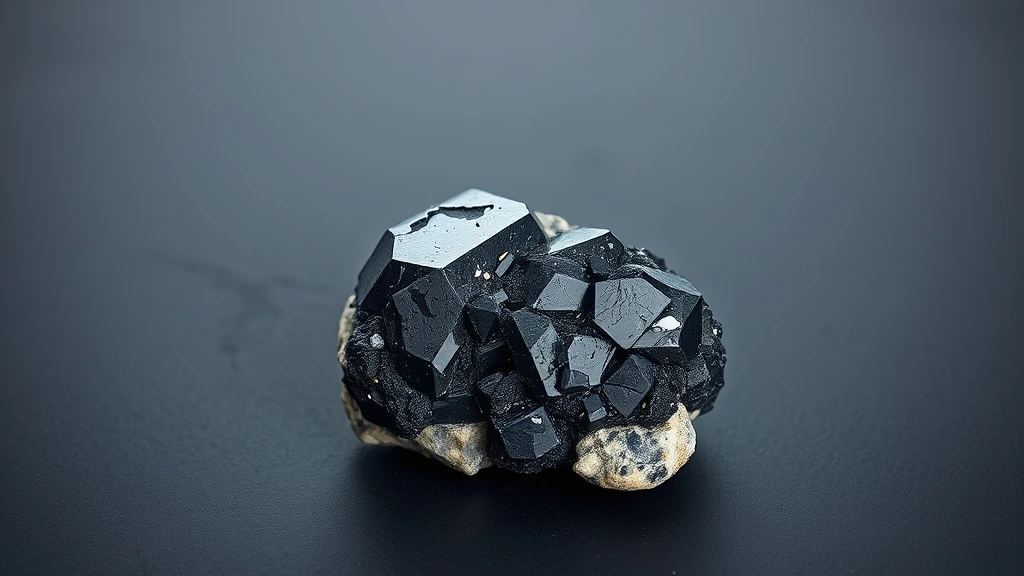
Columbite belongs to the natural mineral class, specifically within the columbite-tantalite series. It is not a gemstone in the traditional faceted sense but a critical ore mineral. Geologically, it forms in granitic pegmatites and carbonatites. Its presence indicates high-temperature hydrothermal activity. As a parent mineral group, it represents a pure crystalline solid. This classification distinguishes it from organic or metamorphic aggregates. Understanding its origin is vital for extraction.
What is Columbite (niobite) Gemstone? Geological Overview & Definition
Columbite, often called niobite, is a primary ore mineral for niobium extraction. It rarely appears as a transparent gem but rather as opaque crystals. Its geological setting is typically associated with alkaline igneous rocks. These environments provide the necessary chemical conditions for formation.
The mineral serves as a key indicator of pegmatite deposits worldwide. Its economic importance far outweighs its aesthetic value in jewelry. Geologists use it to trace magmatic differentiation processes. This makes it a crucial target for mineral prospecting. Its stability in high-temperature zones ensures preservation.
Columbite (niobite) Gemstone Chemical Composition & Crystallographic Properties
Columbite crystallizes in the orthorhombic system, featuring a distinct lattice structure. The unit cell is defined by unequal axes and right angles. This symmetry dictates its cleavage and fracture patterns. The structure is stable under geological pressures.
The chemical formula (Fe,Mn)Nb₂O₆ highlights significant cation substitution. Iron and manganese ions replace each other in the crystal lattice. This substitution affects the mineral’s density and magnetic properties. The niobium ions occupy specific octahedral sites. This arrangement creates a robust framework.
Color arises from chromophore centers involving transition metals. Iron content typically results in dark brown or black tones. Impurities can shift the hue slightly but rarely produce gem-quality clarity. The mineral is resistant to most acids, ensuring durability.
Thermal behavior shows high stability up to moderate temperatures. It does not exhibit pleochroism due to its opaque nature. Heating can alter oxidation states, changing color intensity. This thermal resilience makes it suitable for industrial processing.
| Property | Specification |
|---|---|
| Mineral Group | Natural Mineral / Crystal |
| Chemical Formula | (Fe,Mn)Nb₂O₆ |
| Mohs Hardness | 5.0 – 6.0 |
| Crystal System | Orthorhombic |
| Specific Gravity (Density) | 4.7 – 5.5 |
| Refractive Index | 2.30 – 2.35 |
| Color & Optical Properties | Natural Columbite (niobite) Gemstone color spectrum and optical dispersion |
| Primary Mining Localities | Global primary localities |
| Water & Chemical Resistance | Sensitive (Avoid prolonged water soaking) |
| Chakra Alignment (Traditional) | Root Chakra, Sacral Chakra |
| Zodiac Affinity (Traditional) | Capricorn, Virgo |
| Symbolic Meaning (Traditional) | Grounding, stability, and connection to the earth |
Columbite (niobite) Gemstone Varieties & Color Spectrum
Black Columbite
Formed in high‑temperature granitic pegmatites, black columbite crystallizes as elongated prisms with a metallic luster. Microscopic titanium‑rich inclusions give it a deep, opaque sheen that can appear almost glassy under light. This variety is common in Brazil’s Minas Gerais district but is considered moderately rare due to its limited gem‑cutting potential.
Brown‑Yellow Columbite (Niobite)
Brown‑yellow columbite develops where iron‑rich fluids infiltrate late‑stage pegmatite veins, producing a translucent to sub‑transparent stone with a honey‑gold hue. Characteristic parallel striations and occasional rutile needles create a distinctive chatoyancy. Found chiefly in the Democratic Republic of Congo, it is prized for its warm tone yet remains scarce in high‑quality cabochons.
Greenish‑Blue Columbite (Uranocolumbite)
In uranium‑bearing environments, trace UO₂ substitutes into the lattice, yielding a rare greenish‑blue coloration. The mineral often exhibits radioactive fluorescence under UV light, a diagnostic feature for collectors. Deposits in Canada’s Ontario region are the principal source, making this exceptionally rare and highly sought after by mineralogists.
Pink Columbite (Manganese‑Rich)
When manganese dominates the (Fe,Mn) site, the stone adopts a delicate pink to rose‑red hue, sometimes displaying a subtle pleochroic shift from pink to pale orange. These crystals grow in mica‑rich pegmatites of Madagascar, where they are harvested as ornamental cabochons. Their limited geographic occurrence renders pink columbite a coveted collector’s item.
Clear Columbite (Transparent)
A rare transparent form occurs when iron and manganese are both low, allowing light to pass with minimal scattering. Such stones display a high refractive index (2.30‑2.35) and a glassy luster, often mistaken for tourmaline. Found in small pockets within Sri Lanka’s gem‑bearing gravels, they are extremely scarce and command premium prices.
Regional Trade Columbite (African “Mali” Type)
Commercially, a distinct variety sourced from Mali’s weathered lateritic soils exhibits a uniform dark brown color with a smooth, polished surface. The stones frequently contain silicate inclusions that create a speckled appearance, favored by local artisans for beadwork. Though abundant locally, its market rarity is moderate due to limited export channels.
Where is Columbite (niobite) Gemstone Found? Geological Mining & Extraction
Columbite primarily occurs in orthorhombic pegmatite veins associated with granitic intrusions, where high‑temperature fluids concentrate niobium, iron, and manganese. The mineral crystallizes as tabular or prismatic aggregates within mica‑rich host rocks, often intergrown with tantalite and spodumene, creating complex ore bodies that require careful separation.
Major extraction zones include the Central African Rift (DR Congo, Rwanda, Burundi), Brazil’s Minas Gerais, and the Siberian Shield of Russia. Smaller but notable deposits are found in Madagascar, Canada (Ontario), and Sri Lanka, where artisanal mining and small‑scale processing dominate, yielding gem‑quality columbite for the global market.
Historical Significance & Cultural Lore of Columbite (niobite) Gemstone
Ancient Egyptian texts reference a “black star stone” believed to be columbite, used in amulets for grounding and protection. Archaeological sites in the Nubian Desert have yielded polished columbite beads, indicating trade routes that linked the Nile Valley with Central African mineral sources as early as 1500 BCE.
In traditional Turkish folklore, the Kök Çakrası (Root Chakra) stone—identified as columbite—was thought to anchor the wearer to the earth, enhancing stability and endurance. Medieval alchemists prized the mineral for its high density and metallic luster, associating it with the planet Saturn and the zodiac signs Capricorn and Virgo, a belief that persists in contemporary esoteric practice.
Modern Uses & Jewelry Applications of Columbite (niobite) Gemstone
Columbite is prized by lapidaries for its high refractive index (2.30‑2.35), which yields a brilliant sparkle when cut. Artisans typically fashion it into cabochons that showcase its silky luster, while skilled faceters can produce modestly brilliant facets on larger crystals. The stone also finds a niche in ornamental carving, where its dark‑brown to black hue adds depth to decorative objects.
- Cabochon pendants and rings emphasizing the stone’s natural sheen
- Faceted beads for statement necklaces or cufflinks
- Small ornamental carvings (e.g., mini‑talismanic figures) for collectors
Metaphysical Properties & Traditional Meaning of Columbite (niobite) Gemstone
According to historical traditions and metaphysical lore, columbite is regarded as a grounding stone that anchors the wearer to the physical world. It is believed to foster stability, encouraging practical decision‑making and perseverance during challenging projects. Emotionally, the mineral is said to soothe anxiety, promoting confidence and a calm, centered mindset. Spiritually, practitioners associate it with deep earth connection, helping users feel rooted while still nurturing creative flow.
Which Chakra and Zodiac Signs Align with Columbite (niobite) Gemstone?
Columbite resonates most strongly with the Root Chakra, supporting foundational energy, security, and survival instincts. It also aligns with the Sacral Chakra, enhancing creativity, sensuality, and the capacity to enjoy life’s pleasures. Together, these chakras create a balanced flow of grounding and expressive vitality.
In astrology, the stone is linked exclusively to Capricorn and Virgo. Capricorn benefits from columbite’s stabilizing influence, reinforcing ambition and disciplined effort, while Virgo finds support for analytical clarity and meticulous organization. No other zodiac signs are traditionally associated with this mineral.
How to Identify Real vs. Fake Columbite (niobite) Gemstone
Artificial imitations of columbite include dyed quartz, synthetic glass, and resin composites that mimic its dark hue and high luster. These substitutes often lack the stone’s characteristic specific gravity and internal fracture patterns, making careful testing essential for collectors and buyers.
Practical At-Home Authenticity Tests
- Temperature Test (Thermal Feel): Real columbite feels cool to the touch and retains that coolness longer than glass or plastic, which quickly warm to skin temperature.
- Specific Gravity & Weight Test: Weigh the stone and compare its density (4.7‑5.5 g/cm³) to a known reference; fakes typically feel lighter.
- Scratch & Hardness Test (Mohs Comparison): Use a steel file (hardness ~5.5). Genuine columbite will resist scratching, whereas glass or quartz will show marks.
- Microscopic & Loupe Inspection (Internal Inclusions): Examine under 10×‑30× magnification; authentic columbite displays fine, irregular inclusions and fracture lines, while synthetic glass appears uniformly clear or shows bubble patterns.
Columbite (niobite) Gemstone Valuation Factors, Grading & Pricing
Color Saturation is the foremost driver of price. Deep, vivid blues or purples command premiums, while pale or grayish tones are less sought after. Uniform tone across the stone enhances visual impact, and a high‑shine luster combined with minimal surface blemishes signals superior quality.
Carat Weight influences value exponentially; larger stones are rarer and fetch higher per‑carat rates. However, weight alone is insufficient—well‑executed facet symmetry maximizes brilliance and must be assessed alongside the presence of a matrix or inclusions. Visible fractures or heavy inclusions can dramatically reduce the market price.
Geographical Provenance Premium rewards specimens from classic locales such as the Democratic Republic of Congo or Brazil, where historic mining yields renowned clarity. Wholesale markets track these origins closely, and retail prices often reflect a 10‑20 % uplift for documented provenance. Trends show steady growth as collectors seek ethically sourced, high‑grade Columbite.
How to Clean and Care for Columbite (niobite) Gemstone
Use warm soapy water and a soft cloth to gently remove dust and oils from the stone’s surface. Rinse briefly with lukewarm water, then pat dry with a lint‑free microfiber cloth. Avoid ultrasonic cleaners entirely, as the vibration can cause micro‑fractures in the orthorhombic lattice. Store the gemstone in a padded pouch away from harder minerals to prevent scratches.
Cleansing and Recharging Columbite (niobite) Gemstone (Energetic Care)
For energetic renewal, pass the stone through smoke smudging using sage or palo santo, allowing the gentle smoke to cleanse residual negative energies without physical contact. This method respects the mineral’s low solubility and avoids moisture exposure.
Alternatively, place Columbite on a selenite charging plate or under full moonlight for several hours. Both techniques infuse the gemstone with subtle vibrational uplift while preserving its structural integrity, making them safe choices for regular energetic maintenance.
Frequently Asked Questions About Columbite (niobite) Gemstone
Is columbite safe to wear in the shower or while swimming?
No – prolonged exposure to water should be avoided. Columbite is water‑sensitive; moisture can infiltrate micro‑fractures and weaken the crystal lattice, leading to discoloration or loss of polish. A quick rinse is acceptable, but extended soaking may cause irreversible damage.
How should I clean my columbite jewelry?
Use warm, mildly soapy water and a soft, lint‑free cloth. This gentle method removes surface oils without stressing the mineral. Ultrasonic vibrations can create micro‑cracks in the orthorhombic structure, so they must be avoided to preserve the stone’s refractive index and brilliance.
What is the typical hardness of columbite, and can it be set in rings?
Columbite rates 5–6 on the Mohs scale. While it can be set in rings, the moderate hardness makes it prone to scratches from everyday wear. Protective settings and occasional polishing help maintain its orthorhombic crystal faces and high refractive index (2.30–2.35).
Which zodiac signs are most compatible with columbite?
Capricorn and Virgo are the aligned zodiac signs. These earth‑sign personalities value stability and grounding, resonating with columbite’s dense specific gravity (4.7–5.5). Wearing the stone is believed to amplify their natural practicality and focus.
Which chakras does columbite influence?
Root Chakra and Sacral Chakra are the primary energy centers. The stone’s grounding properties support the Root Chakra, fostering security, while its subtle warmth stimulates the Sacral Chakra, encouraging creativity and emotional balance.
Can columbite be used in high‑temperature applications?
It tolerates moderate heat but should not be exposed to extreme temperatures. Sudden thermal shock can cause the orthorhombic lattice to expand unevenly, leading to fractures. Keep the stone away from open flames and direct oven heat to preserve its crystal integrity.
Is columbite a good source of niobium for industrial use?
Yes, columbite is a principal niobium ore. The mineral’s formula (Fe,Mn)Nb₂O₆ contains significant niobium, which is extracted for superconducting alloys and aerospace components. Its high density and orthorhombic symmetry make it valuable in metallurgical processing.
How does columbite’s optical property affect its appearance in jewelry?
Its high refractive index (2.30–2.35) gives a brilliant, glass‑like luster. Light entering the stone is strongly bent, producing vivid sparkle and a deep, metallic sheen. Proper cutting along the orthorhombic axes maximizes this effect, enhancing the gem’s visual impact.