
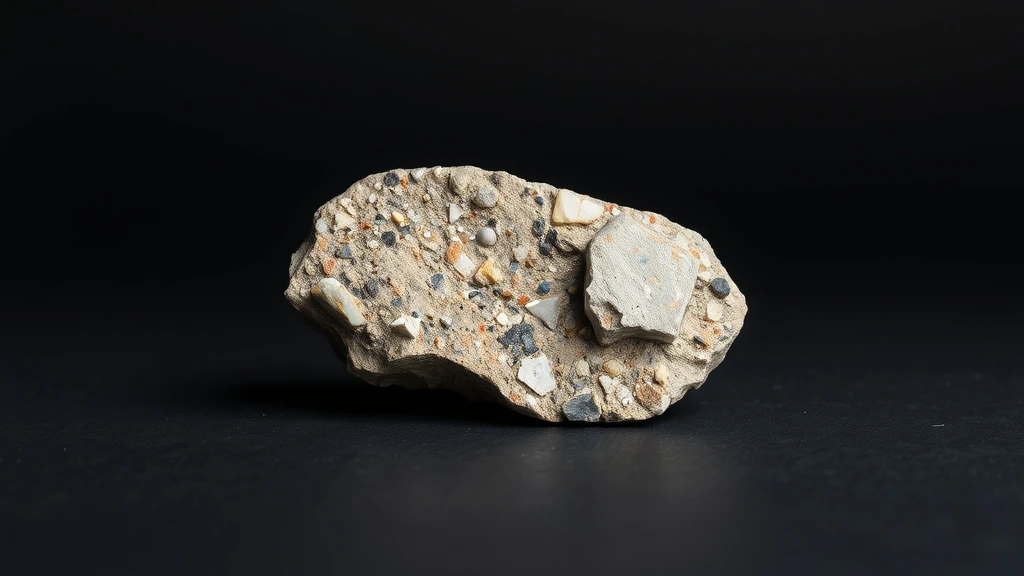
Conglomerate belongs to the broad parent group of natural mineral aggregates rather than single-crystal gemstones. It forms through the lithification of rounded pebbles and cobbles in high-energy environments. This polymineralic structure distinguishes it from homogeneous crystalline minerals. Consequently, its gemological value derives from aesthetic patterning rather than optical purity.
What is Conglomerate Gemstone? Geological Overview & Definition
Conglomerate is defined as a coarse-grained clastic rock containing rounded clasts larger than two millimeters. These fragments are typically cemented by silica, calcite, or iron oxide matrices. The clast size and sorting indicate the energy of the depositional environment.
As a sedimentary rock, it lacks the internal symmetry of crystalline minerals. Instead, it displays a chaotic arrangement of diverse lithologies. This heterogeneous texture makes it unique among gem materials. Collectors value its visual complexity over standard gemological parameters.
Conglomerate Gemstone Chemical Composition & Crystallographic Properties
Conglomerate possesses an aphanitic/polymineralic structure with no single crystal system. It consists of interlocking grains of quartz, feldspar, and mica. This aggregate nature prevents the definition of a unified lattice structure. Each mineral component retains its individual crystallographic orientation.
The chemical composition varies significantly based on the source rocks of the clasts. Common cements include silica (SiO₂) and carbonate (CaCO₃). Cation substitution occurs within individual mineral grains but not across the rock mass. There is no single stoichiometric formula for the entire conglomerate.
Acid sensitivity depends heavily on the cementing material used. Carbonate cements dissolve readily in dilute hydrochloric acid, while silica cements resist. Chromophore color centers are absent in the matrix, with color derived from the clasts. Thermal behavior is heterogeneous, with different minerals expanding at distinct rates.
| Property | Specification |
|---|---|
| Mineral Group | Natural Mineral / Crystal |
| Chemical Formula | Composite rock: Quartz, Feldspar, Mica, and various rock fragments (Clasts) cemented by silica, carbonate, or iron oxide |
| Mohs Hardness | 5.0 – 7.0 |
| Crystal System | Aphanitic/Polymineralic (No single crystal system) |
| Specific Gravity (Density) | 2.4 – 2.9 |
| Refractive Index | 1.54 – 1.62 |
| Color & Optical Properties | Natural Conglomerate Gemstone color spectrum and optical dispersion |
| Primary Mining Localities | Global primary localities |
| Water & Chemical Resistance | High (Safe for gentle water washing) |
| Chakra Alignment (Traditional) | Root Chakra |
| Zodiac Affinity (Traditional) | Capricorn, Taurus |
| Symbolic Meaning (Traditional) | Grounding, stability, and the integration of diverse experiences |
Conglomerate Gemstone Varieties & Color Spectrum
Conglomerate is a coarse-grained sedimentary rock composed of rounded clasts cemented together by silica, carbonate, or iron oxide. Its visual appeal stems from the diverse mineralogy within each fragment, creating a unique mosaic pattern. The refractive index typically ranges from 1.54 to 1.62, depending on the dominant mineral content.
Petrified Wood Conglomerate
This variety features fossilized wood fragments embedded in a silica-rich matrix, often displaying vibrant silification patterns. The wood clasts retain their original cellular structure, offering intricate organic details within the stone. Found primarily in arid regions, these specimens are prized for their earthy tones and natural beauty.
Banded Iron Formation (BIF) Conglomerate
Characterized by alternating bands of magnetite and chert, this type exhibits striking red, brown, and black coloration. The iron oxide cement provides a metallic luster and high density, often exceeding 2.9 g/cm³. These rocks are geologically significant as they record early Earth atmospheric oxygenation events.
Quartzite-Pebble Conglomerate
This subtype contains rounded quartz pebbles set in a fine-grained quartzite matrix, resulting in a durable and translucent appearance. The Mohs hardness of the quartz components ensures high resistance to abrasion, making it suitable for carving. Its color palette ranges from pure white to pale gray, depending on impurities.
Mica-Gneiss Conglomerate
Featuring distinct sheets of mica within gneissic clasts, this variety displays a shimmering, schistose texture. The alignment of mica crystals creates a reflective surface that catches light dynamically. It is less common than quartz-rich types but offers a unique visual complexity due to its polymineralic nature.
Oolitic Limestone Conglomerate
Composed of small, spherical ooids cemented by calcite, this variety often appears in beige or light gray hues. The ooids form in warm, shallow marine environments, providing a textured, granular surface. While softer than quartzite types, it is valued for its organic, bubble-like aesthetic.
Where is Conglomerate Gemstone Found? Geological Mining & Extraction
Conglomerate deposits typically form in high-energy environments such as river deltas, coastal zones, and alluvial fans where sediment transport is vigorous. These rocks are often found in association with sandstone and shale formations, indicating ancient waterways. The cementation process occurs over millions of years, binding the clasts into solid rock.
Major mining regions include the American Southwest, where petrified wood conglomerates are extracted from desert badlands. Additionally, significant deposits exist in Australia and parts of Europe, where iron-rich conglomerates are quarried. Extraction methods usually involve open-pit mining, allowing for the careful removal of large, intact blocks for lapidary work.
Historical Significance & Cultural Lore of Conglomerate Gemstone
Ancient civilizations utilized conglomerate for architectural purposes due to its durability and availability, often carving it into pillars and flooring. In prehistoric times, the distinct clasts served as raw material for lithic tools, showcasing early human ingenuity in stone working. The rock’s stability made it a preferred choice for foundational structures in various cultures.
Culturally, conglomerate is associated with the Root Chakra, symbolizing grounding and the integration of diverse life experiences. Its varied composition reflects the concept of unity in diversity, resonating with spiritual practices emphasizing balance. This stone continues to be valued in modern metaphysical contexts for its stabilizing energy.
Modern Uses & Jewelry Applications of Conglomerate Gemstone
Conglomerate is primarily valued as an ornamental stone rather than a high-value gem, prized for its unique polymineralic composition and earthy aesthetic. Lapidaries often cut these stones into cabochons to highlight the rounded clasts and cement matrix, creating smooth, polished surfaces that emphasize texture. Faceted cuts are rare due to the rock’s composite nature, which can cause uneven light reflection and potential cleavage issues along grain boundaries.
- Cabochon Cutting: Smooth, domed shapes that showcase the natural pebble-like inclusions and cement lines.
- Ornamental Carving: Used for decorative bowls, paperweights, and architectural accents in rustic or modern designs.
- Beading & Pendants: Polished fragments are strung into bracelets or set into simple pendants for their grounding visual appeal.
- Landscape & Garden Art: Large slabs are used in rock gardens to mimic natural geological formations.
Metaphysical Uses & Origins of Conglomerate
According to historical traditions and metaphysical lore, conglomerate symbolizes the integration of diverse experiences into a cohesive whole. Its structure, where distinct rock fragments are bound by a unifying cement, mirrors the human journey of synthesizing varied life events. Practitioners believe this stone fosters stability and resilience, helping individuals navigate complex emotional landscapes with grounded confidence.
The stone is associated with the Root Chakra, reinforcing a sense of security and connection to the physical world. It is said to encourage practicality and patience, traits essential for overcoming obstacles. By honoring the diversity within its matrix, conglomerate reminds users that strength often comes from unity rather than uniformity.
Which Chakra and Zodiac Signs Align with Conglomerate Gemstone?
Conglomerate is canonically aligned with the Root Chakra, which governs survival, safety, and physical stability. This energetic connection supports the stone’s reputation as a powerful grounding tool. It helps anchor the wearer’s energy to the earth, promoting a sense of security during times of change or uncertainty.
In astrological practice, this stone resonates strongly with Capricorn and Taurus. Both earth signs value structure, reliability, and tangible results, mirroring the conglomerate’s solid, composite nature. Capricorns may use it to enhance discipline, while Taurus individuals might find it supportive for maintaining emotional balance and material security.
How to Identify Real vs. Fake Conglomerate Gemstone
Artificial imitations of conglomerate often involve synthetic glass or dyed resin designed to mimic the appearance of natural rock fragments. These fakes may lack the subtle variations in cement color and clast texture found in genuine specimens. Synthetic glass imitations typically appear too uniform and may contain tiny bubbles not present in natural rock.
Practical At-Home Authenticity Tests
- Temperature Test (Thermal Feel): Genuine conglomerate feels distinctly cool to the touch initially, whereas plastic or resin imitations warm up quickly due to lower thermal conductivity.
- Specific Gravity & Weight Test: Real conglomerate has a density of 2.4–2.9 g/cm³, making it feel heavier than its size suggests compared to lightweight glass or plastic replicas.
- Scratch & Hardness Test (Mohs Comparison): With a Mohs hardness of 5.0–7.0, genuine conglomerate will scratch glass (hardness 5.5) but may be scratched by quartz (hardness 7). Fakes often scratch too easily or do not scratch glass at all.
- Microscopic & Loupe Inspection (Internal Inclusions): Use a 10x loupe to look for natural cement lines and irregular clast boundaries. Synthetic imitations often show mold lines, air bubbles, or an unnaturally smooth matrix lacking geological complexity.
Conglomerate Gemstone Valuation Factors, Grading & Pricing
Market value hinges primarily on Color Saturation and overall tone uniformity. Collectors prize specimens where the cementing matrix creates a harmonious, visually balanced background. High optical clarity and a polished luster significantly elevate the stone’s aesthetic appeal.
Carat Weight influences price, yet large pieces often contain visible matrix inclusions. Facet symmetry is difficult to achieve due to the rock’s polymineralic nature. Consequently, rough or tumbled forms often command higher premiums than flawed faceted cuts.
Geographical Provenance Premium drives demand for stones from renowned geological formations. Wholesale prices remain moderate, but retail values spike for certified, high-quality specimens. Market trends favor unique, large-format pieces for decorative and metaphysical applications.
How to Clean and Care for Conglomerate Gemstone
Always use warm soapy water and a soft cloth for routine maintenance. Gently wipe the surface to remove dust and oils without applying excessive pressure. This method preserves the integrity of the cemented clasts and prevents surface abrasion.
Strictly avoid ultrasonic cleaners, as vibrations can cause structural fractures within the composite matrix. Prolonged water soaking is also discouraged due to the stone’s sensitivity to moisture absorption. Store the gemstone in a dry, padded pouch to prevent physical impact.
Cleansing and Recharging Conglomerate Gemstone (Energetic Care)
For energetic cleansing, utilize dry methods such as smoke smudging with sage or palo santo. This approach avoids moisture exposure while purifying the stone’s energy field. Ensure the area is well-ventilated to prevent any residue from settling on the surface.
Recharge the gemstone by placing it on a selenite plate or under moonlight. These methods align with its Root Chakra association and promote stability. Never submerge the stone in water, as this violates its sensitivity to prolonged liquid contact.
Frequently Asked Questions About Conglomerate Gemstone
Is conglomerate gemstone safe to wear in the shower?
Conglomerate is water-sensitive and should not be soaked for prolonged periods. The natural cement binding the clasts can weaken when exposed to excessive moisture over time. Brief contact with rain or splashes is generally harmless, but you should remove the stone before submerging it in baths or pools to preserve its structural integrity and prevent potential delamination.
How should I clean my conglomerate jewelry?
Use warm soapy water and a soft cloth for gentle cleaning. Avoid ultrasonic cleaners, as the high-frequency vibrations can cause structural fractures within the composite rock. A mild detergent solution effectively removes surface oils and dirt without stressing the delicate cement matrix that holds the diverse mineral fragments together securely in place.
Which zodiac signs are compatible with conglomerate?
Capricorn and Taurus are the primary zodiac signs aligned with this stone. These earth signs resonate deeply with the grounding energy inherent in conglomerate’s composition. Wearing this stone can enhance their natural stability and practicality, helping them integrate diverse life experiences while maintaining a strong, unshakable connection to the physical world and material reality.
Which chakra does conglomerate activate?
Conglomerate is specifically attuned to the Root Chakra. This energy center governs feelings of safety, security, and physical well-being. The stone’s diverse mineral composition symbolizes the integration of diverse experiences, supporting the wearer in establishing a solid foundation. It helps anchor spiritual energy into the physical body, promoting a sense of rootedness and stability in daily life.
What is the Mohs hardness of conglomerate?
The hardness varies between 5.0 and 7.0 on the Mohs scale. This range depends on the specific minerals comprising the polymineralic structure, such as quartz or feldspar. While harder components resist scratching, softer cement or clay fragments remain vulnerable. Consequently, you should store the stone separately from harder gems to prevent surface abrasion and maintain its aesthetic appeal over time.
Can I use an ultrasonic cleaner on conglomerate?
No, you must avoid using ultrasonic cleaners on this stone. The intense vibrations can induce structural fractures within the composite rock, particularly at the boundaries between different clasts. Instead, opt for manual cleaning with warm soapy water and a soft cloth. This gentle approach ensures the integrity of the cementing material remains undisturbed while effectively removing accumulated dirt and oils.
What is the chemical composition of conglomerate?
It is a composite rock containing quartz, feldspar, mica, and various rock fragments. These clasts are cemented together by silica, carbonate, or iron oxide. This diverse mineral makeup gives the stone its unique appearance and variable physical properties. Understanding this composition helps explain why its hardness and density vary significantly depending on the specific geological formation and cementing agent present.
What is the density of conglomerate gemstone?
The density typically ranges from 2.4 to 2.9 g/cm³. This variation reflects the different mineral components and the porosity of the cementing matrix. Heavier specimens usually contain more dense minerals like quartz or feldspar, while lighter ones may have more porous cement. This moderate weight makes it comfortable for daily wear in rings, pendants, or other jewelry forms without feeling excessively burdensome.