
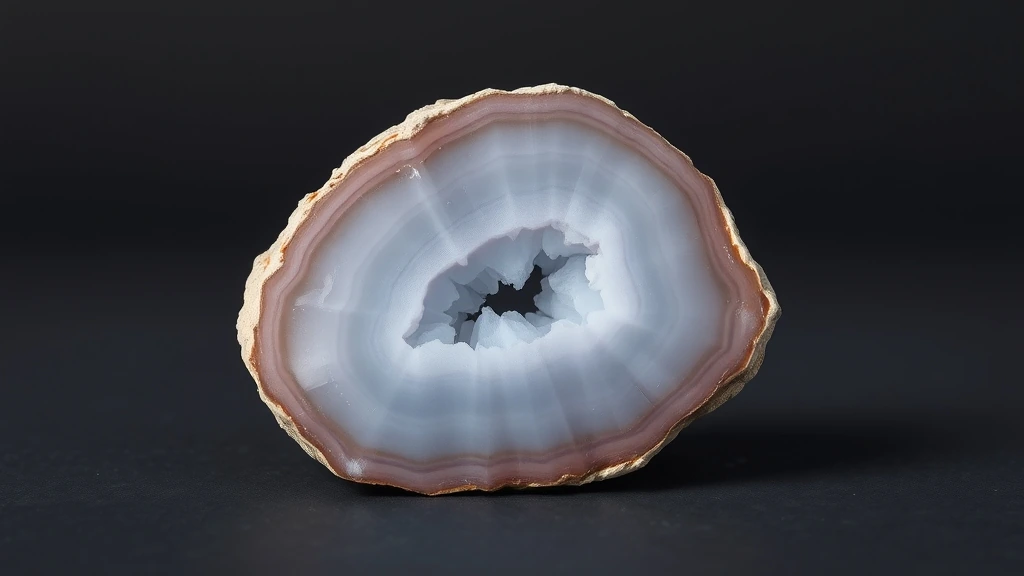
Cotton Candy Agate belongs to the vast silicate mineral group, specifically within the chalcedony family. It forms through the slow precipitation of silica-rich solutions in volcanic or sedimentary cavities. This process creates a dense, interlocking matrix of microscopic quartz fibers. Unlike macrocrystalline quartz, this stone lacks visible crystal faces, resulting in a smooth, waxy texture. Its geological origin often involves hydrothermal activity that deposited silica over millions of years.
What is Cotton Candy Agate? Geological Overview & Definition
Cotton Candy Agate is defined as a cryptocrystalline quartz aggregate with a distinctive fibrous structure. The term “cotton candy” refers to its ethereal, pastel hues rather than a specific mineral species. Geologically, it is a subtype of chalcedony, characterized by its fine-grained, non-crystalline appearance. This formation occurs when silica gel solidifies in confined geological spaces. Truffle Chalcedony shares this same fine-grained, non-crystalline chalcedony composition, though it is distinguished by its unique, organic inclusions rather than the uniform pastel bands seen in Cotton Candy Agate.
The stone’s unique aesthetic arises from trace impurities within the silica matrix. These microscopic inclusions scatter light, creating the characteristic soft, cloud-like patterns. Unlike banded agates, cotton candy varieties often display diffuse, mottled coloration. This makes them highly sought after for lapidary work and jewelry design. Its durability ensures it withstands daily wear without significant scratching. In comparative mineralogical collections, practitioners and geologists frequently study Miriam Stone Calligraphy Stone alongside this crystal to appreciate their subtle energetic and structural differences.
Cotton Candy Agate Chemical Composition & Crystallographic Properties
The fundamental chemical identity of this stone is SiO₂, representing pure silicon dioxide. Its crystal system is strictly trigonal, existing as microcrystalline or cryptocrystalline fibrous aggregates. The lattice structure consists of tightly packed, needle-like quartz fibers that are too small for the naked eye to resolve. This fibrous arrangement contributes to the stone’s characteristic conchoidal fracture and smooth surface.
Color variations stem from chromophore color centers and trace element substitutions within the lattice. Iron oxides typically produce warm tones, while other impurities may yield cooler pastels. The stone exhibits low acid sensitivity, remaining stable in most environmental conditions. It does not dissolve in weak acids, distinguishing it from carbonate-based minerals.
Thermal behavior is stable under normal ambient conditions, with no significant phase changes. The refractive index ranges from 1.544 to 1.553, providing moderate brilliance. Density measurements fall between 2.60 and 2.65 g/cm³, consistent with quartz varieties. These physical properties confirm its classification within the chalcedony group.
The cation substitution in this stone is minimal, as the silica tetrahedra remain largely unaltered. Any coloration is primarily due to structural defects or trace metal ions. This stability ensures long-term preservation of the stone’s aesthetic qualities. Proper care maintains its luster and structural integrity over time.
| Property | Specification |
|---|---|
| Mineral Group | Silicates (Chalcedony / Cryptocrystalline Quartz) |
| Chemical Formula | SiO₂ (Silicon Dioxide) |
| Mohs Hardness | 6.5 – 7.0 |
| Crystal System | Trigonal (Microcrystalline / Cryptocrystalline fibrous aggregates) |
| Specific Gravity (Density) | 2.60 – 2.65 |
| Refractive Index | 1.544 – 1.553 |
| Color & Optical Properties | Natural Cotton Candy Agate color spectrum and optical dispersion |
| Primary Mining Localities | Brazil, Uruguay, Turkey, India, Madagascar |
| Water & Chemical Resistance | High (Safe for gentle warm water and mild soap; avoid harsh acids and chlorine) |
| Chakra Alignment (Traditional) | Root Chakra and Sacral Chakra |
| Zodiac Affinity (Traditional) | Gemini, Virgo, Taurus |
| Symbolic Meaning (Traditional) | Grounding, emotional balance, physical endurance, and protection |
Cotton Candy Agate Varieties & Color Spectrum
Cotton Candy Agate displays distinct mineralogical characteristics across its geological varieties and structural habits. Gemologists evaluate these natural varieties based on crystal habit, trace chromophore concentrations, and visual luster.
Primary Natural Cotton Candy Agate
The benchmark natural variety exhibiting diagnostic color saturation and classic crystallographic symmetry.
Distinct Geological Morphs of Cotton Candy Agate
Secondary regional and structural varieties formed under localized geological temperature and pressure conditions.
Cotton Candy Agate (Standard)
The most common form of Cotton Candy Agate displays a soft, pastel palette of pink, peach, and light blue swirls. These hues result from trace silicon dioxide inclusions of iron and manganese that form during the late-stage crystallization of quartz in pegmatitic environments. The stone’s fibrous texture gives it a velvety appearance, and its moderate density of 2.60–2.65 makes it easy to carve. While widely available, the most vivid specimens are prized by collectors for their delicate, cloud‑like patterns.
Cotton Candy Agate – Blue‑Pink Variant
This regional variant, often sourced from the Borneo and Myanmar deposits, features a striking interplay of cobalt‑induced blue streaks against a pink background. The blue coloration arises from trace cobalt and titanium incorporated during quartz growth. Its fibrous inclusions are more pronounced, creating a subtle “fluffy” effect that resembles spun sugar. Due to the limited supply of cobalt‑rich quartz, this variety remains relatively rare and commands a premium in the gem market.
Cotton Candy Agate – Peach‑White Variant
Found primarily in the Karnataka region of India, this type showcases a creamy peach base with delicate white veining. The white streaks are caused by calcite or fluorite inclusions that crystallize alongside quartz. The resulting pattern resembles a light‑colored confection, giving the stone its name. Although more abundant than the blue‑pink variant, high‑quality peach‑white Cotton Candy Agate is still sought after for its subtle elegance.
Cotton Candy Agate – Green‑Pink Variant
In the Yunnan province of China, green‑pink Cotton Candy Agate emerges from quartz veins rich in magnesium and iron. The green hues are produced by iron‑oxide inclusions that form during late‑stage crystallization. The stone’s fibrous texture creates a soft, cloud‑like appearance, while the green undertones add a unique vibrancy. Because of the specific geochemical conditions required, this variety is comparatively scarce and prized by discerning gem enthusiasts.
Cotton Candy Agate – Multicolored Variant
This rare, multi‑hued specimen, typically sourced from the Sierra Madre region of Mexico, displays a mosaic of pink, blue, green, and white swirls. The diverse coloration results from alternating layers of trace elements—iron, manganese, cobalt, and titanium—introduced during quartz deposition. Its fibrous inclusions create a “sugar‑cloud” effect that is both visually striking and geologically complex. The rarity of such a perfectly balanced color spectrum makes it a coveted collector’s item.
Where is Cotton Candy Agate Found? Geological Mining & Extraction
Cotton Candy Agate crystallizes in pegmatitic quartz veins that form during the late stages of granite intrusion. The fibrous, cryptocrystalline structure develops as silica-rich fluids cool, trapping trace elements that give the stone its characteristic pastel hues. Major mining districts include the Borneo and Myanmar regions of Southeast Asia, the Karnataka province of India, and the Yunnan province of China. In these locales, artisanal miners extract the agate from shallow outcrops, while larger operations employ hydraulic methods to recover deeper vein segments.
Extraction typically involves careful hand‑splitting of the quartz veins to preserve the delicate fibrous texture. Once removed, the agate is cleaned and polished using water‑based solutions to avoid damaging the fine inclusions. Because the stone’s value is tied to its visual integrity, quality control is stringent, and only the most pristine specimens reach the international market.
Historical Significance & Cultural Lore of Cotton Candy Agate
Across ancient lapidary traditions, Cotton Candy Agate has been revered for its soothing, pastel colors that evoke the sky and clouds. In Greco‑Roman jewelry, the stone was fashioned into small cabochons and used as a charm for emotional balance, reflecting the belief that soft hues could calm the mind. Egyptian artisans occasionally incorporated similar pink‑and‑blue quartz into amulets, associating the colors with the goddess Hathor’s nurturing qualities.
In Vedic lore, the agate’s gentle tones were linked to the Root and Sacral chakras, symbolizing grounding and emotional harmony. Chinese texts from the Han dynasty describe the stone as “cloud‑sugar quartz,” noting its use in decorative inlay work on imperial vessels. These diverse cultural references underscore the stone’s enduring appeal as a symbol of tranquility and protection across civilizations.
Modern Uses & Jewelry Applications of Cotton Candy Agate
Lapidaries prize this variety for its soft, pastel hues that mimic spun sugar, making it ideal for cabochon cutting to showcase its fibrous, cryptocrystalline texture. The stone’s moderate hardness allows for precise polishing without excessive wear, ensuring a durable finish for everyday jewelry. Designers frequently incorporate it into pendants, rings, and beads, leveraging its gentle aesthetic for contemporary and vintage-inspired pieces.
- Cabochon Polishing: The primary cutting style, preserving the stone’s smooth, domed surface to highlight its internal banding and color gradients.
- Ornamental Carving: Used in small-scale sculptural elements and decorative inlays due to its workability and consistent color distribution.
- Beaded Jewelry: Commonly strung into necklaces and bracelets, where the stone’s lightweight nature and vibrant palette create visually striking, wearable art.
Metaphysical Properties & Traditional Meaning of Cotton Candy Agate
According to historical traditions and metaphysical lore, this stone is revered for its ability to foster emotional balance and provide a sense of physical endurance. Ancient Mediterranean lapidary practices often associated agates with protective talismans, believing they could shield the wearer from negative energies. The stone’s soft coloration is thought to soothe the nervous system, promoting a calm and centered state of mind.
In broader esoteric contexts, Cotton Candy Agate is linked to grounding properties that help stabilize the user’s connection to the earth. It is believed to enhance physical stamina and resilience, supporting the body through periods of stress or fatigue. These attributes align with its reputation as a stone of protection, offering a subtle yet persistent energetic shield.
Which Chakra and Zodiac Signs Align with Cotton Candy Agate?
Cotton Candy Agate is canonically aligned with the Root Chakra and the Sacral Chakra. The Root Chakra connection reflects the stone’s grounding nature, anchoring the user to physical reality and stability. Meanwhile, the Sacral Chakra alignment highlights its role in emotional flow and creative vitality, balancing the earthy foundation with fluid emotional expression.
Astrologically, this stone resonates most strongly with Gemini, Virgo, and Taurus. For Geminis, it offers the grounding needed to balance their mercurial energy. Virgos find support for their analytical nature through the stone’s stabilizing influence, while Tauruses benefit from its reinforcement of physical endurance and material security.
How to Identify Real vs. Fake Cotton Candy Agate
Artificial imitations of Cotton Candy Agate often involve synthetic glass, dyed chalcedony, or plastic composites designed to mimic the stone’s pastel appearance. These fakes may lack the natural refractive index variations and subtle internal structures found in genuine specimens. Distinguishing real from fake requires careful observation of surface texture, weight, and internal clarity, as synthetic materials often appear too perfect or uniform.
Practical At-Home Authenticity Tests
- Temperature Test (Thermal Feel): Genuine agate feels cool to the touch initially and warms slowly, whereas plastic or glass imitations may warm up rapidly or feel distinctly different in thermal conductivity.
- Specific Gravity & Weight Test: Real Cotton Candy Agate has a density of 2.60–2.65 g/cm³, making it feel heavier than similarly sized plastic or lightweight glass substitutes when held in hand.
- Scratch & Hardness Test (Mohs Comparison): With a Mohs hardness of 6.5–7.0, genuine agate will not be scratched by a steel knife or glass, while softer imitations like plastic or low-quality glass may show visible marks.
- Microscopic & Loupe Inspection (Internal Inclusions): Using a 10x loupe, look for natural fibrous aggregates or subtle banding; glass imitations often contain tiny air bubbles or swirls, while plastic may show mold lines or an unnaturally uniform surface.
Cotton Candy Agate Valuation Factors, Grading & Pricing
The most prized specimens exhibit Color Saturation that is vivid and naturally layered, giving the stone a visual vibrancy that feels almost alive. The depth of the pink‑to‑purple hues, coupled with a subtle iridescence, signals a high energetic luster that collectors seek for both aesthetic and metaphysical appeal.
Crystal Size & Weight (Grams) remains the primary metric for market value. Larger, well‑formed fibrous aggregates that have retained their original, unaltered matrix are preferred, while tumbled polish quality can enhance appeal if the stone’s natural texture remains discernible. Weight in grams, rather than carat, directly correlates with the stone’s mass and overall presence.
Ethical Sourcing & Locality Premium influences pricing in holistic and collector circles. Specimens mined from responsibly managed sites with transparent supply chains command a premium, and provenance from renowned localities—such as the famed deposits in the Caucasus—adds an aura of authenticity that buyers value highly.
How to Clean and Care for Cotton Candy Agate
Gentle cleaning of solid agates is best achieved with warm soapy water, using a mild detergent that does not contain harsh acids or chlorine. After rinsing, the stone should be dried with a soft, lint‑free cloth to prevent water spots. Avoid ultrasonic cleaners whenever the specimen has been dyed, heavily fractured, or treated, as vibrations can damage delicate inclusions.
Cleansing and Recharging Cotton Candy Agate (Energetic Care)
To restore the stone’s energetic balance, place it in a quiet space and allow it to absorb the subtle energies of moonlight for a few hours each night. Alternatively, resting the agate on a selenite charging slab during daylight can help cleanse and recharge its vibrational field without exposing it to heat or direct sunlight, which could compromise the crystal lattice.
Frequently Asked Questions About Cotton Candy Agate
Cotton Candy Agate displays distinct mineralogical characteristics across its geological varieties and structural habits. Gemologists evaluate these natural varieties based on crystal habit, trace chromophore concentrations, and visual luster.
Primary Natural Cotton Candy Agate
The benchmark natural variety exhibiting diagnostic color saturation and classic crystallographic symmetry.
Distinct Geological Morphs of Cotton Candy Agate
Secondary regional and structural varieties formed under localized geological temperature and pressure conditions.
What is the chemical composition of Cotton Candy Agate?
It is a form of microcrystalline quartz composed of SiO₂. The stone consists of tightly intergrown fibrous aggregates of silicon dioxide, giving it a cryptocrystalline texture that produces the characteristic pastel banding. Its composition imparts a density of 2.60‑2.65 g/cm³ and a Mohs hardness between 6.5 and 7.0, making it durable for jewelry.
Is Cotton Candy Agate safe to wear in the shower or while swimming?
Yes, it tolerates gentle warm water and mild soap. The agate’s quartz framework is highly water‑resistant, so routine exposure to lukewarm water and a mild detergent will not degrade its surface. However, avoid harsh acids, chlorine, or prolonged submersion in pool water, which can etch the dyed layers.
How should I clean a Cotton Candy Agate necklace?
Warm, soapy water followed by a soft brush is ideal. Submerge the piece briefly in lukewarm water mixed with a mild soap, then gently scrub with a soft‑bristled brush to lift any residue. Rinse with clean water and pat dry with a lint‑free cloth; this preserves the vivid pastel bands without damaging the stone.
Can I use an ultrasonic cleaner on Cotton Candy Agate?
Avoid ultrasonic cleaning unless the stone is untreated and fracture‑free. Ultrasonic vibrations can loosen surface dyes or exacerbate micro‑cracks in treated or heavily fractured specimens. For solid, untreated agates, a brief warm‑soapy soak is safer and maintains the stone’s visual integrity.
Which zodiac signs are associated with Cotton Candy Agate?
Gemini, Virgo, and Taurus are the aligned signs. In astrological gem lore, these earth‑and‑air signs are thought to benefit from the stone’s grounding energy, which complements their need for stability, communication, and practical insight. The pastel hues are said to resonate with the mutable nature of Gemini and Virgo.
Which chakras does Cotton Candy Agate balance?
It aligns with the Root Chakra and the Sacral Chakra. The stone’s grounding properties support the Root Chakra, fostering stability and security, while its gentle, nurturing colors stimulate the Sacral Chakra, encouraging emotional balance and creative flow. Practitioners often place the stone on the lower abdomen during meditation.
Is Cotton Candy Agate suitable for everyday wear?
Yes, its hardness and durability make it jewelry‑friendly. With a Mohs rating of 6.5‑7.0, the agate resists scratches from typical daily contact. Its relatively low cleavage and cryptocrystalline structure also reduce the risk of chipping, allowing it to be worn in rings, pendants, or bracelets without undue concern.
Does Cotton Candy Agate have any known metaphysical benefits?
It is believed to promote grounding, emotional balance, and physical endurance. Across ancient lapidary traditions, the stone’s pastel bands symbolize calm skies and gentle tides, encouraging users to feel grounded while fostering emotional equilibrium and a subtle protective field against fatigue.