
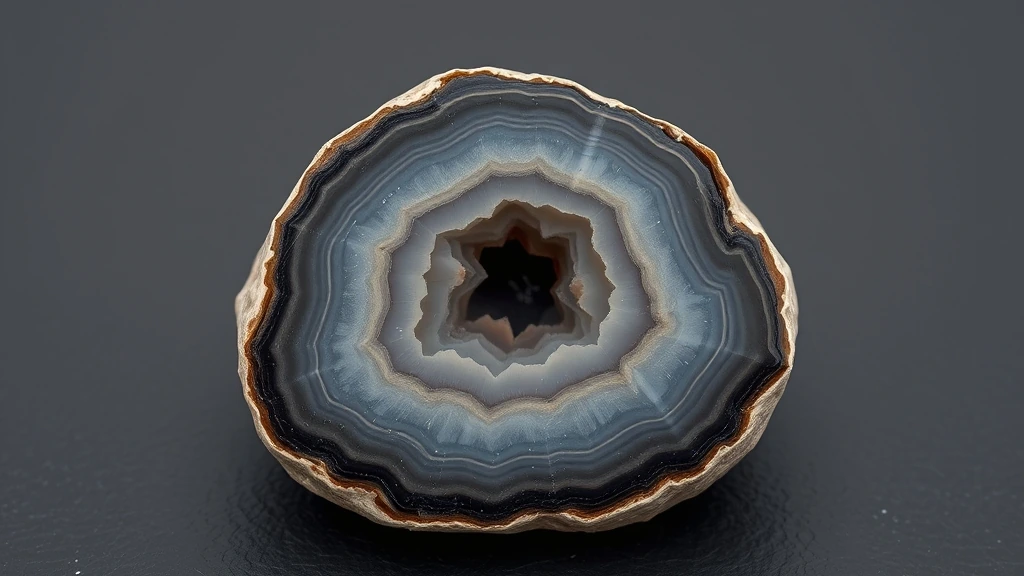
Crazy Lace Agate belongs to the extensive silicate mineral group, specifically classified as a cryptocrystalline quartz variety. It forms through the slow precipitation of silica-rich fluids within volcanic or sedimentary rock cavities over millions of years. This geological process creates a dense, interlocking fibrous structure rather than large, visible crystals. The resulting stone exhibits a waxy luster and exceptional durability, making it a prized material for lapidary arts. Its unique formation within the chalcedony family distingu it from other quartz varieties through its complex, layered banding patterns.
What is Crazy Lace Agate? Geological Overview & Definition
This gemstone is defined by its cryptocrystalline fibrous aggregates, which consist of microscopic quartz fibers interwoven in a chaotic, lace-like network. Unlike macrocrystalline quartz, these fibers are too small to be seen without magnification, giving the stone its characteristic smooth, waxy surface. The term “crazy lace” refers to the irregular, maze-like patterns that resemble intricate lacework when cut and polished. While the chaotic, lace-like network of Crazy Lace Agate is its defining feature, the closely related Silver Lace Agate offers a more subdued aesthetic with its pale, silvery-gray tones that often appeal to those seeking a gentler visual energy.
Geologically, it typically forms in volcanic breccia or sedimentary environments where silica-rich solutions infiltrated porous host rocks. The interplay of different mineral impurities during deposition creates the stone’s distinctive earthy color palette. This natural complexity makes each specimen unique, with no two pieces displaying identical patterns. Its physical robustness allows for detailed carving and faceting without significant risk of fracture. In comparative mineralogical collections, practitioners and geologists frequently study Moroccan Agate alongside this crystal to appreciate their subtle energetic and structural differences.
Crazy Lace Agate Chemical Composition & Crystallographic Properties
The fundamental crystal system of Crazy Lace Agate is Trigonal, reflecting its origin as a microcrystalline form of alpha-quartz. Although the individual fibers are too small to observe directly, their collective arrangement follows the trigonal lattice structure of pure silica. This cryptocrystalline nature means the stone lacks a single, large crystal habit, instead presenting as a dense, isotropic aggregate to the naked eye. The structural integrity relies on the tight packing of these microscopic fibrous units. In comparative mineralogical collections, practitioners and geologists frequently study Preseli Bluestone alongside this crystal to appreciate their subtle energetic and structural differences.
Chemically, the stone is composed almost entirely of SiO₂, with trace impurities responsible for its coloration. There is no significant cation substitution, as the silica tetrahedra remain the dominant structural unit throughout the matrix. The material exhibits high resistance to acids, maintaining its structural stability even when exposed to mild corrosive environments. This chemical inertness ensures long-term preservation of the stone’s physical and aesthetic properties.
The characteristic brown and tan hues arise from chromophore color centers and trace iron oxide inclusions within the silica matrix. These impurities absorb specific wavelengths of light, producing the warm, earthy tones that define the variety. Thermal behavior remains stable under normal handling conditions, with no significant phase transitions occurring at ambient temperatures. The stone’s refractive index of 1.544 to 1.553 contributes to its soft, waxy luster rather than a brilliant sparkle.
| Property | Specification |
|---|---|
| Mineral Group | Silicates (Chalcedony / Cryptocrystalline Quartz) |
| Chemical Formula | SiO₂ (Silicon Dioxide) |
| Mohs Hardness | 6.5 – 7.0 |
| Crystal System | Trigonal (Microcrystalline / Cryptocrystalline fibrous aggregates) |
| Specific Gravity (Density) | 2.60 – 2.65 |
| Refractive Index | 1.544 – 1.553 |
| Color & Optical Properties | Natural Crazy Lace Agate color spectrum and optical dispersion |
| Primary Mining Localities | Brazil, Uruguay, Turkey, India, Madagascar |
| Water & Chemical Resistance | High (Safe for gentle warm water and mild soap; avoid harsh acids and chlorine) |
| Chakra Alignment (Traditional) | Root Chakra and Sacral Chakra |
| Zodiac Affinity (Traditional) | Gemini, Virgo, Taurus |
| Symbolic Meaning (Traditional) | Grounding, emotional balance, physical endurance, and protection |
Crazy Lace Agate Varieties & Color Spectrum
Crazy Lace Agate displays distinct mineralogical characteristics across its geological varieties and structural habits. Gemologists evaluate these natural varieties based on crystal habit, trace chromophore concentrations, and visual luster.
Primary Natural Crazy Lace Agate
The benchmark natural variety exhibiting diagnostic color saturation and classic crystallographic symmetry.
Distinct Geological Morphs of Crazy Lace Agate
Secondary regional and structural varieties formed under localized geological temperature and pressure conditions.
Crazy Lace Agate (General)
Crazy lace agate is a cryptocrystalline form of quartz that displays intricate, lace‑like banding in a spectrum of colors. The bands arise from alternating layers of silica and iron‑oxide inclusions, producing a dynamic play of light. Its density ranges from 2.60 to 2.65 g/cm³, and it exhibits a refractive index of 1.544–1.553. The gemstone is prized for its subtle, translucent appearance and is often cut into cabochons or cabochon‑cut beads.
Crazy Lace Agate – “Blue‑White” Variant
The blue‑white variety is distinguished by pale blue veins interwoven with white or translucent quartz. These veins result from hydrothermal alteration of iron‑rich inclusions, giving the stone a delicate, airy look. This color morph is relatively common in the United States and Brazil, yet high‑quality specimens with deep blue veining are rare and command premium prices.
Crazy Lace Agate – “Red‑Brown” Variant
Red‑brown crazy lace agate showcases warm, earthy tones formed by iron‑oxide inclusions that have undergone oxidation. The resulting bands are thicker and more pronounced, creating a dramatic contrast against the clear quartz matrix. This variant is frequently sourced from the United States, particularly the Appalachian region, and is valued for its bold, natural palette.
Crazy Lace Agate – “Green‑Yellow” Variant
The green‑yellow variety features subtle greenish bands produced by manganese or iron‑oxide impurities, set against a yellowish quartz background. These bands are often fine and tightly packed, giving the stone a shimmering, almost metallic luster. Green‑yellow crazy lace agate is predominantly found in Brazil and the United States, and its rarity increases with the intensity of the green hue.
Crazy Lace Agate – “Black‑White” Variant
Black‑white crazy lace agate displays stark, contrasting bands of deep black and bright white. The black bands are typically formed by graphite or iron‑oxide inclusions, while the white bands are clear quartz. This striking contrast makes the stone popular in jewelry, and it is most commonly mined in Brazil, where high‑quality specimens are abundant.
Crazy Lace Agate – “Multi‑Color” Variant
The multi‑color variety incorporates a spectrum of hues—blue, green, red, and yellow—within a single stone. These colors arise from a complex interplay of various trace elements, including iron, manganese, and titanium. The resulting lace pattern is highly sought after for its visual complexity, and such specimens are usually sourced from Brazil and the United States, with the finest pieces being exceptionally rare.
Where is Crazy Lace Agate Found? Geological Mining & Extraction
Crazy lace agate is typically hosted in pegmatitic and granite environments where silica-rich fluids deposit cryptocrystalline quartz. The most prolific deposits occur in the United States (especially the Appalachian and New England regions), Brazil (particularly the Minas Gerais and Rio Grande do Sul states), and parts of the United Kingdom (notably the Cotswolds). Extraction involves careful mining of these pegmatite veins, followed by hand‑cutting and polishing to preserve the delicate lace patterns.
Historical Significance & Cultural Lore of Crazy Lace Agate
Across ancient Greco‑Roman lapidary traditions, crazy lace agate was valued for its perceived protective qualities, often incorporated into amulets and jewelry to guard against misfortune. In Egyptian artifacts, fragments of this stone appear in burial assemblages, suggesting a belief in its ability to aid the soul’s journey. Chinese historical records from the Han dynasty reference the stone’s use in ceremonial adornments, while Vedic texts describe similar quartz varieties as symbols of grounding and emotional balance. These diverse cultural references underscore the gemstone’s enduring appeal and multifaceted symbolism.
Modern Uses & Jewelry Applications of Crazy Lace Agate
Lapidaries primarily cut Crazy Lace Agate into cabochons to showcase its distinctive, swirling color patterns that resemble natural lace. The stone’s moderate Mohs hardness of 6.5 to 7.0 allows for intricate carving while maintaining structural integrity during polishing. Faceted cuts are rare due to the cryptocrystalline nature of the material, which often lacks the clarity required for brilliant light return.
- Cabochon Jewelry: Polished domes highlight the chaotic, multi-colored bands of brown, white, and green.
- Ornamental Carvings: Skilled artisans sculpt the stone into beads, pendants, and decorative tiles.
- Lapidary Polishing: The stone responds well to standard diamond polishing compounds for a glassy luster.
- Pendant Design: Large, flat slices are often drilled for use in statement necklaces.
Metaphysical Properties & Traditional Meaning of Crazy Lace Agate
According to historical traditions and metaphysical lore, Crazy Lace Agate is revered for its ability to promote emotional balance and physical endurance. Ancient Mediterranean and Vedic lapidary practices often associated banded silicates with stability and the earth’s enduring strength. Practitioners believe the stone’s complex patterns mirror the intricate workings of the human psyche, fostering inner peace.
In contemporary spiritual contexts, the stone is frequently cited as a powerful tool for grounding and protection. Its chaotic yet harmonious appearance is thought to help users navigate emotional turbulence with resilience. Many believers use it to enhance physical vitality and maintain a steady connection to the earth plane.
Which Chakra and Zodiac Signs Align with Crazy Lace Agate?
Crazy Lace Agate is canonically aligned with the Root Chakra and the Sacral Chakra. The Root Chakra connection stems from the stone’s earthy tones and its reputed ability to provide a sense of security and stability. This alignment helps practitioners feel anchored and connected to their physical surroundings during times of change.
Astrologically, the stone resonates strongly with Gemini, Virgo, and Taurus. Taurus, an earth sign, finds comfort in the stone’s grounding properties, while Gemini and Virgo benefit from its capacity to organize chaotic energy. This specific zodiac alignment supports mental clarity and emotional regulation for these signs.
How to Identify Real vs. Fake Crazy Lace Agate
Artificial imitations of Crazy Lace Agate often involve synthetic glass or dyed quartz that mimics the natural stone’s unique banding. These replicas may appear too uniform in color or lack the subtle, organic variations found in genuine specimens. Understanding the material’s natural formation is crucial for distinguishing authentic stones from manufactured alternatives.
Practical At-Home Authenticity Tests
- Temperature Test (Thermal Feel): Genuine agate feels cool to the touch initially and warms slowly, whereas plastic imitations warm up almost instantly due to lower thermal conductivity.
- Specific Gravity & Weight Test: Real Crazy Lace Agate has a density of 2.60–2.65, making it noticeably heavier than similarly sized glass or plastic fakes.
- Scratch & Hardness Test (Mohs Comparison): With a hardness of 6.5–7.0, the stone can scratch glass but will not be scratched by a steel knife blade.
- Microscopic & Loupe Inspection (Internal Inclusions): A 10x loupe reveals natural mineral inclusions and irregular banding, while fakes often show trapped air bubbles or perfectly uniform dye distribution.
Crazy Lace Agate Valuation Factors, Grading & Pricing
The market rewards color saturation above all, as vivid bands of orange, red, and brown create a visual vibrancy that distinguishes premium stones. Collectors look for a natural, energetic luster that appears to shift with light, indicating minimal dyeing or artificial enhancement. A lively, saturated palette often commands higher prices in both wholesale and retail channels.
Crystal size & weight (grams) play a decisive role, with larger, heavier specimens offering more surface area for the intricate lace pattern. Raw blocks are valued differently from tumbled pieces; a well‑polished finish that showcases the banding without excessive abrasion adds significant premium. Natural matrix inclusions that enhance the lace design, rather than obscure it, are also factored into the gram‑based pricing model.
In the holistic and collector arenas, ethical sourcing & locality premium can elevate a stone’s worth. Agates mined from regions with transparent supply chains and documented community benefits often attract higher bids. Buyers also prize stones from historically noted locales, where the geological setting contributes to a narrative of authenticity and cultural respect.
How to Clean and Care for Crazy Lace Agate
Warm soapy water is ideal for solid Crazy Lace Agate; gently immerse the stone in lukewarm water with a mild, pH‑neutral soap, then rinse with clean water and pat dry with a soft microfiber cloth. Avoid ultrasonic cleaners unless the specimen is confirmed to be untreated and free of fractures, as vibration can damage delicate internal banding. For pieces that have been dyed or exhibit visible cracks, limit cleaning to a dry brush or cloth to prevent any loss of color or structural integrity. Store the agate in a low‑humidity environment, away from harsh chemicals, to preserve its natural luster over time.
Cleansing and Recharging Crazy Lace Agate (Energetic Care)
A gentle herbal smudging with sage or cedar can clear stagnant energy without exposing the stone to heat; pass the agate through the rising smoke for a few breaths, then place it on a clean surface to settle. Moonlight exposure during a clear night offers a non‑thermal method to refresh the stone’s vibrational field, allowing the lunar glow to bathe the lace pattern evenly.
Resting the agate on a selenite charging slab provides a stable, non‑conductive platform that transmits subtle lattice vibrations, enhancing grounding and emotional balance. Limit the charging session to a few hours to avoid prolonged exposure that could attract dust; afterward, gently wipe the stone with a dry cloth before returning it to display or wear.
Frequently Asked Questions About Crazy Lace Agate
Crazy Lace Agate displays distinct mineralogical characteristics across its geological varieties and structural habits. Gemologists evaluate these natural varieties based on crystal habit, trace chromophore concentrations, and visual luster.
Primary Natural Crazy Lace Agate
The benchmark natural variety exhibiting diagnostic color saturation and classic crystallographic symmetry.
Distinct Geological Morphs of Crazy Lace Agate
Secondary regional and structural varieties formed under localized geological temperature and pressure conditions.
Is Crazy Lace Agate safe to wear in the shower?
Yes, it can be worn in the shower with care. The stone tolerates gentle warm water and mild soap, but prolonged exposure to harsh acids, chlorine, or abrasive scrubbing can dull its microcrystalline surface and potentially affect any dye or treatment applied to the lace pattern.
How should I clean a Crazy Lace Agate necklace?
Warm soapy water and a soft brush are ideal. Submerge the piece briefly in lukewarm water with a mild detergent, then gently scrub with a soft‑bristled brush to release trapped dirt. Rinse with clean water and pat dry; avoid ultrasonic cleaners if the agate is dyed or fractured.
Can ultrasonic cleaners be used on Crazy Lace Agate?
No, ultrasonic cleaning is not recommended for this gemstone. The high‑frequency vibrations can exacerbate existing fractures and may cause dye migration in treated specimens. Manual cleaning with warm soapy water preserves the cryptocrystalline integrity and the vivid lace pattern.
What zodiac signs are associated with Crazy Lace Agate?
Gemini, Virgo, and Taurus are the aligned zodiac signs. In astrological tradition, these earth‑and‑air signs are thought to benefit from the stone’s grounding energy, which complements their need for stability, clear communication, and practical insight.
Which chakras does Crazy Lace Agate balance?
It is linked to the Root Chakra and the Sacral Chakra. By reinforcing the base energy center, the stone promotes physical grounding, while its influence on the sacral area supports emotional flow, creativity, and balanced sensuality.
Is Crazy Lace Agate a hard suitable for daily wear?
With a Mohs hardness of 6.5‑7, it is durable for everyday use. The stone resists scratches from most metals and fabrics, yet care should be taken to avoid impact with harder materials like quartz or diamond, which could chip its delicate lace bands.
Does Crazy Lace Agate have any known metaphysical properties?
It is reputed to aid grounding, emotional balance, and physical endurance. Practitioners claim the stone’s silica matrix channels stabilizing energy, helping wearers stay centered during stress, while also offering a subtle protective field against negative influences.
Can Crazy Lace Agate be used in jewelry that is exposed to chemicals?
Avoid exposure to strong acids, bleach, or chlorine. While the quartz base is chemically stable, harsh reagents can erode surface lusters and alter any applied dyes. For laboratory or industrial settings, keep the gemstone sealed behind protective settings or opt for a more chemically resistant alternative.