
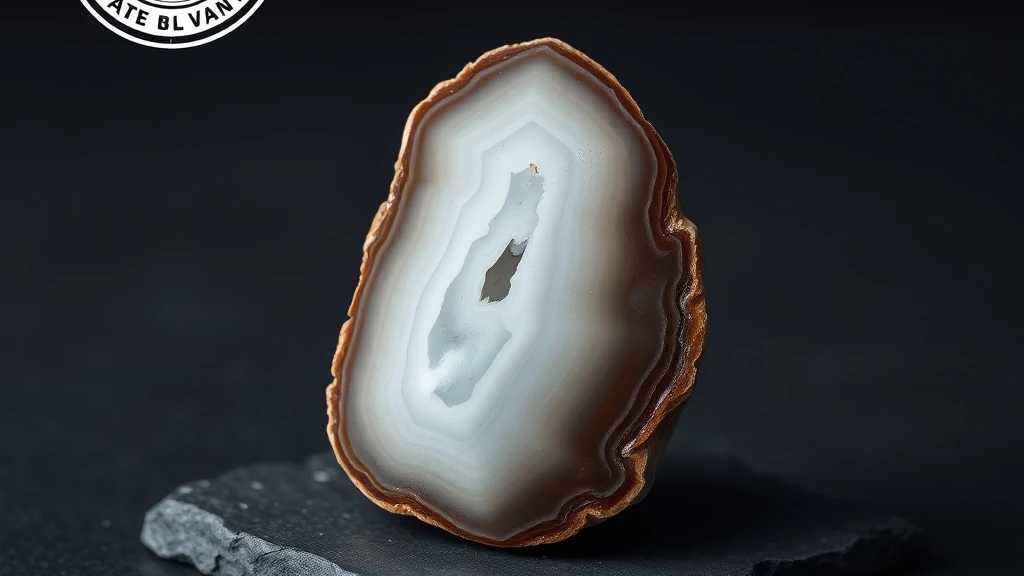
Moroccan Agate belongs to the chalcedony family, a subset of cryptocrystalline quartz. This microcrystalline aggregate forms within silica‑rich cavities of volcanic or sedimentary rocks, often in the North African region. The stone’s fibrous, fibrous‑aggregate structure imparts its characteristic banded appearance and subtle translucency.
What is Moroccan Agate? Geological Overview & Definition
Moroccan Agate is a cryptocrystalline quartz variant, classified under the broader chalcedony group. Its formation occurs in silica‑rich cavities of volcanic or sedimentary host rocks, where repeated precipitation of micro‑fibers creates the distinctive banded patterns. The stone is typically found in the Moroccan Atlas Mountains, where hydrothermal fluids deposit silica in fractures. Its fibrous microstructure gives it a unique texture that distinguishes it from other agates.
Moroccan Agate Chemical Composition & Crystallographic Properties
The mineral’s true crystal system is Trigonal, specifically a microcrystalline or cryptocrystalline fibrous aggregate. Within this system, the lattice is composed of SiO₄ tetrahedra linked in a continuous network, with no long‑range order. Cation substitution is minimal; trace amounts of Al³⁺, Fe³⁺, and Ti⁴⁺ can replace silicon, creating chromophore centers that produce the stone’s varied hues. Moroccan Agate is relatively acid‑resistant, tolerating mild acids but dissolving slowly in strong hydrofluoric solutions. Thermal behavior is modest; the stone withstands moderate heating without significant color change, though prolonged exposure can cause surface oxidation and slight darkening.
| Property | Specification |
|---|---|
| Mineral Group | Silicates (Chalcedony / Cryptocrystalline Quartz) |
| Chemical Formula | SiO₂ (Silicon Dioxide) |
| Mohs Hardness | 6.5 – 7.0 |
| Crystal System | Trigonal (Microcrystalline / Cryptocrystalline fibrous aggregates) |
| Specific Gravity (Density) | 2.60 – 2.65 |
| Refractive Index | 1.544 – 1.553 |
| Color & Optical Properties | Natural Moroccan Agate color spectrum and optical dispersion |
| Primary Mining Localities | Brazil, Uruguay, Turkey, India, Madagascar |
| Water & Chemical Resistance | High (Safe for gentle warm water and mild soap; avoid harsh acids and chlorine) |
| Chakra Alignment (Traditional) | Root Chakra and Sacral Chakra |
| Zodiac Affinity (Traditional) | Gemini, Virgo, Taurus |
| Symbolic Meaning (Traditional) | Grounding, emotional balance, physical endurance, and protection |
Moroccan Agate Varieties & Color Spectrum
Moroccan agates exhibit a diverse palette driven by trace element impurities during crystallization. The most common morphs feature earthy tones ranging from pale cream to deep umber. These colors result from iron oxide inclusions within the silica matrix. In comparative mineralogical collections, practitioners and geologists frequently study Miriam Stone Calligraphy Stone alongside this crystal to appreciate their subtle energetic and structural differences.
Red Moroccan Agate
This variety displays vibrant hues of brick red, rust, and terracotta. The coloration stems from high concentrations of hematite and iron oxide impurities. Specimens often show distinct banding patterns that contrast sharply with lighter silica layers. In comparative mineralogical collections, practitioners and geologists frequently study Iris Agate alongside this crystal to appreciate their subtle energetic and structural differences.
Blue Moroccan Agate
Characterized by soft sky blue to deep azure tones, this morph is relatively rare. The blue pigment arises from specific mineral inclusions interacting with the cryptocrystalline structure. High-quality stones exhibit a translucent quality that enhances their visual depth.
Green Moroccan Agate
Featuring shades of olive, sage, and forest green, this type is prized for its natural aesthetic. The coloration is typically caused by trace amounts of chlorite or other green mineral inclusions. These stones often possess a matte finish that highlights their organic texture.
Banded Moroccan Agate
This classic variety showcases concentric rings of varying colors and opacities. The banding forms as silica deposits accumulate in layers within geodes, creating a fibrous aggregate structure. Each stone displays unique patterns, making no two specimens identical.
Where is Moroccan Agate Found? Geological Mining & Extraction
Moroccan agates primarily occur in volcanic and sedimentary rock formations across the Atlas Mountains region. These deposits formed millions of years ago as silica-rich fluids filled cavities in cooling lava flows. The geological stability of these areas allows for consistent mineral quality.
Extraction sites are concentrated in the central and southern provinces, where artisanal and semi-industrial mining operations take place. Miners carefully extract raw geodes from the host rock, preserving the integrity of the silica bands. Post-extraction processing involves cutting and polishing to reveal the internal patterns.
Historical Significance & Cultural Lore of Moroccan Agate
Ancient civilizations valued agate for its perceived protective and grounding properties. In Greco-Roman tradition, agate was often carved into intaglios and used as amulets for good fortune. Egyptian artisans also incorporated agate into jewelry, associating it with stability and endurance.
Throughout historical lapidary lore, agate was believed to promote emotional balance and physical strength. Vedic texts reference similar stones for their ability to anchor the spirit to the earth. This enduring legacy underscores the stone’s timeless appeal across diverse cultures.
Modern Uses & Jewelry Applications of Moroccan Agate
Moroccan agate’s striking banded patterns make it a favorite for both contemporary and traditional lapidary work. Artisans often cut the stone into smooth cabochons that showcase its natural translucency, while skilled faceters create brilliant facets for high‑impact pieces. Ornamental carving also thrives, producing beads, intaglios, and decorative plaques that highlight the stone’s vivid hues.
- Cabochon pendants and earrings emphasizing the stone’s natural layers
- Faceted rings and brooches that amplify sparkle and depth
- Carved cameos, seals, and ornamental boxes for interior décor
Metaphysical Properties & Traditional Meaning of Moroccan Agate
According to historical traditions and metaphysical lore, Moroccan agate is regarded as a grounding stone that nurtures emotional balance and physical stamina. Across ancient Mediterranean and Vedic lapidary records, the stone is said to absorb negative energies, fostering resilience and protection for the wearer. Its earthy tones are linked to stability, encouraging a calm, centered mindset during stressful situations.
Which Chakra and Zodiac Signs Align with Moroccan Agate?
In universal esoteric systems, Moroccan agate resonates strongly with the Root Chakra, anchoring personal energy to the physical world, and the Sacral Chakra, enhancing creativity and sensual vitality. This dual alignment supports both foundational security and expressive flow, making the stone valuable for meditation and daily wear.
The gemstone is traditionally associated with the zodiac signs Gemini, Virgo, and Taurus. Gemini benefits from the stone’s communicative clarity, Virgo finds reinforcement of practical focus, and Taurus experiences amplified grounding and sensual appreciation, reflecting the stone’s multifaceted symbolism.
How to Identify Real vs. Fake Moroccan Agate
Artificial imitations of Moroccan agate include colored glass, resin composites, and dyed quartz that mimic its banded appearance but lack the authentic microcrystalline structure. Synthetic glass often displays uniform coloration without the natural irregularities, while dyed replicas may show overly bright hues that fade under prolonged light exposure. Recognizing these differences is essential for collectors and buyers.
Practical At-Home Authenticity Tests
- Temperature Test (Thermal Feel): Real agate feels cool to the touch and retains that coolness longer than glass, which quickly warms to skin temperature.
- Specific Gravity & Weight Test: Genuine agate has a density of 2.60‑2.65 g/cm³, making it noticeably heavier than glass of similar size.
- Scratch & Hardness Test (Mohs Comparison): With a hardness of 6.5‑7, agate can scratch a steel nail but will not be scratched by a copper coin; glass typically scratches more easily.
- Microscopic & Loupe Inspection (Internal Inclusions): Under 10× magnification, authentic agate reveals fine, chaotic banding and micro‑inclusions, whereas synthetic glass shows smooth, uniform interiors or bubble patterns.
Moroccan Agate Valuation Factors, Grading & Pricing
Market value is primarily driven by Color Saturation, where deep, uniform hues command higher premiums than pale or mottled specimens. Visual vibrancy and a natural, energetic luster significantly enhance aesthetic appeal for both collectors and holistic practitioners. Stones exhibiting rich, consistent banding without visible fractures typically achieve the highest tier in commercial grading.
Pricing is determined by Crystal Size & Weight (Grams), as agates are valued by mass and dimension rather than specimen weight (grams). The quality of the tumbled polish is critical, with smooth, high-gloss finishes reflecting superior lapidary craftsmanship. Natural matrix inclusions can either increase rarity value or detract from clarity, depending on the specific collector’s preference for geological authenticity.
Ethical Sourcing & Locality Premium plays a pivotal role in the holistic and collector markets, where provenance directly influences perceived integrity. Buyers increasingly prioritize stones from verified Moroccan mines to ensure sustainability and fair labor practices. This transparency supports a premium price point, distinguishing ethically harvested specimens from mass-produced, origin-unknown alternatives in the global gemstone trade.
How to Clean and Care for Moroccan Agate
Moroccan agate possesses a high water resistance, making warm soapy water the ideal method for routine maintenance of solid specimens. Gently wash the stone with mild soap and a soft cloth to remove oils and dust without damaging the surface. Avoid harsh acids and chlorine, which can degrade the mineral’s natural luster over time.
Ultrasonic cleaners must be avoided if the specimen is dyed, heavily fractured, or has undergone other treatments. The intense vibrations can exacerbate existing fractures or strip artificial colorants, resulting in permanent cosmetic damage. For untreated, solid agates, occasional ultrasonic cleaning is generally safe, but manual washing remains the most conservative and recommended approach.
Cleansing and Recharging Moroccan Agate (Energetic Care)
Holistic practitioners often use herbal smudging with sage or palo santo to clear perceived energetic stagnation from the stone. The smoke is gently passed over the agate, allowing the aromatic compounds to interact with the mineral’s surface without physical contact. This dry method respects the stone’s structural integrity while aligning with traditional metaphysical practices.
Alternatively, placing the agate on a selenite charging slab under gentle moonlight allows for passive energetic renewal. This method avoids direct intense sunlight, which can cause thermal stress and potential cracking in the crystal lattice. Resting the stone in a cool, dry environment ensures long-term preservation of both its physical and metaphysical properties.
Frequently Asked Questions About Moroccan Agate
Moroccan Agate displays distinct mineralogical characteristics across its geological varieties and structural habits. Gemologists evaluate these natural varieties based on crystal habit, trace chromophore concentrations, and visual luster.
Primary Natural Moroccan Agate
The benchmark natural variety exhibiting diagnostic color saturation and classic crystallographic symmetry.
Distinct Geological Morphs of Moroccan Agate
Secondary regional and structural varieties formed under localized geological temperature and pressure conditions.
Is Moroccan agate safe to wear in the shower?
Yes, it tolerates gentle warm water and mild soap. The silicon dioxide framework of agate is chemically inert, so routine exposure to shower water will not degrade the stone, though prolonged contact with harsh acids, chlorine, or abrasive scrubbing should be avoided to preserve its surface luster.
How should I clean a Moroccan agate necklace?
Warm soapy water and a soft brush are ideal for solid agates. Immerse the piece briefly in lukewarm water with a mild detergent, then gently scrub with a soft‑bristled brush to release any residue. Rinse with clean water and pat dry; ultrasonic cleaning is not recommended for dyed or fractured specimens.
Can ultrasonic cleaners be used on Moroccan agate?
Avoid ultrasonic cleaning unless the agate is untreated and flawless. The high‑frequency vibrations can exacerbate micro‑fractures or cause dyes to leach, compromising both durability and appearance. For most Moroccan agates, manual cleaning with warm soapy water remains the safest method.
What zodiac signs are associated with Moroccan agate?
Gemini, Virgo, and Taurus are the aligned zodiac signs. In astrological tradition, these earth‑ and air‑oriented signs are believed to benefit from agate’s stabilizing energy, which complements their need for balance, practicality, and grounded decision‑making.
Which chakras does Moroccan agate influence?
Root Chakra and Sacral Chakra are the primary centers. The stone’s grounding qualities support the Root Chakra, fostering security and physical endurance, while its warm, nurturing tones resonate with the Sacral Chakra, encouraging emotional balance and creative flow.
Does Moroccan agate have a high density?
Its density ranges from 2.60 to 2.65 g/cm³. This relatively low density compared with many gemstones reflects its cryptocrystalline quartz composition, giving the stone a comfortable weight for jewelry while still providing the durability expected of a hardness of 6.5–7 on the Mohs scale.
Is Moroccan agate prone to scratching?
With a Mohs hardness of 6.5–7, it resists everyday wear but can be scratched by harder minerals. Quartz, topaz, or diamond tools may leave marks, so store the agate separately from such materials and avoid contact with rough surfaces to maintain its polished finish.
Are there any treatments that affect Moroccan agate’s care?
Dyed or heat‑treated agates require gentler handling. Artificial coloration can fade with prolonged exposure to strong detergents or ultrasonic vibrations, and heat‑treated stones may develop micro‑cracks over time. For treated pieces, limit cleaning to a damp microfiber cloth and avoid harsh chemicals.