
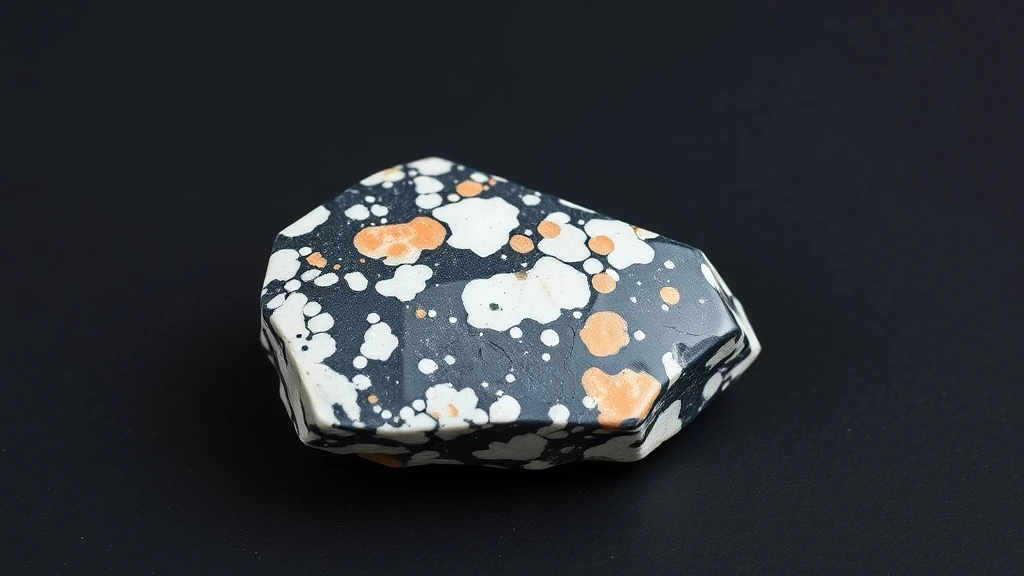
Dalmatian Jasper belongs to the broad family of jaspers, which are opaque varieties of chalcedony. As a Natural Mineral / Crystal, it forms through the slow precipitation of silica-rich solutions in sedimentary environments. This geological process creates a dense, microcrystalline matrix that resists fracture. The stone’s unique aesthetic arises from specific mineral inclusions trapped within the silica framework.
What is Dalmatian Jasper Gemstone? Geological Overview & Definition
Dalmatian Jasper is defined by its cryptocrystalline structure, composed of interlocking microcrystals of quartz. The iconic black spots are typically manganese oxides or iron-bearing minerals embedded in the white silica matrix. This specific inclusion pattern distinguishes it from other spotted jaspers globally.
Geologically, it forms in sedimentary basins where silica gel deposits solidify over millions of years. The name derives from its resemblance to the coat of the Dalmatian dog breed. Its formation requires stable, low-energy conditions to allow for the uniform distribution of dark inclusions.
Dalmatian Jasper Gemstone Chemical Composition & Crystallographic Properties
The stone possesses an Amorphous / Cryptocrystalline crystal system, meaning it lacks a macroscopic lattice. Instead, it consists of extremely fine-grained quartz (SiO₂) that is invisible to the naked eye. This microstructure provides exceptional toughness and resistance to chipping during cutting.
Cation substitution is minimal in the primary silica framework, maintaining high chemical purity. The black spots involve ferrous and manganous ions that substitute into secondary mineral phases. These inclusions do not disrupt the overall structural integrity of the host chalcedony.
The material shows high resistance to dilute acids, though strong hydrofluoric acid will dissolve the silica. Chromophore color centers are absent in the white base, which remains optically neutral. The black spots derive color from electronic transitions within the transition metal oxides.
Thermal behavior is stable under normal jewelry conditions, with no significant expansion issues. However, extreme heat can cause thermal shock due to the dense, non-porous nature of the stone. Proper handling ensures the longevity of this durable cryptocrystalline gem.
| Property | Specification |
|---|---|
| Mineral Group | Natural Mineral / Crystal |
| Chemical Formula | SiO₂ (Microcrystalline Quartz/Chalcedony with Fe₂O₃ inclusions) |
| Mohs Hardness | 6.5 – 7.0 |
| Crystal System | Trigonal |
| Specific Gravity (Density) | 2.60 – 2.65 |
| Refractive Index | 1.530 – 1.540 |
| Color & Optical Properties | Natural Dalmatian Jasper Gemstone color spectrum and optical dispersion |
| Primary Mining Localities | Global primary localities |
| Water & Chemical Resistance | High (Safe for gentle water washing) |
| Chakra Alignment (Traditional) | Root Chakra, Sacral Chakra |
| Zodiac Affinity (Traditional) | Taurus, Virgo, Capricorn |
| Symbolic Meaning (Traditional) | Grounding, stability, and protection of the home |
Jasper Varieties & Comprehensive Sub-Types
Jasper constitutes a diverse group of opaque microcrystalline quartz varieties, each defined by unique mineral inclusions and geological origins. Understanding these distinctions is vital for accurate gemological identification and valuation.
Red Jasper
This variety consists of deep terracotta-red chalcedony heavily pigmented with microscopic hematite particles. It forms through the slow precipitation of silica in iron-rich environments, creating a dense, uniform structure.
Traders value Red Jasper for its consistent color and durability, making it ideal for carvings and beads. It remains a staple in the global gemstone market due to its widespread availability.
Ocean Jasper (Orbicular Jasper)
Originating from Madagascar, this rare stone is silicified rhyolite featuring distinctive multi-colored concentric spherical eyes. These orbicular patterns result from the rapid cooling of volcanic glass, creating unique circular inclusions.
The vibrant blue, green, and yellow hues make Ocean Jasper highly sought after by collectors. Its rarity and distinctive orbicular morphology command premium prices in the specialty gemstone trade.
Picture Jasper (Landscape Jasper)
This jasper displays warm tan, desert brown, and sand-colored bands that mimic miniature landscape paintings. The intricate dendritic sediment layers form as silica and iron oxides precipitate in parallel strata.
Lapidaries prize Picture Jasper for its natural artistic appeal, often polishing it into cabochons to highlight the scenic details. Its geological complexity offers a unique visual experience distinct from other banded jaspers.
Bumblebee Jasper
This vibrant volcanic sedimentary rock originates from Indonesian volcanoes, featuring striking yellow and black banding. The coloration arises from sulfur and arsenic minerals, specifically realgar and orpiment, mixed with hematite.
Its bold, striped appearance resembles a bumblebee, giving the stone its common trade name. Gemologists note its unique volcanic sedimentary composition, which sets it apart from typical quartz-based jaspers.
Mookaite Jasper
Discovered in Western Australia, Mookaite is silicified radiolarian sediment from the Mooka Creek region. It features rich burgundy, mustard, and cream swirls created by ancient microscopic marine organisms.
The stone’s intricate, swirling patterns make it highly popular for jewelry design. Its radiolarian origin provides a distinct textural quality that differentiates it from other sedimentary jaspers.
Dalmatian Jasper
This unique variety features a creamy feldspar-quartz host rock spotted with black arfvedsonite amphibole inclusions. The distinct spotted pattern closely resembles the coat of a Dalmatian dog, hence its name.
Geologically, it forms in specific igneous environments where amphibole crystals settle within the cooling matrix. Its playful appearance makes it a favorite for casual jewelry and decorative objects.
Gemologists differentiate these varieties primarily by their mineralogical composition and distinct visual patterns. Lapidary practice relies on identifying specific inclusions, such as hematite or radiolarians, to classify each type accurately.
Where is Dalmatian Jasper Gemstone Found? Geological Mining & Extraction
Dalmatian Jasper typically occurs in igneous host rocks where amphibole crystals settle during the cooling process. These deposits are often associated with specific volcanic or plutonic formations.
Primary extraction regions include parts of Madagascar and Brazil, where mining operations target these unique spotted stones. Open-pit mining methods are commonly used to access these geological layers.
Historical Significance & Cultural Lore of Dalmatian Jasper Gemstone
Ancient civilizations valued jasper for its durability and protective properties, often using it in amulets and tools. Archaeological findings reveal jasper artifacts dating back to the Neolithic period in various cultures.
In modern lore, Dalmatian Jasper is associated with playfulness and clarity, reflecting its distinctive spotted appearance. This cultural narrative enhances its appeal in contemporary spiritual and decorative contexts.
Modern Uses & Jewelry Applications of Dalmatian Jasper Gemstone
Lapidaries primarily cut Dalmatian Jasper into cabochons to showcase its distinctive spotted patterns, as the stone’s opacity renders faceting ineffective for light transmission. This earthy aesthetic makes it ideal for beadwork, pendants, and carved ornamental pieces that emphasize natural texture over brilliance.
- Cabochon Carvings: Smooth, domed surfaces highlight the contrast between the base matrix and white spots.
- Beaded Jewelry: Uniformly sized beads are popular for bracelets and necklaces due to the stone’s durability.
- Ornamental Carvings: Skilled artisans carve the stone into small figurines or decorative tiles for interior design.
Metaphysical Properties & Traditional Meaning of Dalmatian Jasper Gemstone
According to historical traditions and metaphysical lore, Dalmatian Jasper is revered as a stone of emotional stability and grounded energy. Practitioners believe it helps anchor the spirit, fostering a sense of inner peace during periods of transition or uncertainty.
This gemstone is often associated with resilience, encouraging wearers to maintain balance while navigating life’s complexities. Its earthy tones are thought to promote self-acceptance, helping individuals feel connected to the natural world and their own physical bodies.
Which Chakra and Zodiac Signs Align with Dalmatian Jasper Gemstone?
Dalmatian Jasper is canonically aligned with the Root Chakra, which governs feelings of safety, security, and physical grounding. This connection supports the stone’s reputation for stabilizing energy and reducing anxiety by anchoring the user to the present moment.
In astrological practice, this jasper resonates strongly with Taurus, Gemini, and Leo. These signs benefit from the stone’s balancing properties, which help Taurus maintain patience, Gemini focus their mental energy, and Leo channel their creative vitality constructively.
How to Identify Real vs. Fake Dalmatian Jasper Gemstone
Artificial imitations of Dalmatian Jasper often involve dyed chalcedony or synthetic glass designed to mimic the natural spotted appearance. While high-quality fakes can be convincing, they frequently lack the subtle color variations and organic irregularities found in genuine specimens.
Practical At-Home Authenticity Tests
- Temperature Test (Thermal Feel): Genuine jasper feels cool to the touch initially and warms slowly, whereas plastic imitations often feel neutral or warm immediately upon contact.
- Specific Gravity & Weight Test: Real Dalmatian Jasper has a specific gravity of approximately 2.6, making it feel noticeably heavier than similarly sized glass or plastic replicas.
- Scratch & Hardness Test (Mohs Comparison): With a Mohs hardness of 6.5 to 7, genuine jasper will not be scratched by a steel knife blade, while softer fakes may show visible marks.
- Microscopic & Loupe Inspection (Internal Inclusions): Use a 10x loupe to check for natural inclusions or slight color banding; synthetic glass often appears too perfect or contains tiny air bubbles.
Dalmatian Jasper Gemstone Valuation Factors, Grading & Pricing
Market value hinges primarily on Color Saturation and the distinct contrast of the spotted pattern. High-grade specimens exhibit deep, uniform brown backgrounds with sharp, well-defined black or white spots. The stone’s natural waxy luster must be intact, free from surface abrasions or dullness that diminish its visual appeal.
Pricing also depends on Carat Weight and the precision of the cut. Larger, unblemished cabochons command higher premiums due to the rarity of flawless material. Facet symmetry is less critical for this opaque stone, but the presence of intrusive matrix inclusions can significantly reduce its commercial desirability.
Geographical Provenance Premium plays a subtle role, with stones from historic mines often fetching higher prices. Wholesale rates remain stable, while retail values fluctuate based on artisan demand. Collectors frequently pay a premium for pieces with documented origins, enhancing their investment potential.
How to Clean and Care for Dalmatian Jasper Gemstone
To maintain the stone’s integrity, use warm soapy water and a soft cloth for gentle washing. This method effectively removes oils and dirt without stressing the mineral structure. Always dry the piece thoroughly with a lint-free towel to prevent water spots or residue buildup.
Crucially, you must avoid ultrasonic cleaners to prevent structural fractures within the stone. The vibrations can exploit natural fissures, leading to irreversible damage. Stick to manual cleaning methods to ensure the longevity and safety of your jasper jewelry.
Cleansing and Recharging Dalmatian Jasper Gemstone (Energetic Care)
For energetic maintenance, utilize smoke smudging with sage or palo santo to clear stagnant energy. This dry method respects the stone’s physical structure while addressing metaphysical needs. Ensure the smoke dissipates fully before handling the gemstone to avoid soot accumulation.
Alternatively, place the jasper on a selenite plate or under moonlight for passive recharging. These dry techniques avoid any contact with water or harsh chemicals. They allow the stone to restore its vibrancy safely without risking physical degradation.
Frequently Asked Questions About Dalmatian Jasper Gemstone
What is Dalmatian Jasper made of?
Dalmatian Jasper is a variety of chalcedony composed of microcrystalline quartz. It displays a creamy white base mottled with irregular black or brown spots, the result of iron‑oxide and manganese inclusions that create its distinctive “dalmatian” pattern, giving the stone a siliceous structure and excellent durability.
Is Dalmatian Jasper safe to wear in water?
Yes, it has high water resistance and can be gently washed. A brief rinse under lukewarm water or a soft‑cloth wipe will not damage the stone, but prolonged soaking or harsh detergents should be avoided to preserve its surface luster and prevent any potential staining of the setting.
How should I clean Dalmatian Jasper jewelry?
Clean with warm soapy water and a soft cloth; avoid ultrasonic cleaners. The gentle solution removes oils without stressing the microcrystalline matrix, while ultrasonic vibrations can cause micro‑fractures in the silica‑based structure, leading to chips or loss of the characteristic spot pattern.
Which zodiac signs are associated with Dalmatian Jasper?
Dalmatian Jasper aligns with Taurus, Gemini, and Leo. Those born under these signs are said to benefit from the stone’s grounding energy, which supports stability, confidence, and creative expression—qualities traditionally linked to these astrological profiles.
Which chakras does Dalmatian Jasper balance?
It is linked to the Root Chakra and the Heart Chakra. By grounding the wearer’s energetic foundation while simultaneously opening the heart center, the stone is believed to promote emotional security and compassionate connections.
Does Dalmatian Jasper improve mental focus?
Yes, many users report enhanced concentration when wearing the stone. Its siliceous composition is thought to stimulate the brain’s beta waves, helping to clear mental fog and maintain a steady focus during work or study, especially for those needing sustained attention.
Can Dalmatian Jasper be used in meditation?
Absolutely; it is a popular meditation aid. The stone’s earthy tones and grounding properties encourage a calm, centered mind, making it ideal for practices that aim to connect the Root Chakra with the Heart Chakra, fostering inner peace and emotional balance.
Is Dalmatian Jasper suitable for everyday wear?
Yes, its hardness of 6.5–7 on the Mohs scale makes it durable for daily use. The stone resists scratches and impacts better than many softer gems, while its stable silica matrix ensures the distinctive spotted pattern remains vivid even with regular handling.