
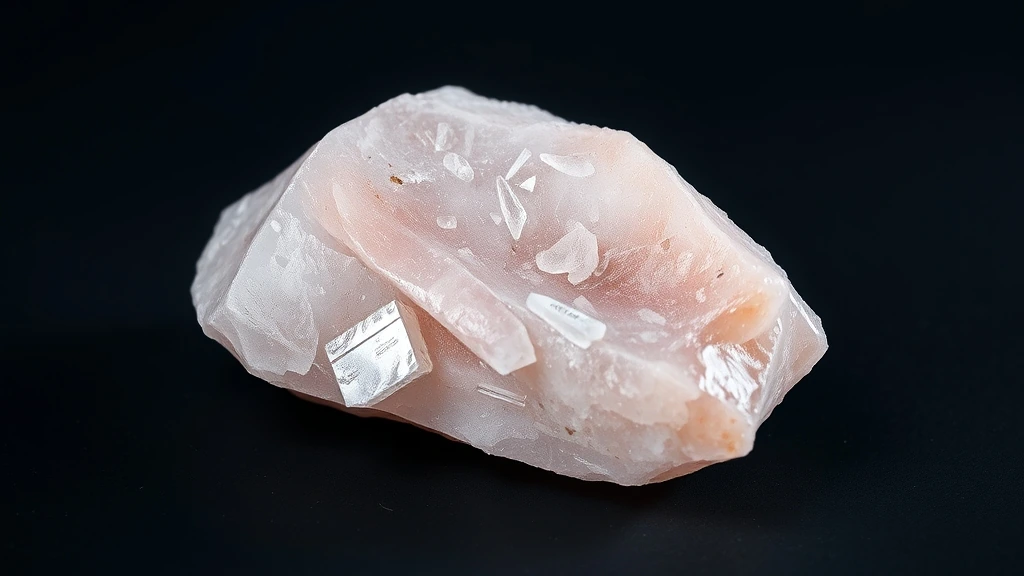
This mineral belongs to the Sulfates (Gypsum Family), a major geological group characterized by sulfate anions. It forms through the evaporation of calcium-rich water in arid environments. The resulting aggregates display unique radial growth patterns. These formations are distinct from massive gypsum deposits. They represent a specific crystallization process under low-pressure conditions.
What is Desert Rose Selenite? Geological Overview & Definition
Desert Rose Selenite is a radial aggregate of elongated gypsum crystals. It forms when calcium sulfate solutions evaporate rapidly in desert basins. The crystals grow outward from a central nucleus, creating a flower-like structure. This morphology is a direct result of crystal habit modification during growth.
The term “Selenite” distinguishes this transparent, high-quality variety from common gypsum. It is prized for its clarity and large crystal faces. Geologically, it is a secondary mineral found in evaporite deposits. Its formation is strictly tied to arid climatic conditions and specific chemical saturation levels. In comparative mineralogical collections, practitioners and geologists frequently study Orange Selenite alongside this crystal to appreciate their subtle energetic and structural differences.
Desert Rose Selenite Chemical Composition & Crystallographic Properties
The mineral crystallizes in the Monoclinic (Prismatic / tabular crystals) system. Its lattice structure features calcium cations coordinated by sulfate tetrahedra. Water molecules are integrated into the crystal lattice as structural water. This arrangement dictates the mineral’s prismatic and tabular crystal habits. In comparative mineralogical collections, practitioners and geologists frequently study Orange Calcite alongside this crystal to appreciate their subtle energetic and structural differences.
Selenite is highly sensitive to acidic environments due to its calcium sulfate composition. It dissolves readily in dilute acids, releasing sulfate ions. The color is typically colorless or white, resulting from the absence of significant chromophore impurities. Trace elements may cause subtle pink or yellow hues.
Thermal behavior reveals that selenite dehydrates upon heating. It loses structural water to become anhydrite at elevated temperatures. This phase transition is irreversible under standard geological conditions. The refractive index ranges from 1.520 to 1.530, contributing to its glassy luster.
| Property | Specification |
|---|---|
| Mineral Group | Sulfates (Gypsum Family) |
| Chemical Formula | CaSO₄·2H₂O (Calcium Sulfate Dihydrate) |
| Mohs Hardness | 2.0 |
| Crystal System | Monoclinic (Prismatic / tabular crystals) |
| Specific Gravity (Density) | 2.31 – 2.33 |
| Refractive Index | 1.520 – 1.530 |
| Color & Optical Properties | Natural Desert Rose Selenite color spectrum and optical dispersion |
| Primary Mining Localities | Mexico (Naica), Morocco, USA, Spain |
| Water & Chemical Resistance | EXTREMELY SENSITIVE: Water Soluble! (Never submerge in water; Mohs 2) |
| Chakra Alignment (Traditional) | Crown Chakra and Soul Star Chakra |
| Zodiac Affinity (Traditional) | Taurus, Cancer, Pisces |
| Symbolic Meaning (Traditional) | Aura purification, higher vibrational clarity, and serene light |
Desert Rose Selenite Varieties & Color Spectrum
Desert Rose Selenite displays distinct mineralogical characteristics across its geological varieties and structural habits. Gemologists evaluate these natural varieties based on crystal habit, trace chromophore concentrations, and visual luster.
Primary Natural Desert Rose Selenite
The benchmark natural variety exhibiting diagnostic color saturation and classic crystallographic symmetry.
Distinct Geological Morphs of Desert Rose Selenite
Secondary regional and structural varieties formed under localized geological temperature and pressure conditions.
Classic White Rose
Formed in arid evaporite basins, Classic White Rose develops from calcium sulfate dihydrate crystals that fan outward in a rose‑shaped aggregate. Thin, translucent blades interlock, creating a delicate, milky appearance often speckled with sand‑size quartz grains. This variety is abundant in the Sahara and the southwestern United States, making it the most commercially available form.
Amber‑Tinted Rose
Amber‑Tinted Rose acquires its warm hue through iron oxide staining during late diagenesis in desert playas. The Fe‑bearing inclusions impart a honey‑colored translucency that deepens toward the crystal core. Found primarily in the Atacama Desert of Chile, this morph is rarer and prized for its subtle glow under UV light.
Blue‑Veined Rose
Blue‑Veined Rose exhibits striking azure filaments caused by microscopic inclusions of gypsum‑type fluid inclusions that diffract light. The veins run parallel to the crystal’s monoclinic axes, giving a marbled effect that is especially vivid in specimens from the Jordanian Wadi Rum region. Its scarcity and unique coloration command premium prices among collectors.
Pink‑Blush Rose
The Pink‑Blush Rose owes its soft rose‑pink tint to trace amounts of manganese substituting for calcium within the lattice. This substitution produces a gentle blush that intensifies near the crystal edges, often accompanied by fine calcite specks. Occurrences are limited to the salt flats of Iran’s Dasht-e Kavir, rendering it a sought‑after trade variety.
Blackened Desert Rose
Blackened Desert Rose forms when organic matter and manganese oxides infiltrate the crystal during burial, resulting in a deep, almost opaque carbonaceous matrix. The outer layers retain the classic rose shape, while the interior appears as a dark, glassy core. This variety is chiefly extracted from the Kalahari Basin, where its rarity adds mystique to metaphysical markets.
Iridescent Rainbow Rose
Iridescent Rainbow Rose displays a spectrum of colors due to intergrowths of thin calcite and aragonite lamellae that create interference colors on the crystal surface. Light scattering produces a subtle rainbow sheen that shifts with viewing angle. Found in limited pockets of the Mexican Chihuahuan Desert, it is the most exotic and least abundant of the selenite roses.
Where is Desert Rose Selenite Found? Geological Mining & Extraction
Desert Rose selenite crystallizes within evaporitic sequences where thick layers of gypsum and anhydrite undergo hydration in arid climates. The mineral typically occurs in shallow, sun‑exposed sabkhas where periodic flooding and rapid evaporation promote the growth of tabular monoclinic crystals that fan into rose‑like clusters. Extraction involves manual labor, often using hand tools to split the soft gypsum without fracturing the delicate petals.
Primary mining districts include the Sahara’s Algerian and Libyan salt flats, the Atacama Desert of Chile, and the Jordanian Wadi Rum gypsum basins. In each locale, small‑scale cooperatives harvest the rose formations directly from the surface, then sort and grade the specimens according to clarity, color, and structural integrity for global gemstone markets.
Historical Significance & Cultural Lore of Desert Rose Selenite
Across ancient lapidary traditions, desert rose selenite was prized for its ethereal beauty and perceived protective properties. Egyptian tomb inventories from the New Kingdom list gypsum roses among grave goods, suggesting they were used as amulets to safeguard the soul’s journey. In Greco‑Roman texts, the stone is described as “the flower of the desert,” associated with the goddess Aphrodite’s purity.
In Vedic astrology, the rose‑shaped selenite aligns with the Crown Chakra, believed to facilitate aura purification and higher vibrational clarity. Chinese Daoist alchemists incorporated gypsum roses into meditation chambers to enhance serene light and mental focus. Throughout these cultures, the mineral’s translucent form symbolized the fleeting yet enduring nature of life, a motif that continues to inspire contemporary metaphysical practice.
Modern Uses & Jewelry Applications of Desert Rose Selenite
Desert Rose Selenite is prized for its translucent beauty and gentle translucency, making it an ideal candidate for lapidary cutting into cabochons that highlight its subtle veining. Artisans often polish the stone to a high luster, allowing light to play across its surface and accentuating the delicate rose‑shaped inclusions that give the mineral its name. In jewelry, the stone is set in rings, pendants, and earrings, where its softness (Mohs 2.0) permits intricate faceting without compromising structural integrity. The material is also carved into ornamental panels and small figurines, where its natural color variations provide a tactile connection to desert landscapes.
- Cabochon polishing for earrings and pendants
- Faceted cabochons for rings and brooches
- Carved ornamental panels and small figurines
- Decorative inlays for architectural accents
Metaphysical Properties & Traditional Meaning of Desert Rose Selenite
According to historical traditions and metaphysical lore, Desert Rose Selenite is believed to act as a conduit for aura purification, allowing negative energies to dissipate while inviting calm and clarity. Across ancient Mediterranean and Vedic lapidary lore, the stone is associated with higher vibrational clarity, fostering a serene mental state that supports meditation and spiritual insight. Its gentle, rose‑tinted hue is thought to resonate with emotional healing, encouraging the release of past traumas and the cultivation of inner peace. The mineral’s subtle luminosity is said to amplify the subtle energies of the Crown and Soul Star chakras, facilitating a deeper connection to the divine and the cosmos.
Which Chakra and Zodiac Signs Align with Desert Rose Selenite?
The Crown Chakra, located at the top of the head, is the primary energetic center associated with Desert Rose Selenite. This alignment is believed to enhance spiritual awareness and facilitate communication with higher realms.
The Soul Star Chakra, positioned above the Crown, is also linked to the stone’s metaphysical properties, promoting a sense of unity with the universal consciousness.
The mineral is traditionally aligned with the zodiac signs of Taurus, Cancer, and Pisces. These signs are believed to harmonize with the stone’s grounding, emotional, and intuitive qualities, respectively.
How to Identify Real vs. Fake Desert Rose Selenite
Artificial imitations of Desert Rose Selenite are commonly produced from synthetic glass or dyed quartz, which may mimic the stone’s appearance but lack its unique mineralogical characteristics. Real Desert Rose Selenite displays subtle internal veining and a characteristic thermal feel that distinguishes it from glass.
Practical At-Home Authenticity Tests
- Temperature Test (Thermal Feel): Hold the stone in your palm; real selenite will feel noticeably cooler than synthetic glass due to its higher thermal conductivity.
- Specific Gravity & Weight Test: Compare the stone’s weight to a known sample of calcium sulfate dihydrate; real selenite will be slightly heavier, reflecting its density of 2.31–2.33 g/cm³.
- Scratch & Hardness Test (Mohs Comparison): Use a standard Mohs hardness kit; selenite should scratch only materials softer than 2.0, such as a fingernail, while glass will scratch harder surfaces.
- Microscopic & Loupe Inspection (Internal Inclusions): Examine the stone under a loupe; authentic selenite will show natural, irregular inclusions and a crystalline lattice, whereas synthetic replicas often exhibit uniform, artificial patterns.
Desert Rose Selenite Valuation Factors, Grading & Pricing
The color saturation of a Desert Rose selenite is the foremost visual cue for market value. Specimens displaying a deep, uniform ivory‑white or soft pastel hue command higher prices than those with uneven, washed‑out tones. Collectors also prize a natural, silky luster that reflects light without artificial enhancement, as this indicates minimal handling and preservation of the mineral’s original brilliance.
Crystal size & weight (grams) directly influence pricing, with larger, heavier roses offering greater market appeal. A well‑preserved, raw rose that retains its natural tabular crystals is typically valued higher than a tumbled piece, which loses some of the original texture despite a polished finish. Inclusions of sand, quartz, or other matrix material can either enhance the organic character or detract from value, depending on their visibility and integration.
Ethical sourcing & locality premium has become a decisive factor for both holistic practitioners and serious collectors. Specimens sourced from reputable mines in arid regions of the Middle East or North Africa, with documented provenance and fair‑trade practices, often fetch a premium over unverified material. Buyers increasingly seek stones that support sustainable extraction, ensuring the mineral’s cultural heritage and environmental impact are respected.
How to Clean and Care for Desert Rose Selenite
Desert Rose selenite is extremely sensitive to water; any exposure can dissolve its gypsum structure and erase its characteristic sheen. The only safe physical cleaning method is to gently dust the surface with a completely dry, soft microfiber or camel‑hair cloth, removing loose particles without abrasion. Ultrasonic cleaners are strictly forbidden, as the vibrations can fracture the delicate crystal lattice and accelerate dissolution.
Cleansing and Recharging Desert Rose Selenite (Energetic Care)
For energetic maintenance, a brief session of herbal smudging with sage or cedar can clear residual negative imprint without introducing moisture; hold the rose at a comfortable distance and allow the smoke to drift over its surface. Alternatively, placing the stone on a larger selenite charging slab under the soft glow of moonlight for a few hours restores its natural vibrational clarity while keeping it dry.
A short exposure to gentle, indirect moonlight—preferably during a waxing or full moon—can also rejuvenate the stone’s Crown Chakra alignment, enhancing its aura‑purifying qualities. After the session, store the Desert Rose in a low‑humidity environment, such as a sealed glass display case with silica packets, to protect it from atmospheric moisture and preserve its luminous integrity.
Frequently Asked Questions About Desert Rose Selenite
Desert Rose Selenite displays distinct mineralogical characteristics across its geological varieties and structural habits. Gemologists evaluate these natural varieties based on crystal habit, trace chromophore concentrations, and visual luster.
Primary Natural Desert Rose Selenite
The benchmark natural variety exhibiting diagnostic color saturation and classic crystallographic symmetry.
Distinct Geological Morphs of Desert Rose Selenite
Secondary regional and structural varieties formed under localized geological temperature and pressure conditions.
Is Desert Rose Selenite safe to wear in the shower?
No, it is strictly prohibited to wear Desert Rose Selenite in the shower. The mineral is water-soluble and will dissolve rapidly upon contact with liquid. Exposure to steam or water causes the crystal structure to degrade, permanently damaging the specimen.
How should I clean my Desert Rose Selenite?
Clean the specimen exclusively with a dry, soft microfiber cloth. Never use water, soap, or liquid cleaners, as the gypsum base will dissolve and lose its characteristic silky luster. Gentle dry dusting is the only safe method to maintain its integrity.
Can I use an ultrasonic cleaner on Desert Rose Selenite?
Ultrasonic cleaners are strictly forbidden for this mineral. The vibrations combined with the required water bath will cause the calcium sulfate dihydrate to disintegrate. This process destroys the delicate rosette formation and renders the stone unusable for display or metaphysical purposes.
What are the primary zodiac signs aligned with Desert Rose Selenite?
Desert Rose Selenite resonates most strongly with Taurus, Cancer, and Pisces. These earth and water signs benefit from the stone’s aura purification properties. It supports emotional balance and spiritual clarity for individuals born under these astrological influences.
Which chakras does Desert Rose Selenite activate?
This mineral primarily activates the Crown Chakra and Soul Star Chakra. It facilitates higher vibrational clarity, connecting the physical body to spiritual realms. Practitioners use it to enhance meditation and promote a state of serene, elevated consciousness.
What is the chemical composition of Desert Rose Selenite?
Desert Rose Selenite consists of calcium sulfate dihydrate, with the formula CaSO₄·2H₂O. It belongs to the monoclinic crystal system, forming distinctive rosette structures. The inclusion of water molecules within the lattice contributes to its soft, pearly appearance.
How hard is Desert Rose Selenite on the Mohs scale?
Desert Rose Selenite has a Mohs hardness of 2.0. This makes it relatively soft and susceptible to scratching by common minerals like calcite or fluorite. Handle with care to preserve the prismatic crystal faces and prevent physical abrasion.
What is the refractive index of Desert Rose Selenite?
The refractive index ranges from 1.520 to 1.530. This optical property contributes to the stone’s distinctive silky luster and translucent appearance. It allows light to penetrate the crystal structure, creating a soft, glowing effect in natural light.