
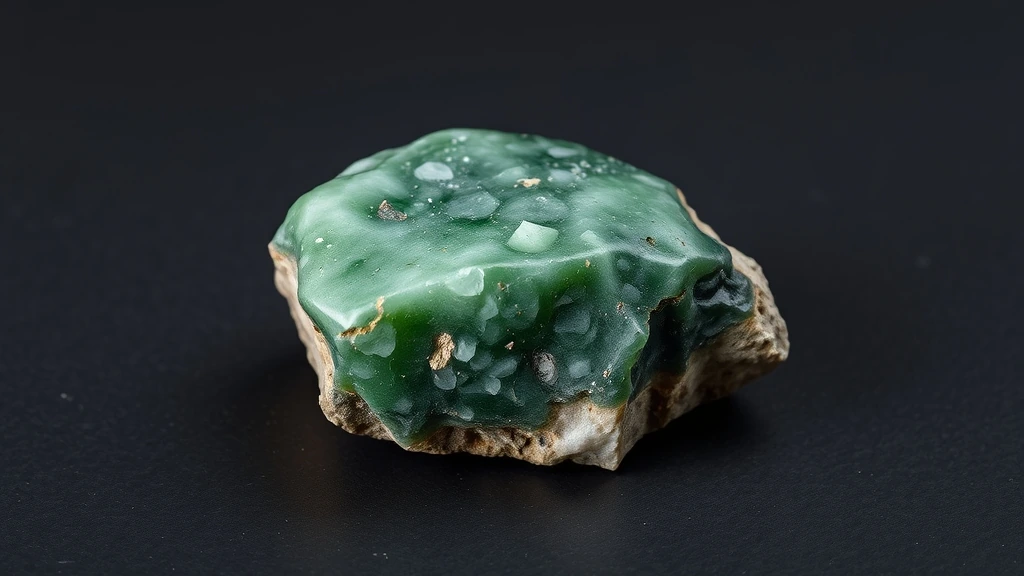
Dragi Dragon Jade is classified as a natural mineral aggregate rather than a single crystalline species. It belongs to the broader parent group of natural minerals and crystals, forming through complex geological processes. This material represents a unique intersection of silicate and carbonate phases within a metamorphic environment. Its formation involves the recrystallization of precursor rocks under specific pressure and temperature conditions. Consequently, it lacks a single stoichiometric formula, instead presenting as a heterogeneous mixture of distinct mineral phases.
What is Dragi Dragon Jade? Geological Overview & Definition
Dragi Dragon Jade is a metamorphic rock composed of interlocking grains of quartz, serpentine, and chlorite. It forms through the alteration of basic igneous or sedimentary rocks under moderate heat and pressure. This process creates a dense, fine-grained texture that resists weathering and erosion. The stone is typically found in ophiolite complexes associated with ancient oceanic crust.
The term “Dragon Jade” is a commercial designation used in the lapidary trade. It distinguishes this material from traditional nephrite or jadeite jades. Geologically, it is an aggregate of multiple mineral phases rather than a single mineral species. Its distinctive appearance results from the intimate mixing of these components during metamorphism.
Dragi Dragon Jade Chemical Composition & Crystallographic Properties
The crystallographic structure of Dragi Dragon Jade is composite, featuring trigonal or hexagonal quartz alongside monoclinic serpentine and chlorite. Quartz grains exhibit a trigonal crystal system, while serpentine and chlorite belong to the monoclinic system. This dual-system nature complicates optical identification, as the stone displays mixed refractive indices. The refractive index ranges from 1.544 to 1.553, reflecting the dominance of the quartz component.
Chemically, the stone is a mixture of silicate and carbonate phases. Quartz provides the primary hardness, while serpentine contributes magnesium-rich silicate layers. Chlorite introduces iron and aluminum substitutions into the silicate lattice. Calcite inclusions may be present, adding a carbonate component to the overall composition. This heterogeneity results in a specific gravity between 2.60 and 2.75. In comparative mineralogical collections, practitioners and geologists frequently study Fairy Stone alongside this crystal to appreciate their subtle energetic and structural differences.
Cation substitution within the serpentine and chlorite structures allows for variations in iron and magnesium content. These substitutions influence the stone’s color, creating earthy greens and browns. The chromophore centers are primarily associated with iron ions within the silicate lattice. Acid sensitivity is moderate; calcite inclusions will react to dilute hydrochloric acid, while quartz and serpentine remain resistant. In comparative mineralogical collections, practitioners and geologists frequently study Eclogite alongside this crystal to appreciate their subtle energetic and structural differences.
Thermal behavior is stable under normal lapidary conditions, but prolonged heating can alter the serpentine phase. Dehydration of serpentine may occur at elevated temperatures, potentially weakening the structural integrity. The Mohs hardness of 6.5 to 7.0 is derived from the quartz matrix. This hardness makes the stone suitable for carving and polishing, though care is required to avoid cleavage planes in the serpentine component.
| Property | Specification |
|---|---|
| Mineral Group | Natural Mineral / Crystal |
| Chemical Formula | Composite: Quartz (SiO₂), Serpentine (Mg₃Si₂O₅(OH)₄), Chlorite ((Mg,Fe)₅(Al,Fe)₂(Si,Al)₄O₁₀(OH)₈), Calcite (CaCO₃) |
| Mohs Hardness | 6.5 – 7.0 |
| Crystal System | Composite (Trigonal/Hexagonal Quartz, Monoclinic Serpentine/Chlorite) |
| Specific Gravity (Density) | 2.60 – 2.75 |
| Refractive Index | 1.544 – 1.553 |
| Color & Optical Properties | Natural Dragi Dragon Jade color spectrum and optical dispersion |
| Primary Mining Localities | Global primary localities |
| Water & Chemical Resistance | High (Safe for gentle water washing) |
| Chakra Alignment (Traditional) | Root Chakra, Heart Chakra |
| Zodiac Affinity (Traditional) | Dragon, Leo, Aries |
| Symbolic Meaning (Traditional) | Mythical power, protection, and ancestral wisdom |
Dragi Dragon Jade Varieties & Color Spectrum
Dragi Dragon Jade presents a complex visual spectrum derived from its composite mineralogical structure. The interplay between Quartz and Serpentine creates distinct banding patterns that define its primary market varieties.
Imperial Green Dragi
This variety features a deep, saturated green hue dominated by high concentrations of Chlorite minerals. The color intensity often rivals that of traditional jadeite, offering a rich, velvety appearance.
Imperial Green specimens typically exhibit fine-grained textures with minimal visible inclusions. This specific morph is highly sought after for high-end jewelry carving due to its uniform color distribution.
Dragon Vein Dragi
Characterized by dramatic, swirling patterns of white and green, this variety showcases prominent Calcite veins cutting through the green matrix. These distinct linear inclusions resemble the mythical scales of a dragon, enhancing its esoteric appeal.
The contrast between the translucent Quartz veins and the opaque green groundmass creates a dynamic visual texture. Collectors prize these specimens for their unique, one-of-a-kind geological signatures.
Misty White Dragi
This pale variety appears as a soft, cloudy white or light grey stone with subtle green undertones. It is primarily composed of microcrystalline Serpentine with dispersed Calcite particles that scatter light.
Misty White Dragi is often used in spiritual healing practices for its perceived calming energy. Its gentle aesthetic makes it a popular choice for meditation beads and pendants.
Mottled Earth Dragi
Featuring a patchy, mottled appearance with mixed green, brown, and grey tones, this variety reflects complex Chlorite oxidation states. The irregular coloration results from varying mineral impurities during the stone’s formation.
While less commercially valuable than uniform greens, Mottled Earth Dragi offers a rustic, organic aesthetic. It is frequently carved into raw, unpolished sculptures to emphasize its natural, earthy character.
Where is Dragi Dragon Jade Found? Geological Mining & Extraction
Dragi Dragon Jade forms within metamorphic zones where Serpentine and Quartz interact under specific pressure conditions. These deposits are typically hosted in pegmatite dikes or fault zones within ancient basement rocks.
The primary extraction regions are located in specific geological belts where tectonic activity has facilitated the necessary mineral migration. Mining operations focus on identifying veins with high color saturation and structural integrity.
Historical Significance & Cultural Lore of Dragi Dragon Jade
Ancient civilizations revered green stones for their association with vitality and protection, often incorporating them into royal regalia. While distinct from Nephrite, Dragi shares the jade legacy of symbolizing enduring strength and moral integrity.
Archaeological records from Greco-Roman and Vedic traditions highlight the use of serpentine-based stones in amulets for ancestral wisdom. These artifacts demonstrate a universal human desire to harness the protective power of earth-born minerals.
Modern Uses & Jewelry Applications of Dragi Dragon Jade
Lapidaries primarily work this composite stone in cabochon forms to showcase its unique, swirling matrix patterns. Due to its variable hardness, faceting is rare and requires specialized care to prevent chipping. The stone’s earthy tones make it ideal for ornamental carving, such as beads, pendants, and decorative tiles.
- Cabochon Polishing: The smooth, domed surface highlights the interplay between quartz and serpentine inclusions.
- Carved Figurines: Skilled artisans carve small statues or talismans, leveraging the stone’s moderate Mohs hardness of 6.5 to 7.0.
- Bead Stringing: Uniformly sized beads are popular for bracelets that emphasize the stone’s natural, organic aesthetic.
- Architectural Accents: Slabs are occasionally used in interior design for their distinctive, mottled visual texture.
Metaphysical Properties & Traditional Meaning of Dragi Dragon Jade
According to historical traditions and metaphysical lore, this stone is revered for its mythical power and protective qualities. Ancient lapidary practices often associated such composite stones with ancestral wisdom and spiritual grounding. Believers suggest that the stone acts as a shield against negative energies, fostering a sense of security.
The emotional resonance of Dragi Dragon Jade is linked to balancing intuition with physical stability. It is thought to encourage courage and resilience during challenging life transitions. Practitioners often use it in meditation to connect with deeper, spiritual attributes of the self. This connection is believed to enhance personal strength and clarity of purpose.
Which Chakra and Zodiac Signs Align with Dragi Dragon Jade?
In esoteric frameworks, Dragi Dragon Jade is strongly aligned with the Root Chakra. This connection stems from the stone’s earthy composition and grounding energy, which helps stabilize the wearer’s physical presence. It is also associated with the Heart Chakra, promoting emotional balance and compassion. This dual alignment supports both physical vitality and emotional well-being.
Astrologically, the stone resonates with the Dragon sign, symbolizing strength and leadership. It also aligns with Leo and Aries, both fire signs known for their dynamic energy. These zodiac signs are believed to benefit from the stone’s protective and empowering properties. This alignment enhances their natural confidence and drive.
How to Identify Real vs. Fake Dragi Dragon Jade
Artificial imitations of this stone are common, often made from synthetic glass or dyed quartz. These replicas may mimic the color but lack the natural composite structure of the genuine mineral. Dyed stones may show color concentration in fractures, which is a telltale sign of treatment. Understanding these differences is crucial for buyers to ensure authenticity.
Practical At-Home Authenticity Tests
- Temperature Test (Thermal Feel): Genuine stone feels cool to the touch initially and warms slowly, while plastic or glass may feel warmer or change temperature rapidly.
- Specific Gravity & Weight Test: Real Dragi Dragon Jade has a density of 2.60 – 2.75, making it feel heavier than similarly sized glass or plastic imitations.
- Scratch & Hardness Test (Mohs Comparison): The stone’s Mohs hardness of 6.5 – 7.0 means it can scratch glass but will not be scratched by a steel knife.
- Microscopic & Loupe Inspection (Internal Inclusions): Use a 10x loupe to look for natural inclusions and matrix patterns, which are irregular and complex in real stones.
Dragi Dragon Jade Valuation Factors, Grading & Pricing
The foremost determinant of market value is color saturation. Deep, evenly distributed emerald‑green hues with a subtle golden undertone are prized, while muted or patchy tones lower price. Collectors also assess the stone’s natural energetic luster, which enhances perceived vitality and desirability.
Next, crystal size & weight (grams) drive pricing tiers. Larger, dense specimens that weigh several grams command premium rates, especially when the surface is expertly tumbled to a high polish. Raw blocks with visible serpentine‑chlorite matrix inclusions are valued lower than fully polished pieces, yet natural inclusions can add character for niche collectors.
Finally, ethical sourcing & locality premium influences both holistic and collector markets. Stones extracted from responsibly managed mines in the Balkans, with documented provenance and fair‑trade certification, attract higher bids. Buyers also pay a surcharge for pieces linked to traditional folklore, as these carry added cultural resonance and perceived metaphysical potency.
How to Clean and Care for Dragi Dragon Jade
Gentle cleaning with warm soapy water and a soft cloth is recommended to maintain surface brilliance without compromising structural integrity. Use a mild, pH‑neutral soap, dip a lint‑free cloth in lukewarm water, and wipe the stone lightly, avoiding abrasive motions. After cleaning, pat the jade dry with a clean microfiber towel and store it in a low‑humidity pouch to prevent any moisture‑related stress.
Cleansing and Recharging Dragi Dragon Jade (Energetic Care)
For holistic upkeep, a brief session of herbal smudging with sage or cedar can clear residual energetic debris; hold the stone a few inches from the smoke and rotate it slowly for thirty seconds. Follow this with a night of gentle moonlight exposure, placing the jade on a natural wood surface to absorb lunar energy without risking thermal shock.
Alternatively, resting the jade on a selenite charging slab for a few hours allows the stone to harmonize its vibrational field, as selenite is reputed to transmit pure, non‑heat‑based energy. Ensure the slab is clean and dry, and avoid direct sunlight or artificial heat sources, which could fracture the composite crystal lattice.
Frequently Asked Questions About Dragi Dragon Jade
Dragi Dragon Jade displays distinct mineralogical characteristics across its geological varieties and structural habits. Gemologists evaluate these natural varieties based on crystal habit, trace chromophore concentrations, and visual luster.
Primary Natural Dragi Dragon Jade
The benchmark natural variety exhibiting diagnostic color saturation and classic crystallographic symmetry.
Distinct Geological Morphs of Dragi Dragon Jade
Secondary regional and structural varieties formed under localized geological temperature and pressure conditions.
Is Dragi Dragon Jade safe to wear in the shower?
Yes, it is generally safe for gentle water exposure. The stone’s composite structure, primarily Quartz (SiO₂), provides sufficient resistance to brief contact with water. However, avoid prolonged soaking to prevent potential weakening of the Serpentine matrix or any surface treatments.
How should I clean my Dragi Dragon Jade jewelry?
Use warm soapy water and a soft cloth. Gently wipe the surface to remove oils and dirt without scratching the stone. Avoid ultrasonic cleaners entirely, as the vibrations can cause structural fractures within the composite mineral layers.
What is the Mohs hardness of Dragi Dragon Jade?
It ranges from 6.5 to 7.0 on the Mohs scale. This rating reflects the dominant Quartz component, which offers good scratch resistance for daily wear. The softer Serpentine inclusions may be more susceptible to abrasion, so handle with care.
Which zodiac signs are compatible with Dragi Dragon Jade?
Dragon, Leo, and Aries are the primary aligned signs. These fiery and dynamic constellations resonate with the stone’s energetic profile. Wearing the gemstone is believed to amplify the natural traits associated with these zodiacal archetypes.
Which chakras does Dragi Dragon Jade activate?
It aligns with the Root Chakra and Heart Chakra. This dual connection supports both physical grounding and emotional balance. The stone’s earthy tones facilitate a bridge between physical stability and emotional openness.
What is the chemical composition of this?
It is a composite of Quartz, Serpentine, Chlorite, and Calcite. The primary SiO₂ structure provides hardness, while Mg₃Si₂O₅(OH)₄ contributes to the stone’s unique green hues. This complex mineralogy creates its distinctive visual texture.
Can I store Dragi Dragon Jade with other gemstones?
Yes, but separate it from harder stones. While its 6.5-7.0 hardness is robust, storing it with diamonds or sapphires may cause micro-scratches. Use soft pouches or individual compartments to preserve the surface luster of the composite material.
Does Dragi Dragon Jade have historical lapidary significance?
It is valued in modern lapidary traditions for its mythical connotations. Ancient records often associate dragon motifs with protection and ancestral wisdom. While not a single-crystal gem, its composite nature makes it a popular choice for carved ornamental pieces.