
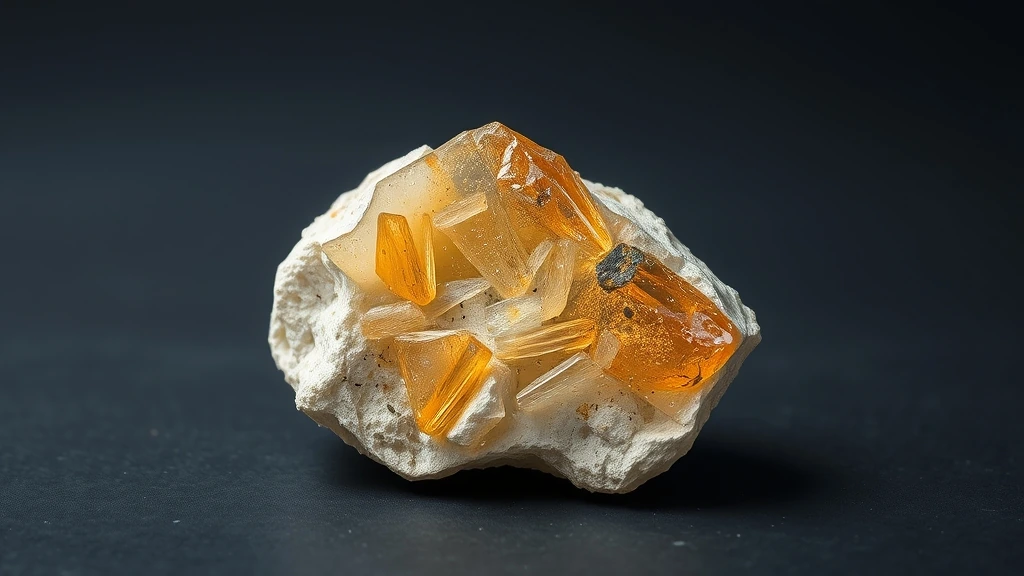
Golden Rutilated Quartz belongs to the Silicates supergroup, specifically classified under Tectosilicates within the Quartz Group. It forms when titanium dioxide needles grow inside a developing quartz crystal lattice. This unique inclusion process creates a visually complex structure that distinguishes it from pure quartz specimens. The host mineral provides the structural framework, while the inclusions dictate the stone’s primary aesthetic value.
What is Golden Rutilated Quartz? Geological Overview & Definition
Golden Rutilated Quartz is defined by rutile inclusions embedded within a transparent to translucent quartz matrix. These needle-like structures form as the host crystal grows around pre-existing titanium dioxide filaments. The resulting gemstone displays a syngenetic relationship between the host and the included mineral phase. While Golden Rutilated Quartz features distinct titanium dioxide needles, other quartz varieties like Pink Lithium Quartz derive their color from trace lithium impurities rather than visible mineral inclusions.
Geologically, these formations occur in hydrothermal veins and pegmatites where temperature and pressure conditions favor simultaneous crystallization. The rutile needles often align parallel to the c-axis of the quartz host. This alignment creates a distinctive visual pattern that enhances the stone’s market appeal and lapidary value. Similarly, the striking, eye‑like inclusions found in Hawk Eye quartz illustrate how mineral growth patterns can produce captivating visual effects that rival the parallel rutile needles of golden rutilated quartz.
Golden Rutilated Quartz Chemical Composition & Crystallographic Properties
The host quartz crystallizes in the Trigonal system, specifically exhibiting Rhombohedral or Trapezohedral habit. Its lattice structure consists of a three-dimensional framework of silicon and oxygen tetrahedra. This tectosilicate network provides exceptional structural stability and resistance to chemical weathering. The crystallographic orientation of the host dictates the growth pattern of the internal inclusions.
The primary chromophore for the golden color is rutile, which is titanium dioxide (TiO₂). Unlike pure quartz, which is colorless, the rutile needles absorb specific wavelengths of light to produce a warm, metallic gold appearance. The host quartz itself remains optically neutral, allowing the inclusions to dominate the visual spectrum. This distinction is critical for accurate gemological identification and valuation.
The material exhibits high chemical inertness due to its strong covalent bonding within the silica lattice. It is resistant to dilute acids and standard cleaning agents used in jewelry maintenance. However, the rutile inclusions may be more susceptible to certain chemical treatments than the host mineral. Proper care ensures the long-term preservation of both the host and the included filaments.
Thermal behavior of the composite structure is governed by the quartz host properties. The stone can withstand moderate heat but is sensitive to rapid temperature changes. Such fluctuations may cause thermal shock, leading to internal fractures or stress cracks. Gemologists recommend avoiding extreme thermal exposure to maintain the integrity of the delicate inclusion network.
| Property | Specification |
|---|---|
| Mineral Group | Silicates (Tectosilicates / Quartz Group) |
| Chemical Formula | SiO₂ (Silicon Dioxide) |
| Mohs Hardness | 7.0 |
| Crystal System | Trigonal (Rhombohedral / Trapezohedral) |
| Specific Gravity (Density) | 2.65 |
| Refractive Index | 1.544 – 1.553 |
| Color & Optical Properties | Natural Golden Rutilated Quartz color spectrum and optical dispersion |
| Primary Mining Localities | Brazil, Madagascar, USA (Arkansas), Swiss Alps |
| Water & Chemical Resistance | High (Fully resistant to water and moisture) |
| Chakra Alignment (Traditional) | All Chakras (Universal Harmonizer) |
| Zodiac Affinity (Traditional) | All Zodiac Signs (Especially Leo and Aries) |
| Symbolic Meaning (Traditional) | Master energy amplifier, clarity, purification, and focus |
Golden Rutilated Quartz Varieties & Color Spectrum
Golden rutilated quartz exhibits a diverse range of visual characteristics, primarily defined by the density and orientation of its internal rutile inclusions. The most common form features golden needle-like inclusions that create a striking contrast against the transparent to translucent quartz host. These inclusions are composed of titanium dioxide, which crystallizes within the quartz matrix during geological cooling. The visual appeal depends heavily on the inclusion density, ranging from sparse, delicate threads to dense, web-like formations.
Classic Golden Rutilated Quartz
This variety is characterized by distinct, straight golden needles that often run parallel to the quartz crystal’s c-axis. The rutile inclusions appear bright and metallic, catching light to produce a shimmering effect known as chatoyancy. It is the most commercially available form, found in significant quantities in Brazil and Madagascar. The clarity of the host quartz significantly impacts the gem’s overall value and brilliance.
Tiger’s Eye Rutilated Quartz
While technically a different mineral structure, this variety is often grouped with rutilated quartz in trade due to its fibrous golden appearance. It features crocidolite fibers that have been replaced by hematite, creating a silky, chatoyant surface. The color ranges from deep amber to bright yellow, mimicking the eye of a tiger. This form is highly valued for its play-of-color and durability in jewelry settings.
Black Rutilated Quartz
This variety contains black or dark brown rutile inclusions that appear as thick, opaque needles within the quartz. The dark inclusions often form dense, chaotic patterns that contrast sharply with the clear host material. It is rarer than the golden variety and is prized for its dramatic visual depth. The rutile needles may be thicker, resulting in a more robust and industrial aesthetic.
Pink Rutilated Quartz
This rare morph features pink-tinted quartz hosting golden or reddish rutile inclusions. The pink coloration is typically due to iron impurities or minor radiation damage within the quartz lattice. The combination of soft pink hues with metallic gold threads creates a unique aesthetic appeal. It is significantly less common than standard golden varieties, making it a collector’s item in the gem market.
Smoky Rutilated Quartz
This variety combines smoky quartz with golden rutile inclusions, resulting in a rich, earthy color palette. The brownish tint of the host quartz enhances the warmth of the golden needles, creating a cohesive visual effect. It is often found in the same geological deposits as clear rutilated quartz. The smoky coloration is attributed to natural irradiation from surrounding rocks.
Where is Golden Rutilated Quartz Found? Geological Mining & Extraction
Golden rutilated quartz primarily forms in granitic pegmatites and hydrothermal veins where rutile crystals grow within cooling quartz. The rutile inclusions develop as the magma cools, trapping the titanium dioxide in its crystalline structure. These deposits are often associated with iron-rich environments that facilitate the formation of the golden needles. The host rock typically consists of granite or gneiss, providing the necessary chemical environment.
Major mining regions include Brazil, Madagascar, and China, which produce the majority of the global supply. Brazilian deposits are renowned for their high clarity and dense, well-formed rutile inclusions. Madagascar also yields significant quantities, often featuring larger crystal sizes and vibrant colors. China is another key producer, contributing to the global market with consistent availability. These regions offer diverse geological conditions that result in varied inclusion patterns and qualities.
Historical Significance & Cultural Lore of Golden Rutilated Quartz
Ancient civilizations revered rutilated quartz for its perceived spiritual amplification and clarity-enhancing properties. In Greco-Roman tradition, it was associated with the gods and used in ritualistic contexts to enhance divine communication. Egyptian artisans incorporated similar quartz varieties into amulets, believing they provided protection and strength. The golden inclusions were seen as symbols of solar energy and vitality.
In Vedic traditions, rutilated quartz was valued for its ability to harmonize energy and promote mental focus. Chinese lapidary lore often linked such stones to longevity and prosperity, using them in decorative arts. Throughout early archaeological records, these stones appear in burial sites and temples, indicating their high social status. The universal appeal of this gemstone spans cultures, reflecting its enduring symbolic significance.
Modern Uses & Jewelry Applications of Golden Rutilated Quartz
Golden rutilated quartz is prized for its dramatic golden needle inclusions, which catch light like tiny sunbeams. Lapidary artisans often cut the stone into cabochons to showcase the internal rutiles, while faceted cuts highlight sparkle and brilliance. Ornamental carving—such as pendants, beads, and decorative inlays—leverages the stone’s translucency and golden contrast.
- Cabochon pendants emphasize the needle pattern for a classic, timeless look.
- Faceted rings and earrings maximize sparkle, making the stone suitable for high‑end fashion.
- Beaded necklaces use smaller cuts to create fluid, golden‑streaked strands.
- Artistic carvings in luxury objects (e.g., watch crowns, ceremonial objects) exploit the stone’s unique visual depth.
Safety & Mineral Profile of Golden Rutilated Quartz
Golden rutilated quartz is chemically stable; its silicon dioxide matrix resists most acids and solvents, making it safe for everyday wear. Handling requires only basic precautions—avoid hard impacts that could fracture the crystal, and store pieces separately to prevent scratching. Although historically referenced in metaphysical lore as a “master energy amplifier,” reputable gemologists stress that its primary value lies in scientific study and specimen display, not therapeutic use.
Mineralogical Group and Planetary Lore of Golden Rutilated Quartz
Golden rutilated quartz belongs to the quartz family, specifically the trigonal (rhombohedral) crystal system, with a Mohs hardness of 7.0 and a density of 2.65 g/cm³. The golden rutile needles are composed of TiO₂, forming elongated, needle‑like inclusions that give the stone its distinctive appearance.
Across ancient lapidary traditions, quartz was linked to the Sun and regarded as a symbol of clarity and illumination. In early astrological texts, the stone’s radiant inclusions were associated with the fire signs Leo and Aries, reflecting its reputed ability to “focus” and “purify” energy—an interpretation that persists in modern esoteric literature but remains outside the scope of scientific mineralogy.
How to Identify Real vs. Fake Golden Rutilated Quartz
Imitations of golden rutilated quartz range from dyed clear quartz to synthetic glass embedded with metallic flakes. Some manufacturers produce synthetic rutilated quartz using hydrothermal growth, which can mimic natural inclusions but often lacks the irregular, chaotic distribution of genuine rutile. Distinguishing authentic specimens requires careful visual and physical testing, as well as awareness of the stone’s typical density and hardness.
Practical At-Home Authenticity Tests
- Temperature Test (Thermal Feel): Natural quartz feels cool to the touch and warms slowly; glass or plastic replicas heat up quickly when held.
- Specific Gravity & Weight Test: Weigh the stone and compare its specific gravity (~2.65). A significantly lighter feel suggests glass or plastic; a heavier feel may indicate leaded glass.
- Scratch & Hardness Test (Mohs Comparison): Use a steel nail (hardness ~5.5) to scratch an inconspicuous area. Quartz will resist scratching, whereas glass may show a faint mark.
- Microscopic & Loupe Inspection (Internal Inclusions): Under 10×–30× magnification, genuine rutile appears as sharp, needle‑like inclusions with random orientation; synthetic or dyed stones often show uniform, bubble‑like artifacts or surface‑applied glitter.
Golden Rutilated Quartz Valuation Factors, Grading & Pricing
Specimen aesthetic quality is the foremost determinant in market value. A crystal with a flawless crystal habit and an undamaged matrix commands premium prices. The overall visual harmony of the golden rutilations against the quartz host enhances its desirability among collectors.
Rarity and specimen dimensions drive the second tier of valuation. Larger, intact crystal clusters measured in centimeters or grams are prized, especially when free from handling damage. The absence of fractures or surface blemishes ensures a higher grade, reflecting the specimen’s pristine condition.
Mineralogical provenance and locality value play a critical role in the scientific and museum collector markets. Specimens sourced from renowned deposits, such as the famed Oltu region, carry added significance. Provenance documentation and a clear geological history elevate the specimen’s status and justify premium pricing.
How to Clean and Care for Golden Rutilated Quartz
Physical cleaning of golden rutilated quartz is straightforward and gentle. Use warm water and a mild soap solution to rinse the specimen, then dry it with a soft, lint‑free cloth. The mineral’s high water resistance allows safe use of an ultrasonic cleaner, provided the crystal is not heavily fractured.
Cleansing and Recharging Golden Rutilated Quartz (Energetic Care)
Dry energetic care can be performed by placing the quartz under gentle moonlight for several hours, allowing the subtle lunar energy to refresh its vibrational field. Alternatively, resting the crystal on a selenite charging slab for a few minutes can help realign its energetic properties without exposing it to heat or direct sunlight.
Frequently Asked Questions About Golden Rutilated Quartz
Golden Rutilated Quartz displays distinct mineralogical characteristics across its geological varieties and structural habits. Gemologists evaluate these natural varieties based on crystal habit, trace chromophore concentrations, and visual luster.
Primary Natural Golden Rutilated Quartz
The benchmark natural variety exhibiting diagnostic color saturation and classic crystallographic symmetry.
Distinct Geological Morphs of Golden Rutilated Quartz
Secondary regional and structural varieties formed under localized geological temperature and pressure conditions.
Is golden rutilated quartz safe to wear in the shower?
Yes, it is fully resistant to water and moisture without any risk of damage. The quartz host mineral possesses a closed crystal structure that prevents liquid absorption, ensuring long-term durability. You can safely wear your jewelry during daily activities, including showering, swimming, or exposure to rain, without worrying about degradation.
How should I clean my golden rutilated quartz jewelry?
Easily clean it with warm water and mild soap, then dry it with a soft cloth. For deeper maintenance, the stone is suitable for ultrasonic cleaning unless it contains heavy fractures or inclusions. Avoid harsh chemicals or abrasive scrubbers that could potentially scratch the surface or disturb the delicate rutile needle formations within the matrix.
Which zodiac signs are most compatible with this?
It aligns with all zodiac signs, but holds special resonance for Leo and Aries. These fire signs benefit from the stone’s ability to amplify confidence and creative energy. While universally harmonizing, its fiery aesthetic and energetic properties make it particularly empowering for those born under these specific astrological influences.
What chakra system does golden rutilated quartz activate?
It functions as a universal harmonizer, connecting and balancing all chakras simultaneously. Rather than targeting a single energy center, it facilitates the free flow of prana throughout the entire energetic body. This comprehensive alignment supports overall spiritual well-being and ensures that no specific chakra becomes blocked or overactive during meditation practices.
Is golden rutilated quartz durable enough for daily wear?
Yes, its Mohs hardness of 7.0 makes it highly resistant to scratches and abrasion. This durability allows it to withstand the rigors of everyday life, such as accidental knocks or contact with other jewelry. However, you should still handle it with care to avoid chipping the edges of the protruding rutile needles.
How can I distinguish genuine golden rutilated quartz from fakes?
Look for natural inclusions that follow the crystal’s internal growth patterns, rather than uniform artificial lines. Genuine specimens display varying needle thicknesses and angles, often accompanied by minor imperfections or cloudiness in the quartz matrix. Synthetic alternatives typically feature perfectly straight, evenly spaced fibers that lack the organic irregularity found in naturally formed rutile inclusions.
Does this require special storage conditions to preserve its luster?
Store it in a soft pouch or separate compartment to prevent surface scratching. While the stone itself is robust, the delicate rutile needles can be abraded if rubbed against harder gemstones like diamonds or sapphires. Keeping it isolated ensures that both the quartz host and the metallic inclusions retain their pristine visual appeal over time.
What is the primary chemical composition of this mineral specimen?
The host crystal is silicon dioxide (SiO₂), while the inclusions are titanium dioxide (TiO₂). This unique combination creates the striking golden threads visible within the transparent quartz matrix. Understanding this dual composition helps explain the stone’s stability, as both minerals are chemically inert and resistant to environmental weathering factors.