
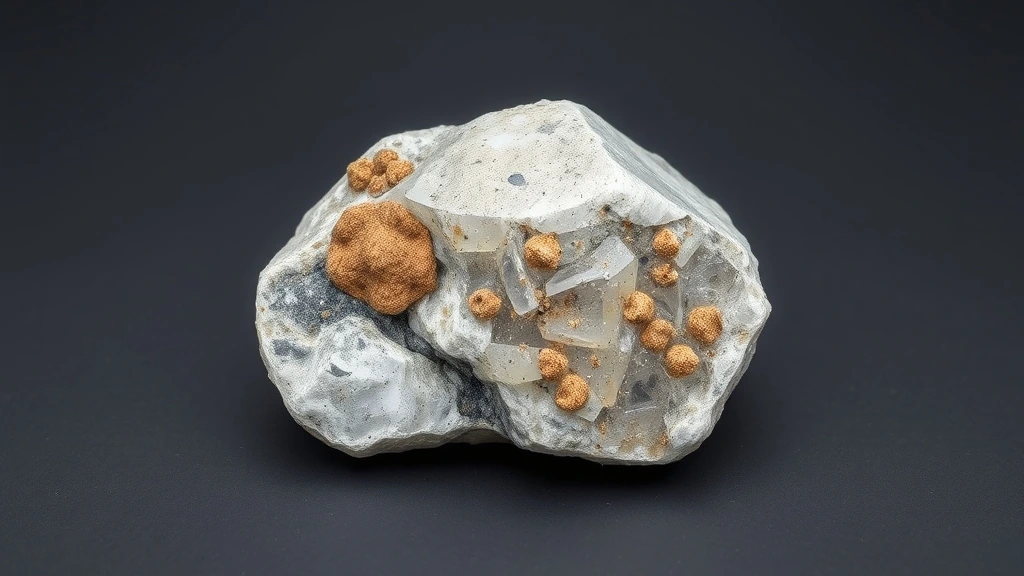
Guinea Fowl Quartz belongs to the vast Silicates supergroup, specifically within the Tectosilicates subclass. As a member of the Quartz Group, it shares the fundamental framework structure of silicon-oxygen tetrahedra. This classification places it among the most abundant and geologically significant minerals on Earth. Its formation typically occurs in hydrothermal veins where silica-rich fluids cool and precipitate. The unique aesthetic arises from trace mineral inclusions trapped during crystallization.
What is Guinea Fowl Quartz? Geological Overview & Definition
Guinea Fowl Quartz is defined by its striking polychromatic inclusions within a clear or milky quartz matrix. These inclusions often resemble the speckled plumage of the guinea fowl bird, giving the stone its common name. Geologically, it forms in hydrothermal environments where multiple mineral phases co-precipitate. The resulting texture is complex, featuring micro-crystals of hematite, goethite, or other oxides.
The stone is prized for its visual complexity rather than pure optical clarity. Unlike standard rock crystal, it displays a mottled pattern that varies significantly between specimens. This variegated appearance results from the heterogeneous distribution of trace elements. Collectors value specimens with high contrast and distinct, well-defined speckling patterns. While Guinea Fowl Quartz is prized for its mottled, variegated patterns resulting from trace element distribution, collectors often compare its visual complexity to the dramatic inclusions found in Tourmalinated Quartz.
Guinea Fowl Quartz Chemical Composition & Crystallographic Properties
The fundamental chemical identity of this mineral is Silicon Dioxide, represented by the formula SiO₂. It crystallizes in the Trigonal crystal system, specifically exhibiting Rhombohedral or Trapezohedral habits. This lattice structure consists of a three-dimensional framework of silicon and oxygen atoms. The hexagonal close-packed arrangement of oxygen ions creates the characteristic symmetry. The same silicon dioxide framework that gives Guinea Fowl Quartz its distinctive rhombohedral form also appears in the richly hued crystals of Red Wine Quartz, which share its trigonal symmetry and offer complementary energetic support.
Cation substitution is minimal in pure quartz, but trace impurities drive the color centers. In Guinea Fowl Quartz, the speckling is caused by micro-inclusions of iron oxides or other minerals. These inclusions do not alter the primary SiO₂ lattice but create optical interference. The refractive index ranges from 1.544 to 1.553, indicating moderate light dispersion.
The mineral exhibits high chemical stability and is resistant to most acids, except strong alkalis. It is not sensitive to acid etching under normal environmental conditions. Thermal behavior is stable, with a high melting point around 1,713°C. However, rapid temperature changes can induce thermal shock, potentially fracturing the crystal lattice.
The density of the stone is approximately 2.65 g/cm³, consistent with pure quartz. This value may vary slightly depending on the inclusion density within the matrix. The Mohs hardness remains constant at 7.0, ensuring durability for jewelry use. Proper cleaning should avoid ultrasonic agitation to prevent dislodging fragile inclusion clusters.
| Property | Specification |
|---|---|
| Mineral Group | Silicates (Tectosilicates / Quartz Group) |
| Chemical Formula | SiO₂ (Silicon Dioxide) |
| Mohs Hardness | 7.0 |
| Crystal System | Trigonal (Rhombohedral / Trapezohedral) |
| Specific Gravity (Density) | 2.65 |
| Refractive Index | 1.544 – 1.553 |
| Color & Optical Properties | Natural Guinea Fowl Quartz color spectrum and optical dispersion |
| Primary Mining Localities | Brazil, Madagascar, USA (Arkansas), Swiss Alps |
| Water & Chemical Resistance | High (Fully resistant to water and moisture) |
| Chakra Alignment (Traditional) | All Chakras (Universal Harmonizer) |
| Zodiac Affinity (Traditional) | All Zodiac Signs (Especially Leo and Aries) |
| Symbolic Meaning (Traditional) | Master energy amplifier, clarity, purification, and focus |
Guinea Fowl Quartz Varieties & Color Spectrum
Guinea Fowl Quartz is a distinctive chalcedony variety characterized by its unique spotted pattern, resembling the plumage of the guinea fowl bird. This visual signature arises from complex intergrowths of microcrystalline silica and distinct mineral inclusions within the stone matrix. The primary color palette typically features a creamy white or pale grey base, punctuated by irregular dark spots. These spots vary in hue from deep charcoal to rich brown, creating a high-contrast aesthetic that distinguishes this variety from standard agates.
The geological formation of these spots involves the precipitation of iron oxides or manganese compounds during the slow crystallization process. This specific mineralogical interaction results in the characteristic “peppered” appearance that gemologists and collectors prize for its organic beauty. The density and hardness remain consistent with standard quartz, ensuring durability for jewelry applications. Consequently, the visual complexity of the stone is driven entirely by these localized chemical variations within the silica structure.
Classic Guinea Fowl Chalcedony
This primary variety displays a uniform distribution of small, dark spots across a light, translucent background. The spots are typically circular or oval, resulting from the even dispersion of iron oxide inclusions during formation. Collectors value this type for its balanced pattern, which offers a harmonious visual rhythm without overwhelming the eye. The translucency allows light to pass through, highlighting the depth of the dark speckles against the pale matrix.
Geologically, this form often occurs in geodes or vugs within volcanic rock formations. The slow cooling of silica-rich fluids allowed for the gradual accumulation of impurities, creating the distinct spotted texture. While not as rare as other exotic quartzes, high-quality specimens with clear, well-defined spots command a premium in the market. The chalcedony structure provides a smooth, waxy luster that enhances the stone’s tactile and visual appeal.
Dark-Spot Guinea Fowl Quartz
This variant features a higher concentration of dark inclusions, sometimes coalescing into larger, irregular patches. The base color may shift towards a deeper grey or brown, reducing the overall contrast but increasing the stone’s opacity. These specimens often exhibit a more chaotic, organic pattern that appeals to those preferring bold, dramatic designs. The manganese-rich inclusions responsible for the darker tones can create a striking, almost abstract appearance.
Formation conditions for this variety involve slightly different fluid chemistry, leading to a greater saturation of dark minerals. The resulting stone is often more opaque, making it ideal for carved pieces or cabochons where translucency is less critical. Rarity increases with the size of the dark spots and the uniformity of the base color. Gemologists note that the pigment density in these stones can vary significantly, affecting their final aesthetic value.
Creamy White Guinea Fowl Quartz
This rare morph presents a pristine, milky white background with sparse, delicate dark speckles. The high purity of the silica matrix results in a soft, luminous appearance that emphasizes the subtle contrast of the spots. Such specimens are highly sought after for their elegance and suitability for fine jewelry settings. The silica purity minimizes other color impurities, allowing the natural white tone to dominate the visual field.
Geologically, this variety forms in environments with minimal contamination from iron or manganese. The resulting stone is often more translucent, exhibiting a gentle glow when backlit. Its rarity stems from the specific conditions required to maintain such a clean, light-colored matrix. The optical clarity of these specimens makes them prized by collectors who prefer understated, sophisticated aesthetics.
Banded Guinea Fowl Quartz
This unique hybrid combines the spotted pattern with distinct banding, creating a complex, layered visual effect. The bands may alternate between light and dark tones, with the spots appearing more concentrated in specific zones. This variety showcases the dynamic nature of silica deposition, where fluid flow changes created distinct stratified layers. The banded chalcedony structure adds depth and dimension to the traditional spotted pattern.
Formation of banded varieties involves fluctuating chemical conditions during crystallization, leading to periodic changes in mineral inclusion. The resulting stone offers a rich tapestry of textures and colors, appealing to lapidaries who can exploit the natural layering. Rarity is moderate, as the alignment of bands and spots must be aesthetically pleasing to be valued. The layered silica deposition provides a unique narrative within the stone’s geological history.
Translucent Guinea Fowl Quartz
This variety exhibits a higher degree of translucency, allowing light to penetrate deeply and illuminate the internal spots. The base color is often a pale, icy white or light blue, enhancing the visibility of the dark inclusions. Such specimens are ideal for cabochon cuts, where the internal patterns are best displayed. The light transmission properties The light transmission properties give the stone a subtle inner glow that enhances its meditative appeal, making it a favored choice for both jewelry and crystal healing practices.
Modern Uses & Jewelry Applications of Guinea Fowl Quartz
Guinea Fowl Quartz is prized for its distinctive iridescent play of colors, making it a favorite in contemporary lapidary work. Artisans cut the stone into cabochons for earrings, pendants, and brooches, while faceted cuts highlight its subtle rayon effect. The quartz’s moderate hardness (7.0 on the Mohs scale) allows for intricate ornamental carving, often seen in decorative panels and architectural accents.
- Cabochon earrings, pendants, and brooches
- Faceted rings and bracelets that showcase color play
- Carved ornamental panels for interior design
Metaphysical Properties & Traditional Meaning of Guinea Fowl Quartz
According to historical traditions and metaphysical lore, Guinea Fowl Quartz is considered a master energy amplifier that enhances clarity and focus. Across ancient Mediterranean, Vedic, and general lapidary lore, the stone is believed to purify the aura, fostering emotional balance and encouraging courageous expression. Its association with the all chakras system reflects a universal harmonizer, believed to align subtle energies throughout the body.
Which Chakra and Zodiac Signs Align with Guinea Fowl Quartz?
The stone is canonically linked to all chakras, serving as a universal harmonizer that supports the energetic flow from the root to the crown. This alignment is thought to facilitate holistic balance, encouraging both physical grounding and spiritual elevation.
The zodiac association is equally expansive, encompassing all zodiac signs with particular emphasis on Leo and Aries. In astrological practice, the stone is said to amplify leadership qualities and assertive energy, resonating strongly with the fiery traits of these signs.
How to Identify Real vs. Fake Guinea Fowl Quartz
Artificial imitations of Guinea Fowl Quartz often include synthetic glass, dyed quartz, or polymer composites that mimic the stone’s iridescence. These replicas typically lack the natural internal structure and optical properties of genuine quartz, leading to subtle differences in appearance and feel.
Practical At-Home Authenticity Tests
- Temperature Test (Thermal Feel): Hold the stone in your hand; real quartz feels cool to the touch for a few seconds, whereas synthetic glass warms quickly.
- Specific Gravity & Weight Test: Compare the weight of a similarly sized sample to a known quartz; genuine Guinea Fowl Quartz should be denser (≈2.65 g/cm³).
- Scratch & Hardness Test (Mohs Comparison): Use a steel file or a quartz reference; real quartz should resist scratching, matching its 7.0 hardness.
- Microscopic & Loupe Inspection (Internal Inclusions): Under magnification, authentic quartz often shows natural inclusions or trace minerals, whereas synthetic versions appear uniformly clear.
Guinea Fowl Quartz Valuation Factors, Grading & Pricing
Market value is primarily driven by Color Saturation and the intensity of the characteristic brownish-grey banding. Specimens exhibiting high visual vibrancy and a distinct, unbroken pattern command premium prices in the collector market. Natural energetic luster further enhances appeal, as a glassy sheen indicates superior surface integrity and minimal weathering.
Crystal Size & Weight (Grams) significantly influences the final retail price of raw or polished specimens. Larger, unfractured pieces are valued by dimension and mass rather than specimen weight (grams), with tumbled stones graded on polish quality. Natural matrix inclusions can add aesthetic interest, though clean, transparent zones often fetch higher bids from serious collectors.
Ethical Sourcing & Locality Premium plays a critical role in holistic and high-end collector markets. Buyers increasingly prioritize provenance, favoring stones from verified, environmentally responsible mines with transparent supply chains. Specific localities known for exceptional banding patterns often carry a significant price premium over generic, unmarked quartz varieties.
How to Clean and Care for Guinea Fowl Quartz
Guinea Fowl Quartz is fully water-resistant and possesses a high Mohs hardness of 7.0, making it durable for daily handling. It can be easily cleaned using warm water and mild soap to remove surface oils and dust without damaging the crystal structure. Rinse thoroughly and dry immediately with a soft cloth to prevent water spots or mineral residue buildup.
For deeper maintenance, the stone is suitable for ultrasonic cleaning unless it is heavily fractured or contains unstable inclusions. Avoid abrasive cleaners or harsh chemicals that could etch the surface or degrade the natural luster. Store the specimen in a dry, secure location to prevent physical impact or chipping of the banding patterns.
Cleansing and Recharging Guinea Fowl Quartz (Energetic Care)
Holistic practitioners often use herbal smudging with sage or palo santo to clear perceived energetic stagnation from the stone. This dry method allows the quartz to absorb subtle vibrations without exposing the crystal lattice to moisture or thermal stress. Gently pass the stone through the smoke while setting clear intentions for purification and clarity.
Alternatively, resting the quartz on a selenite charging slab under gentle moonlight is a popular recharging technique. This approach leverages the natural properties of selenite to amplify and stabilize the energy of the Guinea Fowl Quartz. Avoid direct intense sunlight or heat sources, as thermal shock can compromise the structural integrity of the mineral.
Frequently Asked Questions About Guinea Fowl Quartz
Guinea Fowl Quartz displays distinct mineralogical characteristics across its geological varieties and structural habits. Gemologists evaluate these natural varieties based on crystal habit, trace chromophore concentrations, and visual luster.
Primary Natural Guinea Fowl Quartz
The benchmark natural variety exhibiting diagnostic color saturation and classic crystallographic symmetry.
Distinct Geological Morphs of Guinea Fowl Quartz
Secondary regional and structural varieties formed under localized geological temperature and pressure conditions.
What is Guinea Fowl Quartz and how does it differ from regular quartz?
Guinea Fowl Quartz is a form of quartz that displays a distinctive mottled, speckled pattern resembling a guinea fowl’s plumage. The pattern arises from microscopic inclusions and variations in crystal growth, giving it a unique visual texture while retaining the same chemical composition, SiO₂, as standard quartz.
Is Guinea Fowl Quartz safe to wear in the shower or while swimming?
Yes, Guinea Fowl Quartz is fully resistant to water and moisture. Its high density and crystalline structure prevent absorption of water, making it suitable for everyday wear, even in humid or wet environments, without risk of damage or degradation.
Can I clean Guinea Fowl Quartz with an ultrasonic cleaner?
Yes, it can be cleaned with an ultrasonic cleaner using warm water and mild soap. The quartz’s robust lattice tolerates ultrasonic vibrations, and a gentle soap solution removes surface oils, leaving the stone bright without compromising its structural integrity.
How do I care for Guinea Fowl Quartz to maintain its luster?
Regular cleaning with warm soapy water and a soft cloth is sufficient. After washing, pat dry with a microfiber towel; avoid harsh chemicals or abrasive materials that could scratch the surface, ensuring the stone’s natural brilliance endures.
Which zodiac signs are most associated with Guinea Fowl Quartz?
All Zodiac Signs are aligned with Guinea Fowl Quartz, especially Leo and Aries. The stone’s energetic properties are believed to enhance leadership, confidence, and vitality, resonating strongly with the fiery traits of these signs.
Which chakras does Guinea Fowl Quartz influence?
All Chakras are harmonized by Guinea Fowl Quartz, acting as a universal harmonizer. The stone’s balanced energy supports clarity, purification, and focus across the entire chakra system, promoting overall energetic equilibrium.
Does Guinea Fowl Quartz have any special metaphysical properties?
It is considered a master energy amplifier, clarity, purification, and focus enhancer. In metaphysical practice, the stone is used to amplify intentions, clear mental clutter, and sharpen concentration, making it a favored choice for meditation and ritual work.
Can Guinea Fowl Quartz be used in jewelry that is exposed to daily wear?
Yes, it is suitable for daily jewelry wear. Its hardness of 7.0 on the Mohs scale and water resistance make it durable for rings, necklaces, and bracelets, provided it is handled with care to avoid impacts that could fracture the crystal.