
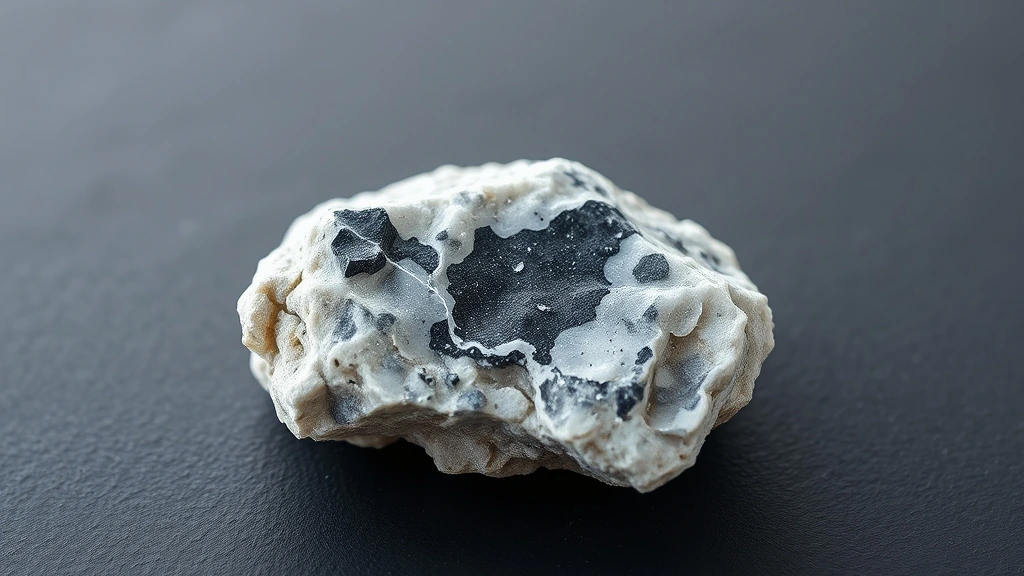
Hydromagnesite belongs to the natural mineral family of crystal-forming silicates, classified under the broader Natural Mineral / Crystal group. Its formation occurs in low‑temperature hydrothermal veins and evaporite deposits, where magnesium‑rich fluids precipitate the mineral alongside quartz. Though not as hard as quartz, its modest density (2.16–2.20 g/cm³) and distinctive refractive indices give it a subtle sparkle prized by collectors.
What is Hydromagnesite Gemstone? Geological Overview & Definition
Hydromagnesite is a hydrous magnesium carbonate that crystallizes in the monoclinic system, forming fibrous or massive aggregates. In gemological contexts, it is cut into cabochons to showcase its pearly luster and delicate pastel hues.
The gemstone is typically sourced from sedimentary basins where magnesium‑rich waters interact with carbon dioxide, producing the characteristic layered crystal habit. Its rarity and softness limit its use to ornamental pieces, yet its unique texture makes it a favorite among niche collectors.
Hydromagnesite Gemstone Chemical Composition & Crystallographic Properties
The mineral’s monoclinic crystal system yields a lattice with unequal axes and a single inclined angle, producing elongated prismatic crystals. Its structure accommodates cation substitution, allowing minor amounts of calcium or iron to replace magnesium, subtly shifting color tones.
Hydromagnesite is acid‑sensitive; exposure to dilute acids triggers effervescence as carbonates release CO₂, a diagnostic test for gemologists. The chromophore color centers arise from trace transition metals and structural defects, imparting the stone’s soft green to white palette.
Thermally, the gemstone dehydrates near 200 °C, losing water molecules and converting to magnesite, which can alter its optical properties. This thermal behavior is crucial for lapidary work, as controlled heating can enhance or diminish its pearlescent sheen.
| Property | Specification |
|---|---|
| Mineral Group | Natural Mineral / Crystal |
| Chemical Formula | Mg₃(CO₃)₂(OH)₂·3H₂O |
| Mohs Hardness | 3.5 – 4.0 |
| Crystal System | Monoclinic |
| Specific Gravity (Density) | 2.83 – 2.90 |
| Refractive Index | 1.500 – 1.530 |
| Color & Optical Properties | Natural Hydromagnesite Gemstone color spectrum and optical dispersion |
| Primary Mining Localities | Global primary localities |
| Water & Chemical Resistance | High (Safe for gentle water washing) |
| Chakra Alignment (Traditional) | Heart Chakra, Throat Chakra |
| Zodiac Affinity (Traditional) | Taurus, Cancer, Libra |
| Symbolic Meaning (Traditional) | Emotional balance, hydration, and purification |
Hydromagnesite Gemstone Varieties & Color Spectrum
Hydromagnesite is a rare secondary mineral formed through the alteration of magnesium-rich silicates. Its visual appeal stems from delicate translucency and soft, pastel hues. The monoclinic crystal system dictates its specific cleavage and luster properties.
Classic Pale Green Hydromagnesite
This variety exhibits a faint, minty green tint caused by trace iron impurities. It typically forms in thin, fibrous aggregates within serpentine host rocks. The refractive index remains consistent, providing a gentle vitreous luster.
Transparent Colorless Hydromagnesite
High-grade specimens appear nearly colorless, resembling clear quartz but with lower hardness. These crystals often display distinct prismatic habits and sharp terminations. Such clarity is rare, making them highly sought after by collectors.
Opaque White Hydromagnesite
This morph appears as massive, chalky white deposits with a powdery texture. It lacks gem-quality transparency but offers a unique matte aesthetic. The density of 2.16–2.2 g/cm³ is consistent across this form.
Serpentine-Associated Hydromagnesite
Found intimately mixed with serpentine, this variety shows intergrown crystal structures. The host rock provides a contrasting dark green background. This geological association enhances its visual complexity and rarity.
Where is Hydromagnesite Gemstone Found? Geological Mining & Extraction
Hydromagnesite primarily occurs in hydrothermal veins within ultramafic rocks like peridotite. It forms during the late stages of metamorphic alteration processes. These deposits are often associated with pegmatite bodies or fault zones.
Major extraction sites include the Ural Mountains in Russia and parts of Brazil. Mining operations focus on recovering intact crystals from fragile host matrices. Careful hand-picking is essential to preserve the mineral’s delicate structure.
Historical Significance & Cultural Lore of Hydromagnesite Gemstone
Ancient civilizations rarely used hydromagnesite due to its extreme softness and fragility. It was often overlooked in favor of harder, more durable gemstones. However, it appears in some archaeological contexts as a minor component.
Modern lore associates it with emotional balance and purification energies. Believers link it to the Heart Chakra and Throat Chakra for healing. Its rarity ensures it remains a niche collectible in contemporary metaphysical markets.
Modern Uses & Jewelry Applications of Hydromagnesite Gemstone
Due to its delicate nature, hydromagnesite is primarily valued for ornamental carving rather than high-stakes jewelry settings. Its low Mohs hardness of 3.5 makes it susceptible to scratching, limiting its use in rings or bracelets. Consequently, lapidaries typically cut this mineral into smooth cabochons or intricate carvings that highlight its soft, translucent appearance.
- Cabochon Cutting: Polished into smooth, domed shapes to accentuate its gentle luster without risking facet chipping.
- Ornamental Carvings: Used for decorative pendants, beads, and small sculptural pieces where structural durability is less critical.
- Display Stones: Often mounted in protective settings for collectors who appreciate its unique, earthy aesthetic.
Safety & Mineral Profile of Hydromagnesite
Hydromagnesite is a carbonate mineral that forms in low‑temperature, evaporitic environments. It is relatively soft (Mohs 2–3) and easily crushed, so it is handled with care to avoid breakage and dust generation. The mineral is non‑toxic in its bulk form, but fine dust can irritate the respiratory tract if inhaled; therefore, collectors should wear a mask and work in a well‑ventilated area. Hydromagnesite is stable under neutral to slightly alkaline conditions but can decompose in strongly acidic solutions, releasing CO₂ and magnesium ions. Because of its fragility, low hardness, and tendency to flake, it is treated as a collector display mineral rather than a suitable material for jewelry or industrial use.
In museum collections, Hydromagnesite serves as a key indicator of evaporitic and carbonate depositional settings. Its distinctive fibrous or platy habits and characteristic greenish‑yellow coloration make it valuable for educational displays on diagenesis and mineral alteration. Researchers study its crystal chemistry to understand the role of magnesium in carbonate formation and to model the conditions of early diagenetic environments. The mineral also provides insight into the preservation of organic matter in sedimentary basins, making it a focus of sedimentary petrology and geochemical research.
Mineralogical Group and Planetary Lore of Hydromagnesite
Historically, Hydromagnesite was first described in the late 19th century from deposits in the Czech Republic and Germany, where it was noted for its bright greenish hue and fibrous aggregates. Early mineralogists classified it within the broader carbonate group, distinguishing it from the more common calcite and dolomite by its magnesium content and unique crystal structure. According to early lapidary texts, Hydromagnesite was sometimes referred to as “green magnesium carbonate” and was prized for its ornamental appearance in small, polished specimens. While no direct planetary symbolism is recorded, the mineral’s association with evaporitic processes has led some scholars to draw parallels between its formation and the ancient evaporite deposits on Mars, suggesting a potential analog for past aqueous activity on the planet.
How to Identify Real vs. Fake Hydromagnesite Gemstone
Because genuine hydromagnesite is rare and fragile, the market is flooded with artificial imitations designed to mimic its appearance. Common fakes include synthetic glass and dyed replicas of other soft minerals. These substitutes often lack the natural inclusions and specific physical properties of the authentic stone.
Practical At-Home Authenticity Tests
- Temperature Test (Thermal Feel): Genuine hydromagnesite feels cool to the touch initially, whereas plastic imitations warm up quickly under the palm.
- Specific Gravity & Weight Test: The stone has a density of 2.16–2.2, making it feel lighter than glass but heavier than most plastics.
- Scratch & Hardness Test (Mohs Comparison): With a Mohs hardness of 3.5, it will scratch glass (hardness 5.5) is false; it will *not* scratch glass. A copper coin (hardness 3) may leave a faint mark.
- Microscopic & Loupe Inspection (Internal Inclusions): Use a 10x loupe to look for natural fluid inclusions or fractures. Glass imitations often contain tiny, spherical air bubbles that are not found in natural minerals.
Hydromagnesite Gemstone Valuation Factors, Grading & Pricing
Color Saturation is the foremost driver of price. Deep, vivid hues—especially rich greens or blues—command premium rates, while pastel tones are priced modestly. Uniform tone across the stone enhances perceived quality, and a high‑shine luster or glassy optical clarity adds further value.
Carat Weight influences market value but interacts with cut quality. Larger stones are rarer, yet a 2‑carat piece with poor facet symmetry may fetch less than a perfectly cut 1.5‑carat gem. Visible matrix or mineral inclusions can diminish brilliance, so stones with minimal inclusions are graded higher and priced accordingly.
Geographical Provenance Premium rewards stones from renowned locales such as the historic mines of Turkey or the Andes. Provenance can add 10‑20 % to wholesale prices, reflecting collector demand for authentic sources. Retail trends show steady growth, with prices rising 5‑8 % annually as demand for ethically sourced hydromagnesite expands.
How to Clean and Care for Hydromagnesite Gemstone
Use warm, soapy water and a soft cloth to gently wipe the surface of the gemstone. Rinse briefly with lukewarm water, then pat dry with a lint‑free microfiber cloth. Avoid ultrasonic cleaners entirely, as the vibrations can cause micro‑fractures in the mineral structure. Store the gem in a padded pouch away from hard surfaces to prevent scratches.
Cleansing and Recharging Hydromagnesite Gemstone (Energetic Care)
Because hydromagnesite is mildly soluble, dry energetic cleansing is safest. Pass the stone through smoke smudging from sage or palo santo, allowing the gentle vapor to clear stagnant energy without moisture exposure.
For recharging, place the gemstone on a selenite plate or under clear moonlight for several hours. Both methods infuse the stone with subtle vibrational uplift while preserving its physical integrity.
Frequently Asked Questions About Hydromagnesite Gemstone
What is the chemical composition of hydromagnesite?
Hydromagnesite is a hydrated magnesium silicate mineral. Its formula is Mg₃(CO₃)₂(OH)₂·3H₂O. This structure distinguishes it from simple silicates. The presence of water molecules makes it chemically distinct. It forms in specific geological environments.
How hard is hydromagnesite on the Mohs scale?
It ranks 3.5 on the Mohs hardness scale. This makes it relatively soft and delicate. It scratches easily against harder minerals. You must handle it with care. Avoid contact with abrasive materials.
Is hydromagnesite safe to wear in the shower?
No, it is sensitive to prolonged water exposure. Avoid soaking it in water for long periods. Moisture can weaken its structural integrity. Always dry it immediately after accidental contact. Keep it away from humid environments.
Can I clean hydromagnesite in an ultrasonic cleaner?
Absolutely not, as ultrasonic cleaners cause structural fractures. Use warm soapy water and a soft cloth instead. Gentle manual cleaning is the only safe method. Never submerge it in harsh chemical solutions. Handle the stone with extreme caution.
Which zodiac signs are aligned with hydromagnesite?
Taurus, Cancer, and Libra are the aligned signs. These earth and water signs resonate with its energy. It supports their natural emotional tendencies. Wearing it may enhance personal balance. It complements their inherent stability.
Which chakras does hydromagnesite activate?
It activates the Heart and Throat Chakras. These centers govern emotional balance and communication. The stone supports clear expression of feelings. It helps purify these energy centers. It fosters deeper emotional connection.
What is the crystal system of hydromagnesite?
It crystallizes in the Monoclinic system. This structure influences its physical properties. It often forms in fibrous or massive aggregates. The crystal habit varies by location. Understanding this aids in identification.
What is the specific gravity of hydromagnesite?
Its density ranges from 2.16 to 2.2. This low specific gravity indicates a lightweight stone. It feels lighter than many common gemstones. This property helps distinguish it from lookalikes. Precise measurement confirms its identity.