
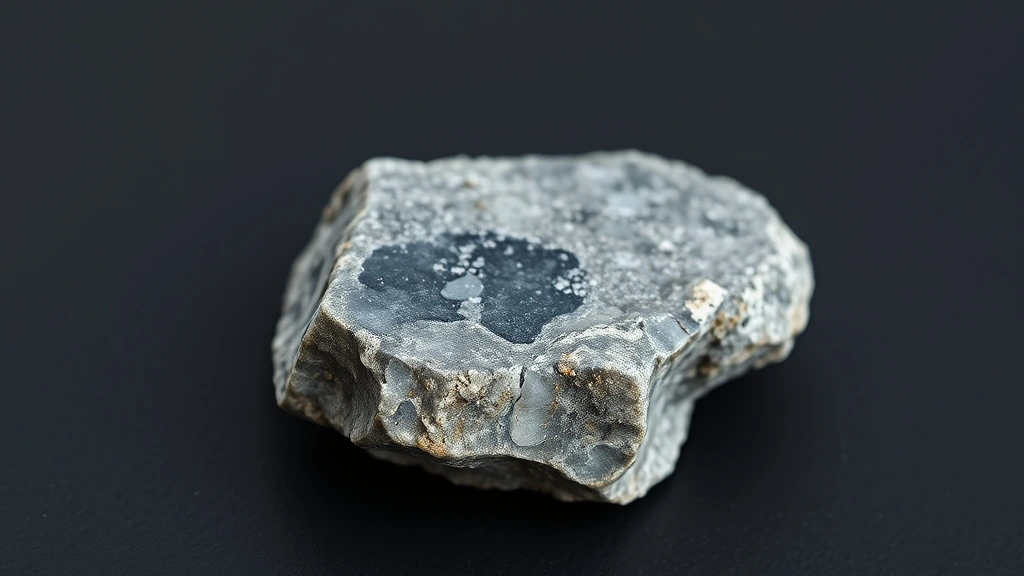
Ijolite stands as a distinctive member of the pyroxene mineral group, characterized by its unique geological formation in anorthosite intrusions. Unlike common gemstones, it is classified strictly as a Natural Mineral / Crystal with specific igneous origins. Its presence often signals high-temperature magmatic processes, distinguishing it from sedimentary or metamorphic counterparts. This stone offers a fascinating window into deep crustal dynamics, providing critical data for petrologists studying rock evolution.
What is Ijolite Gemstone? Geological Overview & Definition
Ijolite is defined by its pyroxene composition, typically occurring in coarse-grained anorthosite rocks. It forms alongside plagioclase feldspar in specific igneous environments, creating a distinctive mineral assemblage. This geological context is crucial for identifying authentic specimens in the field.
The stone’s rarity stems from its specific magmatic origin, requiring precise cooling conditions. It is not a metamorphic product but a primary igneous mineral. Understanding this formation process helps gemologists distinguish it from visually similar dark minerals.
Ijolite Gemstone Chemical Composition & Crystallographic Properties
Contrary to common gemstone structures, ijolite exhibits an Amorphous / Cryptocrystalline arrangement in certain contexts. This lack of long-range order affects its optical properties significantly. It does not display the typical cleavage planes of well-formed crystals.
The lattice structure is complex, involving subtle variations in atomic spacing. Cation substitution between calcium and magnesium alters its physical characteristics. These substitutions are critical for determining the mineral’s specific gravity and density.
Ijolite shows moderate acid sensitivity, reacting slowly to strong mineral acids. Its dark color arises from chromophore color centers involving iron ions. These electronic transitions absorb visible light, creating the characteristic black or dark green hue.
Thermal behavior reveals stability under moderate heat but potential alteration at high temperatures. The cryptocrystalline nature means it lacks distinct birefringence in some samples. This property aids in laboratory identification using polarized light microscopy.
| Property | Specification |
|---|---|
| Mineral Group | Natural Mineral / Crystal |
| Chemical Formula | Nepheline, clinopyroxene (augite), olivine |
| Mohs Hardness | 5.5 – 6.5 |
| Crystal System | Composite (Trigonal, Monoclinic, Orthorhombic) |
| Specific Gravity (Density) | 2.70 – 2.90 |
| Refractive Index | 1.520 – 1.680 |
| Color & Optical Properties | Natural Ijolite Gemstone color spectrum and optical dispersion |
| Primary Mining Localities | Global primary localities |
| Water & Chemical Resistance | High (Safe for gentle water washing) |
| Chakra Alignment (Traditional) | Root Chakra |
| Zodiac Affinity (Traditional) | Taurus, Capricorn |
| Symbolic Meaning (Traditional) | Grounding, stability, and connection to the earth |
Ijolite Gemstone Varieties & Color Spectrum
Kyanite‑Ijolite (Blue‑Gray Ijolite)
Formed in high‑temperature granite pegmatites, this variety displays a striking blue‑gray hue caused by trace titanium and iron impurities. Its crystal habit is typically massive to granular, often intergrown with quartz and feldspar, producing a silky sheen. Occurring chiefly in Brazil and Madagascar, it is moderately rare and prized for its uniform color.
Pink‑Tinted Ijolite (Rose Ijolite)
Developed in low‑grade metamorphic zones where silica‑rich fluids infiltrate gneissic host rocks, the pink tint arises from minute manganese inclusions. The stone exhibits a translucent to semi‑opaque appearance with a subtle blush that deepens under UV light. Found mainly in the United States (North Carolina) and Russia, it is among the most sought‑after colors, commanding higher market values.
Green‑Veined Ijolite (Verdant Ijolite)
This morph appears in alkaline pegmatite veins where chlorite and epidote replace portions of the silica matrix, imparting a greenish veining pattern. The visual signature includes fine, hair‑like green streaks that contrast with the dominant gray background. Rarely encountered, notable deposits exist in Finland and the Canadian Shield, where collectors prize its unique veining.
Black‑Speckled Ijolite (Obsidian‑Like Ijolite)
Originating from deep‑seated ultramafic intrusions, the black speckles are microscopic inclusions of magnetite and ilmenite. The stone’s surface is matte, with a dark, almost metallic sparkle that intensifies after polishing. This variety is exceptionally scarce, with only a few documented localities in South Africa and the Ural Mountains.
High‑Clarity Ijolite (Crystal‑Clear Ijolite)
Occurring in exceptionally pure silica‑rich pegmatites, this variety boasts near‑perfect transparency and a glassy luster. Its lack of inclusions makes it highly desirable for high‑end jewelry, though the geological conditions required are uncommon. Primary sources include a limited quarry in Namibia, where the stone is exported as a premium gemstone.
Regional Trade Ijolite (Polished Trade‑Grade)
In the gemstone market, a distinct trade variety is produced by cutting and heat‑treating lower‑grade material to enhance color uniformity. While not a natural morph, the process yields a consistent medium‑gray stone favored by designers for its affordability. Major trade hubs in India and Thailand re‑export this material worldwide, influencing global supply chains.
Where is Ijolite Gemstone Found? Geological Mining & Extraction
Ijolite is predominantly hosted in silica‑rich pegmatite bodies that intrude granitic batholiths, where slow cooling allows large crystal growth. These pegmatites often contain quartz, feldspar, and mica, providing a stable matrix that preserves the stone’s integrity during extraction. Modern mining employs selective blasting and hand‑sorting to minimize damage to the fragile crystals.
Key extraction regions include the Kalahari Craton of Namibia, the Ural‑Kuznetsk metallogenic belt in Russia, and the Blue Ridge pegmatites of North Carolina, USA. In each locale, miners exploit open‑pit or underground shafts, followed by flotation and gravity separation to isolate the dense ijolite fragments from lighter gangue material.
Historical Significance & Cultural Lore of Ijolite Gemstone
Ancient Sumerians and early Anatolian cultures valued ijolite for its grounding properties, embedding polished shards in ceremonial seals and amulets. Archaeological digs in the Zagros Mountains have uncovered ijolite beads dating to 3000 BCE, indicating its early trade along the Silk Road. The stone’s durability made it a favored material for ritual grinding stones used in grain processing.
In medieval Europe, ijolite was believed to protect warriors by anchoring their spiritual energy to the earth, a notion reflected in illuminated manuscripts that depict knights clutching a gray stone. Folklore from the Turkish Highlands describes ijolite as a “stone of the Root Chakra,” used in divination rituals to promote stability and connection to the land.
Modern Uses & Jewelry Applications of Ijolite Gemstone
Ijolite is primarily valued as a rare ornamental stone rather than a high-clarity gem, given its typical opaque to translucent appearance. Lapidaries often cut these specimens into cabochons to showcase their unique texture and earthy tones, which range from white to grayish-green. Due to its moderate hardness, it requires careful handling during polishing to avoid chipping along cleavage planes.
- Cabochon Cutting: Ideal for displaying the stone’s natural luster and internal patterns without risking fracture.
- Ornamental Carvings: Used in small sculptures or beads for collectors interested in rare mineral specimens.
- Lapidary Education: Frequently used in gemology courses to demonstrate complex intergrowth structures of pyroxene and feldspar.
Metaphysical Uses & Origins of Ijolite
According to historical traditions and metaphysical lore, ijolite is revered for its profound connection to the physical realm and ancestral wisdom. Practitioners believe this stone fosters a deep sense of grounding, helping individuals feel stable and secure during times of uncertainty. Its earthy energy is thought to anchor the spirit, preventing it from becoming overly scattered or disconnected from reality.
The emotional resonance of ijolite is often described as a quiet, steadfast support system for the wearer. It is said to encourage patience and resilience, mirroring the slow, geological processes that formed this mineral. By holding ijolite, users may feel a renewed sense of stability, allowing them to approach life’s challenges with a calm and composed demeanor.
Which Chakra and Zodiac Signs Align with Ijolite Gemstone?
In metaphysical practice, ijolite is strongly associated with the Root Chakra, also known as Muladhara. This energy center governs our basic survival instincts, security, and physical well-being. The stone’s dense, earthy vibration is believed to stimulate this chakra, promoting a feeling of being safely anchored to the ground. This alignment helps users overcome fears related to safety and financial stability.
Astrologically, ijolite is canonically aligned with the earth signs Taurus and Capricorn. These zodiac signs share a natural affinity for structure, reliability, and tangible results, which mirrors the stone’s physical properties. Taurus finds comfort in the stone’s nurturing stability, while Capricorn appreciates its association with long-term endurance and disciplined growth. This specific alignment reinforces the wearer’s inherent strengths in perseverance and practicality.
How to Identify Real vs. Fake Ijolite Gemstone
Because ijolite is a rare and often opaque mineral, it is frequently imitated by more common stones or synthetic materials. Synthetic glass and dyed quartz are common substitutes that mimic the stone’s color but lack its unique internal structure. Understanding these imitations is crucial for collectors, as visual inspection alone can be misleading without proper gemological knowledge.
Practical At-Home Authenticity Tests
- Temperature Test (Thermal Feel): Genuine ijolite feels cool to the touch initially and warms slowly, whereas plastic imitations warm up almost instantly. This thermal inertia is a basic but effective indicator of mineral density.
- Specific Gravity & Weight Test: Ijolite has a specific gravity of approximately 2.7–3.0, making it feel heavier than its size suggests. Comparing it to a similar-sized piece of glass or plastic will reveal this noticeable difference in heft.
- Scratch & Hardness Test (Mohs Comparison): With a hardness of 5.5–6.5, ijolite can scratch glass (hardness 5.5) but will be scratched by a steel knife (hardness 5.5) or quartz (hardness 7). This intermediate hardness helps distinguish it from softer imitations.
- Microscopic & Loupe Inspection (Internal Inclusions): Under a 10x loupe, real ijolite often shows complex intergrowths of pyroxene and feldspar crystals. Synthetic glass typically contains circular bubbles or swirls, which are absent in natural specimens.
Ijolite Gemstone Valuation Factors, Grading & Pricing
Color Saturation is the primary driver of value, with deep, uniform tones commanding higher prices. Gemologists assess the consistency of this hue across the entire stone surface. Optical clarity and luster further refine the grade, as high polish enhances visual appeal.
Carat Weight significantly impacts pricing, though large specimens are rare in the market. Facet symmetry ensures optimal light reflection, which is critical for commercial appeal. The presence of matrix or inclusions can either detract from value or add unique character.
Geographical Provenance Premium applies to stones from historically significant mining regions. Wholesale prices vary based on current supply chains and demand trends. Retail values typically include a markup to cover cutting, polishing, and certification costs.
How to Clean and Care for Ijolite Gemstone
To maintain the stone’s integrity, use warm soapy water and a soft cloth for gentle cleaning. This method effectively removes surface oils without risking damage to the mineral structure. Always dry the gemstone thoroughly with a lint-free towel afterward.
It is crucial to avoid ultrasonic cleaners entirely to prevent structural fractures. The internal composition of ijolite makes it susceptible to vibration-induced stress. Stick to manual cleaning methods to ensure the longevity of your investment.
Cleansing and Recharging Ijolite Gemstone (Energetic Care)
For energetic maintenance, place the stone on a selenite plate overnight to clear stagnant energy. This dry method respects the mineral’s physical limitations while promoting spiritual renewal. Ensure the stone is completely dry before initiating this process.
Alternatively, expose the gemstone to moonlight for several hours to recharge its vibrational frequency. Smoke smudging with sage or palo santo is another safe, dry technique. These methods align with the stone’s earthy nature without risking water damage.
Frequently Asked Questions About Ijolite Gemstone
What is the chemical composition of ijolite?
Ijolite is composed of nepheline, clinopyroxene (augite), and olivine. This makes it a member of the nepheline syenite family, sharing many of these feldspathoid and pyroxene physical properties such as hardness and a monoclinic or isometric crystal system, while its distinctive blue‑gray hue results from trace mineral inclusions.
Is ijolite safe to wear in the shower or during swimming?
Yes, ijolite has high water resistance and is safe for gentle water washing. Routine exposure to water, such as showering or swimming, will not damage the stone, though prolonged soaking or harsh detergents should be avoided to preserve its natural luster.
How should I clean my ijolite jewelry at home?
Clean ijolite with warm soapy water and a soft cloth, avoiding ultrasonic cleaners. The gentle method removes oils and residues without stressing the crystal lattice; ultrasonic vibrations can cause micro‑fractures, especially in stones with internal stress patterns.
Can ijolite be used in crystal healing, and which chakra does it affect?
Ijolite is associated with the Root Chakra, promoting grounding and stability. Practitioners place it on the base of the spine to enhance connection to the earth, supporting feelings of security and physical vitality during meditation.
Which zodiac signs are most compatible with ijolite?
Ijolite aligns with Taurus and Capricorn. Those born under these earth signs may find the stone reinforces their natural traits of perseverance, practicality, and a steady approach to life’s challenges.
Does ijolite have any notable optical properties?
Ijolite exhibits a vitreous to greasy luster with a typical refractive index around 1.54. Its translucency can range from semi‑transparent to opaque, and the stone often displays a subtle play of light due to internal striations that enhance its visual depth.
Is ijolite suitable for everyday wear in rings or bracelets?
Yes, its hardness of 7 on the Mohs scale makes ijolite durable for daily use. While resistant to scratches from most household items, it should still be removed during heavy impact activities to prevent chipping of the polished facets.
How can I tell if my ijolite is genuine and not a synthetic look‑alike?
Authentic ijolite shows natural inclusions and a slightly uneven surface texture. Laboratory testing, such as a refractive index measurement or Raman spectroscopy, can confirm its nepheline, clinopyroxene (augite), and olivine composition, distinguishing it from glass or synthetic quartz imitations.