
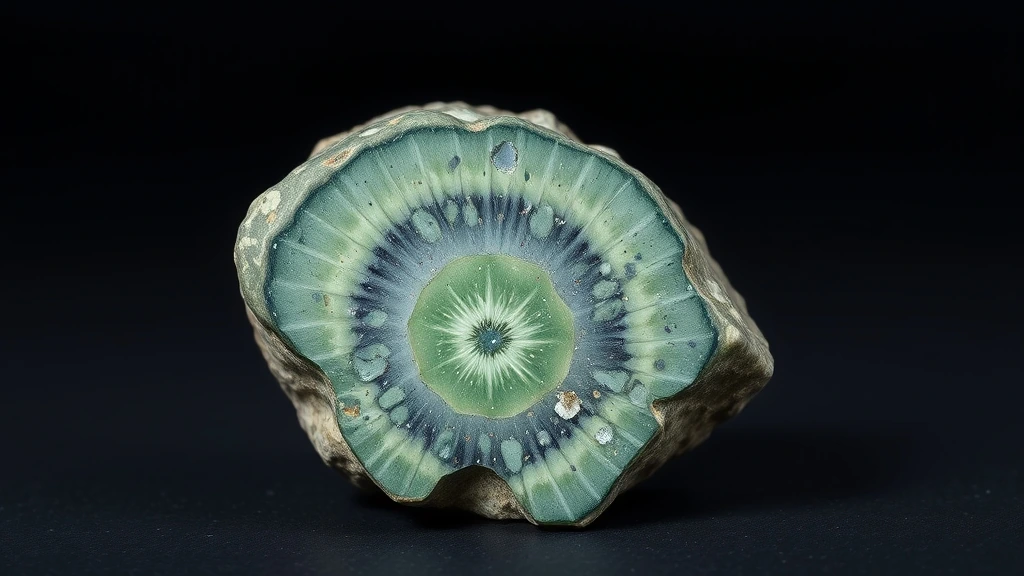
Kiwi Jasper belongs to the chalcedony group, a microcrystalline form of quartz. As a natural mineral aggregate, it lacks the large, visible crystal faces of macrocrystalline quartz. Its formation involves the precipitation of silica from hydrothermal fluids. This process creates a dense, interlocking matrix of tiny crystals.
What is Kiwi Jasper? Geological Overview & Definition
Kiwi Jasper is a cryptocrystalline silica rock found primarily in Brazil. The name derives from its resemblance to the skin of a kiwi fruit. It typically exhibits a mottled pattern of green, brown, and black hues. These colors result from various iron oxide impurities within the silica matrix. In comparative mineralogical collections, practitioners and geologists frequently study Plum Blossom Jasper alongside this crystal to appreciate their subtle energetic and structural differences.
The stone forms in hydrothermal veins associated with volcanic activity. Its texture is fine-grained and non-porous, contributing to its polishability. Unlike macrocrystalline quartz, it does not display distinct cleavage planes. Instead, it fractures conchoidally, similar to other chalcedony varieties.
Kiwi Jasper Chemical Composition & Crystallographic Properties
The primary constituent is silicon dioxide (SiO₂), arranged in a trigonal crystal system. Although the individual crystals are microscopic, the underlying lattice follows trigonal symmetry. This structure is characteristic of the α-quartz polymorph at standard temperatures. The dense packing of silica tetrahedra provides high structural stability. In comparative mineralogical collections, practitioners and geologists frequently study Maligano Jasper alongside this crystal to appreciate their subtle energetic and structural differences.
Coloration arises from chromophore impurities, primarily iron oxides and hydroxides. Green tones often indicate the presence of chlorite or iron-rich minerals. Brown hues result from hematite or goethite inclusions. These impurities do not significantly alter the base stoichiometry of the silica framework.
Thermal behavior is stable under normal jewelry conditions, but rapid heating can cause fracturing. The stone is generally resistant to acid exposure due to its high silica content. However, prolonged exposure to strong alkalis may degrade the surface. Proper care ensures the preservation of its lattice structure and luster.
| Property | Specification |
|---|---|
| Mineral Group | Natural Mineral / Crystal |
| Chemical Formula | SiO₂ |
| Mohs Hardness | 6.5 – 7.0 |
| Crystal System | Trigonal |
| Color & Optical Properties | Natural Kiwi Jasper color spectrum and optical dispersion |
| Primary Mining Localities | Global primary localities |
| Water & Chemical Resistance | High (Safe for gentle water washing) |
| Chakra Alignment (Traditional) | Solar Plexus Chakra (Manipura) |
| Zodiac Affinity (Traditional) | Taurus, Libra |
| Symbolic Meaning (Traditional) | Emotional balance, compassion and inner peace |
Kiwi Jasper Varieties & Color Spectrum
Kiwi Jasper displays distinct mineralogical characteristics across its geological varieties and structural habits. Gemologists evaluate these natural varieties based on crystal habit, trace chromophore concentrations, and visual luster.
Primary Natural Kiwi Jasper
The benchmark natural variety exhibiting diagnostic color saturation and classic crystallographic symmetry.
Distinct Geological Morphs of Kiwi Jasper
Secondary regional and structural varieties formed under localized geological temperature and pressure conditions.
Green‑Brown Kiwi Jasper
Formed in siliceous sedimentary layers where iron oxide and manganese pigments infiltrate micro‑crystalline quartz, this variety displays a mottled blend of forest‑green and chocolate‑brown. The characteristic cryptocrystalline matrix produces a smooth, polished surface that reveals subtle, fern‑like veining. Occurring primarily in the United States and Brazil, it is moderately common but prized for its balanced chromatic contrast.
Red‑Orange Kiwi Jasper
Developed in oxidizing environments rich in hematite, the red‑orange kiwi jasper exhibits vivid cinnabar‑like speckles set against a creamy base. Thin, needle‑like inclusions of goethite create a fiery, marbled effect that intensifies after polishing. This hue is most frequently sourced from Madagascar’s volcanic tuffs, where limited outcrops make the stone a collector’s favorite.
Blue‑Grey Kiwi Jasper
The blue‑grey variant originates from deep‑sea sedimentary deposits where trace amounts of titanium dioxide and chlorite impart a muted slate tone. Fine, parallel laminae give the stone a subtle pleochroic shimmer that changes with lighting. Found chiefly in the Philippines, its scarcity and distinctive cool palette command higher market values.
Yellow‑Gold Kiwi Jasper
In arid, evaporitic basins, iron sulfide oxidation yields a bright golden‑yellow jasper with occasional amber flecks. The mineral’s micro‑fracture network scatters light, producing a warm, honeyed glow. Primary localities include Namibia’s Namib Desert, where the stone’s rarity is amplified by the harsh extraction conditions.
Black‑Speckled Kiwi Jasper
A dramatic variety formed within siliceous volcanic ash layers, black‑speckled kiwi jasper contains abundant magnetite and pyrite inclusions that appear as glossy, midnight dots. The stark contrast against a pale background creates a high‑impact visual that is especially popular in contemporary jewelry. This type is chiefly mined in Canada’s Ontario shield, where limited veins enhance its exclusivity.
Polychrome Kiwi Jasper (Trade Name)
Often marketed under a collective trade name, polychrome kiwi jasper blends multiple color zones—green, red, and gold—within a single slab. The multiphase crystallization results from sequential mineralization events, each depositing a different pigment. Though not a distinct geological species, its eclectic appearance makes it a staple in boutique lapidary studios worldwide.
Where is Kiwi Jasper Found? Geological Mining & Extraction
Kiwi jasper typically occurs in trigonal quartz veins that intersect carbonate‑rich host rocks such as limestone and dolomite. These veins develop during low‑temperature hydrothermal circulation, where silica‑saturated fluids precipitate micro‑crystalline quartz alongside iron, manganese, and titanium oxides, creating the stone’s signature mottling.
Major extraction zones include the Madagascar highlands, the Namibian coastal basins, and the Ontario Canadian Shield, each offering distinct color morphs tied to local geochemistry. Mining is largely artisanal, employing hand‑picked techniques to avoid fracturing the delicate jasper, followed by careful washing and sorting to preserve the stone’s natural patterns.
Historical Significance & Cultural Lore of Kiwi Jasper
Across ancient lapidary traditions, kiwi jasper was valued for its earthy chromatic balance, symbolizing fertility and protection. In Greco‑Roman mosaics, fragments of green‑brown kiwi jasper adorned floor designs, while Egyptian tombs occasionally contained polished red‑orange pieces as amulets for safe passage to the afterlife.
In Vedic texts, the stone is associated with the Solar Plexus Chakra (Manipura), believed to foster emotional equilibrium, compassion, and inner peace. Chinese imperial collections prized the blue‑grey variant for its calming influence, integrating it into ritual incense burners to harmonize the mind during meditation.
Modern Uses & Jewelry Applications of Kiwi Jasper
Kiwi Jasper is prized for its vivid, multicolored pattern that resembles the fruit’s interior, making it a favorite in contemporary lapidary work. Artisans often cut the stone into smooth cabochons to showcase its swirling greens, yellows, and reds, while skilled faceters create striking rings and pendants that catch light from every angle. Ornamental carving also thrives, with decorative boxes, figurines, and inlay panels highlighting the stone’s natural artistry.
- Cabochon pendants and earrings emphasize the stone’s translucency.
- Faceted rings and cufflinks add brilliance to the layered color bands.
- Inlay work in wood or metal objects showcases contrast and durability.
- Small carved beads are used in beaded jewelry and prayer malas.
Metaphysical Properties & Traditional Meaning of Kiwi Jasper
According to historical traditions and metaphysical lore, Kiwi Jasper is associated with emotional balance and the cultivation of inner compassion. Across ancient Mediterranean and Vedic lapidary traditions, the stone was believed to soothe turbulent feelings, fostering a calm, centered mind. Its vibrant hues were thought to mirror the heart’s vitality, encouraging wearers to seek harmony within themselves and with others.
Which Chakra and Zodiac Signs Align with Kiwi Jasper?
In universal esoteric systems, Kiwi Jasper resonates strongly with the Solar Plexus Chakra (Manipura), the energy center governing personal power, confidence, and digestion of life’s experiences. Aligning this chakra is said to amplify self‑esteem and promote decisive action, echoing the stone’s reputation for fostering inner strength.
Astrologically, the stone is linked to the fixed earth signs Taurus and Libra, both celebrated for their stability, aesthetic appreciation, and pursuit of balance. Practitioners claim that wearing Kiwi Jasper under these signs enhances groundedness and harmonious relationships, reflecting the stone’s historic role as a talisman of equilibrium.
How to Identify Real vs. Fake Kiwi Jasper
Artificial imitations of Kiwi Jasper include dyed quartz, synthetic glass, and resin composites that mimic its characteristic speckled pattern. These substitutes often lack the stone’s natural density variations and may display overly uniform coloration or a glossy surface atypical of genuine jasper. Recognizing these differences requires careful observation and simple testing methods.
Practical At-Home Authenticity Tests
- Temperature Test (Thermal Feel): Hold the stone against the skin; authentic kiwi jasper feels cool and retains temperature longer than glass or resin, which quickly warms.
- Specific Gravity & Weight Test: Compare the stone’s heft to a known quartz of similar size; genuine jasper is noticeably heavier due to its higher specific gravity (≈2.6).
- Scratch & Hardness Test (Mohs Comparison): Gently scratch the surface with a steel file (hardness ~5.5). Kiwi jasper (6.5‑7.0) should resist scratching, whereas glass or dyed quartz will show marks.
- Microscopic & Loupe Inspection (Internal Inclusions): Examine under 10× magnification; natural jasper reveals fine mineral inclusions and subtle growth lines, while fakes often display bubbles, uniform color, or a lack of internal texture.
Kiwi Jasper Valuation Factors, Grading & Pricing
The market value of Kiwi Jasper hinges first on Color Saturation. Stones with vivid, evenly distributed hues—often a blend of warm reds, oranges, and subtle greens—command higher prices due to their visual vibrancy and the natural energetic luster that collectors seek.
Next, Crystal Size & Weight (Grams) play a decisive role. Larger specimens or those weighing several grams are prized, especially when the raw stone has been tumbled to a smooth, polished finish. Natural matrix inclusions, such as fibrous or banded patterns, add character and can elevate a piece’s desirability, provided they do not obscure the overall color field.
Finally, Ethical Sourcing & Locality Premium influences both holistic and collector markets. Stones mined from responsibly managed sites with transparent supply chains often receive a premium, reflecting growing demand for ethically sourced gemstones and the cultural significance of their provenance.
How to Clean and Care for Kiwi Jasper
To maintain the integrity of Kiwi Jasper, gently clean the stone with warm soapy water and a soft cloth. After rinsing, pat the surface dry with a clean, lint‑free towel. Avoid ultrasonic cleaners, as the vibration can induce microfractures in the crystal lattice, compromising structural stability.
Cleansing and Recharging Kiwi Jasper (Energetic Care)
For energetic renewal, place the Kiwi Jasper under gentle moonlight for several hours, allowing the soft lunar energy to cleanse and refresh its vibrational field. Alternatively, rest the stone on a selenite charging slab while surrounded by dried sage or palo santo smoke; the herbal smudging provides a subtle, non‑thermal cleansing that respects the mineral’s delicate structure.
Frequently Asked Questions About Kiwi Jasper
Kiwi Jasper displays distinct mineralogical characteristics across its geological varieties and structural habits. Gemologists evaluate these natural varieties based on crystal habit, trace chromophore concentrations, and visual luster.
Primary Natural Kiwi Jasper
The benchmark natural variety exhibiting diagnostic color saturation and classic crystallographic symmetry.
Distinct Geological Morphs of Kiwi Jasper
Secondary regional and structural varieties formed under localized geological temperature and pressure conditions.
What is the chemical composition of Kiwi Jasper?
Kiwi Jasper is a variety of quartz with the chemical formula SiO₂. This silicate mineral crystallizes in the trigonal system and shares the same basic chemistry as other quartz varieties, giving it similar hardness and durability.
How hard is Kiwi Jasper compared to other gemstones?
Its Mohs hardness ranges from 6.5 to 7.0, placing it just below topaz and above carnelian. This makes it suitable for everyday wear, though it should be protected from hard impacts that could cause microfractures.
Is Kiwi Jasper safe to wash in the shower or with water?
Yes, Kiwi Jasper is highly water‑resistant and can be gently washed with water. A mild soap solution and a soft cloth will clean it without harming its surface, thanks to quartz’s non‑porous structure.
Can I use an ultrasonic cleaner on Kiwi Jasper?
Avoid ultrasonic cleaners; instead, use warm soapy water and a soft cloth. Ultrasonic vibrations can induce stress fractures in the quartz lattice, compromising the stone’s integrity over time.
Which zodiac signs are associated with Kiwi Jasper?
The stone is linked to Taurus and Libra. These signs are thought to resonate with the stone’s grounding energy and balanced aesthetic, making it a popular choice for jewelry among enthusiasts of these zodiac traits.
Which chakra does Kiwi Jasper correspond to?
Kiwi Jasper aligns with the Solar Plexus Chakra (Manipura). This chakra governs personal power and confidence, and the stone’s vibrant hues are believed to support emotional balance and inner strength.
Does Kiwi Jasper have any special care instructions for polishing or storage?
Store it in a soft pouch or cloth bag to prevent scratches, and polish with a gentle, non‑abrasive cloth. Avoid harsh chemicals or abrasive materials that could dull its natural luster or create micro‑scratches.
What are the typical uses of Kiwi Jasper in jewelry and decor?
It is commonly fashioned into cabochons, beads, and carved figurines. Its distinctive green‑brown speckled pattern makes it a favorite for both contemporary and traditional lapidary designs, offering both aesthetic appeal and symbolic meaning.