
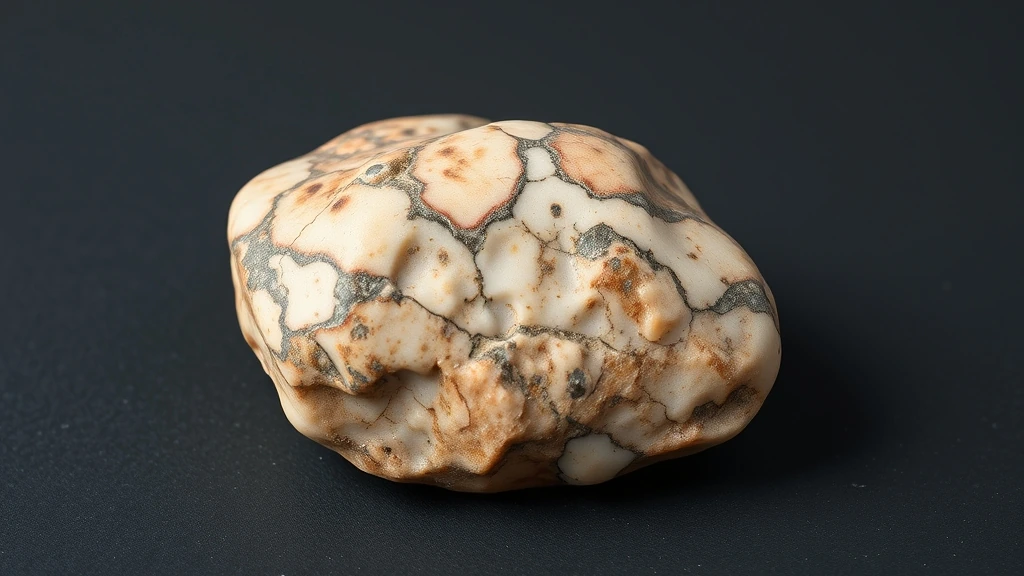
An aggregate of finely intergrown quartz crystals, Plum Blossom Jasper belongs to the chalcedony family within the broader Natural Mineral / Crystal group. Its formation occurs in silica‑rich hydrothermal veins where rapid cooling promotes a dense, cryptocrystalline texture. The stone’s characteristic mottled pattern arises from trace iron oxides and manganese inclusions that color the otherwise translucent silica matrix.
What is Plum Blossom Jasper? Geological Overview & Definition
Plum Blossom Jasper is a variety of chalcedony, a cryptocrystalline silica composed of interlocking quartz microcrystals. It forms in sedimentary or volcanic settings where silica‑laden fluids precipitate, often filling fissures and cavities in host rocks.
The name derives from the stone’s visual similarity to the pink blossoms of the plum tree, a motif celebrated across East Asian art and ancient lapidary traditions. Historically, artisans prized it for its ability to be polished to a high sheen while retaining intricate, natural patterns that evoke organic motifs. If you’re drawn to the stone’s luminous, floral patterns, you may also appreciate the celestial speckles of Star Jasper, which echo the same natural elegance in a night‑sky palette.
Plum Blossom Jasper Chemical Composition & Crystallographic Properties
Although Jasper lacks a single stoichiometric formula, its bulk composition is essentially SiO₂, reflecting its quartz‑based microcrystalline framework. The aggregate consists of countless trigonal quartz crystals, each obeying the trigonal crystal system with a three‑fold rotational axis. In comparative mineralogical collections, practitioners and geologists frequently study Pink Zebra Jasper alongside this crystal to appreciate their subtle energetic and structural differences.
Trace cations such as Fe³⁺, Mn²⁺, and Ti⁴⁺ substitute into the silica lattice, creating chromophore color centers that generate the stone’s pink to reddish hues. These substitutions do not alter the overall quartz structure but introduce localized distortions that affect light absorption.
Jasper is relatively acid‑sensitive; prolonged exposure to strong acids can dissolve surface silica and leach color‑bearing ions, dulling its luster. Thermal treatment, however, can enhance color intensity by driving out volatile fluids and promoting oxidation of iron inclusions.
The material’s thermal expansion aligns with that of quartz, expanding modestly with temperature rise and contracting upon cooling, which contributes to its durability under typical jewelry‑making processes.
| Property | Specification |
|---|---|
| Mineral Group | Natural Mineral / Crystal |
| Chemical Formula | SiO₂ |
| Mohs Hardness | 6.5 – 7.0 |
| Crystal System | Trigonal |
| Color & Optical Properties | Natural Plum Blossom Jasper color spectrum and optical dispersion |
| Primary Mining Localities | Global primary localities |
| Water & Chemical Resistance | High (Safe for gentle water washing) |
| Chakra Alignment (Traditional) | Root Chakra (Muladhara) |
| Zodiac Affinity (Traditional) | Taurus, Libra |
| Symbolic Meaning (Traditional) | Clear communication, truth and serenity |
Plum Blossom Jasper Varieties & Color Spectrum
Plum Blossom Jasper displays distinct mineralogical characteristics across its geological varieties and structural habits. Gemologists evaluate these natural varieties based on crystal habit, trace chromophore concentrations, and visual luster.
Primary Natural Plum Blossom Jasper
The benchmark natural variety exhibiting diagnostic color saturation and classic crystallographic symmetry.
Distinct Geological Morphs of Plum Blossom Jasper
Secondary regional and structural varieties formed under localized geological temperature and pressure conditions.
Classic Plum Blossom Jasper
The most widely recognized form displays a deep plum background mottled with white, gray, and black specks. These inclusions are typically silica‑rich phenocrysts that form during late-stage crystallization in quartz‑rich pegmatites. The visual contrast gives the stone a “blossom” appearance, making it popular in jewelry and ornamental carvings. Its relative abundance in the United States and Brazil renders it commercially accessible, though high‑quality specimens with vivid plum tones remain prized.
Black‑Plum Jasper
This variant is distinguished by a black matrix with scattered pink or red flecks, resembling a darkened plum blossom. The black coloration results from iron‑oxide inclusions that form during the final stages of quartz crystallization. The rarity of a balanced black‑plum interplay makes it a sought‑after collector’s piece, especially in the United States and parts of Southeast Asia where pegmatite veins are prolific.
White‑Plum Jasper
White‑Plum Jasper features a white or pale gray background with subtle plum‑colored specks. The light matrix is produced by silica with low iron content, while the plum inclusions arise from trace amounts of manganese or iron. This gentle palette is common in the United States and Brazil, yet exceptionally pure, high‑contrast specimens are rare and command premium prices.
Red‑Plum Jasper
Red‑Plum Jasper showcases a rich red or burgundy base with lighter plum or white specks. The red hue originates from iron‑oxide or hematite inclusions, while the plum accents are silica‑rich phenocrysts. This combination is uncommon in the United States but more frequently found in Brazil, where the mineral’s formation is linked to late‑stage quartz crystallization in iron‑rich pegmatites.
Blue‑Plum Jasper
Blue‑Plum Jasper presents a soft blue or slate‑gray background dotted with plum‑colored inclusions. The blue tone is due to trace amounts of titanium or chromium within the quartz matrix, while the plum specks are silica phenocrysts. This rare variety is predominantly sourced from Brazil and is prized for its subtle, ethereal appearance.
Green‑Plum Jasper
Green‑Plum Jasper is characterized by a greenish‑gray matrix with plum or white inclusions. The green coloration results from ferrous or magnesium impurities incorporated during quartz crystallization. Though less common than other plum variants, it is occasionally found in the United States and Brazil, offering a unique contrast to the traditional plum palette.
Where is Plum Blossom Jasper Found? Geological Mining & Extraction
Plum Blossom Jasper is typically hosted in silica‑rich pegmatite veins that form during the late stages of granite crystallization. These pegmatites are often associated with granite intrusions in continental crustal settings, where high‑temperature fluids concentrate quartz and trace elements that give rise to the characteristic plum inclusions.
The principal mining regions include the United States (particularly the Appalachian and Appalachian‑type pegmatite zones), Brazil (notably the Minas Gerais and Goiás provinces), and Southeast Asia (such as Thailand and Vietnam). Extraction methods involve open‑pit or underground mining followed by mechanical separation of quartz grains, with subsequent sorting based on color and inclusion patterns.
Historical Significance & Cultural Lore of Plum Blossom Jasper
Across ancient Greco‑Roman and Egyptian lapidary traditions, plum‑colored quartz was valued for its aesthetic beauty and believed to confer clarity of communication. In Chinese folklore, the stone was associated with the Root Chakra (Muladhara), symbolizing stability and grounding, and was often incorporated into ceremonial jewelry.
Archaeological findings from Vedic sites in India reveal plum‑blossom quartz used in ritualistic carvings, while Mesoamerican artifacts occasionally feature similar quartz varieties, underscoring its widespread appeal. These cultures attributed to the stone qualities of truth and serenity, aligning with its modern esoteric associations.
Modern Uses & Jewelry Applications of Plum Blossom Jasper
Lapidaries primarily cut Plum Blossom Jasper into cabochons to showcase its distinctive floral inclusions and smooth, polished surface. The stone’s moderate hardness allows for intricate detailing, making it ideal for pendants, rings, and ornamental carvings that highlight its natural aesthetic.
- Cabochon Cutting: This technique preserves the integrity of the “plum blossom” patterns, offering a domed, reflective finish that enhances the stone’s earthy tones.
- Ornamental Carving: Skilled artisans use the material for small figurines, beads, and decorative tiles, leveraging its durability for long-lasting home accents.
- Jewelry Settings: Due to its Mohs hardness of 6.5 to 7.0, it suits everyday wear in rings and bracelets, though it requires careful handling to avoid chipping.
Metaphysical Properties & Traditional Meaning of Plum Blossom Jasper
According to historical traditions and metaphysical lore, Plum Blossom Jasper is revered for its capacity to foster clear communication and emotional serenity. Ancient Mediterranean and Vedic practices often associated such jasper varieties with grounding energies that stabilize the wearer’s mental state.
In broader lapidary history, this stone symbolizes truth and honesty, serving as a talisman for those seeking to express themselves with clarity and integrity. Its floral patterns are interpreted as signs of growth, renewal, and the harmonious balance between earth and spirit.
Which Chakra and Zodiac Signs Align with Plum Blossom Jasper?
Plum Blossom Jasper is canonically aligned with the Root Chakra (Muladhara), which governs feelings of safety, stability, and physical connection to the earth. This energetic association supports the stone’s reputation for grounding and anchoring the wearer’s presence in the physical world.
Astrologically, the stone resonates strongly with the signs of Taurus and Libra. Taurus appreciates the stone’s earthy stability, while Libra values its capacity to promote harmony and balanced communication in interpersonal relationships.
How to Identify Real vs. Fake Plum Blossom Jasper
Artificial imitations of Plum Blossom Jasper often involve synthetic glass or dyed quartz, which lack the natural complexity of genuine stone. These fakes may appear overly uniform or possess an artificial sheen that does not match the subtle, organic variations found in authentic specimens.
Practical At-Home Authenticity Tests
- Temperature Test (Thermal Feel): Genuine Jasper feels cool to the touch initially and warms slowly, whereas plastic or glass imitations may warm up more rapidly or feel less dense.
- Specific Gravity & Weight Test: Real Jasper has a higher specific gravity than glass; when held, it should feel noticeably heavier for its size compared to a similarly sized glass replica.
- Scratch & Hardness Test (Mohs Comparison): With a Mohs hardness of 6.5 to 7.0, genuine Jasper will not be scratched by a steel knife, while softer imitations or glass may show minor abrasions.
- Microscopic & Loupe Inspection (Internal Inclusions): Using a 10x loupe, look for natural internal inclusions and mineral patterns; synthetic glass often contains tiny bubbles or a perfectly uniform structure lacking natural geological variation.
Plum Blossom Jasper Valuation Factors, Grading & Pricing
The market value of Plum Blossom Jasper is significantly influenced by Color Saturation, with more vibrant and evenly colored specimens commanding higher prices. Visual vibrancy and natural energetic luster also play a crucial role in determining the stone’s value. The overall aesthetic appeal of the stone is a key factor in its valuation.
The size and weight of the Crystal Size & Weight (Grams) are also important considerations in valuing Plum Blossom Jasper. The quality of the polish, whether raw or tumbled, can also impact the stone’s value, as can the presence of natural matrix inclusions. The weight of the stone in grams is a key factor in determining its price, with larger and heavier specimens generally being more valuable.
In holistic and collector markets, Ethical Sourcing & Locality Premium can also impact the value of Plum Blossom Jasper. Specimens that are sourced from reputable and environmentally responsible suppliers may command a premium price, as may those that are certified as being from a specific locality or region. This premium is reflected in the final price of the stone, with ethically sourced specimens being more highly valued.
How to Clean and Care for Plum Blossom Jasper
To clean Plum Blossom Jasper, use warm soapy water and a soft cloth, taking care to avoid any abrasive materials or harsh chemicals. It is essential to avoid using ultrasonic cleaners, as they can cause structural fractures in the stone. Instead, gently wipe the stone with a soft cloth and mild soap, then rinse with warm water and dry thoroughly.
Cleansing and Recharging Plum Blossom Jasper (Energetic Care)
To cleanse and recharge Plum Blossom Jasper, it is recommended to use safe and gentle methods such as herbal smudging or gentle moonlight exposure. This can help to restore the stone’s natural energy and promote a sense of balance and harmony. By placing the stone on a selenite charging slab or surrounded by herbs, you can help to cleanse and recharge its energetic properties.
The use of gentle moonlight exposure or herbal smudging can be an effective way to cleanse and recharge Plum Blossom Jasper, as these methods do not involve the use of heat or harsh chemicals. By taking a holistic approach to the care and maintenance of the stone, you can help to promote its natural beauty and energetic properties, and ensure that it remains a valued and cherished possession. Regular cleansing and recharging can help to maintain the stone’s vitality and promote a sense of well-being.
Frequently Asked Questions About Plum Blossom Jasper
Plum Blossom Jasper displays distinct mineralogical characteristics across its geological varieties and structural habits. Gemologists evaluate these natural varieties based on crystal habit, trace chromophore concentrations, and visual luster.
Primary Natural Plum Blossom Jasper
The benchmark natural variety exhibiting diagnostic color saturation and classic crystallographic symmetry.
Distinct Geological Morphs of Plum Blossom Jasper
Secondary regional and structural varieties formed under localized geological temperature and pressure conditions.
Is Plum Blossom Jasper safe to wear in water?
It is safe for gentle water washing. This means you can wear Plum Blossom Jasper in the shower or while swimming, but be sure to rinse it thoroughly and dry it to prevent any potential damage to the stone’s surface.
Can I use an ultrasonic cleaner on Plum Blossom Jasper?
Avoid using ultrasonic cleaners to prevent structural fractures. Instead, use warm soapy water and a soft cloth to clean your Plum Blossom Jasper, ensuring its longevity and preserving its crystal structure.
What are the aligned zodiac signs for Plum Blossom Jasper?
Taurus and Libra are the aligned zodiac signs for Plum Blossom Jasper, making it a great choice for individuals born under these signs who seek to harness its metaphysical properties.
Which chakra is associated with Plum Blossom Jasper?
The Root Chakra (Muladhara) is the associated chakra for Plum Blossom Jasper, helping to promote balance and stability in one’s life and energy.
How do I clean my Plum Blossom Jasper jewelry?
Use warm soapy water and a soft cloth to clean your Plum Blossom Jasper jewelry, avoiding any harsh chemicals or abrasive materials that could damage the stone’s surface.
Is Plum Blossom Jasper a durable?
Yes, it has a Mohs hardness of 6.5-7.0, making it a relatively durable gemstone suitable for everyday wear, but still requiring care to prevent scratches and fractures.
Can I wear Plum Blossom Jasper in extreme weather conditions?
It is generally safe to wear in various weather conditions, but be aware that extreme temperatures or weathering can still affect the stone’s appearance over time.
What are the esoteric benefits of wearing Plum Blossom Jasper?
It is believed to promote clear communication, truth, and serenity, making it a great choice for those seeking to enhance their emotional and spiritual well-being.