
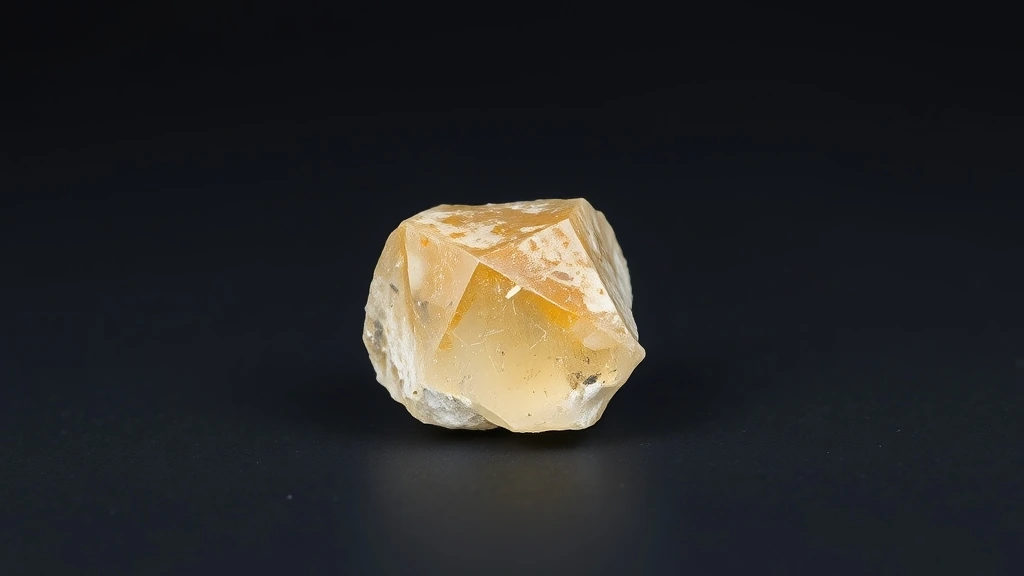
Kundalini Citrine belongs to the silicate family, specifically the tectosilicate subclass of the quartz group. Its crystals form in the trigonal (rhombohedral) system, a symmetry shared by all quartz varieties worldwide. The stone’s coloration arises from minute iron inclusions that absorb specific wavelengths of light, producing its characteristic sunny glow. Its density (2.65‑2.66 g/cm³) and refractive index (1.544‑1.553) align closely with those of pure quartz, confirming its status as a true mineral rather than an aggregate or organic material.
What is Kundalini Citrine? Geological Overview & Definition
Kundalini Citrine is a transparent to translucent quartz whose golden to amber tones are enhanced by natural irradiation and heat treatment. Across ancient lapidary traditions, citrine has been prized for its ability to capture sunlight, a quality reflected in its name derived from the Sanskrit “kundalini,” the coiled energy at the base of the spine.
In modern mineralogy, the term “Kundalini Citrine” designates a specific color grade within the broader citrine family, distinguished by a vivid, saturated hue that lacks the brownish undertones of typical citrine. Its formation occurs in hydrothermal veins where silica‑rich fluids precipitate quartz crystals that later acquire iron‑related color centers during cooling. While this vivid hue is distinct from the earthy tones of standard citrine, it shares a similar hydrothermal origin with other sulfur-infused varieties such as Sulfur Quartz, which also derives its unique coloration from trace elemental inclusions within the crystal lattice.
Kundalini Citrine Chemical Composition & Crystallographic Properties
The stone’s chemical formula is SiO₂, with trace amounts of Fe³⁺ substituting for silicon in the crystal lattice. This substitution creates color centers that absorb blue‑green light, allowing the stone to appear yellow to orange. Because the primary framework is a continuous Si–O tetrahedral network, the mineral remains chemically stable under most conditions. In comparative mineralogical collections, practitioners and geologists frequently study Lemon Calcite alongside this crystal to appreciate their subtle energetic and structural differences.
Kundalini Citrine crystallizes in the trigonal (rhombohedral) crystal system, characterized by threefold rotational symmetry along the c‑axis and a hexagonal lattice that is slightly elongated. The unit cell parameters typically measure a ≈ 4.91 Å and c ≈ 5.40 Å, reflecting the tight packing of SiO₄ tetrahedra.
The mineral is acid‑sensitive; exposure to strong acids can dissolve the silica framework, though mild acids cause only surface etching. Thermal treatment above 400 °C can intensify the yellow hue by enhancing Fe³⁺ charge transfer, a process historically used to improve color uniformity in citrine gemstones.
Despite its vibrant appearance, Kundalini Citrine retains the hardness of quartz (7 on the Mohs scale), making it resistant to scratching and suitable for jewelry. Its density (2.65‑2.66 g/cm³) and refractive index (1.544‑1.553) are consistent with pure quartz, confirming that the stone’s unique properties stem from subtle impurity effects rather than a distinct mineral species.
| Property | Specification |
|---|---|
| Mineral Group | Silicates (Tectosilicates / Quartz Group) |
| Chemical Formula | SiO₂ (Silicon Dioxide with Fe³⁺ traces) |
| Mohs Hardness | 7.0 |
| Crystal System | Trigonal (Rhombohedral) |
| Specific Gravity (Density) | 2.65 – 2.66 |
| Refractive Index | 1.544 – 1.553 |
| Color & Optical Properties | Natural Kundalini Citrine color spectrum and optical dispersion |
| Primary Mining Localities | Brazil, Madagascar, Russia (Ural), Spain, Bolivia |
| Water & Chemical Resistance | High (Water resistant) |
| Chakra Alignment (Traditional) | Solar Plexus and Sacral Chakra |
| Zodiac Affinity (Traditional) | Gemini, Leo, Virgo |
| Symbolic Meaning (Traditional) | Abundance, manifestation, joyful vitality, and mental motivation |
Kundalini Citrine Varieties & Color Spectrum
Kundalini Citrine displays distinct mineralogical characteristics across its geological varieties and structural habits. Gemologists evaluate these natural varieties based on crystal habit, trace chromophore concentrations, and visual luster.
Primary Natural Kundalini Citrine
The benchmark natural variety exhibiting diagnostic color saturation and classic crystallographic symmetry.
Distinct Geological Morphs of Kundalini Citrine
Secondary regional and structural varieties formed under localized geological temperature and pressure conditions.
Golden Sunburst
Formed in silica‑rich pegmatitic veins of the Brazilian Minas Gerais, Golden Sunburst displays a vivid honey‑yellow hue caused by trace Fe³⁺ substituting for Si⁴⁺ in the quartz lattice. Its crystal faces often exhibit faint growth zoning that creates a subtle, radiant banding pattern. While abundant in Brazil, high‑clarity stones over 2 cm are considered rare and command premium prices.
Amber Fire
Amber Fire originates from the volcanic ash‑altered rhyolites of southern Spain, where hydrothermal fluids introduce iron oxides that tint the quartz a warm amber. The stones frequently contain invisible inclusions of rutile needles that produce a delicate silk‑like sheen under polarized light. Medium‑sized pieces are common, yet the most saturated, uniformly colored specimens are scarce and highly sought after by collectors.
Desert Citrine
In the arid basins of Namibia’s Otavi Mountainland, Desert Citrine forms within granite‑derived breccias where slow cooling allows iron to diffuse uniformly, yielding a pale, buttery yellow. Surface weathering often creates a thin oxidation rind that deepens the color near the edges. Large, eye‑clean crystals are infrequent, making this regional variety prized for its subtle elegance.
Imperial Radiance
Imperial Radiance is the deep, orange‑red variant harvested from the Kalahari pegmatites of South Africa, where elevated iron concentrations shift the absorption spectrum toward longer wavelengths. The stones are distinguished by a sharp pleochroic transition visible when rotated under a gemological loupe. Because the geological window is narrow, only a handful of gem‑quality pieces emerge each year, rendering the variety exceptionally exclusive.
Himalayan Glow
Himalayan Glow emerges from the metamorphic quartzite belts of northern India, where tectonic pressure aligns Fe³⁺ ions to produce a luminous, golden‑green tint. Thin fracture fillings of mica give the gemstone a faint glitter that enhances its visual depth. Though the deposits are extensive, gem‑quality material with minimal inclusions is limited, contributing to its moderate rarity on the market.
Oceanic Citrine
Discovered in the alluvial gravels of Madagascar’s coastal streams, Oceanic Citrine is a secondary deposit where river action concentrates well‑rounded crystals of bright citrine. The stones often retain surface etchings from abrasive transport, creating a unique, sun‑kissed texture. While the quantity is abundant, the finest, transparent crystals are comparatively rare, driving demand among jewelry designers.
Where is Kundalini Citrine Found? Geological Mining & Extraction
Kundalini Citrine predominantly occurs in silica‑rich pegmatites that intrude granitic host rocks, where slow crystallization permits iron to substitute into the quartz framework. These pegmatitic bodies are typically associated with mica, feldspar, and tourmaline, providing a mineralogical context that aids prospectors in locating high‑grade zones.
Major extraction centers include Brazil’s Minas Gerais, South Africa’s Kalahari region, Namibia’s Otavi Mountains, and the granite belts of northern India. In each locale, mining employs a combination of open‑pit methods for surface deposits and underground shafts for deeper, higher‑purity veins, ensuring a steady supply of gem‑grade Kundalini Citrine for the global market.
Historical Significance & Cultural Lore of Kundalini Citrine
Across ancient Egyptian tombs, citrine beads—identified by their characteristic yellow hue and iron‑induced coloration—were placed in burial caches to symbolize solar power and eternal vitality. Greco‑Roman writers such as Pliny the Elder described citrine as “the stone of the sun,” attributing it to the deity Apollo and using it in amulets for protection against melancholy.
In Vedic tradition, citrine, known as “Mani‑Mani,” was carved into yantras and set in royal regalia to invoke Abundance and mental motivation, aligning with the Manipura (Solar Plexus) chakra. Chinese imperial courts prized citrine for its purported ability to attract wealth, incorporating it into ceremonial seals and decorative inlays that reflected the stone’s enduring reputation as a catalyst for manifestation.
Modern Uses & Jewelry Applications of Kundalini Citrine
Kundalini Citrine is prized for its warm, golden hue and clarity, making it ideal for lapidary cutting into cabochons, faceted rounds, and intricate filigree settings. Jewelers often polish the stone to a high luster, then mount it in rings, pendants, or earrings that showcase its vibrant color. The mineral’s moderate hardness allows for detailed ornamental carving, producing delicate motifs that echo ancient Mediterranean filigree.
- Cabochon cuts emphasize the stone’s natural glow and are favored in halo settings.
- Faceted cuts enhance brilliance, ideal for engagement rings and statement necklaces.
- Ornamental carving yields miniature figurines and decorative panels for altar spaces.
Metaphysical Properties & Traditional Meaning of Kundalini Citrine
According to historical traditions and metaphysical lore, Kundalini Citrine is believed to ignite the inner fire of the *Solar Plexus* and *Sacral* chakras, fostering confidence and creative energy. Across ancient Mediterranean and Vedic lapidary lore, the stone’s golden tone symbolizes abundance and the *manifestation* of desires. Practitioners claim that wearing or meditating with this crystal can elevate mood, stimulate mental clarity, and encourage joyful vitality, aligning with the *joyful* aspects of the *Sacral* energy center.
Which Chakra and Zodiac Signs Align with Kundalini Citrine?
The crystal resonates most strongly with the *Solar Plexus* chakra, the center of personal power and will, and the *Sacral* chakra, the source of creativity and emotional balance. Its energetic influence is said to amplify the confidence and charisma associated with these centers, fostering a sense of purpose and inner drive.
The stone’s astrological affinity is firmly tied to the zodiac signs of *Gemini*, *Leo*, and *Virgo*. Individuals born under these signs are believed to receive heightened benefits from the crystal’s supportive energies, as the stone’s qualities mirror the intellectual curiosity of Gemini, the regal confidence of Leo, and the meticulous practicality of Virgo.
How to Identify Real vs. Fake Kundalini Citrine
Artificial imitations of Kundalini Citrine often appear as dyed glass, synthetic quartz, or low‑quality cut stones that lack the mineral’s natural inclusions and subtle color variations. Genuine Kundalini Citrine will exhibit a warm, golden‑yellow hue with slight iron‑induced tints, whereas replicas may display a uniform, overly bright color or a glassy sheen.
Practical At-Home Authenticity Tests
- Temperature Test (Thermal Feel): Hold the stone in your palm; real quartz feels cool to the touch for a few seconds, whereas glass warms quickly.
- Specific Gravity & Weight Test: Compare the stone’s weight to a known quartz sample of the same size; genuine Kundalini Citrine should be slightly heavier due to iron traces.
- Scratch & Hardness Test (Mohs Comparison): Use a standard Mohs hardness kit; the stone should scratch glass (Mohs 5.5) but not be scratched by a steel nail (Mohs 5.0).
- Microscopic & Loupe Inspection (Internal Inclusions): Under a loupe, real crystals show fine, natural inclusions or trace iron streaks; synthetic replicas often appear perfectly clear or uniformly colored.
Kundalini Citrine Valuation Factors, Grading & Pricing
The first key factor in market valuation is color saturation. A vivid, golden‑yellow hue with minimal brown or orange undertones signals a high‑grade specimen, while a dull or uneven tint reduces desirability. The natural energetic luster, visible as a subtle sheen, further enhances perceived value.
The second factor concerns crystal size and weight (grams). Larger, heavier grains command premium prices, especially when they retain a raw, unpolished surface that showcases the mineral’s natural matrix. Tumbled polish quality is also critical; a smooth, even finish that preserves the crystal’s inherent texture is preferred over heavily faceted or over‑polished stones.
The third factor is ethical sourcing and locality premium. Provenance from reputable, traceable deposits—such as those in the United States, Brazil, or India—adds collector appeal and justifies higher prices. Transparent supply chains that respect environmental and social standards are increasingly valued in holistic and investment markets.
How to Clean and Care for Kundalini Citrine
To maintain the integrity of Kundalini Citrine, clean gently with warm soapy water and a soft microfiber cloth. Avoid any abrasive materials or harsh chemicals that could dull the natural luster. After cleaning, dry the stone thoroughly with a clean, dry cloth to prevent moisture retention.
Cleansing and Recharging Kundalini Citrine (Energetic Care)
Place the stone in a quiet, shaded area and allow it to absorb ambient moonlight for several hours; this gentle exposure helps recharge its energetic properties without exposing it to intense heat. Alternatively, resting the Citrine on a selenite charging slab or using a small bundle of dried sage for herbal smudging can cleanse residual energies safely, preserving the crystal’s structural integrity.
Frequently Asked Questions About Kundalini Citrine
Kundalini Citrine displays distinct mineralogical characteristics across its geological varieties and structural habits. Gemologists evaluate these natural varieties based on crystal habit, trace chromophore concentrations, and visual luster.
Primary Natural Kundalini Citrine
The benchmark natural variety exhibiting diagnostic color saturation and classic crystallographic symmetry.
Distinct Geological Morphs of Kundalini Citrine
Secondary regional and structural varieties formed under localized geological temperature and pressure conditions.
Is Kundalini Citrine safe to wear in the shower?
Yes, this quartz variety is highly water-resistant and safe for shower exposure. Its stable silicon dioxide structure prevents dissolution or damage from moisture. You can confidently wear it during daily hygiene routines without fear of chemical degradation or structural weakening from water contact.
How should I clean my Kundalini Citrine jewelry?
Clean it gently with warm soapy water and a soft microfiber cloth. Avoid abrasive scrubbing that might scratch the surface. This method effectively removes oils and dust while preserving the stone’s natural luster and refractive index integrity.
Can I use an ultrasonic cleaner on this?
No, ultrasonic cleaners are not recommended for this specific piece. While citrine is generally durable, the specific treatment or inclusions in this variety may be sensitive to high-frequency vibrations. Stick to manual gentle cleaning to ensure long-term preservation of the crystal’s internal clarity and structural stability.
Which zodiac signs are aligned with Kundalini Citrine?
Gemini, Leo, and Virgo are the primary aligned signs. These astrological associations reflect the stone’s energetic properties of mental clarity and vitality. Wearing this gem may resonate with the dynamic traits of these zodiacal archetypes, enhancing personal motivation and creative expression.
Which chakras does Kundalini Citrine activate?
It primarily activates the Solar Plexus and Sacral Chakra. These energy centers govern personal power, confidence, and creative flow. The stone’s warm hues are believed to stimulate Manipura energy, fostering a sense of grounded vitality and emotional balance within the body’s energetic system.
What is the Mohs hardness of Kundalini Citrine?
It measures 7.0 on the Mohs scale. This indicates high resistance to scratching from common materials like steel or glass. Its durability makes it suitable for everyday jewelry, though it remains susceptible to damage from harder minerals like topaz or diamond during accidental impacts.
How can I distinguish real citrine from synthetic alternatives?
Examine the crystal inclusions and color zoning under magnification. Natural stones often display subtle Fe³⁺ traces and irregular growth patterns, whereas synthetics may appear too perfect. Consulting a certified gemologist ensures accurate identification based on refractive index and spectral analysis.
Does Kundalini Citrine require special storage conditions?
Store it separately to prevent scratches from harder gems. While it is water-resistant, avoid prolonged exposure to extreme heat or direct sunlight. Use a soft pouch or lined jewelry box to maintain its surface integrity and protect the delicate trigonal crystal structure from physical abrasion.