
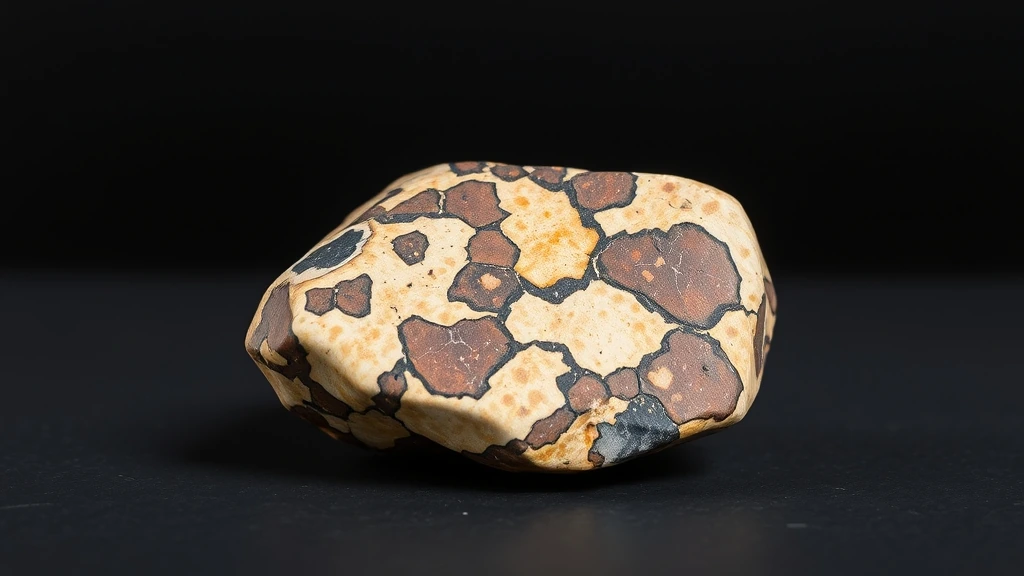
Leopard Skin Jasper belongs to the natural mineral/crystal group, specifically an opaque, cryptocrystalline aggregate of quartz. Its formation occurs in hydrothermal veins where silica‑rich fluids precipitate fine‑grained quartz interspersed with iron oxides that generate the characteristic spotted pattern. The stone’s durability and vivid coloration have made it a favored material in ancient lapidary traditions across the Mediterranean and the Americas.
What is Leopard Skin Jasper? Geological Overview & Definition
Leopard Skin Jasper is an aggregate of microcrystalline quartz whose texture is defined by tightly packed silica crystals below the resolution of the naked eye. The embedded iron‑oxide inclusions create the leopard‑like rosette patterns that give the stone its name, a feature recognized in early Egyptian and Mesoamerican ornamental objects. In comparative mineralogical collections, practitioners and geologists frequently study Pink Zebra Jasper alongside this crystal to appreciate their subtle energetic and structural differences.
Classified as a jasper, the material is a chalcedony variety formed under low‑temperature, silica‑saturated conditions. Its formation often accompanies volcanic tuffs or sedimentary layers, where fluctuating redox conditions cause iron to precipitate as hematite or goethite, imparting the dark speckles against a lighter quartz matrix.
Leopard Skin Jasper Chemical Composition & Crystallographic Properties
Although commonly described as a single mineral, Leopard Skin Jasper is an aggregate of trigonal quartz crystals (SiO₂) whose individual grains share the same crystal symmetry. The overall rock inherits the trigonal crystal system of its quartz constituents, arranging in a hexagonal lattice with threefold rotational symmetry along the c‑axis. In comparative mineralogical collections, practitioners and geologists frequently study Kiwi Jasper alongside this crystal to appreciate their subtle energetic and structural differences.
The stone’s color palette arises from cation substitution where Fe³⁺ replaces Si⁴⁺ in trace amounts, generating localized charge‑balance defects that act as chromophore centers. These iron‑oxide inclusions absorb specific wavelengths, producing the brown and black mottling while the surrounding silica remains largely transparent.
Leopard Skin Jasper is acid‑sensitive; exposure to strong acids can dissolve the silica matrix, releasing silica gel and altering surface luster. However, mild acidic conditions typically only affect the iron‑oxide pigments, leaving the quartz framework intact.
Thermally, the aggregate exhibits low thermal expansion characteristic of quartz, expanding about 0.5 × 10⁻⁶ °C⁻¹ along the a‑axis and 0.7 × 10⁻⁶ °C⁻¹ along the c‑axis. Heating above 573 °C can induce the quartz α→β transition, potentially causing microfracturing if the stone is subjected to rapid temperature changes.
| Property | Specification |
|---|---|
| Mineral Group | Natural Mineral / Crystal |
| Chemical Formula | SiO₂ |
| Mohs Hardness | 6.5 – 7.0 |
| Crystal System | Trigonal |
| Color & Optical Properties | Natural Leopard Skin Jasper color spectrum and optical dispersion |
| Primary Mining Localities | Global primary localities |
| Water & Chemical Resistance | High (Safe for gentle water washing) |
| Chakra Alignment (Traditional) | Throat Chakra (Vishuddha) |
| Zodiac Affinity (Traditional) | Sagittarius, Pisces |
| Symbolic Meaning (Traditional) | Emotional balance, compassion and inner peace |
Leopard Skin Jasper Varieties & Color Spectrum
Leopard Skin Jasper displays distinct mineralogical characteristics across its geological varieties and structural habits. Gemologists evaluate these natural varieties based on crystal habit, trace chromophore concentrations, and visual luster.
Primary Natural Leopard Skin Jasper
The benchmark natural variety exhibiting diagnostic color saturation and classic crystallographic symmetry.
Distinct Geological Morphs of Leopard Skin Jasper
Secondary regional and structural varieties formed under localized geological temperature and pressure conditions.
Classic Leopard Pattern
Formed in siliceous sedimentary layers of the Cambrian to Ordovician age, this variety displays a creamy base mottled with dark brown to black rosettes that mimic a leopard’s coat. The pattern arises from iron‑oxide and manganese inclusions that crystallize during diagenesis, giving each stone a unique, high‑contrast tableau. It is the most widely traded form, sourced chiefly from Brazil and the United States, and is considered moderately common among collectors.
Red‑Veined Leopard Jasper
Developed within trachytic volcanic tuffs of the Andes, this morph exhibits a deep reddish‑brown matrix intersected by thin, bright orange‑red veins of hematite. The veining reflects hydrothermal fluid migration that precipitated iron oxides along micro‑fractures, creating a striking, almost blood‑like network. Because the Andes deposits are limited to a few high‑altitude quarries, this variety commands a premium price in the gemstone market.
Green‑Spotted Leopard Jasper
Originating from the metamorphosed quartzite belts of Madagascar, the stone’s base ranges from olive‑green to chartreuse, punctuated by irregular black spots of graphite and chlorite. The green hue is imparted by trace amounts of chromium and nickel incorporated during regional metamorphism, while the dark speckles result from carbonaceous inclusions. Its rarity stems from the narrow metamorphic zones where such chemistry co‑exists, making it a coveted specimen for high‑end lapidary work.
Blue‑Grey Leopard Jasper
Extracted from the siliceous shales of the Czech Republic, this variety features a muted slate‑grey background overlaid with pale blue‑grey splotches of kaolinite and sericite. The subtle coloration is a product of low‑temperature hydrothermal alteration that introduced aluminum‑rich minerals into the quartz matrix. Although abundant in the local deposits, its delicate palette is prized for jewelry that seeks a subdued, sophisticated aesthetic.
Golden Leopard Jasper
Found in the granite‑bound pegmatites of Namibia, this stone displays a warm honey‑gold base interspersed with dark brown to black leopard‑like markings of magnetite. The golden tone originates from finely disseminated goethite and limonite that oxidized during uplift and weathering. Its scarcity is heightened by the limited pegmatite bodies that host the mineral, rendering it a specialty item for collectors seeking vibrant earth tones.
Black‑On‑Black Leopard Jasper
Sourced from the basaltic lava flows of the Philippines, this variety is characterized by a deep black matrix with glossy, almost metallic black spots of magnetite and ilmenite. The uniform darkness results from high concentrations of iron‑rich oxides that formed under reducing conditions during rapid cooling. Because the volcanic source zones are small and often environmentally protected, this form is among the rarest and most sought after for its dramatic, monochrome appearance.
Where is Leopard Skin Jasper Found? Geological Mining & Extraction
Leopard Skin Jasper primarily occurs within siliceous sedimentary and volcanic host rocks that have undergone low‑ to medium‑grade metamorphism. In Brazil’s Minas Gerais region, the stone is extracted from quartz‑rich sandstones where iron‑oxide veins have infiltrated during diagenesis, while in the United States it is mined from Cambrian shales of the Appalachian basin where similar processes produced the classic leopard pattern.
Significant secondary sources include the Andes’ trachytic tuffs, Madagascar’s metamorphosed quartzites, and Namibia’s granite‑bound pegmatites, each offering distinct color morphs. Extraction methods range from open‑pit quarrying to selective hand‑picking, with miners employing water‑based washing to separate the dense jasper fragments from surrounding matrix, ensuring minimal damage to the delicate inclusions that define each variety.
Historical Significance & Cultural Lore of Leopard Skin Jasper
Across ancient lapidary traditions, Leopard Skin Jasper was prized for its striking resemblance to animal pelts, symbolizing strength and protection in Greco‑Roman amulets and Egyptian scarab inlays. Archaeological finds from the New Kingdom include carved seals and inlay panels where the stone’s bold pattern was believed to ward off evil spirits and convey the wearer’s noble status.
In Vedic and early Chinese texts, the stone is associated with the Throat Chakra (Vishuddha), promoting emotional balance, compassion, and inner peace. Historical records describe its use in meditation beads and royal regalia, where the leopard motif was thought to channel the fierce yet harmonious energy of the animal kingdom, reinforcing both personal integrity and societal harmony.
Modern Uses & Jewelry Applications of Leopard Skin Jasper
Leopard Skin Jasper is prized for its distinctive mottled pattern, making it a favorite in lapidary work. Artisans cut the stone into smooth cabochons or finely faceted pieces, allowing the natural swirls to catch light. The material is also carved into ornamental motifs for decorative panels, table tops, and architectural accents.
- Cabochon: Polished, rounded discs highlighting the speckled texture.
- Faceted: Sharp cuts that enhance brilliance and contrast.
- Carving: Intricate designs for jewelry settings, figurines, and wall art.
Metaphysical Properties & Traditional Meaning of Leopard Skin Jasper
According to historical traditions and metaphysical lore, Leopard Skin Jasper is believed to embody emotional balance and inner peace. Across ancient Mediterranean and Vedic lapidary practices, the stone’s speckled appearance is seen as a mirror of the soul’s complexity, encouraging compassion and calm. In general metaphysical circles, it is thought to soothe emotional turbulence and foster clear, honest communication.
Which Chakra and Zodiac Signs Align with Leopard Skin Jasper?
Leopard Skin Jasper is traditionally associated with the Throat Chakra (Vishuddha), the center of communication and self-expression. This alignment supports the stone’s reputed ability to help articulate feelings and thoughts with clarity.
The stone’s celestial correspondences include the zodiac signs Sagittarius and Pisces. Those born under these signs are believed to resonate deeply with the stone’s energetic qualities, enhancing their natural intuition and empathy.
How to Identify Real vs. Fake Leopard Skin Jasper
Artificial imitations of Leopard Skin Jasper often appear as dyed glass or synthetic composites that lack the stone’s natural texture and mineral composition. Genuine jasper will exhibit a unique, irregular mottling that cannot be replicated by uniform coloring or layering.
Practical At-Home Authenticity Tests
- Temperature Test (Thermal Feel): Hold the stone in your hand; real jasper feels noticeably cooler than synthetic glass, which warms quickly.
- Specific Gravity & Weight Test: A 2‑inch cube of genuine jasper typically weighs around 3.5–4.0 g, whereas glass replicas are lighter.
- Scratch & Hardness Test (Mohs Comparison): Use a steel nail or quartz crystal; real jasper should scratch only with a harder material (≥7 on the Mohs scale), while glass may scratch more easily.
- Microscopic & Loupe Inspection (Internal Inclusions): Under magnification, authentic jasper shows natural mineral inclusions and subtle color variations; synthetic versions display uniformity and lack of inclusions.
Leopard Skin Jasper Valuation Factors, Grading & Pricing
Market value hinges primarily on Color Saturation, where deep, contrasting bands of amber, brown, and black command premium prices. High visual vibrancy enhances the stone’s natural energetic luster, making it highly desirable for lapidary work. Collectors prefer specimens with sharp, well-defined patterns that mimic the distinctive coat of a leopard.
Crystal Size & Weight (Grams) significantly influences pricing, as larger raw pieces or polished tumbles are valued by dimension and mass rather than specimen weight (grams). The quality of the tumbled polish is critical, with smooth, high-gloss finishes increasing the stone’s commercial appeal. Natural matrix inclusions that create unique, organic textures further elevate the specimen’s aesthetic and market worth.
Ethical Sourcing & Locality Premium plays a vital role in holistic and collector markets, where provenance transparency is increasingly demanded. Stones from reputable, sustainably managed mines often carry a higher price tag due to verified origin. Buyers frequently pay more for pieces with documented ethical extraction practices, ensuring environmental and social responsibility in the supply chain.
How to Clean and Care for Leopard Skin Jasper
To maintain the stone’s integrity, use warm soapy water and a soft cloth to gently remove surface dust and oils. This method effectively cleans the porous surface without damaging the delicate mineral structure. Avoid using harsh chemicals or abrasive materials that could scratch the polished finish or alter the natural luster.
It is essential to avoid ultrasonic cleaners for Leopard Skin Jasper, as high-frequency vibrations can induce structural fractures within the stone. The internal matrix and potential micro-fractures make the material susceptible to stress from intense sonic energy. Always dry the specimen thoroughly with a lint-free towel after washing to prevent water spots.
Cleansing and Recharging Leopard Skin Jasper (Energetic Care)
For holistic maintenance, practitioners often employ herbal smudging with sage or palo santo to clear perceived energetic stagnation. This dry method allows the smoke to circulate around the stone without introducing moisture or heat. The gentle ritual respects the mineral’s physical stability while addressing its metaphysical properties.
Alternatively, resting the jasper on a selenite charging slab provides a safe, passive recharging environment. This technique avoids direct intense sunlight or domestic heating, which can degrade the crystal lattice over time. Gentle moonlight exposure is another preferred method, aligning with the stone’s association with emotional balance and inner peace.
Frequently Asked Questions About Leopard Skin Jasper
Leopard Skin Jasper displays distinct mineralogical characteristics across its geological varieties and structural habits. Gemologists evaluate these natural varieties based on crystal habit, trace chromophore concentrations, and visual luster.
Primary Natural Leopard Skin Jasper
The benchmark natural variety exhibiting diagnostic color saturation and classic crystallographic symmetry.
Distinct Geological Morphs of Leopard Skin Jasper
Secondary regional and structural varieties formed under localized geological temperature and pressure conditions.
Is Leopard Skin Jasper safe to wear in the shower?
Yes, it is generally safe for gentle water exposure. As a hard quartz variety, it does not dissolve or degrade when exposed to water. However, frequent contact with harsh soaps may dull the surface over time. Rinse the stone thoroughly after showering to maintain its natural luster and prevent mineral buildup.
How should I clean my Leopard Skin Jasper jewelry?
Use warm soapy water and a soft cloth for cleaning. Gently scrub the surface with mild soap to remove oils and dirt. Avoid ultrasonic cleaners entirely, as the vibrations can cause structural fractures in the stone. Dry the piece immediately with a lint-free cloth to prevent water spots.
What is the Mohs hardness of Leopard Skin Jasper?
It measures between 6.5 and 7.0 on the Mohs scale. This high hardness makes it durable enough for everyday jewelry use. The stone resists scratching from common household materials. Its robust nature ensures that the intricate spotted patterns remain intact during normal wear and handling.
Which zodiac signs are aligned with this?
Sagittarius and Pisces are the primary aligned zodiac signs. These astrological associations stem from the stone’s energetic properties. Sagittarius benefits from its grounding nature, while Pisces connects with its emotional depth. Wearing this jasper may enhance personal traits associated with these specific star signs.
Which chakra does Leopard Skin Jasper activate?
It primarily activates the Throat Chakra (Vishuddha). This energy center governs communication, self-expression, and truth. The stone’s balanced vibrations support clear verbal expression and emotional release. Meditating with this jasper can help unblock creative flow and foster honest dialogue within the wearer.
What is the chemical composition of this stone?
The primary chemical formula is SiO₂, or silicon dioxide. This composition identifies it as a cryptocrystalline quartz. The distinctive leopard spots result from iron oxide inclusions within the matrix. These mineral impurities create the unique brown and black patterns characteristic of this variety.
Can I use an ultrasonic cleaner on this gem?
No, you must avoid ultrasonic cleaners for this stone. The high-frequency vibrations can induce structural fractures within the jasper. Instead, stick to manual cleaning methods with warm soapy water. This precaution preserves the integrity of the stone’s internal structure and prevents potential damage.
Is Leopard Skin Jasper suitable for daily wear?
Yes, its high hardness makes it ideal for daily wear. The stone withstands minor impacts and scratches better than softer minerals. Regular maintenance with a soft cloth keeps it looking pristine. Its durability ensures that the gemstone remains a reliable part of your everyday jewelry collection.