
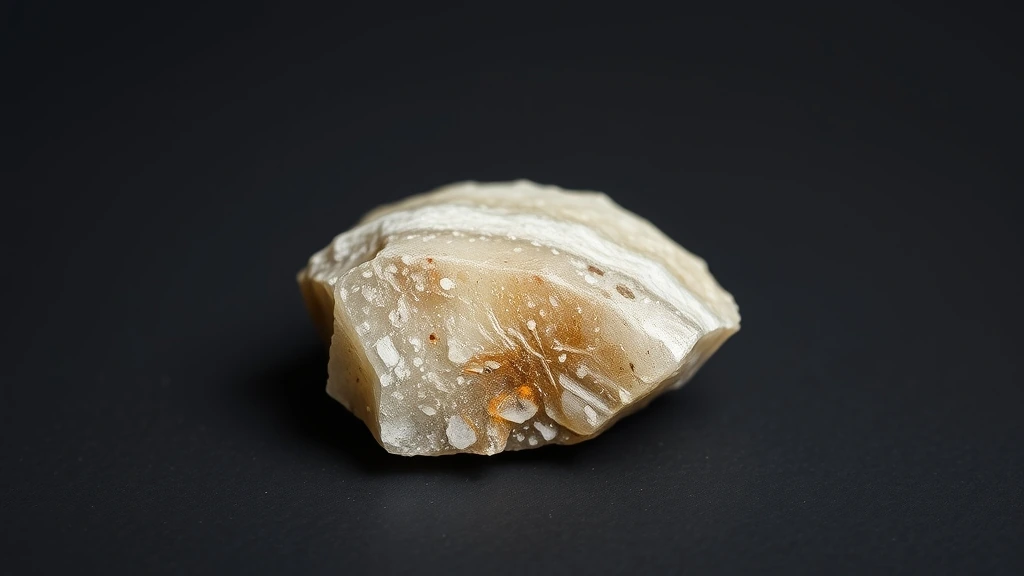
Libyan Desert Glass is classified as an amorphous natural glass, formed when a meteorite impact melted surface sands in the Sahara’s western desert about 29 million years ago. Though lacking a true crystal lattice, it is grouped with natural minerals and crystals because its homogeneous composition and physical properties are reproducible and measurable. The material is found in scattered shards and lenses, often exhibiting a characteristic greenish‑yellow translucency that deepens with thickness. Its origin ties directly to high‑temperature shock metamorphism, distinguishing it from volcanic obsidian and synthetic glass.
What is Libyan Desert Glass ? Geological Overview & Definition
Libyan Desert Glass (LDG) is an impact‑generated silica glass that occurs as irregular shards, often up to several centimeters across, within the Libyan Sahara. The glass formed when a meteoritic airburst melted quartz‑rich sand, which then cooled rapidly, preserving a glassy, non‑crystalline structure.
In gemological terms, LDG is prized for its unique color palette—a subtle yellow‑green that can appear almost honey‑like under light—and its rarity, as the source crater remains unexposed. The stone is cut into cabochons or polished beads, capitalizing on its natural luster and the faint internal flow lines that hint at its violent birth.
Libyan Desert Glass Chemical Composition & Crystallographic Properties
The material is an amorphous aggregate of silica (SiO₂) comprising roughly 75‑85 % of its mass, with Al₂O₃ (5‑10 %) and trace amounts of Fe₂O₃, MgO, CaO and Na₂O. Because it lacks a repeating lattice, the term “crystal system” is correctly listed as Amorphous, and no unit cell parameters apply. This disorder gives the glass its isotropic optical behavior, reflected in a uniform refractive index of 1.45‑1.47.
Cation substitution occurs sporadically: iron and manganese ions replace a few silicon sites, creating color centers that absorb specific wavelengths and produce the characteristic yellow‑green hue. These centers are also responsible for the glass’s modest UV‑induced fluorescence, a diagnostic feature in gemological testing.
LDG is chemically stable under neutral conditions but shows sensitivity to strong acids, which can leach alkali and iron ions, gradually dulling its surface sheen. Thermal shock resistance is moderate; rapid heating above 600 °C can induce micro‑cracking, whereas slow cooling preserves the glassy matrix.
Despite its amorphous nature, LDG exhibits a density of 2.25‑2.35 g/cm³ and a hardness of 6‑7 on the Mohs scale, aligning it with other natural glasses such as obsidian. These physical constants aid gemologists in distinguishing LDG from synthetic silica glass, which typically displays slightly different optical and density values.
| Property | Specification |
|---|---|
| Mineral Group | Natural Mineral / Crystal |
| Chemical Formula | Natural glass (SiO₂ ~75-85%, Al₂O₃ ~5-10%, Fe₂O₃, MgO, CaO, Na₂O) |
| Mohs Hardness | 6.0 – 7.0 |
| Crystal System | Amorphous |
| Specific Gravity (Density) | 2.25 – 2.35 |
| Refractive Index | 1.45 – 1.47 |
| Color & Optical Properties | Natural Libyan Desert Glass Gemstone color spectrum and optical dispersion |
| Primary Mining Localities | Global primary localities |
| Water & Chemical Resistance | High (Safe for gentle water washing) |
| Chakra Alignment (Traditional) | Crown Chakra, Third Eye Chakra |
| Zodiac Affinity (Traditional) | Sagittarius, Aquarius |
| Symbolic Meaning (Traditional) | Cosmic connection, ancient wisdom, and spiritual awakening |
Libyan Desert Glass Varieties & Color Spectrum
Natural Desert Glass (Type I)
This primary variety exhibits a pale yellow to golden hue, resulting from high silica content and minimal iron oxidation. It typically contains sparse metallic inclusions and displays a smooth, vesicular surface texture from rapid cooling.
Geologically, it forms from impact-melted sand, creating a natural glass with no crystalline structure. Its rarity is moderate, as it represents the most common form found in surface deposits across the Western Desert.
Blue Desert Glass (Type II)
Distinct for its striking azure or turquoise tint, this variety owes its color to specific iron oxide concentrations within the melt. It often features a more opaque appearance compared to its yellow counterparts due to higher impurity levels.
This morph is significantly rarer, with limited occurrences in specific impact zones. Collectors prize its unique chromatic signature, which distinguishes it sharply from standard desert glass specimens in the market.
Green Desert Glass (Type III)
Characterized by an olive or emerald-green tone, this type results from elevated magnesium and iron ratios in the source sand. It frequently displays a slightly higher density and a more robust structural integrity during cutting.
Visual inspection reveals subtle internal stress patterns and occasional metallic specks. Its scarcity is high, making certified specimens highly sought after by advanced gemologists and institutional collectors.
Clear Desert Glass (Type IV)
This exceptionally rare variety appears nearly colorless, indicating extremely low levels of transition metal contaminants in the original silica. It possesses a high degree of transparency, allowing light to pass through with minimal distortion.
Due to its pristine clarity, it commands premium pricing in the gemstone trade. The amorphous structure remains consistent, but the lack of color impurities makes it a standout specimen for scientific study.
Swirled Desert Glass (Type V)
Identified by internal flow lines and bubble trails, this variety captures the dynamic movement of the impact melt during solidification. The swirling patterns are unique to each piece, acting as a geological fingerprint of the formation event.
These visual complexities make identification and grading more challenging for standard gemological instruments. It is valued for its artistic aesthetic, appealing to collectors who prioritize inclusion patterns over pure color purity.
Metallic Desert Glass (Type VI)
This variety is distinguished by dense clusters of metallic inclusions, often appearing as silver or gold flecks. These particles are remnants of the impactor material that did not fully assimilate into the silica melt.
Highly prized for its industrial and gemological interest, it offers insights into the cosmic origin of the material. Its rarity is extreme, with only a handful of significant specimens documented in major mineralogical collections.
Where is Libyan Desert Glass Found? Geological Mining & Extraction
Libyan Desert Glass is exclusively found in the Western Desert of Egypt, specifically within the Alamein and Marsa Matruh regions. These deposits lie on the surface, formed by a massive meteorite impact approximately 28.5 million years ago.
The material is not mined from deep bedrock but collected from alluvial plains where wind and water have exposed the glass. Extraction involves careful hand-picking to preserve the integrity of the fragile, amorphous glass sheets.
Historical Significance & Cultural Lore of Libyan Desert Glass
Ancient Egyptian artisans utilized this material for scarabs and amulets, believing it held protective spiritual powers. Archaeological evidence confirms its presence in royal tombs, indicating its status as a precious gemstone in the Bronze Age.
The material’s origin was long a mystery, with early theories suggesting volcanic activity. Modern impact crater analysis has since confirmed its extraterrestrial source, reshaping our understanding of its geological and cultural history.
Modern Uses & Jewelry Applications of Libyan Desert Glass
Lapidaries typically cut this rare material into cabochons to showcase its unique color variations and internal textures. Due to its amorphous structure, faceting is less common but possible for smaller, clearer specimens. The stone’s natural beauty often requires minimal enhancement, preserving its geological authenticity.
- Cabochon Cutting: Polished into smooth, domed shapes to highlight the “swirls” and color bands.
- Ornamental Carving: Used in high-end art pieces to display the glassy luster and natural inclusions.
- Minimalist Jewelry: Set in silver or gold to emphasize the stone’s prehistoric origin and rarity.
Metaphysical Uses & Origins of Libyan Desert Glass
According to historical traditions and metaphysical lore, this ancient glass is revered for its cosmic connection and ability to bridge earthly and spiritual realms. Practitioners believe it activates ancient wisdom, facilitating deep introspection and heightened awareness. Its formation through a massive impact event symbolizes profound transformation and resilience.
The stone is associated with spiritual awakening, helping users transcend limiting beliefs and access higher states of consciousness. It is often used in meditation to enhance intuition and clarity of thought. The energy is described as stabilizing yet expansive, promoting a sense of grounded transcendence.
Which Chakra and Zodiac Signs Align with Libyan Desert Glass ?
This gemstone is canonically aligned with the Crown Chakra, the seventh energy center located at the top of the head. This connection supports spiritual insight, universal consciousness, and the integration of higher knowledge. It helps clear blockages that prevent the flow of divine energy into the physical body.
Additionally, it resonates strongly with the Third Eye Chakra, enhancing intuition, psychic perception, and inner vision. For zodiac signs, it is specifically attuned to Sagittarius and Aquarius. These air and fire signs benefit from the stone’s ability to expand perspective and foster innovative thinking.
How to Identify Real vs. Fake Libyan Desert Glass
Artificial imitations often use synthetic glass or dyed silicates to mimic the natural coloration of desert glass. These replicas may lack the subtle internal structures and specific chemical signatures found in genuine specimens. Understanding these differences is crucial for collectors and buyers to avoid purchasing counterfeit materials.
Practical At-Home Authenticity Tests
- Temperature Test (Thermal Feel): Genuine glass feels cool to the touch initially and warms up slowly, whereas plastic imitations may feel warmer or heat up rapidly.
- Specific Gravity & Weight Test: Real Libyan Desert Glass has a density of 2.25 – 2.35 g/cm³. It should feel slightly heavier than similar-sized quartz or lighter than dense metals.
- Scratch & Hardness Test (Mohs Comparison): With a Mohs hardness of 6.0 – 7.0, it can scratch glass (5.5) but may be scratched by topaz (8). Be careful not to damage the stone during testing.
- Microscopic & Loupe Inspection (Internal Inclusions): Use a 10x loupe to look for natural inclusions like bubbles or flow lines. Synthetic glass often contains perfectly round bubbles or lacks natural geological imperfections.
Libyan Desert Glass Valuation Factors, Grading & Pricing
The primary driver of value is Color Saturation, which ranges from pale straw to deep amber. Collectors prize specimens with uniform tone and high optical clarity, free from cloudy inclusions. A strong vitreous luster further enhances the stone’s visual appeal and market desirability.
Specimen Mass & Size significantly impacts price, as large, intact pieces are exceptionally rare. carving craftsmanship and block integrity is less critical than in cut gems, but balanced proportions improve light return. The presence of matrix or internal bubbles can either detract from value or add unique character, depending on the buyer’s preference.
Geographical Provenance Premium is crucial, as authentic Libyan Desert Glass commands a significant markup. Wholesale prices vary widely, but retail values have trended upward due to limited supply. Certified documentation from reputable gemological laboratories ensures authenticity and protects the investment.
How to Clean and Care for Libyan Desert Glass
To maintain its integrity, always use warm soapy water and a soft, lint-free cloth for cleaning. Gently wipe the surface to remove dust and oils without applying excessive pressure. This method is safe for the amorphous structure and preserves the natural luster effectively.
You must strictly avoid ultrasonic cleaners and steam cleaners, as vibrations can cause structural fractures. The stone’s Mohs hardness of 6.0 to 7.0 makes it susceptible to shock damage. Store the gemstone separately to prevent scratching from harder minerals or jewelry pieces.
Cleansing and Recharging Libyan Desert Glass (Energetic Care)
For energetic maintenance, place the stone on a selenite plate overnight to clear stagnant energy. This dry method respects the mineral’s physical limitations while facilitating spiritual cleansing. Avoid submerging the stone in water for extended periods during this process.
Alternatively, use smoke smudging with sage or palo santo to purify the stone’s aura. Expose the gemstone to moonlight for several hours to recharge its cosmic connection. These gentle, dry techniques ensure the stone remains physically intact and energetically balanced.
Frequently Asked Questions About Libian Desert Glass
What is Libyan Desert Glass made of?
It is a natural silica glass formed by meteorite impact. The material consists primarily of SiO₂ (75‑85 %) with minor Al₂O₃, Fe₂O₃, MgO, CaO, and Na₂O, giving it an amorphous, glassy structure that lacks a true crystal lattice yet displays a distinctive honey‑comb pattern.
How hard is Libyan Desert Glass compared to other gemstones?
It rates 6 – 7 on the Mohs scale. This hardness places it between feldspar and quartz, making it durable enough for everyday jewelry but still susceptible to scratching from harder stones like sapphire or diamond. Proper care prolongs its brilliance.
Can I wear Libyan Desert Glass in the shower or while swimming?
Yes, it is water‑resistant and safe for gentle washing. The glass tolerates mild water exposure, so you may clean it with warm soapy water and a soft cloth. Avoid harsh chemicals or prolonged immersion, which could affect surface luster over time.
Should I use an ultrasonic cleaner on Libyan Desert Glass?
No, ultrasonic cleaning is not recommended. The rapid vibrations can create micro‑fractures in the amorphous glass matrix, leading to cracks. Instead, gently clean the stone with warm, mildly soapy water and a soft, lint‑free cloth to preserve its integrity.
Which zodiac signs are associated with Libyan Desert Glass?
Sagittarius and Aquarius are the aligned signs. In astrological tradition, this glass is believed to amplify the adventurous spirit of Sagittarius and the innovative, humanitarian qualities of Aquarius, making it a favored talisman for those born under these signs.
Which chakras does Libyan Desert Glass energize?
It resonates with the Crown and Third Eye Chakras. The stone is said to stimulate higher consciousness and intuitive insight, supporting meditation and spiritual awakening by aligning the Crown (Sahasrara) and Third Eye (Ajna) energy centers.
How should I store Libyan Desert Glass to prevent damage?
Store it separately in a soft pouch or lined jewelry box. Because the glass is amorphous and brittle, contact with harder gemstones or metal edges can cause chipping. Keeping it cushioned and isolated reduces the risk of accidental scratches or fractures.
Is Libyan Desert Glass suitable for everyday jewelry?
Yes, it is suitable for regular wear with proper care. Its density of 2.25‑2.35 g/cm³ and moderate hardness make it comfortable and resilient, while its unique cosmic origin adds an exotic appeal. Regular gentle cleaning maintains its sparkle without compromising durability.