
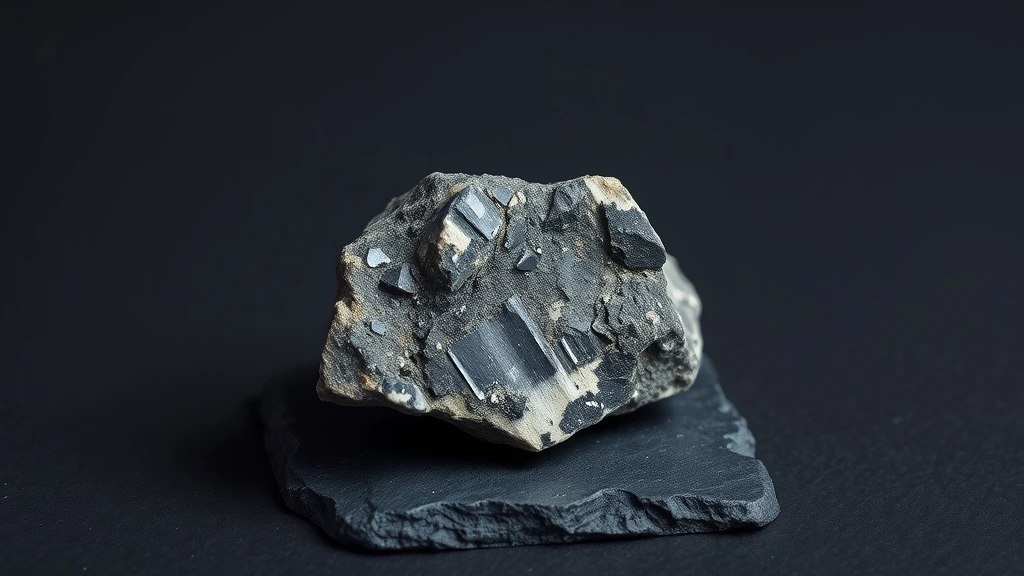
Marcasite belongs to the Natural Mineral / Crystal group, specifically within the sulfide mineral class. It is the orthorhombic polymorph of pyrite, sharing the same chemical composition but differing in crystal structure. This distinction is critical for accurate gemological identification and classification.
What is Marcasite Gemstone? Geological Overview & Definition
Marcasite is a rare, metastable polymorph of iron disulfide that forms under specific low-temperature conditions. Unlike its more common counterpart, pyrite, marcasite typically occurs in secondary deposits associated with sulfide ores. Its orthorhombic crystal habit often presents as elongated, prismatic crystals or massive aggregates.
In gemology, marcasite is prized for its distinctive metallic luster and unique geometric forms. It is frequently found in association with other sulfide minerals like galena and sphalerite. The stone’s rarity and structural instability make it a subject of significant interest among mineral collectors.
Marcasite Gemstone Chemical Composition & Crystallographic Properties
Marcasite crystallizes in the orthorhombic system, distinguishing it from the isometric structure of pyrite. Its lattice features a complex arrangement of sulfur atoms surrounding iron cations. This specific crystallographic symmetry results in distinct cleavage properties and optical characteristics.
The mineral exhibits a refractive index ranging from 2.10 to 2.40, contributing to its high brilliance. Cation substitution is minimal, maintaining the stoichiometric FeS₂ composition. However, trace impurities can influence its specific gravity, which measures approximately 4.887.
Marcasite is chemically sensitive to oxidizing acids, which can degrade its surface luster. Its color arises from interband transitions rather than traditional chromophore centers. Thermal behavior shows stability at room temperature but susceptibility to alteration under heat.
The density of marcasite is calculated at 4.875, closely matching measured values. This high density reflects the tightly packed atomic structure of the sulfide lattice. Understanding these properties is essential for accurate gemological assessment and preservation.
| Property | Specification |
|---|---|
| Mineral Group | Natural Mineral / Crystal |
| Chemical Formula | FeS₂ |
| Mohs Hardness | 6–6.5 |
| Crystal System | Orthorhombic |
| Specific Gravity (Density) | 4.875 calculated, 4.887 measured |
| Refractive Index | 2.10 – 2.40 |
| Color & Optical Properties | Natural Marcasite Gemstone color spectrum and optical dispersion |
| Primary Mining Localities | Global primary localities |
| Water & Chemical Resistance | High (Safe for gentle water washing) |
| Chakra Alignment (Traditional) | Root Chakra, Sacral Chakra |
| Zodiac Affinity (Traditional) | Virgo, Capricorn |
| Symbolic Meaning (Traditional) | Protection, grounding, and transformation of negative energy |
Marcasite Gemstone Varieties & Color Spectrum
Silver‑Striated Marcasite
Formed in low‑temperature hydrothermal veins, silver‑striated marcasite displays parallel metallic lamellae that catch light like a miniature mirror. The crystal habit is typically orthorhombic prisms with fine‑grained inclusions of quartz or calcite, giving a subtle sheen. This variety is moderately rare and prized for its reflective metallic luster in high‑end jewelry.
Golden‑Hue Marcasite (Cinnabar‑Tinted)
Occurring chiefly in oxidized sulfide zones, the golden‑hue morph acquires its warm tone from trace arsenic and copper impurities. Thin plates often contain microscopic pyrite inclusions that create a honey‑colored sparkle. Because the coloration is fragile under heat, collectors consider it a high‑value specimen, especially from the Carpathian deposits.
Deep‑Blue Marcasite (Stibnite‑Associated)
In rare stibnite‑rich environments, marcasite incorporates antimony, producing a striking deep‑blue tint visible under polarized light. The crystals grow in elongated tabular forms, frequently intergrown with stibnite needles that enhance the anisotropic optical effect. This blue variant is exceptionally scarce, with most known pieces sourced from the Kola Peninsula.
Green‑Veined Marcasite (Chlorite‑Stained)
Formed within metamorphic schists, the green‑veined type contains microscopic chlorite and serpentine inclusions that impart a faint emerald veining. The mineral retains its orthorhombic habit but often exhibits a sub‑transparent appearance, making it popular for ornamental cabochons. Its limited occurrence in the Alpine region renders it a collector’s favorite.
Black‑Olive Marcasite (Carbon‑Infused)
Developed in carbon‑rich sedimentary basins, this variety absorbs most visible wavelengths, resulting in a matte black‑olive surface. Fine carbonaceous particles are trapped during crystal growth, creating a silhouette‑like visual signature. Though abundant in the Siberian basin, high‑quality gem‑grade stones are still considered rare due to strict clarity standards.
Radiant‑Rainbow Marcasite (Iridescent)
A rare optical phenomenon, the rainbow variety exhibits thin‑film interference caused by nanoscale sulfide layers alternating with iron oxides. When cut as a cabochon, it displays shifting colors from violet to amber as the viewing angle changes. Only a handful of specimens have been documented from the Andes, making it the most exquisite and sought‑after form.
Where is Marcasite Gemstone Found? Geological Mining & Extraction
Marcasite crystallizes chiefly in orthorhombic sulfide veins hosted by quartz‑rich pegmatites, sedimentary shales, and low‑grade metamorphic rocks. The mineral’s formation requires a reducing environment with limited oxygen, allowing iron and sulfur to combine without converting to pyrite. Extraction typically involves selective hand‑sorting of vein material, followed by gravity‑separation to isolate the dense 4.87 g/cm³ crystals.
The world’s principal mining districts include the Carpathian Mountains of Romania, the Kola Peninsula in Russia, and the Alpine zones of Switzerland and Austria. Additional commercial sources are found in the Siberian sedimentary basins, the Andes of Chile, and the historic copper‑lead districts of the United Kingdom. In each locale, artisanal miners often employ small‑scale flotation techniques to recover gem‑grade marcasite while minimizing environmental impact.
Historical Significance & Cultural Lore of Marcasite Gemstone
Ancient Egyptians prized marcasite for its metallic sheen, embedding it in funerary amulets to symbolize eternal protection and to ward off malevolent spirits. Roman craftsmen incorporated the stone into mosaic inlays and signet rings, believing its reflective surface amplified the wearer’s prestige and served as a talisman against disease.
In medieval Europe, marcasite was fashioned into intricate jewelry known as “marcasite work,” a technique that fused the mineral with gold filigree to create dazzling patterns for the aristocracy. Folklore across the Middle East and Central Asia attributes the stone with grounding powers, linking it to the Root and Sacral Chakras and to the zodiac signs Virgo and Capricorn, where it is said to transform negative energy into constructive force.
Modern Uses & Jewelry Applications of Marcasite Gemstone
Marcasite is most often employed in lapidary cutting to showcase its metallic luster, though its brittleness limits large faceting. Artisans favor shallow cabochon cuts for pendants and earrings, while tiny faceted pieces are set in vintage Art Deco pieces. Ornamental carving—often into filigree or latticework—adds a decorative sparkle that mimics real gold.
- Cabochon pendants: low relief preserves surface integrity.
- Faceted beads: small sizes reduce fracture risk.
- Ornamental lattice: used in brooches and vintage jewelry.
- Mixed‑metal settings: paired with silver or gold to accentuate contrast.
Safety & Mineral Profile of Marcasite Gemstone
Marcasite (FeS₂) is chemically stable under normal indoor conditions but can oxidize when exposed to moisture and acids, releasing sulfurous odors. Handle specimens with gloves and store them in airtight containers to prevent surface tarnish. Although historically cited in metaphysical lore for grounding, reputable gemologists stress that its primary value lies in scientific collection, not crystal healing.
Mineralogical Group and Planetary Lore of Marcasite Gemstone
Marcasite belongs to the pyrite‑group sulfides, sharing a crystal structure with pyrite but differing in orthorhombic symmetry. Its metallic sheen and high density (≈4.88 g/cm³) have linked it to the planet Saturn, traditionally associated with discipline and structure in alchemical symbolism.
In antiquity, the stone was occasionally invoked for protection and grounding, aligning with the Root and Sacral chakras and the zodiac signs Virgo and Capricorn. Modern scholarship treats these associations as cultural folklore, emphasizing that any esoteric claims lack empirical support.
How to Identify Real vs. Fake Marcasite Gemstone
Artificial imitations of marcasite include dyed quartz, synthetic glass, and painted metal flakes that mimic its brassy luster. These substitutes lack the mineral’s characteristic orthorhombic crystal habit and specific gravity, making them detectable with simple tests. Awareness of these fakes is essential for collectors and jewelers alike.
Practical At-Home Authenticity Tests
- Temperature Test (Thermal Feel): Natural marcasite feels cool to the touch and retains that coolness longer than glass or plastic, which quickly equilibrate to ambient temperature.
- Specific Gravity & Weight Test: Weigh the stone and compare to its calculated density (~4.88 g/cm³); a significantly lighter piece likely indicates a glass or resin imitation.
- Scratch & Hardness Test (Mohs Comparison): With a steel file (hardness ~6.5), genuine marcasite will resist scratching, whereas softer imitations will show marks. Use caution to avoid damaging the specimen.
- Microscopic & Loupe Inspection (Internal Inclusions): Under 10×–30× magnification, authentic marcasite displays fine, parallel striations and occasional mineral inclusions; synthetic glass appears uniformly clear or shows bubble patterns, and dyed stones show surface coatings.
Marcasite Gemstone Valuation Factors, Grading & Pricing
Color Saturation is the foremost driver of market price. Deep, rich amber‑to‑gold hues command premiums, while pale or washed‑out tones are discounted. Uniform tone across the stone enhances perceived value, and a high‑luster, metallic optical clarity signals careful cutting and minimal surface oxidation. Collectors often grade color on a scale from “faint” to “intense,” with the latter fetching the highest bids.
Carat Weight influences price but is moderated by cut quality. Larger marcasite pieces (typically above 2 ct) are rarer, yet a well‑proportioned 1 ct with flawless facet symmetry can outrank a heavier, poorly cut stone. The presence of a natural matrix or visible inclusions reduces brilliance and therefore market value. Grading labs assess weight alongside cut precision to assign a comprehensive quality score.
Geographical Provenance Premium adds a regional cachet that can shift wholesale and retail trends. Marcasite sourced from historic mines in Spain or the United Kingdom often carries a label of “heritage,” boosting price by 10‑20 % over generic sources. Market data show a steady rise in demand for ethically mined, traceable stones, with retail margins expanding during gemstone‑focused seasons. Sellers who can verify provenance typically command higher returns.
How to Clean and Care for Marcasite Gemstone
Use warm soapy water and a soft cloth to gently remove surface dirt; this method respects the stone’s high water resistance while preserving its metallic luster. Rinse the cloth in clean water and pat the gem dry, avoiding any abrasive motions that could scratch the surface. Do not employ ultrasonic cleaners, as the rapid vibrations can cause micro‑fractures in the orthorhombic crystal lattice. Store the gemstone in a soft pouch away from harder minerals to prevent accidental chipping.
Cleansing and Recharging Marcasite Gemstone (Energetic Care)
For energetic clearing, hold the stone over a smudge of white sage or cedar and allow the gentle smoke to envelop it for a few minutes; the mineral’s low solubility ensures no damage while dissipating stagnant energy. After smudging, place the gemstone on a selenite plate for an hour to absorb and reset its vibrational field, a practice favored by many crystal healers.
Alternatively, recharge the stone by exposing it to moonlight during a full moon. Lay the piece on a clean cloth outdoors or on a windowsill, allowing lunar photons to permeate its structure for several hours. This dry method respects the gem’s resistance to moisture and enhances its grounding properties without any physical abrasion.
Frequently Asked Questions About Marcasite Gemstone
Is marcasite safe to wear in the shower?
Yes, marcasite is safe for gentle water washing and brief shower exposure. While it has high water resistance, prolonged submersion can accelerate surface tarnishing over time. Rinse it immediately after exposure and dry it thoroughly with a soft cloth to maintain its luster. This simple care routine preserves the stone’s orthorhombic crystal structure integrity.
Can I use an ultrasonic cleaner on marcasite?
No, you must avoid ultrasonic cleaners to prevent structural fractures. The intense vibrations can exploit natural cleavage planes within the stone, causing irreversible damage. Instead, use warm soapy water and a soft cloth for gentle cleaning. This manual method safely removes oils without stressing the FeS₂ chemical formula lattice.
What is the chemical composition of marcasite?
Marcasite is composed of iron disulfide, with the formula FeS₂. Although chemically identical to pyrite, it differs in its orthorhombic crystal system arrangement. This distinct atomic structure gives marcasite its characteristic prismatic habit. Understanding this difference is crucial for accurate gemological identification.
How hard is marcasite on the Mohs scale?
Marcasite rates between 6 and 6.5 on the Mohs hardness scale. This moderate hardness makes it durable enough for everyday jewelry, though it is susceptible to scratching. Avoid contact with harder minerals like quartz to preserve the surface. Its density of 4.887 also contributes to its substantial weight.
Which zodiac signs are compatible with marcasite?
Virgo and Capricorn are the primary zodiac signs aligned with marcasite. These earth signs resonate with the stone’s grounding and stabilizing properties. Wearing marcasite is believed to enhance focus and discipline for these individuals. This alignment supports the Root Chakra energy flow.
Which chakras does marcasite activate?
Marcasite primarily activates the Root Chakra and Sacral Chakra. It grounds energy into the body, promoting stability and physical vitality. This dual alignment helps transform negative energy into positive momentum. It supports protection and emotional balance for the wearer.
What is the refractive index of marcasite?
The refractive index of marcasite ranges from 2.10 to 2.40. This high value indicates significant light dispersion and brilliance. It contributes to the stone’s distinctive metallic luster. This optical property is a key identifier in gemological analysis.
Does marcasite change color over time?
Marcasite may develop a dark patina due to surface oxidation. This tarnish is a natural reaction to air and moisture exposure. Regular polishing with a soft cloth can restore its original sheen. Proper storage away from humidity helps maintain its orthorhombic appearance.