
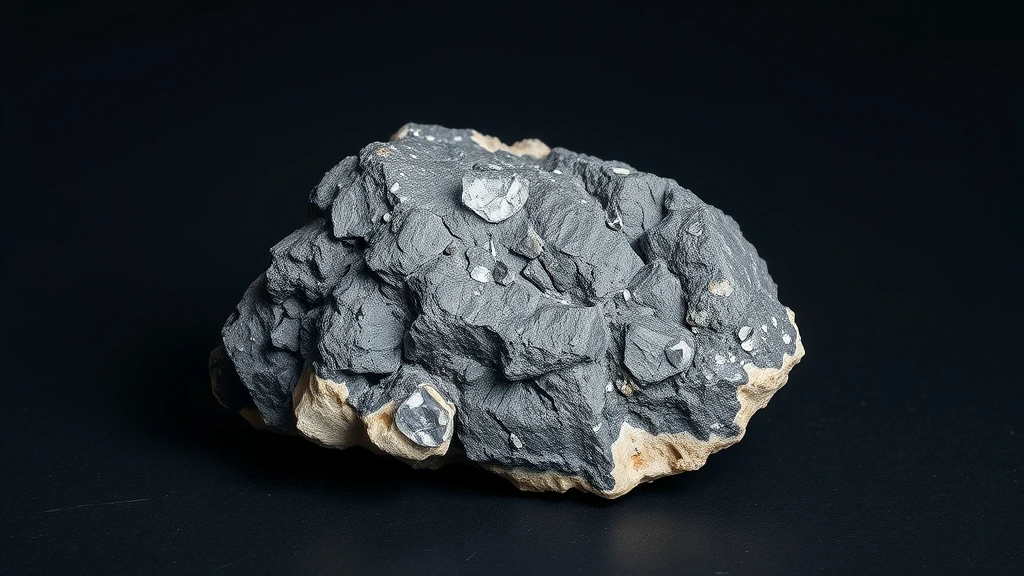
Stibnite belongs to the Natural Mineral classification, specifically within the sulfide group. It forms as a primary ore of antimony in hydrothermal veins. This mineral is geologically significant for its role in industrial metallurgy. Its distinct prismatic habit distinguishes it from other sulfides. Understanding its parent group clarifies its formation environment. Antimonite Stibnite shares this sulfide lineage, reinforcing its classification as a primary hydrothermal ore that exhibits the characteristic prismatic habit distinguishing it from other members of the group.
What is Stibnite? Geological Overview & Definition
Stibnite serves as the principal ore of antimony, a metal vital for flame retardants and batteries. It typically occurs in hydrothermal veins associated with quartz and calcite. The mineral often displays a characteristic prismatic habit with striated faces.
Its geological distribution is widespread, found in both igneous and metamorphic settings. Stibnite frequently co-occurs with other sulfides like galena and pyrite. Its presence indicates specific temperature and pressure conditions during formation.
Stibnite Chemical Composition & Crystallographic Properties
Stibnite crystallizes in the Orthorhombic system, characterized by three mutually perpendicular axes. Its lattice structure features chains of Sb₂S₃ units linked by van der Waals forces. This arrangement contributes to its perfect basal cleavage. The refractive index ranges from 2.400 to 2.570, indicating high optical density.
The mineral’s metallic gray color arises from its sulfide chromophore centers. It exhibits strong acid sensitivity, reacting with oxidizing acids to release toxic antimony compounds. Thermal behavior shows stability at room temperature but volatility at high heat. Cation substitution is rare, maintaining strict stoichiometric composition.
| Property | Specification |
|---|---|
| Mineral Group | Natural Mineral / Crystal |
| Chemical Formula | Sb₂ S₃ |
| Mohs Hardness | 2 |
| Crystal System | Orthorhombic |
| Specific Gravity (Density) | 4.63 |
| Refractive Index | 2.400 – 2.570 |
| Color & Optical Properties | Natural Stibnite color spectrum and optical dispersion |
| Primary Mining Localities | Global primary localities |
| Water & Chemical Resistance | Sensitive (Avoid prolonged water soaking) |
| Chakra Alignment (Traditional) | Root Chakra |
| Zodiac Affinity (Traditional) | Capricorn, Scorpio |
| Symbolic Meaning (Traditional) | Grounding, protection against negativity, and transmutation of fear |
Stibnite Varieties & Color Spectrum
Classic Metallic Stibnite
Formed in low‑temperature hydrothermal veins, classic stibnite crystallizes as slender, needle‑like orthorhombic prisms. The metallic luster and deep lead‑gray hue result from its high antimony content, while microscopic galena inclusions often impart a faint silver sheen. This variety is the most abundant yet remains prized for its striking reflectivity, especially when cut as cabochons.
Golden Stibnite (Aureate)
A rare oxidation product, golden stibnite develops where sulfur‑rich fluids interact with iron‑bearing host rocks, producing a brassy yellow surface coating of antimony oxides. The mineral retains its orthorhombic habit but displays a warm, sun‑lit glow that distinguishes it from the classic gray. Collectors value this variety for its unusual hue and limited occurrences in the Carlin Trend of Nevada.
Black‑Veined Stibnite
In regions of high manganese concentration, stibnite incorporates black manganese sulfide veins that cut across its metallic matrix. These dark inclusions create a dramatic contrast, giving the stone a marbled appearance reminiscent of onyx. The variety is chiefly reported from the Kola Peninsula, where tectonic uplift exposes deep‑seated sulfide deposits.
Pearlescent Stibnite (Nacreous)
When fine‑grained stibnite forms in low‑pressure sedimentary basins, microscopic fluid‑filled cavities generate a subtle iridescence under angled light. The resulting nacreous sheen can shift from silvery to pale pink, depending on cavity size and orientation. This delicate effect is most commonly observed in the Erzgebirge district of Germany, where post‑depositional alteration enhances the optical play.
Red‑Stained Stibnite (Rutilated)
Exposure to trace amounts of ruthenium and iron oxides during crystallization imparts a reddish tint to the otherwise metallic crystal. The red stains appear as fine, linear streaks that can be traced to the mineral’s growth zones. Such specimens are exceptionally scarce and are primarily sourced from the Kalahari Copper Belt, where oxidizing conditions are prevalent.
Regional Trade Stibnite (Mongolian Silk)
Historically exported along the Silk Road, Mongolian stibnite exhibits a unique silky luster due to the presence of fine, intergrown pyrite lamellae. The mineral’s surface reflects light with a soft, satin‑like quality, distinguishing it from other varieties. Modern collectors seek these pieces for their cultural provenance and the subtle interplay of metallic and silky tones.
Where is Stibnite Found? Geological Mining & Extraction
Stibnite typically occurs in hydrothermal vein systems associated with quartz, calcite, and galena, often within low‑grade metamorphic host rocks such as schist and slate. The mineral precipitates from antimony‑rich, sulfur‑bearing fluids at temperatures between 150 °C and 300 °C, forming the characteristic prismatic aggregates that are later mined.
Major extraction zones include the Kola Peninsula (Russia), the Carlin Trend (Nevada, USA), and the Sichuan‑Yunnan provinces (China), where open‑pit and underground methods expose extensive stibnite lenses. In these locales, ore is crushed, screened, and separated by gravity‑based jigging, exploiting the mineral’s high density of 4.63 g/cm³ to achieve efficient recovery.
Historical Significance & Cultural Lore of Stibnite
Ancient Egyptians used powdered stibnite as a cosmetic pigment for eye makeup, valued for its deep black hue and protective properties against the desert sun. In the Bronze Age Near East, the mineral was ground into a paste for metalworking flux, facilitating the smelting of copper and tin alloys, a practice documented on tablets from the city of Ur.
In traditional Chinese alchemy, stibnite—known as “Huǒshí”—was believed to transmute fear into courage, aligning with its grounding and protective esoteric attributes. Medieval European grimoires cite stibnite as a talisman against negativity, often set into amulets for warriors, reinforcing its enduring reputation as a stone of protection.
Modern Uses & Jewelry Applications of Stibnite
Stibnite’s metallic luster and deep lead‑gray hue make it a striking, though fragile, material for specialty lapidary work. Artisans typically cut it into cabochons or shallow faceted stones to showcase its cleavage planes while minimizing breakage. Its rarity also drives ornamental carving for high‑end décor, where polished shards serve as dramatic inlays or accent pieces.
- Cabochon pendants with protective leather settings
- Low‑cut faceted earrings emphasizing reflective facets
- Carved miniatures for museum displays or luxury interiors
Safety & Mineral Profile of Stibnite
Handling stibnite requires caution because antimony sulfide can release toxic dust if fractured or powdered. The mineral is chemically stable in solid form but should be stored in sealed containers and handled with gloves and a dust mask during cutting or polishing. It is primarily a collector mineral, valued for scientific study and specimen display rather than any crystal‑healing claims; historical metaphysical lore mentions grounding and protection, yet such beliefs lack empirical support.
Mineralogical Group and Planetary Lore of Stibnite
Stibnite belongs to the antimony sulfide group, crystallizing in the orthorhombic system with perfect basal cleavage that contributes to its characteristic sheet‑like habit. Its high density (4.63 g/cm³) and metallic luster distinguish it from other sulfide minerals, and it often forms striking, elongated prisms in hydrothermal veins.
In traditional planetary symbolism, stibnite has been linked to Saturn, reflecting themes of discipline and structure that echo its alignment with the Root Chakra and the zodiac signs Capricorn and Scorpio. While ancient texts ascribed protective and transmutational properties, modern mineralogists treat these attributions as cultural folklore, emphasizing the stone’s scientific and safety considerations.
How to Identify Real vs. Fake Stibnite
Artificial imitations of stibnite range from dyed glass shards to polymer composites that mimic its metallic sheen. Synthetic glass may display uniform clarity and lack the characteristic cleavage lines, while dyed replicas often show uneven coloration under close inspection. Distinguishing genuine specimens relies on a combination of visual cues and simple physical tests.
Practical At-Home Authenticity Tests
- Temperature Test (Thermal Feel): Real stibnite feels noticeably cooler to the touch than glass or plastic due to its higher thermal conductivity.
- Specific Gravity & Weight Test: Holding the stone, genuine stibnite feels substantially heavier than a similarly sized glass imitation, reflecting its density of 4.63 g/cm³.
- Scratch & Hardness Test (Mohs Comparison): With a fingernail (hardness ~2.5) a real specimen will be easily scratched, whereas many fakes resist scratching, indicating a higher Mohs rating.
- Microscopic & Loupe Inspection (Internal Inclusions): Under 10× magnification, authentic stibnite shows layered cleavage and occasional mineral inclusions, while synthetic glass appears uniformly flawless.
Stibnite Valuation Factors, Grading & Pricing
Specimen aesthetic quality dominates market value, with collectors rewarding crystal habit perfection and a glossy, metallic luster. Undamaged matrix and clear, well‑defined orthorhombic prisms enhance visual impact, while surface tarnish or oxidation reduces price. Even minor fractures can halve a specimen’s worth in high‑end auctions.
Rarity and specimen dimensions are the next decisive factors. Large, intact clusters measured in centimeters and grams command premium prices, especially when the crystals retain their original, unaltered growth orientation. Specimens that have avoided handling damage and retain a cohesive mass are far more desirable than fragmented pieces of similar size.
Mineralogical provenance and locality value heavily influence collector and museum demand. Stibnite from historic mines such as the Kidd Creek (Canada) or the Kashan region (Iran) carries a provenance premium, reflecting geological significance and documented mining history. Provenance documentation, including original field notes and legal export records, can double or triple a specimen’s market price.
How to Clean and Care for Stibnite
Gently wipe the surface of the stibnite with a lightly dampened cloth, then immediately dry it with a soft, dry microfiber towel. This brief moisture exposure removes dust without allowing water to penetrate the crystal lattice. Avoid any prolonged soaking or immersion, as the mineral is moisture‑sensitive and can fracture under stress.
Ultrasonic cleaners must never be used on stibnite; the high‑frequency vibrations can create micro‑cracks that compromise structural integrity. Store the specimen in a low‑humidity environment, preferably within a sealed display case with silica gel packets to control moisture levels. Regularly inspect for surface oxidation and address it promptly with dry cleaning methods only.
Cleansing and Recharging Stibnite (Energetic Care)
For energetic maintenance, place the stibnite in a gentle stream of herbal smudging smoke, allowing the aromatic vapors to pass over the crystal for a few minutes. This method is believed to clear stagnant energy without exposing the mineral to moisture or heat, preserving its physical structure.
Alternatively, rest the specimen on a clean selenite slab under soft moonlight for several hours. The subtle lunar illumination and the neutral charge of selenite are thought to recharge the stone’s metaphysical properties while keeping the mineral safe from thermal stress or direct sunlight.
Frequently Asked Questions About Stibnite
What is the chemical composition of stibnite?
Stibnite consists of antimony and sulfur in a 2:3 ratio. Its chemical formula is Sb₂S₃, defining it as a trivalent antimony sulfide. This specific stoichiometry creates a dense, metallic structure that distinguishes it from other sulfide minerals found in geological deposits.
How hard is stibnite on the Mohs scale?
Stibnite registers a hardness of 2 on the Mohs scale. This low Mohs hardness makes it exceptionally soft and susceptible to scratching by common objects. Consequently, it requires careful handling to prevent surface abrasion during storage or display.
Can stibnite be worn as jewelry?
Stibnite is generally unsuitable for daily jewelry due to its softness. Its Mohs hardness of 2 means it scratches easily against harder materials. While decorative pieces exist, they are best reserved for occasional display rather than active, everyday wear.
Is stibnite safe to clean with water?
Stibnite is sensitive to prolonged water exposure and should be handled with care. You must avoid prolonged water soaking to prevent potential structural degradation. Brief contact is acceptable, but immediate drying is essential to maintain the mineral’s integrity and luster.
How should I clean a stibnite specimen?
Wipe the surface briefly with a damp cloth and dry immediately. You must avoid ultrasonic cleaners entirely, as their vibrations can cause structural fractures. A soft, dry microfiber cloth is the safest method for removing dust without damaging the delicate crystal faces.
Which zodiac signs are aligned with stibnite?
Stibnite is traditionally aligned with Capricorn and Scorpio. These earth and water signs resonate with the mineral’s grounding properties. Practitioners believe these alignments enhance personal stability and emotional depth for individuals born under these astrological signs.
Which chakra does stibnite correspond to?
Stibnite is exclusively associated with the Root Chakra. This connection supports grounding and stability, anchoring the user to the physical plane. It does not align with higher chakras, focusing instead on foundational energy and protection against negativity.
What is the crystal system of stibnite?
Stibnite crystallizes in the orthorhombic system. This structure often produces prismatic crystals with distinct striations on their faces. The orthorhombic lattice contributes to its characteristic metallic luster and specific cleavage patterns observed in mineralogical studies.