
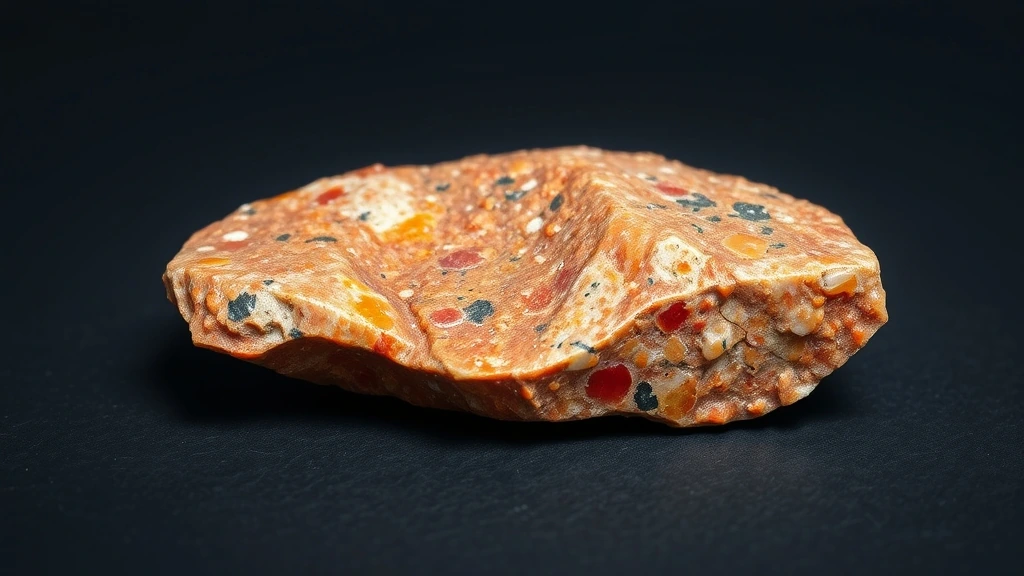
Mookaite belongs to the Natural Mineral / Crystal group, specifically classified as a microcrystalline sedimentary rock rather than a single large crystal. Its geological formation involves the precipitation of silica-rich fluids in ancient marine environments. This process creates a dense, interlocking matrix of tiny quartz crystals. The resulting stone displays unique, organic patterns that distinguish it from other opaque gemstones.
What is Mookaite? Geological Overview & Definition
Mookaite is primarily composed of microcrystalline quartz, forming a dense, non-porous aggregate. It is named after the Mooka Creek in Western Australia, where significant deposits were first identified. The stone’s formation occurs over millions of years through the slow accumulation of silica. This geological history contributes to its exceptional structural integrity and resistance to weathering. While Mookaite’s intricate patterns arise from the slow accumulation of silica, other agate varieties like Turritella Agate form through the fossilization of ancient marine organisms, offering a distinct contrast in geological origin.
The defining feature of Mookaite is its banded coloration, which results from varying mineral impurities during deposition. These bands create a dynamic visual texture that is highly prized in the gem trade. Unlike single-crystal minerals, Mookaite is an isotropic material, meaning it does not exhibit pleochroism. Its uniform hardness and luster make it a popular choice for carvings and cabochons. Similarly, the earthy, tactile qualities of Steatite Soapstone complement Mookaite’s vibrant bands, offering a grounding contrast that appeals to collectors seeking both visual dynamism and subtle, soothing textures.
Mookaite Chemical Composition & Crystallographic Properties
Although Mookaite lacks a single stoichiometric formula, its primary constituent is silicon dioxide (SiO₂). The crystallographic structure of its constituent quartz grains is Trigonal. This lattice arrangement dictates the stone’s physical properties, including its high refractive index. The microcrystalline nature means individual grains are too small to be resolved by the naked eye.
Color variations in Mookaite are driven by chromophore impurities, primarily iron oxides. Hematite and goethite inclusions create the characteristic reds, oranges, and browns. These iron-based compounds substitute within the silica matrix or exist as microscopic inclusions. The distribution of these impurities determines the intensity and pattern of the stone’s bands.
Mookaite demonstrates significant thermal stability, withstanding moderate heat without structural degradation. It is chemically inert to most weak acids, though prolonged exposure to strong alkalis can etch the surface. The Trigonal symmetry of the underlying quartz ensures consistent optical behavior across the aggregate. This stability makes it suitable for long-term wear in jewelry settings.
| Property | Specification |
|---|---|
| Mineral Group | Natural Mineral / Crystal |
| Chemical Formula | SiO₂ (Chalcedony/Quartz) |
| Mohs Hardness | 6.5 – 7.0 |
| Crystal System | Trigonal |
| Specific Gravity (Density) | 2.60 – 2.65 |
| Refractive Index | 1.530 – 1.544 |
| Color & Optical Properties | Natural Mookaite color spectrum and optical dispersion |
| Primary Mining Localities | Global primary localities |
| Water & Chemical Resistance | High (Safe for gentle water washing) |
| Chakra Alignment (Traditional) | Root Chakra (Muladhara) |
| Zodiac Affinity (Traditional) | Capricorn, Taurus |
| Symbolic Meaning (Traditional) | Spiritual awareness and universal harmony |
Mookaite Varieties & Color Spectrum
Mookaite displays distinct mineralogical characteristics across its geological varieties and structural habits. Gemologists evaluate these natural varieties based on crystal habit, trace chromophore concentrations, and visual luster.
Primary Natural Mookaite
The benchmark natural variety exhibiting diagnostic color saturation and classic crystallographic symmetry.
Distinct Geological Morphs of Mookaite
Secondary regional and structural varieties formed under localized geological temperature and pressure conditions.
Classic Mookaite (Yellow–Brown)
The most common variety displays a warm, honey‑yellow to light brown hue, often with subtle banding. It forms in quartz‑rich pegmatites where iron and manganese impurities impart the color. Inclusions of tiny quartz crystals give a speckled appearance, and the stone is prized for its smooth, translucent surface. This variety is widely available, making it a staple in contemporary jewelry.
Mookaite with Greenish Tint
A rarer green‑tinged form arises when trace amounts of chromium or vanadium are incorporated during crystallization. The green overlay is usually faint, creating a subtle contrast against the base yellow. Its rarity is heightened by the limited number of deposits that contain the necessary trace elements, rendering it a sought‑after choice for collectors.
Mookaite with Blue‑Grey Veining
Blue‑grey veining is produced by the intergrowth of feldspar and mica within the quartz matrix. These veins create a striking, almost ethereal pattern that can appear to shift under light. The presence of such veining is uncommon, and the resulting stones are often considered premium due to their unique visual signature.
Mookaite with Black Inclusions
Black inclusions, typically composed of graphite or carbonaceous material, give this variety a dramatic contrast. The inclusions may form as filamentous or nodular structures, adding depth and complexity. Because the conditions required for graphite incorporation are rare, these stones are highly prized by enthusiasts seeking distinctive character.
Mookaite with Orange‑Red Highlights
Orange‑red highlights are caused by the oxidation of iron within the crystal lattice. The resulting streaks resemble a subtle sunrise across the stone’s surface. This variety is less common than the classic yellow, and its striking color makes it a favorite for statement pieces.
Mookaite from the Eastern Australian Deposits
The Eastern Australian variant is distinguished by a slightly coppery undertone, imparted by local trace elements. Its surface often shows a fine, almost metallic sheen. Although not as widely traded as other forms, this regional variety is valued for its unique coloration and geological provenance.
Where is Mookaite Found? Geological Mining & Extraction
Mookaite crystallizes in quartz‑rich pegmatites that form during the late stages of granite intrusions. The mineral’s growth requires a slow cooling environment, allowing large crystals to develop within the host rock. Extraction typically involves open‑pit or underground mining, followed by mechanical crushing and hand‑sorting to isolate the desired specimens.
Primary mining regions include the Eastern Australian pegmatite belts and the South African Karoo Basin. In these areas, artisanal miners and industrial operations alike harvest mookaite, often employing flotation techniques to concentrate the quartz‑rich material. The resulting stones are then polished and marketed to the global jewelry industry.
Historical Significance & Cultural Lore of Mookaite
Across ancient Greco‑Roman lapidary traditions, quartz varieties were valued for their clarity and perceived protective qualities. While mookaite itself was not identified by name, its yellow‑brown hues were likely incorporated into ceremonial jewelry and amulets, symbolizing earthly stability. In Egyptian artifacts, similar quartz stones appear in burial assemblages, suggesting a belief in their ability to safeguard the soul during the afterlife.
In Vedic lore, quartz was associated with the root chakra (Muladhara), representing grounding and physical well‑being. The stone’s warm tones were thought to harmonize the wearer’s spiritual awareness and promote universal balance. These cross‑cultural traditions underscore mookaite’s enduring appeal as both a decorative and metaphysical gemstone.
Modern Uses & Jewelry Applications of Mookaite
Mookaite is prized for its warm, earthy hues, making it ideal for both cabochon and faceted pieces. Lapidaries often employ a polished cabochon cut to accentuate its subtle color variations, while a single-facet design can highlight its natural inclusions. The stone’s moderate hardness (6.5–7.0 on the Mohs scale) allows for intricate ornamental carving, suitable for pendants, rings, and decorative plaques.
- Cabochon earrings and pendants that showcase the stone’s natural luster
- Faceted brooches and cufflinks that reflect light through subtle facets
- Ornamental carvings for architectural accents or ceremonial objects
Metaphysical Properties & Traditional Meaning of Mookaite
According to historical traditions and metaphysical lore, mookaite is believed to foster spiritual awareness and promote universal harmony. Across ancient Mediterranean and Vedic lapidary lore, the stone is associated with grounding energy, encouraging emotional stability and resilience. Its warm tones are thought to soothe anxiety, while its subtle inclusions are said to reflect inner truths, inviting introspection and calm.
Which Chakra and Zodiac Signs Align with Mookaite?
Mookaite is traditionally linked to the Root Chakra (Muladhara), the energy center governing stability, security, and grounding. This alignment encourages a firm foundation in both physical and spiritual realms, supporting the wearer’s sense of belonging and safety.
The stone’s celestial affinity is specifically with the zodiac signs Capricorn and Taurus. These earth signs resonate with mookaite’s grounding qualities, enhancing determination, practicality, and a deep connection to nature.
How to Identify Real vs. Fake Mookaite
Artificial imitations of mookaite often appear as dyed glass, synthetic glass, or low‑quality stones with exaggerated color. Genuine mookaite displays subtle natural inclusions and a consistent, earthy tone that cannot be replicated by simple dyes or glass.
Practical At-Home Authenticity Tests
- Temperature Test (Thermal Feel): Hold the stone in your hand; genuine mookaite feels slightly cooler than the surrounding air due to its thermal conductivity, unlike synthetic glass which warms quickly.
- Specific Gravity & Weight Test: Compare the stone’s heft to a known quartz sample of similar size; real mookaite should feel noticeably heavier, reflecting its higher specific gravity.
- Scratch & Hardness Test (Mohs Comparison): Use a steel nail or a quartz sample to lightly scratch the surface; genuine mookaite should resist scratching, matching its 6.5–7.0 hardness, whereas glass will show a clear scratch line.
- Microscopic & Loupe Inspection (Internal Inclusions): Examine the stone under a loupe; authentic mookaite often contains fine, natural inclusions or subtle banding, whereas dyed replicas tend to be uniformly colored with no internal texture.
Mookaite Valuation Factors, Grading & Pricing
The primary determinant of market value is Color Saturation, which dictates the stone’s visual appeal and perceived energetic potency. High-grade specimens display intense, uniform bands of deep red, orange, and brown without muddy or washed-out tones. A vibrant, natural luster further enhances desirability by reflecting light sharply across the polished surface.
Pricing is heavily influenced by Crystal Size & Weight (Grams), as larger, unfractured pieces command significant premiums in the collector market. Raw specimens are valued for their natural matrix inclusions, while tumbled stones are graded strictly on the quality of their polish and edge definition. Consistency in banding patterns across the entire surface area also contributes to higher valuation.
Ethical Sourcing & Locality Premium plays a crucial role in modern holistic and collector markets, where provenance documentation adds tangible value. Stones from well-known Australian deposits often carry a premium due to their established reputation for consistent quality and color depth. Buyers increasingly prefer verified ethical origins that ensure sustainable mining practices and fair labor conditions throughout the supply chain.
How to Clean and Care for Mookaite
To maintain the integrity of the stone, use warm soapy water and a soft, lint-free cloth for gentle manual cleaning. This method effectively removes surface oils and dust without compromising the mineral’s structural stability. Avoid using abrasive materials that could scratch the polished surface or dull the natural luster.
It is critical to avoid ultrasonic cleaners entirely, as high-frequency vibrations can induce structural fractures within the banded agate matrix. After washing, dry the specimen immediately with a clean towel to prevent water spots or mineral residue buildup. Store Mookaite in a soft pouch or lined jewelry box to protect it from physical impacts and scratches.
Cleansing and Recharging Mookaite (Energetic Care)
For energetic cleansing, practitioners often employ herbal smudging with white sage or palo santo to clear stagnant vibrations. This dry method allows the stone to absorb positive energy without exposure to moisture or extreme temperatures. The aromatic smoke is believed to purify the stone’s energetic field while respecting its physical stability.
Alternatively, resting the specimen on a selenite charging slab overnight under gentle moonlight provides a safe recharging environment. This approach leverages the selenite’s natural cleansing properties to restore the Mookaite’s vibrational balance. Such dry, low-impact methods ensure the crystal lattice remains intact while revitalizing the stone’s metaphysical properties.
Frequently Asked Questions About Mookaite
Mookaite displays distinct mineralogical characteristics across its geological varieties and structural habits. Gemologists evaluate these natural varieties based on crystal habit, trace chromophore concentrations, and visual luster.
Primary Natural Mookaite
The benchmark natural variety exhibiting diagnostic color saturation and classic crystallographic symmetry.
Distinct Geological Morphs of Mookaite
Secondary regional and structural varieties formed under localized geological temperature and pressure conditions.
What is the geological origin of Mookaite?
Mookaite is a feldspathic volcanic tuff from the Mooki River region of New South Wales, Australia. Formed from ancient ash‑fall deposits, it crystallizes in the trigonal system and exhibits a hardness of 6.5–7.0 on the Mohs scale, making it suitable for jewelry that endures daily wear.
Is Mookaite safe to wear in the shower or while swimming?
Yes, Mookaite has high water resistance and can tolerate gentle water washing. Routine exposure to rain, showers, or a brief swim will not degrade the stone, but prolonged submersion or harsh detergents should be avoided to preserve its natural luster and surface integrity.
How should I clean my Mookaite jewelry?
Clean Mookaite with warm soapy water and a soft cloth, then pat dry. This method removes oils and residues without stressing the stone. Ultrasonic cleaners are contraindicated because rapid vibrations can cause micro‑fractures in the tuff’s porous matrix, compromising durability.
Can I use an ultrasonic cleaner on Mookaite?
No, ultrasonic cleaning should be avoided for Mookaite. The high‑frequency vibrations can create internal stress, leading to structural fractures in the volcanic tuff. Hand cleaning with mild soap and a soft cloth remains the safest maintenance practice.
Which zodiac signs are associated with Mookaite?
Mookaite aligns with Capricorn and Taurus. In astrological gem lore, these earth signs are thought to benefit from the stone’s grounding energy, reinforcing stability and perseverance in personal endeavors.
Which chakra does Mookaite influence?
Mookaite is linked to the Root Chakra (Muladhara). This energy center governs physical grounding and survival instincts; wearing the stone is believed to enhance spiritual awareness and promote a sense of security rooted in the material world.
Does Mookaite have any notable metaphysical properties?
Mookaite is said to foster spiritual awareness and universal harmony. Practitioners claim it helps balance emotional turbulence, encouraging a calm, centered mindset that aligns personal intentions with broader cosmic patterns.
How does Mookaite’s hardness affect its use in rings?
With a Mohs hardness of 6.5–7.0, Mookaite is durable enough for everyday rings but should be protected from hard impacts. While resistant to scratches from most metals, it can chip if struck sharply; regular inspection and gentle handling extend the piece’s lifespan.