
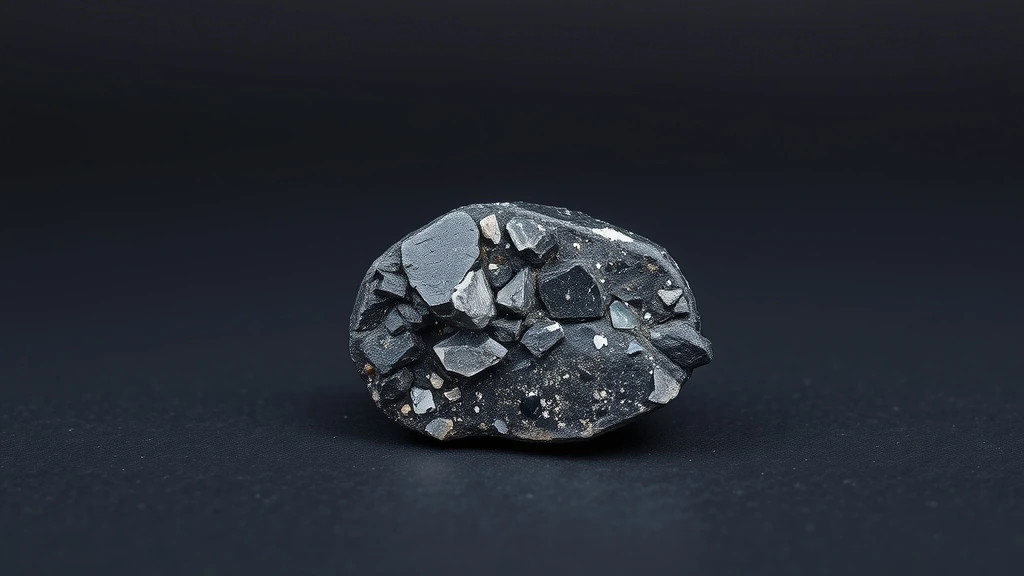
Nickel ore gemstones belong to the Natural Mineral / Crystal group, meaning they are genuine mineral aggregates rather than synthetic or organic gems. They form in magmatic sulfide deposits where nickel‑rich fluids precipitate a suite of sulfide minerals. The resulting material is an aggregate of isometric, hexagonal, orthorhombic, and monoclinic crystals, each contributing to the stone’s overall appearance and physical properties.
What is Nickel Ore Gemstone? Geological Overview & Definition
Nickel ore gemstone is not a single mineral but a composite of several nickel‑bearing sulfides—principally pentlandite (Ni,Fe)₉S₈, millerite (NiS), gersdorffite (NiAsS) and pyrrhotite (Fe₁₋ₓS). These minerals crystallize together in veins and massive sulfide bodies, producing a metallic‑lustered aggregate that can be cut or polished for ornamental use.
In gemological terms, the stone is valued for its industrial strength and grounding energy, often linked to the Root Chakra and the earth‑sign zodiac signs Taurus, Virgo and Capricorn. Its dense, opaque nature makes it a distinctive alternative to traditional metallic gemstones such as hematite or pyrite.
Nickel Ore Gemstone Chemical Composition & Crystallographic Properties
The aggregate displays a composite crystal system: isometric pentlandite crystals coexist with hexagonal millerite, orthorhombic gersdorffite and monoclinic pyrrhotite. This diversity creates a polycrystalline lattice where each phase retains its own symmetry while interlocking at grain boundaries.
Cation substitution is common; nickel readily replaces iron in pentlandite and pyrrhotite, while arsenic can enter the gersdorffite structure, producing subtle variations in color and density. These substitutions generate chromophore color centers that impart the characteristic bronze‑gold to pewter tones.
All constituent sulfides are acid‑sensitive; exposure to strong acids can dissolve surface layers, altering luster and potentially releasing nickel ions. Consequently, cleaning should be limited to mild, neutral solutions and soft brushes.
Thermally, the aggregate is stable up to about 350 °C, beyond which pentlandite begins to oxidize, and millerite may decompose to nickel oxide. This thermal behavior influences both cutting practices and long‑term durability in jewelry settings.
| Property | Specification |
|---|---|
| Mineral Group | Natural Mineral / Crystal |
| Chemical Formula | Composite: Pentlandite (Ni,Fe)₉S₈, Millerite (NiS), Gersdorffite (NiAsS), Pyrrhotite (Fe₁₋ₓS) |
| Mohs Hardness | 3.5 – 4.5 |
| Crystal System | Composite: Isometric, Hexagonal, Orthorhombic, Monoclinic |
| Specific Gravity (Density) | 4.5 – 6.6 |
| Refractive Index | 2.0 – 2.6 |
| Color & Optical Properties | Natural Nickel Ore Gemstone color spectrum and optical dispersion |
| Primary Mining Localities | Global primary localities |
| Water & Chemical Resistance | Sensitive (Avoid prolonged water soaking) |
| Chakra Alignment (Traditional) | Root Chakra |
| Zodiac Affinity (Traditional) | Taurus, Virgo, Capricorn |
| Symbolic Meaning (Traditional) | Industrial strength, grounding, and material stability |
Nickel Ore Gemstone Varieties & Color Spectrum
Nickel ore specimens are prized for their metallic luster and complex mineral associations. The visual appeal stems from the interplay of sulfide and arsenide minerals. Collectors seek specimens with high metallic reflectivity and distinct crystal habits.
Pentlandite
Pentlandite is the most economically significant nickel sulfide mineral globally. It typically forms massive, granular aggregates with a brassy-yellow to brownish hue. This variety often exhibits a magnetic response due to its iron-nickel composition.
Its crystal system is isometric, though it rarely forms perfect octahedra. Inclusions of pyrite or chalcopyrite are common in high-grade deposits. The composite chemical formula (Ni,Fe)₉S₈ defines its structural stability.
Millerite
Millerite appears as slender, prismatic crystals with a bright, silvery-white metallic sheen. It is rarer than pentlandite and often found in oxidized zones of nickel deposits. The hexagonal crystal system allows for distinctive needle-like formations.
These crystals are fragile and require careful handling during extraction. The refractive index of 2.0 to 2.6 contributes to its brilliant luster. Specimens from Sudbury, Canada, are particularly renowned for their clarity.
Gersdorffite
Gersdorffite is a nickel arsenide sulfide with a pale green to grayish-green color. It crystallizes in the orthorhombic system, often forming small, well-defined cubes. This variety is less common and highly valued by mineral collectors.
Its orthorhombic crystal structure distinguishes it from other nickel ores. The mineral is brittle and has a Mohs hardness of 3.5 to 4.5. It frequently occurs alongside pyrite and chalcopyrite in hydrothermal veins.
Pyrrhotite
Pyrrhotite is an iron sulfide that often accompanies nickel ores in massive deposits. It displays a brassy-yellow color with a strong magnetic property. This mineral can form complex, intergrown textures with pentlandite.
The monoclinic crystal system is evident in its cleavage patterns. It is less stable than pentlandite and prone to oxidation. Its presence indicates a high-temperature magmatic origin.
Native Nickel
Native nickel is an extremely rare metal occurring in its pure elemental form. It appears as silvery-gray, malleable nuggets or flakes. This variety is found in meteorites and rare terrestrial deposits.
The isotropic optical properties make it distinct from sulfide ores. It is highly resistant to corrosion and tarnishing. Specimens are exceptionally rare and command high prices in the market.
Where is Nickel Ore Gemstone Found? Geological Mining & Extraction
Nickel ores primarily occur in magmatic sulfide deposits associated with ultramafic rocks. These deposits form from the crystallization of nickel-rich magma in deep crustal environments. The host rock is typically peridotite or gabbro.
Major mining regions include Sudbury, Canada, and Norilsk, Russia. These areas contain some of the largest and richest nickel deposits on Earth. Extraction involves open-pit mining followed by smelting and refining.
Historical Significance & Cultural Lore of Nickel Ore Gemstone
Ancient civilizations utilized nickel alloys, such as pewter, for jewelry and ceremonial objects. The metal’s durability and luster made it a symbol of status and power. Archaeological artifacts from Mesopotamia and Egypt show early use.
In modern times, nickel ore is valued for its industrial strength and grounding properties. It is associated with the Root Chakra and zodiac signs like Taurus. The mineral represents material stability and resilience.
Modern Uses & Jewelry Applications of Nickel Ore Gemstone
Nickel ore minerals are primarily valued for their industrial applications rather than high-end jewelry, yet they find a niche in artisanal lapidary work. Due to their metallic luster and distinctive banding, collectors often cut these specimens into cabochons or polished tumbles. The low Mohs hardness of 3.5 to 4.5 limits faceting options, making smooth, rounded cuts the preferred aesthetic for pendants and rings.
- Cabochon Cutting: Ideal for showcasing the iridescent sheen of Pentlandite or the metallic glow of Millerite.
- Ornamental Carving: Used in decorative boxes and paperweights due to their stable, composite structure.
- Industrial Display: Polished slabs serve as educational models in geology museums and mining exhibits.
- Wire Wrapping: Popular in bohemian jewelry styles where the raw, earthy texture is highlighted.
Metaphysical Properties & Traditional Meaning of Nickel Ore Gemstone
According to historical traditions and metaphysical lore, nickel ore is revered for its industrial strength and profound grounding capabilities. Practitioners believe this composite mineral anchors the wearer to the physical world, fostering a sense of material stability during times of change. It is often associated with resilience, mirroring the robust nature of the nickel metal extracted from these ores.
The stone is said to resonate with themes of endurance and practical wisdom, helping users overcome obstacles with steady determination. By connecting the spirit to the earth, it encourages a focus on tangible results rather than abstract worries. This earthy energy is thought to stabilize emotional fluctuations and promote a calm, focused mindset.
Which Chakra and Zodiac Signs Align with Nickel Ore Gemstone?
In metaphysical practice, nickel ore is strictly aligned with the Root Chakra, which governs survival, security, and physical well-being. This connection stems from the mineral’s dense, metallic composition and its deep association with the earth’s crust. It is believed to strengthen the foundation of one’s life, providing a sense of safety and rootedness.
The zodiac signs most compatible with this stone are Taurus, Virgo, and Capricorn. These earth signs share the mineral’s emphasis on reliability, hard work, and tangible achievements. Wearing nickel ore is thought to amplify their natural strengths, enhancing their ability to manifest goals and maintain stability in their daily lives.
How to Identify Real vs. Fake Nickel Ore Gemstone
Artificial imitations of nickel ore often involve synthetic glass or dyed base metals designed to mimic the metallic luster. These fakes may lack the natural banding and structural complexity found in genuine Pentlandite or Millerite specimens. Recognizing these differences is crucial for collectors seeking authentic geological samples.
Practical At-Home Authenticity Tests
- Temperature Test (Thermal Feel): Genuine nickel ore feels noticeably cooler to the touch than plastic or glass imitations due to its high thermal conductivity.
- Specific Gravity & Weight Test: Real specimens are significantly heavier, with a density ranging from 4.5 to 6.6, making them feel dense in the hand.
- Scratch & Hardness Test (Mohs Comparison): With a Mohs hardness of 3.5 to 4.5, the stone can be scratched by a steel knife but will not scratch glass easily.
- Microscopic & Loupe Inspection (Internal Inclusions): Use a 10x loupe to look for natural crystal inclusions and irregular banding patterns that synthetic replicas often lack.
Nickel Ore Gemstone Valuation Factors, Grading & Pricing
Color Saturation is the foremost driver of value. Deep, uniform hues ranging from steel‑gray to rich bronzy‑gold command premium prices, while muted or uneven tones reduce desirability. Optical clarity and a high‑luster surface further amplify the gemstone’s market appeal, reflecting light with a metallic sheen that collectors prize.
Carat Weight directly influences price, but only when paired with excellent facet symmetry. Larger stones that retain proportional balance and precise angles are far more valuable than smaller, poorly cut specimens. The presence of a matrix or visible inclusions—especially iron‑rich pyrrhotite—can detract from both brilliance and price, though occasional mineral veins may be tolerated if they enhance character.
Geographical Provenance Premium rewards stones sourced from historically renowned nickel districts such as Sudbury (Canada) or the Kola Peninsula (Russia). Provenance certificates add credibility and often lift wholesale rates by 10‑20 %. Retail trends show a steady rise in demand, with prices climbing 5‑8 % annually as industrial‑strength gemstones gain popularity among metaphysical buyers.
How to Clean and Care for Nickel Ore Gemstone
Use warm soapy water and a soft cloth to gently wipe the surface, removing dust and oils without stressing the crystal lattice. Do not employ ultrasonic cleaners; the vibrations can cause micro‑fractures in the brittle nickel sulfide structure. After cleaning, pat the stone dry with a lint‑free microfiber towel and store it in a padded compartment away from hard metals.
Cleansing and Recharging Nickel Ore Gemstone (Energetic Care)
For energetic renewal, pass the gemstone through smoke smudging using white sage or palo santo; the gentle ash clears stagnant vibrations without introducing moisture. Limit exposure to a few seconds, then place the stone on a selenite plate to absorb residual negativity and restore its grounding frequency.
Alternatively, expose the gem to moonlight during a full moon, allowing lunar energy to recharge its inherent industrial strength. Lay the stone on a clean, natural fabric outdoors or on a windowsill, ensuring it remains dry; the subtle illumination revitalizes the root‑chakra alignment associated with nickel ore.
Frequently Asked Questions About Nickel Ore Gemstone
Is nickel ore gemstone safe to wear in water?
No, it is water‑sensitive and should not be soaked for extended periods. Prolonged exposure to moisture can cause surface oxidation and weaken the crystal lattice, especially in minerals like pentlandite and millerite. Wipe it dry promptly after brief contact with rain or splashes.
Can I clean nickel ore gemstone with an ultrasonic cleaner?
Avoid ultrasonic cleaning; use warm soapy water and a soft cloth instead. The high‑frequency vibrations can create micro‑fractures in the relatively soft Mohs 3.5‑4.5 structure, leading to loss of polish or even breakage. Gentle hand cleaning preserves its natural luster.
What is the typical hardness of nickel ore gemstone?
It ranges from 3.5 to 4.5 on the Mohs scale. This places it between calcite and fluorite, meaning it scratches easily against harder gemstones like quartz. Handle it with care, especially when setting it in jewelry that may encounter harder stones.
Which zodiac signs are associated with nickel ore gemstone?
Taurus, Virgo, and Capricorn are the aligned zodiac signs. These earth signs are said to resonate with the stone’s grounding energy, supporting material stability and practical ambition in the wearer’s life.
Which chakra does nickel ore gemstone activate?
It is linked exclusively to the Root Chakra. This energy center governs feelings of safety, security, and physical grounding, mirroring the stone’s reputation for “industrial strength” and material stability in metaphysical practice.
How dense is nickel ore gemstone compared to other gems?
Its specific gravity falls between 4.5 and 6.6. This relatively high density reflects the presence of heavy nickel and iron sulfides such as pentlandite and pyrrhotite, making the stone feel noticeably weighty in the hand.
What is the refractive index range for nickel ore gemstone?
The refractive index varies from 2.0 to 2.6. Such a high RI gives the stone a brilliant, metallic sheen when cut, but also contributes to its susceptibility to surface damage if mishandled.
Which crystal systems are found in nickel ore gemstone?
It occurs in isometric, hexagonal, orthorhombic, and monoclinic systems. This diversity stems from its composite nature—minerals like millerite (hexagonal) and gersdorffite (monoclinic) coexist, creating varied habit forms that influence cutting and setting decisions.